

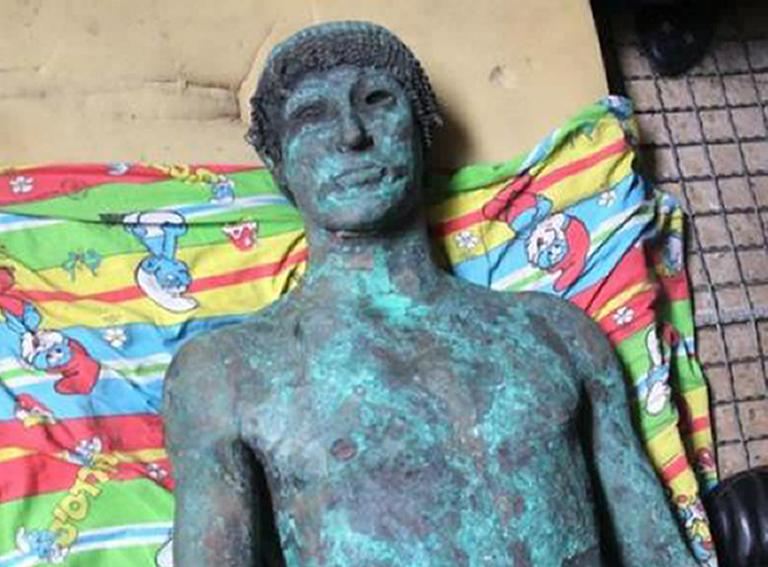
 An ancient bronze casting of Greek god Apollo, hooked from the sea by a young Gaza fisherman, was seized by police and vanished from public view. Tug-of-war over a valuable artifact – or – coyness over risqué rendering of his frontal assets? Authorities are as silent as a statue as to when it will reappear.
Joudat Ghrab plucked the life-sized deity from the sea last August, just north of the Egyptian-Gaza border. He said he spotted a human shape lurking in shallow waters some 100 meters offshore. He dove in and found the statue, and – with the help of family – he dragged the 500 kg figure ashore and lugged it home on a donkey cart.
“I felt it was something gifted to me by God,” the fisherman told Reuters. “My financial situation is very difficult and I am waiting for my reward.”
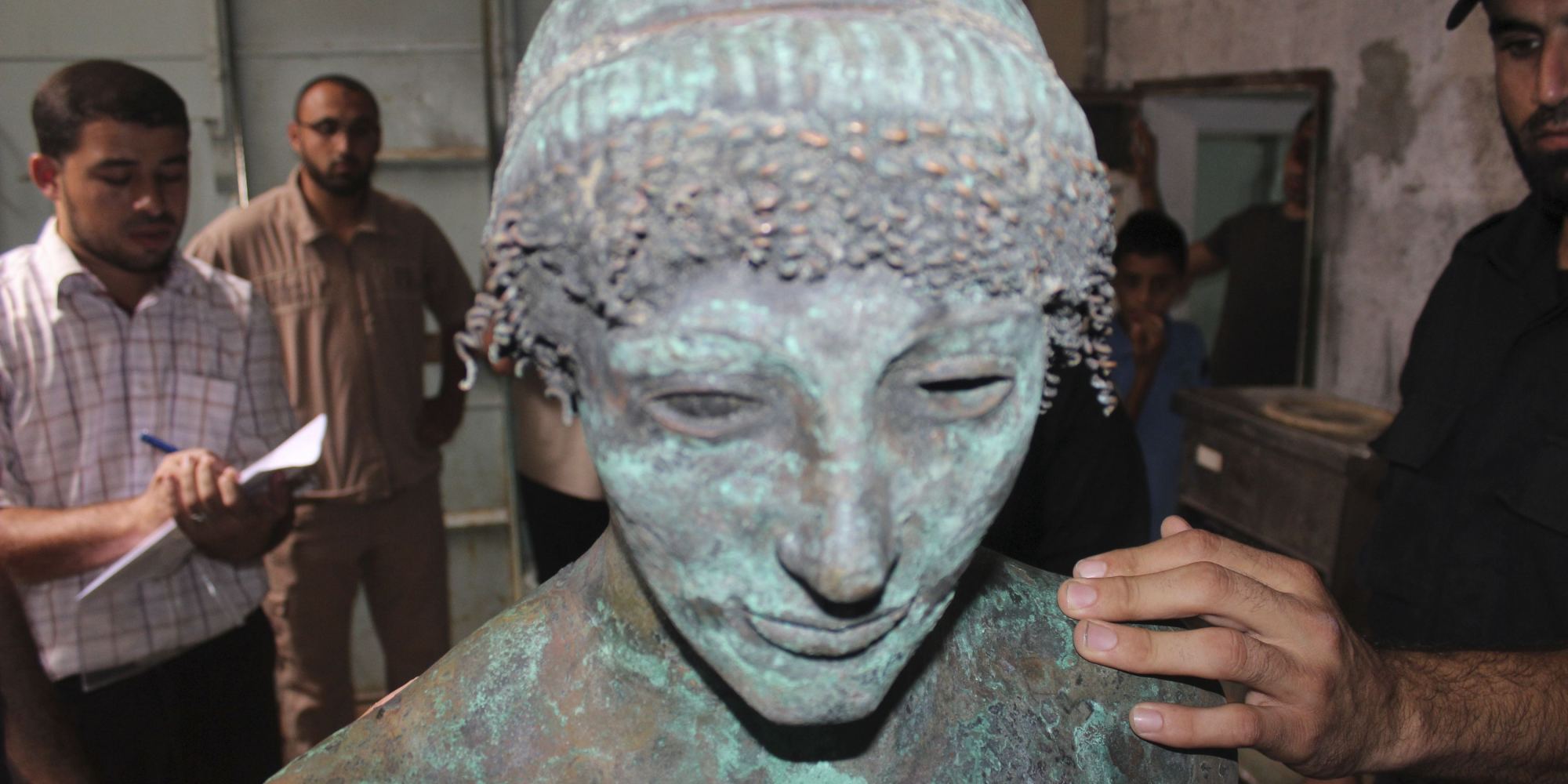 The metal Greek didn’t enjoy traditional Arabic hospitality; Ghrab’s mother was appalled when saw the statue’s nakedness and demanded that his manhood (god-hood?) be covered.
Speculation spread as to the hunky god’s street value; someone listed it on Ebay at a starting bid of half a million dollars, then Hamas police seized it, claiming ongoing investigation.
Blurred photos of the young, athletic, god laid out on a Smurf-printed blanket are the only proofs that the statue exists.
“It’s unique…I would say it is priceless,” said Jean-Michel de Tarragon, a historian with the French Biblical and Archaeological School of Jerusalem. He told Reuters television, “It’s very, very rare to find a statue which is not in marble or in stone, but in metal.”
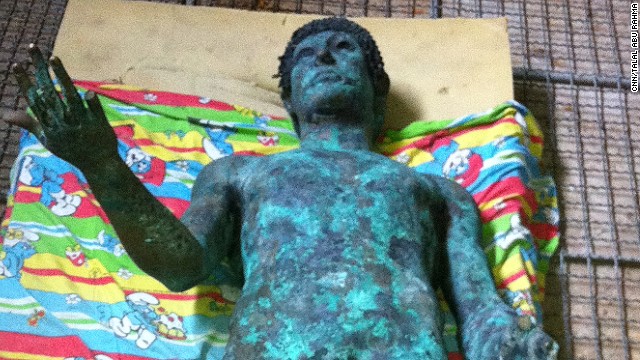 Tarragon suggests that the pristine sculpture was probably cast between the 5th and the 1st century BC and added it was vital to pinpoint the discovery location. “This wasn’t found in the sea … it is very clean,” he said, noting there were no barnacles or erosion normally seen on items fished from water.
Historical records of ancient Egyptians, Philistines, Romans, Byzantines and Crusaders lie beneath Gaza sands, many sites remain unexplored. The Apollo find might prove the tip of an historical iceberg, Tarragon said.
“A statue at that time was (put) in a complex, in a temple or a palace. If it was in a temple, you should have all the other artifacts of the cult (at the site),” he said, adding that he hoped Hamas appreciated its potential importance.
Officials at Gaza’s tourism ministry told Reuters the statue will not be shown publicly until a criminal investigation into who tried to sell it concludes, but Apollo’s genitals would need be covered so as not to violate the Hamas regime’s modesty regulations.



“X-rated” of not, the Gazans should offer this statute to a world class museum like the Louvre in Paris. It should not be sold on the private market; and most definitely not be destroyed. If they do destroy it, they are no better than the Talaban were in Afghanistan prior to October, 2001.