

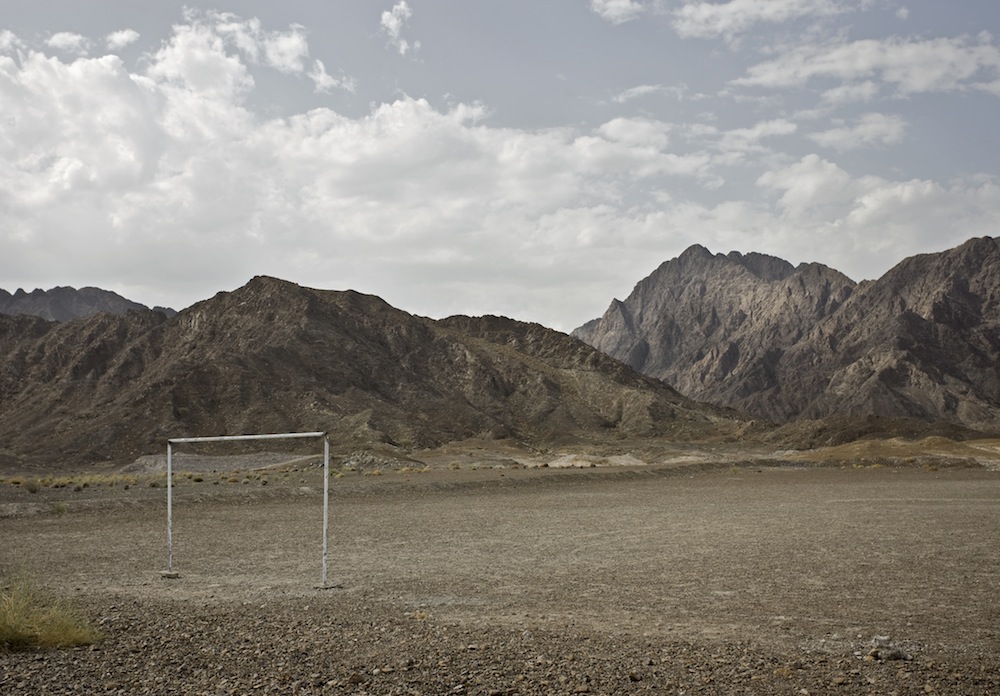
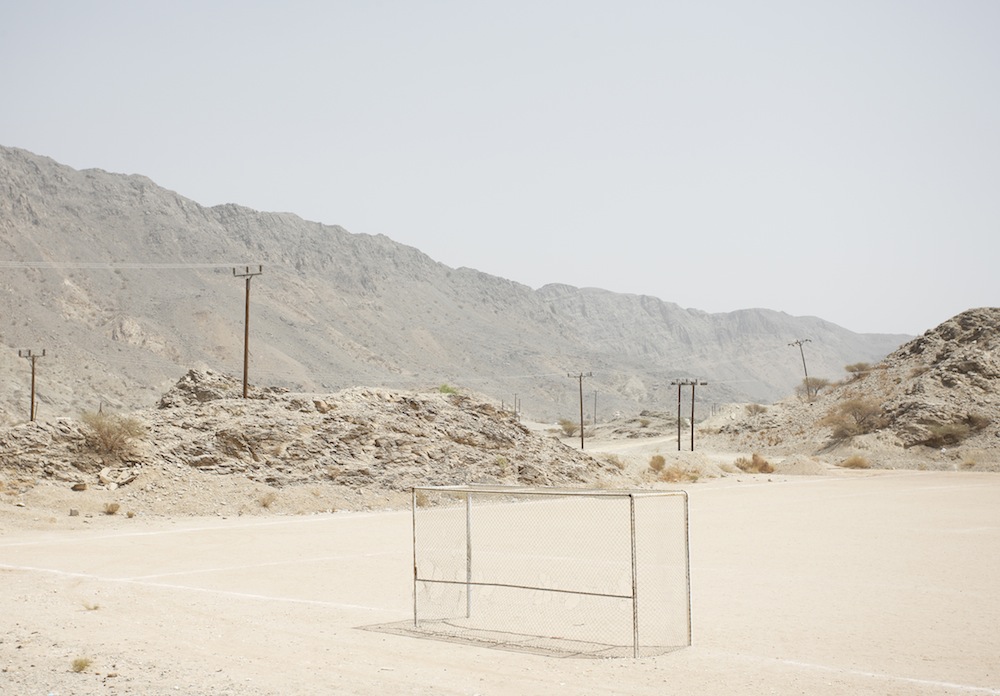
 Ask yourself: if you lived in the deep desert, where the sand burns your soles at midday, would you run outside and play soccer? No sane person should. But Dick Sweeney has sent us thought-provoking images of soccer posts in extreme environments that reveal just how much Arabs love their football.
The Australian photographer spent six years traveling to the Arabian peninsula to spend time in the desert and capture images. One challenge, he said, is trying to portray the heat through an image. Think about that for a second. What does heat look like? And then imagine chasing a ball in it.
 Full disclosure. I spent my entire childhood in South Africa watching football on the television and absorbed virtually nothing.
And I know as much about Arab soccer, except this: an Arab Women’s Championship football league was established to get the girls excited about competing with each other. They played their first game in Alexandria, Egypt in 2006.
It was also their last. Eight teams participated and Algeria won – at least according to Wikipedia.
Sweeney discovered a fascination for the football pitches while working on portraits. He snuck over to grab a few shots and liked what he found when he returned home.
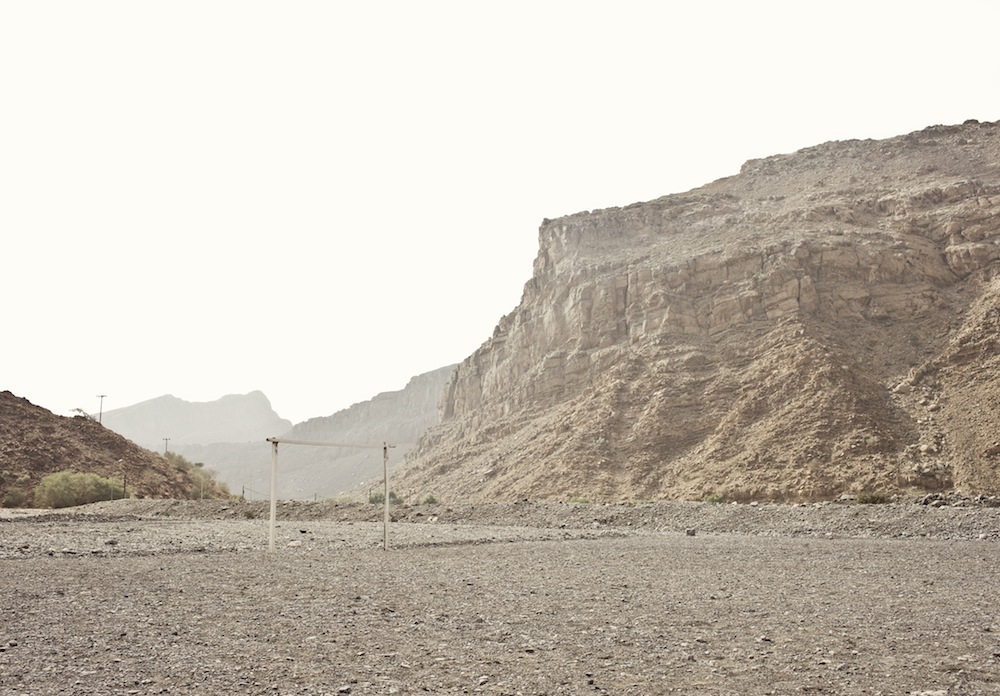 We corresponded with him via email. He traveled 10,000 kilometers to seek out pitches up and down the Arabian peninsula. A big fan of the desert, this city dweller has spent many years walking and deserts and keeping company with the people to whom they are home.
“I never feel at a loss when faced with the imposing nature of the environment. In fact although I’m a city boy, I feel very comfortable and closer to the force of the creator when I’m there,” he wrote.
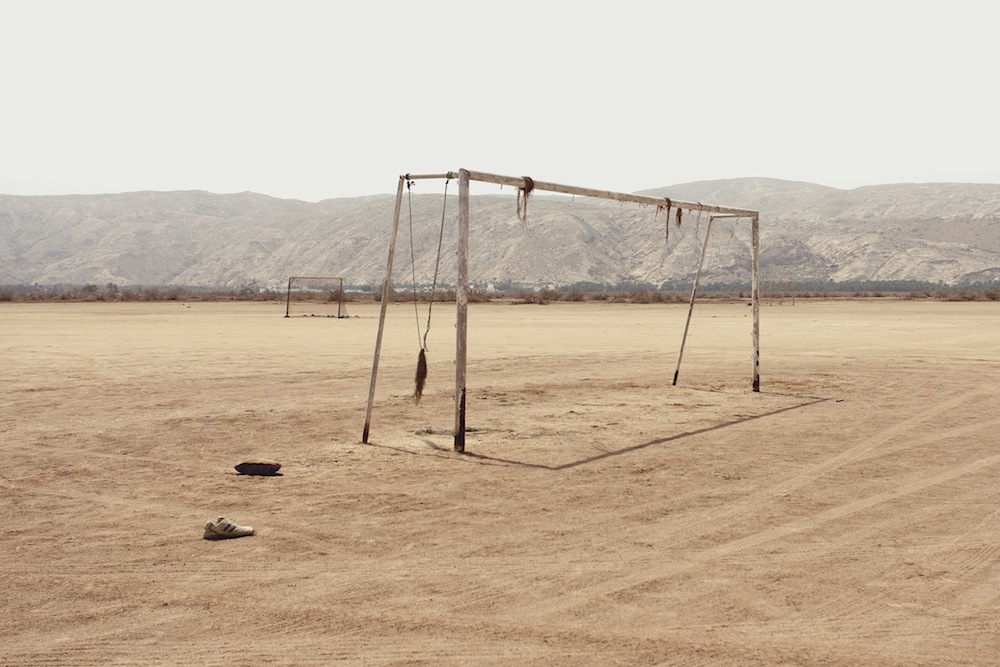
Although the images were very sparse and extreme in their location, I sensed a great passion by the people that marked out these humble pitches and played the game in such a hardy location. I was also keen to express the heat of the day too in the way I exposed the shots.
Perhaps these photos go some way to painting the story of how Qatar won the right to become the first Arab nation to host a World Cup.
 Although Morocco, Saudi Arabia and Tunisia have each played in the World Cup four times and Qatar has never made it (did they try?), Qatar has invested a great deal of money on large sporting events that attract foreigners, and they fought for World Cup 2022 (and some say they rigged it.)
And the whole operation may well be built on the backs of migrant workers who suffer poor working conditions, an issue that is trickling into mainstream media with very little conviction.
This event will be good for the Arab world. Yeah, they have to figure out how to make sure people don’t collapse from heat exhaustion, and maybe the event will be shifted to cooler months. A whole host of other variables could come up between now and then. But having the World Cup in this region will also expose what is remarkable about it and the people.
Here’s how Dick Sweeney sees it through the lens:
I got to realise I think that these images themselves were a portrait of the people that played the game here. So I could see a story here about people which did not actually feature any people; and I think telling stories in subtle ways like this to me is intriguing, hopefully others will agree.
He is currently publishing a collection of these images in a book; if you want to watch his progress, just visit http://dicksweeney.com.
All images © Dick Sweeney

In Oman, each village with a large enough population has its pitch and most evenings the children and young adults will be out there playing a game, I see them on the way back from field trips or on the way out to the rural areas. Anybody out there playing during the day is categorised under the ”mad dogs and englishmen go out in the midday sun” syndrome. They are footie mad and the whole country goes gaga during the Gulf Cup, even those who may not watch or be supporters otherwise.
Thanks Meem, I love that anecdote. I hope the World Cup will be a special event for the region.