Earth. Energy. Everything next.

Turkey Wins “Fossil of the Day” Award At Doha Climate Change Negotiations

With the world’s fourth largest number of planned coal-fired power plants, Turkey is flouting international concern about climate change.

As the United Nation’s climate change talks in Doha enter their second day, Turkey has been called out on its irresponsible climate policies with the “Fossil of the Day” award. Although Turkey has kept a low profile in the negotiations so far, according to the Climate Action Network (CAN), it is “clearly their time to step onto the fossil stage,” according to the award announcement.

Fossil-worthy

CAN awards the prize to countries that have done most to block progress on the UN climate negotiations.

Turkey has already announced it will not make any pledges for the second commitment period of the Kyoto Protocol. Turkey ratified the first commitment period of the Protocol three years ago but never had to honor the requirements since it wasn’t a member of the United Nations Framework Convention on Climate Change (UNFCC) when the protocol was first adopted.

In Turkish paper Hurriyet Daily News, a CAN representative lays out the other reasons why Turkey has won this very dubious honor:

We’ve given the award to Turkey because it is the fourth largest country in the world in terms of coal mines. What’s more, its Energy Ministry announced 2012 as ‘coal year.’ Turkey has still not announced a target reduction of greenhouse gases, as is determined in the Kyoto Protocol. So, the ‘Fossil of the Day’ award has been given to it.

Turkey also posted the largest relative increase in annual greenhouse gas (GHG) emissions between 1990 and 2010, according to CAN.

High potential, little impetus to reduce emissions

Even though Turkey was among the major carbon emitters who avoided binding reduction commitments at the UN’s Durban conference last year, the government has requested more funds in this year’s climate negotiations.

There’s plenty of potential for Turkey to reduce its carbon footprint — even more so than most developed countries. Its vast solar and wind energy resources are largely undeveloped, and have attracted substantial investment interest from inside and outside Turkey.

Turkey is already suffering from global climate change. A representative from a major Turkish export association recently declared that the country’s wheat exports this year would be 2.5 million tons less than they were in 2011. Earlier this year, three international financial research firms agreed that Turkey’s addiction to imported fossil fuels had contributed to its $86.6 billion current account deficit and was preventing the country from achieving its full economic growth potential.

Despite all this, the Turkish government remains committed to building more polluting power plants, as indicated by the World Resource Institute report on planned coal-fired power plants. Little surprise that CAN has chosen Turkey for a “Fossil of the Day” award.

:: Climate Action Network

Read more about energy policy in Turkey:

Turkey Avoiding Greenhouse Gas-Reduction Despite Rapid Increases in Emissions, New Report Finds
Turkey Ripe For Renewable Energy Boom – So Why The Delay?
Turkey’s Economic Growth Hampered By Oil Addiction, Analysts Say
Turkey’s Wheat Exports Decline Due To Climate Change, Says Industry Official

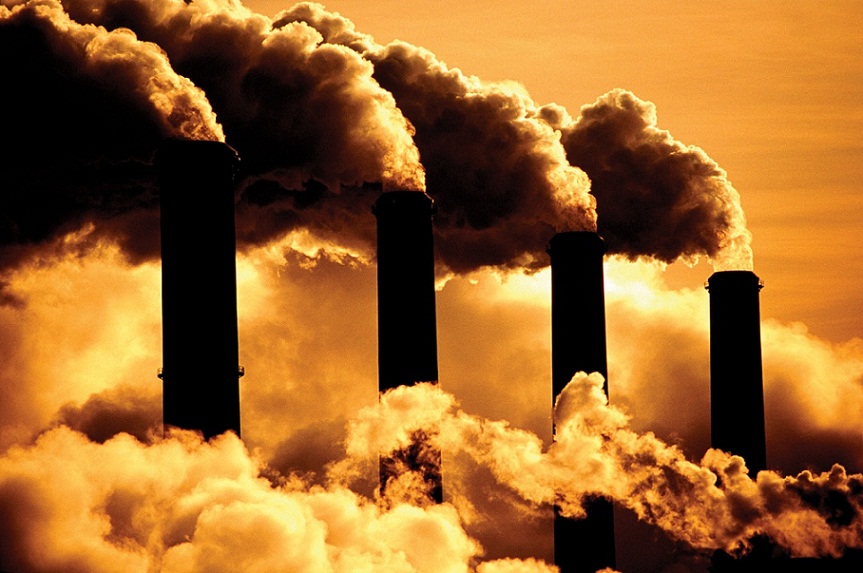
Image via Çin Günlüğü

Julia Harte
Julia Hartehttp://www.greenprophet.com
Julia spent her childhood summers in a remote research station in the Rocky Mountains of Colorado, helping her father with a 25-year-old experiment in which he simulated global warming over a patch of alpine meadow. When not measuring plant species diversity or carbon flux in the soil, she could be found scampering around the forests and finding snowbanks to slide down. Now she is a freelance journalist living in Istanbul, where her passion for the environment intersects with her interest in Turkish politics and grassroots culture. She also writes about Turkish climate and energy policy for Solve Climate News.

Read More

TRENDING

Cities promise net zero. A new UN-aligned checklist asks them to prove it

At COP31 in Türkiye, a new climate checklist challenges cities to prove their net-zero promises with measurable action, transparent reporting and real emissions cuts.

At COP31, 350.org demands an end to fossil fuels, not another round of promises

From Bill McKibben to climate organizers across the Middle East, Green Prophet has followed 350.org for 16 years. At COP31 in Türkiye, the movement is demanding an end to fossil fuel expansion and a fair transition to renewable energy.

Stardust’s solar geoengineered $10 billion plan to blot out the sun

Israeli-American startup Stardust Solutions has raised $75 million to develop technology that could cool the Earth by reflecting sunlight. Is solar geoengineering becoming a real industry? Or could it be a new threat?

Mongolia rangelands the center of climate change

Mongolia put the world’s overlooked rangelands on the climate agenda at UNCCD COP17, where governments and investors backed new financing for land restoration, drought resilience and pastoral communities.

Did China’s AI Boom Melt the Himalayas? Nepal’s Deadly Floods Raises Question About Data Centers and Climate

Nepal’s devastating floods reveal the growing risks of a warming Himalaya. As glaciers retreat and extreme events intensify, clean energy and climate action are increasingly urgent — and local organizations need support.

Why Bronwyn Finnegan Chose the Nonprofit Sector Over Politics or Corporate Life

Bronwyn Finnegan could have pursued a career in politics or corporate leadership. Instead, she chose the nonprofit sector, where she focuses on financial sustainability, governance and helping mission-driven organizations build the capacity to survive and grow.

Scientists make lead-free perovskite solar cells that can weather the elements

Scientists have developed a “raincoat” for lead-free tin perovskite solar cells, helping them withstand air, moisture and heat while maintaining high efficiency.

The Essential Guide To Sustainability in Project Management

Sustainability is an approach where businesses and individuals balance the environmental, social, and economic aspects of a project such that current and future stakeholders are not overburdened with the impacts of the project in future.

Yerukim Forms a New Green Economy Where the Money is Really Green

The Yerukim members who pick up the recyclables get to keep the monetary reward, the public earns "green" bills that can be used in shops, and business owners get to be associated with environmentalism.

Choosing Riyadh over Dubai? What Investors Should Know

Saudi Arabia is deploying capital at unmatched scale to catalyze tourism and advanced industry while rewiring its power-and-water backbone. The investable frontier is widening—especially in renewables, grid storage, water efficiency/desal retrofits, and hospitality operating platforms. Prudent investors will insist on phased delivery, enforceable KPIs (energy, water, biodiversity), and RHQ/zone compliance—while pricing political-economy and reputational risks alongside growth upside.

Sell your cooking oil for biodiesel money

Want to make money on old french fry oil? Sell it.

Qatar Alternative Energy Summit Pairs Investors And Innovators

Alternative energy investors and innovators can meet n' greet in Doha, Qatar March 16 and 17.

Here’s How To Implement The Four Pillars Of Employee Engagement

If you throw a party for your work team and they are vegans, don't make it a barbecue. Know the sustainability values of your team to boost moral and retain good people.

Popular Categories