
Turkey Ripe For Renewable Energy Boom – So Why The Delay?

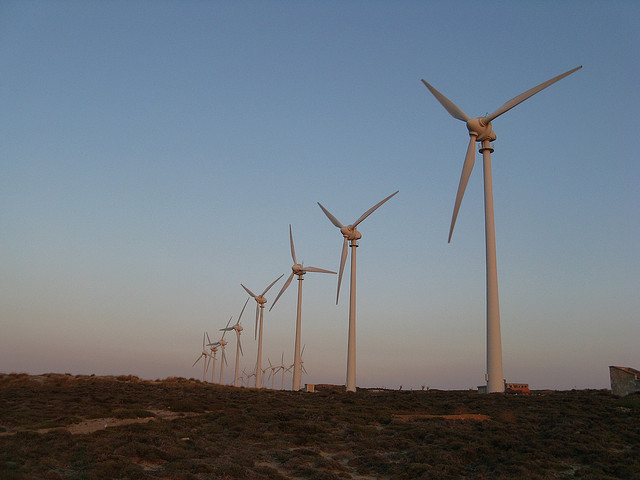
Despite its vast solar and wind energy potential, Turkey’s renewable resources have only been developed in small pockets of the country, such as the windy Aegean island of Bozcaada (pictured above).

With European countries having already tapped most of their low-hanging renewable energy development opportunities, Turkey is perfectly poised to become the new renewable energy dynamo in the region, according to an analysis published yesterday in the Financial Times‘s beyondbrics blog.

The resources

Although Turkey ranks second in Europe with its massive solar and onshore wind potential, according to the article, those resources remain vastly underused.

Given Turkey’s high dependence on energy imports, the main reason behind its current account deficit, and Turkey’s rapidly growing energy demand, now is the perfect time for the country to expand its local energy production in a more local, sustainable direction.

Wind contributes just 1,800 MW to Turkey’s installed power generating capacity, which is expected to top 55,000 MW this year. Solar is even less utilized, with only 5 MW of installed PV systems generating power.

Hydropower has been the focus of Turkey’s renewable energy so far, with nearly one third of the country’s installed capacity from hydropower dams. But those dams are increasingly coming under fire for the environmental and human threats they pose, and most of the economically viable hydro resources have already been sold to developers.

The obstacles

What’s holding Turkey back from becoming the renewable energy behemoth it could be?

Complicated bureaucratic and administrative procedures account for some of the delay. The renewable sector is also dominated by holding companies that invest in renewable energy only to diversify, without any strategic interest in the sector. Licenses for renewable projects have been viewed by many Turkish firms as “a security that could be flipped for a profit”, according to the Financial Times article, and no proper analysis performed on them. Smaller companies tend to also lack the expertise or foreign partners necessary to fully develop the project licenses they win.

On a more specific level, solar is held back by the limited capacity accorded it by the central government. Licenses are required for any power-generating installation greater than 500 kW, but the 2013 solar license round will only include 600 MW worth of licenses.

The wind energy market in Turkey was stalled for several years by a chaotic auction in 2008 that sold licenses for overlapping projects, totaling more than 78,000 MW — well in excess of the economically feasible wind energy potential of 38,000 MW. This year, firms that won valid licenses are just beginning to develop them.

Slow progress, but progress nonetheless

The Turkish government has some ambitious goals for the next several years: 20,000 MW of installed wind capacity by 2023, reducing the current account deficit by 1 percent of GDP, and boosting research and development spending from 1 percent of GDP to 3 percent.

All of these are connected to a stronger renewable energy sector in Turkey. By making the licensing process more rigorous and streamlined, encouraging foreign investment and strategic partnerships, and raising the incentives for renewable developers, the government will guarantee a cleaner and more secure energy future for Turkey.

:: Financial Times

Read more about renewable energy in Turkey:

Turkish Cabinet Invokes Wartime Law To Seize Property For Hydro Projects
14,000 Turkish Homes To Be Powered By World’s Most Efficient 1.5-MW Wind Turbines
Wind Energy and Organic Farming Collide in Western Turkey

Image via tryangulation

Julia Harte
Julia Hartehttp://www.greenprophet.com
Julia spent her childhood summers in a remote research station in the Rocky Mountains of Colorado, helping her father with a 25-year-old experiment in which he simulated global warming over a patch of alpine meadow. When not measuring plant species diversity or carbon flux in the soil, she could be found scampering around the forests and finding snowbanks to slide down. Now she is a freelance journalist living in Istanbul, where her passion for the environment intersects with her interest in Turkish politics and grassroots culture. She also writes about Turkish climate and energy policy for Solve Climate News.

Read More

1 COMMENT

TRENDING

Wave wind energy for Nvidia’s next AI energy boom?

As AI factories consume unprecedented amounts of electricity, NVIDIA is looking beyond chips and data centers to the ocean. The company recently spotlighted Israel's Eco Wave Power and its wave energy projects in Jaffa and Los Angeles, highlighting how AI, digital twins and renewable energy can work together to meet future power demands. The collaboration reflects a growing realization that the future of artificial intelligence may depend as much on clean energy infrastructure as it does on computing power.

Collecting kinetic energy from roads; REPS turns traffic into a power plant

REPS announced a $23.6M equity financing round to scale...

AI data centers are triggering panic, instead of cleantech opportunities

AI may unintentionally become the economic engine that finally modernizes America’s aging grid. California is experiencing a massive AI data center boom, ranking 3rd in the U.S. with 227 operating centers and 54 more in development as of April 2026, according to Stanford.

Korean researchers create battery from greenhouse gases

Professor Ji-Soo Jang, in collaboration with Professor Taekwang Yoon of Ajou University and Professor Hansel Kim of Chungbuk National University, has developed a novel energy device that generates electricity during the process of capturing greenhouse gases.

EU startup aiming to generate energy on moon villages

Stepping up to democratize the moon is an EU-funded company, Deep Space Energy, which has just raised more than $1 million USD as a seed fund to help it create energy generators on the moon.

Yerukim Forms a New Green Economy Where the Money is Really Green

The Yerukim members who pick up the recyclables get to keep the monetary reward, the public earns "green" bills that can be used in shops, and business owners get to be associated with environmentalism.

Choosing Riyadh over Dubai? What Investors Should Know

Saudi Arabia is deploying capital at unmatched scale to catalyze tourism and advanced industry while rewiring its power-and-water backbone. The investable frontier is widening—especially in renewables, grid storage, water efficiency/desal retrofits, and hospitality operating platforms. Prudent investors will insist on phased delivery, enforceable KPIs (energy, water, biodiversity), and RHQ/zone compliance—while pricing political-economy and reputational risks alongside growth upside.

Sell your cooking oil for biodiesel money

Want to make money on old french fry oil? Sell it.

Qatar Alternative Energy Summit Pairs Investors And Innovators

Alternative energy investors and innovators can meet n' greet in Doha, Qatar March 16 and 17.

Here’s How To Implement The Four Pillars Of Employee Engagement

If you throw a party for your work team and they are vegans, don't make it a barbecue. Know the sustainability values of your team to boost moral and retain good people.

Locals From Rishon Fight IKEA

Big Box stores are a pretty new concept in Israel, and thank God that not every Israeli city wants them in their backyard. A word from someone who has see the beautiful farmland around her hometown Newmarket, Ontario stripped and converted into vulgar strip malls of big box shops: they have no place in a healthy and sustainable town or city.

The Jewish National Fund Meets An Inconvenient Truth

According to the JNF, it has transformed thousands of acres of barren land into green forests in Israel. They state that each person emits about 23 tons of carbon per year, estimating that each tree planted can absorb one ton of carbon in its lifetime. That's a whole lot of trees you'd need to be planting. Could so many fit in Israel?

How to quiet noise from construction in your office

Streets need to be resurfaced in New York but the humming and grinding noise is unsettling. Noise is environmental pollution. 

Popular Categories