Turkish Energy Analyst Says Biggest Emitters Avoided Durban Commitments

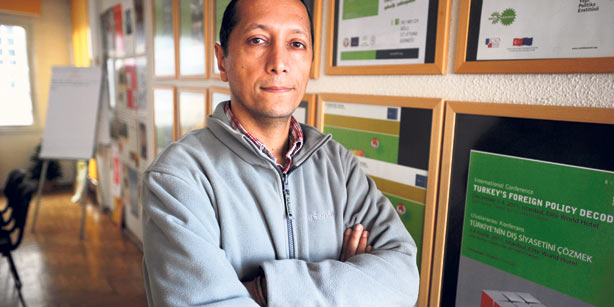
 Özgür Gürbüz, turkey energy analystThe countries that emit the most greenhouse gases only agreed to “vague, fragile” reduction targets at the recent climate change conference in Durban, according to Özgür Gürbüz, who was present at the conference.

For MENA countries, there are some bright spots in the outcome of the most recent United Nations Framework Convention on Climate Change (COP17) in Durban, South Africa. No legally binding greenhouse gas-emissions reduction target was set at the COP17, however. Instead, countries aimed at reducing their emissions by 25 to 40 percent from 1990 levels by 2020.

Prospects for real reductions: slim

But the world’s biggest polluters — the United States, Canada, Russia, and Japan, who together emit approximately one third of global emissions — will probably not adhere to this target without a legally binding protocol.

That’s the opinion of Özgür Gürbüz, a Turkish energy analyst, journalist, and consultant who has attended several climate change conferences, including COP17, who was recently interviewed in the Turkish daily Today’s Zaman.

Compared to the first commitment period of the Kyoto Protocol, which expires next year, says Gürbüz, the targeted 25-40% reduction from Durban is a wide, vague range, and gives countries too much time to reduce their emissions.

“An international, legally binding treaty… has to be finalized and realized by 2017, but preferably earlier,” he told the Zaman. “The current agreement is very fragile and could break down.”

All the technology needed to substantially reduce GHG emissions in developed countries already exists, according to Gürbüz, but political will and commercial interests are holding countries back from doing so.

“When it comes to oil, we are ready to talk about values and human rights, but when it comes to lives that are not attached to material benefits, there is nobody to speak out,” he pointed out.

Turkey’s strategy

Turkey is still included in the list of Annex I (developed) countries in the COP charter, but the “special circumstances” of its in-between stage of development, which exempted it from certain requirements in the Kyoto Protocol’s first commitment period.

Turkey’s emissions since 1990, however, have grown by 97 percent — one of the highest rates in the world. Per capita carbon-equivalent emissions are close to 5.2 tons, close to China’s and higher than the world average.

With very low hydrocarbon reserves of its own and plentiful renewable resources, Turkey’s energy future should be obvious, Gürbüz says.

Yet Turkey’s leaders seem to be fixated on following the same development path as the nations with the highest emissions of today.

“We are taught that higher electricity consumption per capita is a criterion of development. That is nonsense. Let’s keep the lights on all the time in our houses! I am sure it will double per capita consumption but the country will be worse off because of wasted energy.”

Instead, Turkey should focus on improving the energy efficiency of its vehicles, devices, and industrial facilities, adds Gürbüz. That’s the only path to true energy independence and energy security for this rapidly growing country.

:: Today’s Zaman 

Read more about what happened at Durban:
Durban Gives 6 Reasons For The Middle East To Celebrate
How Will Saudi-Driven Carbon Capture Work Under the Durban Climate Agreement? 
Saudi Acts As Oil Cheerleader At COP 17 Circus

Image via Today’s Zaman

Julia Harte
Julia Hartehttp://www.greenprophet.com
Julia spent her childhood summers in a remote research station in the Rocky Mountains of Colorado, helping her father with a 25-year-old experiment in which he simulated global warming over a patch of alpine meadow. When not measuring plant species diversity or carbon flux in the soil, she could be found scampering around the forests and finding snowbanks to slide down. Now she is a freelance journalist living in Istanbul, where her passion for the environment intersects with her interest in Turkish politics and grassroots culture. She also writes about Turkish climate and energy policy for Solve Climate News.

Read More

1 COMMENT

TRENDING

Dan Zaslavsky’s energy tower dream is rising again in Iran and China

The Energy Tower idea never made the leap from drawings and engineering studies to full-scale construction. But nearly two decades after most people stopped talking about it, the concept is quietly evolving in two unexpected places: China and Iran. The concept let dreamers dream and doers do - figuring out more pleasing designs and engineering.

Weston Higginbotham found dead in a Kyoto forest: is climate anxiety part of the story?

In some ways, Weston has become a symbol of a generation wrestling with environmental and technological anxiety. Friends and family described him as deeply concerned about environmental issues. Reports also noted that he questioned the growing role of artificial intelligence in daily life, even reportedly disagreeing with his mother about her use of AI.

Billie Eilish’s Mom Takes the Stage at Hollywood Climate Summit — But Does Hollywood Still Care About Climate Change?

Hollywood once promised to help save the planet. Leonardo DiCaprio warned of climate catastrophe from awards stages. Celebrities flew to climate conferences. Studios pledged greener productions. Streaming platforms rushed to commission environmental documentaries. But in 2026, with the aftermath of wildfires, heatwaves and floods becoming routine, a question lingers: Does Hollywood still care about climate change?

Can Scientists Predict Coral Bleaching Before It Happens?

Now researchers at the Woods Hole Oceanographic Institution (WHOI) in the US say they have developed a way to predict coral bleaching five to six months before it occurs, potentially giving reef managers enough time to intervene and save vulnerable corals.

10 Amazing Facts About the Sidr Tree

Most people in the West have never heard of the Sidr tree. That's strange when you think about it. This tough, thorny desert tree has fed people, bees, birds, and camels for thousands of years. It appears in Islamic tradition. Its honey sells for astonishing prices.

Locals From Rishon Fight IKEA

Big Box stores are a pretty new concept in Israel, and thank God that not every Israeli city wants them in their backyard. A word from someone who has see the beautiful farmland around her hometown Newmarket, Ontario stripped and converted into vulgar strip malls of big box shops: they have no place in a healthy and sustainable town or city.

The Jewish National Fund Meets An Inconvenient Truth

According to the JNF, it has transformed thousands of acres of barren land into green forests in Israel. They state that each person emits about 23 tons of carbon per year, estimating that each tree planted can absorb one ton of carbon in its lifetime. That's a whole lot of trees you'd need to be planting. Could so many fit in Israel?

How to quiet noise from construction in your office

Streets need to be resurfaced in New York but the humming and grinding noise is unsettling. Noise is environmental pollution. 

EarthX and a blueprint for sustainable investing

Trammell S. Crow, a Dallas-based businessman and father of four, is focusing his efforts on impact investing, and media that focuses on saving the planet through EarthX.

Mining Afghanistan’s Mineral Discoveries Similar to Avatar

Now that American forces in Afghanistan are commemorating the longest period of any war that America has been involved in, including the 1965-73 Vietnam War, the recent discoveries of large and extremely valuable mineral and metal deposits may finally bring to light a reason to continue the presence of US fighting forces in this war torn and backward country.

From Pilot Plant to Global Stage: How Aduro Clean Technologies’ 2026 Expansion Signals a Turning Point for Chemical Recycling Investors Like Yazan Al Homsi

The company's Next Generation Process (NGP) Pilot Plant in London, Ontario, has officially moved into initial operating campaigns, generating the kind of structured, repeatable data that separates laboratory promise from commercial viability.

Nobul’s Regan McGee on Shareholder Value: “Complacency Is the Silent Killer” 

Why the governance framework designed to protect shareholders so...

Should You Invest in the Private Market?

startustartup Unlike public stock exchanges, which offer daily trading, strict...

Popular Categories