
Sustainable Architecture Saudi Style: King Abdullah Financial District

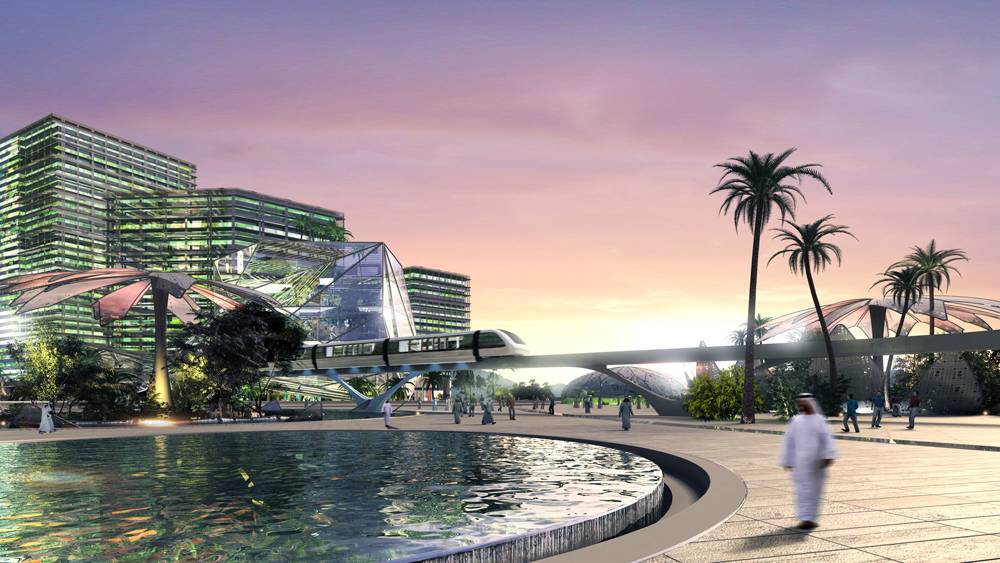
sustainable architecture, green design, sustainable design, eco design, green architecture, Saudi, Riyadh, King Abdullah Financial DistrictAlthough the massive 3,300,000 sq m King Abdullah Financial District in Riyadh will feature a variety of “green” initiatives, this is definitely sustainable architecture Saudi style.

We applaud any individual or organization that seeks to green up their portfolio, and Saudi Arabia is no exception. Really, it’s difficult to blame the Kingdom’s residents for striking it rich with oil, expanding their quality of life, and not wanting to let it go even as the world gets hotter and ecosystems collapse. But sustainable Saudi architecture exists in a class of its own.

We have on one end simple earth architecture such as Hassan Fathy’s famous works in Egypt, which requires very little imported materials and have virtually no environmental impact, and then we have the King Abdullah Financial District (KAFD) designed by Henning Larsen Architects (HLA). Even though all kinds of alternative energy and passive design techniques have been incorporated into its design, this 3,300,000 sq m mixed use center is audacious, expensive, and about as glitzy as it gets.

sustainable architecture, green design, sustainable design, eco design, green architecture, Saudi, Riyadh, King Abdullah Financial DistrictHLA is a well-respected firm, and are particularly well-known for greening contemporary urban architecture, so the KAFD design is definitely worth celebrating. Although the renders depict buildings with stereotypical Arab fanfare, there are several features that make this district less obnoxious than other developments in the region.

Water features will bring temperatures down by up to 8 degrees Celsius and shading to will mitigate excess solar gain such that very little mechanical cooling will have to be used.

sustainable architecture, green design, sustainable design, eco design, green architecture, Saudi, Riyadh, King Abdullah Financial DistrictThe various retail, financial, residential, and cultural facilities will have green roofs that provide insulation and smart lighting solutions that will further ensure that energy use is kept to a minimum.

KAFD will be a pedestrian-friendly center in Riyadh with a monorail and solar-powered skywalk bridges. If the Saudis can be convinced to leave their cars at home, these will keep vehicular pollution down.

Facades will include building integrated solar cells and the cladding material will be sourced locally — according to World Architecture News — so that the project’s carbon footprint will be less onerous.

sustainable architecture, green design, sustainable design, eco design, green architecture, Saudi, Riyadh, King Abdullah Financial DistrictAll in all, energy consumption (when compared to similar developments in the country) will be halved – an impressive feat.

Nonetheless, a major driver of climate change and resource depletion is this sense of entitlement – the notion that the few should be allowed to use up more than their fair share of natural resources while the rest of the world scrambles for the scraps. Eventually, even Saudi will have to scale back to something much more modest.

:: WAN
Tafline Laylin
Tafline Laylinhttp://www.greenprophet.com
As a tour leader who led “eco-friendly” camping trips throughout North America, Tafline soon realized that she was instead leaving behind a trail of gas fumes, plastic bottles and Pringles. In fact, wherever she traveled – whether it was Viet Nam or South Africa or England – it became clear how inefficiently the mandate to re-think our consumer culture is reaching the general public. Born in Iran, raised in South Africa and the United States, she currently splits her time between Africa and the Middle East. Tafline can be reached at tafline (at) greenprophet (dot) com.

Read More

3 COMMENTS
  1. Saudi Kingdom should be appreciated in their effort to keep Saudi Arabia with more Green buidings and ecofriendly designs.Surely Saudis can help the world to overcome the Carbon Dioxide emission syndroms and the threat to the planet due to Global warming.Saudi should take lead in helping the developing countries to take initiaitves in Carbon offset programs and must lead the world.

    S.Abdul Rahim

TRENDING

Understanding Food Production: Karl Studer on the Urban-Rural Knowledge Gap

Karl Studer occupies an unusual position in American business. As President of Quanta Services, he oversees electrical infrastructure operations across the United States, Canada, and Australia, managing thousands of employees and multibillion-dollar projects.

Wave wind energy for Nvidia’s next AI energy boom?

As AI factories consume unprecedented amounts of electricity, NVIDIA is looking beyond chips and data centers to the ocean. The company recently spotlighted Israel's Eco Wave Power and its wave energy projects in Jaffa and Los Angeles, highlighting how AI, digital twins and renewable energy can work together to meet future power demands. The collaboration reflects a growing realization that the future of artificial intelligence may depend as much on clean energy infrastructure as it does on computing power.

Weston Higginbotham found dead in a Kyoto forest: is climate anxiety part of the story?

In some ways, Weston has become a symbol of a generation wrestling with environmental and technological anxiety. Friends and family described him as deeply concerned about environmental issues. Reports also noted that he questioned the growing role of artificial intelligence in daily life, even reportedly disagreeing with his mother about her use of AI.

Billie Eilish’s Mom Takes the Stage at Hollywood Climate Summit — But Does Hollywood Still Care About Climate Change?

Hollywood once promised to help save the planet. Leonardo DiCaprio warned of climate catastrophe from awards stages. Celebrities flew to climate conferences. Studios pledged greener productions. Streaming platforms rushed to commission environmental documentaries. But in 2026, with the aftermath of wildfires, heatwaves and floods becoming routine, a question lingers: Does Hollywood still care about climate change?

Can Scientists Predict Coral Bleaching Before It Happens?

Now researchers at the Woods Hole Oceanographic Institution (WHOI) in the US say they have developed a way to predict coral bleaching five to six months before it occurs, potentially giving reef managers enough time to intervene and save vulnerable corals.

Yerukim Forms a New Green Economy Where the Money is Really Green

The Yerukim members who pick up the recyclables get to keep the monetary reward, the public earns "green" bills that can be used in shops, and business owners get to be associated with environmentalism.

Choosing Riyadh over Dubai? What Investors Should Know

Saudi Arabia is deploying capital at unmatched scale to catalyze tourism and advanced industry while rewiring its power-and-water backbone. The investable frontier is widening—especially in renewables, grid storage, water efficiency/desal retrofits, and hospitality operating platforms. Prudent investors will insist on phased delivery, enforceable KPIs (energy, water, biodiversity), and RHQ/zone compliance—while pricing political-economy and reputational risks alongside growth upside.

Sell your cooking oil for biodiesel money

Want to make money on old french fry oil? Sell it.

Qatar Alternative Energy Summit Pairs Investors And Innovators

Alternative energy investors and innovators can meet n' greet in Doha, Qatar March 16 and 17.

Here’s How To Implement The Four Pillars Of Employee Engagement

If you throw a party for your work team and they are vegans, don't make it a barbecue. Know the sustainability values of your team to boost moral and retain good people.

Locals From Rishon Fight IKEA

Big Box stores are a pretty new concept in Israel, and thank God that not every Israeli city wants them in their backyard. A word from someone who has see the beautiful farmland around her hometown Newmarket, Ontario stripped and converted into vulgar strip malls of big box shops: they have no place in a healthy and sustainable town or city.

The Jewish National Fund Meets An Inconvenient Truth

According to the JNF, it has transformed thousands of acres of barren land into green forests in Israel. They state that each person emits about 23 tons of carbon per year, estimating that each tree planted can absorb one ton of carbon in its lifetime. That's a whole lot of trees you'd need to be planting. Could so many fit in Israel?

How to quiet noise from construction in your office

Streets need to be resurfaced in New York but the humming and grinding noise is unsettling. Noise is environmental pollution. 

Popular Categories