Earth. Energy. Everything next.

Israel Chemicals Will Pay for Southern Dead Sea Damage

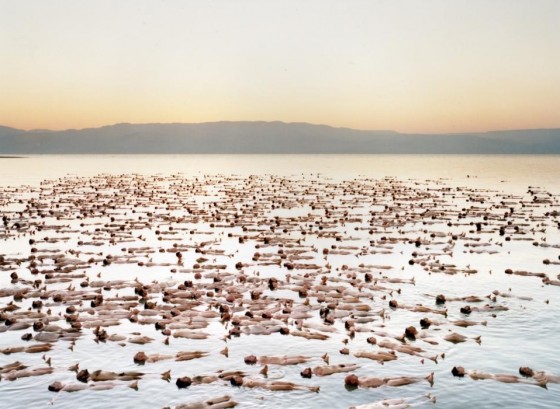
naked dead sea, spencer tunick israel
Dead Sea bathers, naked or clothed, may now continue to enjoy floating there.

Israel Chemicals (ICL), one of the major mineral mining companies at the Dead Sea, and whose activities appears to be partially responsible for continuing rising waters in the salt lake’s southern portion are willing to pay for most of the costs of dredging built up deposits of salt from the lakes southern portion. This development reported in The Marker, will prevent rising waters from flooding many of the hotels located in this area.

The operation, which could take as long as 18-20 years to complete, was estimated originally by ICL to cost around NIS 3.8 billion or more than one billion US Dollars as per present currency rates. According to this estimate, the dredging operations will take until 2030 to complete; and of this sum, ICL is willing to pay up to NIS 3 billion to complete.

Attention to the rising waters in the lake’s southern portion, which is not really the Dead Sea but a section of evaporation pools for extracting phosphates and other minerals, began to get media attention in 2010. At that time, it was reported that the building up salt accumulation, which was causing water levels to rise, was building up at the rate of some 20 cm per year.

In addition to the lucrative mineral mining industries, area tourism is a big money maker for the State of Israel and Jordan. It’s a provider of tourism related jobs for many people living in nearby cities like Arad and Beersheva.

Moving the hotels and health spas to higher ground, or dismantling them and rebuilding elsewhere is estimated to cost more than the cost of the dredging operations, including disruption of tourism to the area, while the hotel rebuilding or relocation is being carried out.

The plight of the Dead Sea, especially its tourism industries, was brought recently to international media attention when American nude art photographer Spencer Tunick staged an event of 1000 naked people, most of them Israelis, floating on the waters of the Dead Sea.

Israel Chemical’s offer to pay toward the dredging work is at least enough to start these operations, which should commence immediately if there is to be any reasonable chance to save the Dead Sea’s tourism infrastructure.

::Naked Dead Sea

More about the Dead Sea:

1000 Naked Israelis Strip to Save the Dead Sea

As Israel Chemicals Profits Soar, the Dead Sea Suffers

Time Running Out to Save Dead Sea Hotels

Irony at The Dead Sea: Too Much Water in Southern Portion

Maurice Picow
Maurice Picowhttps://www.greenprophet.com/
Maurice Picow grew up in Oklahoma City, U.S.A., where he received a B.S. Degree in Business Administration. Following graduation, Maurice embarked on a career as a real estate broker before making the decision to move to Israel. After arriving in Israel, he came involved in the insurance agency business and later in the moving and international relocation fields. Maurice became interested in writing news and commentary articles in the late 1990’s, and now writes feature articles for the The Jerusalem Post as well as being a regular contributor to Green Prophet. He has also written a non-fiction study on Islam, a two volume adventure novel, and is completing a romance novel about a forbidden love affair. Writing topics of particular interest for Green Prophet are those dealing with global warming and climate change, as well as clean technology - particularly electric cars.

Read More

TRENDING

Cities promise net zero. A new UN-aligned checklist asks them to prove it

At COP31 in Türkiye, a new climate checklist challenges cities to prove their net-zero promises with measurable action, transparent reporting and real emissions cuts.

Petra by Night returns as Jordan tries brings tourists back to Wadi Rum

The Nabataeans understood that prosperity in the desert depended on respecting environmental limits. Two thousand years later, Petra's greatest attraction may still be the wisdom of the people who learned to live within them.

The pulsing planet and the earthquakes that shape our world

One of the most persistent questions in seismology concerns whether scientists will eventually be able to predict major earthquakes before they happen.

Amman’s traffic crisis is about more than cars. It’s about how we think

I believe Jordan needs a cultural transformation alongside its infrastructure investments. We must begin by redefining social prestige. Why should ownership of an expensive car be considered a greater achievement than making an environmentally responsible transportation choice? Why should travelling by bus carry a social stigma?

Why water-starved Amman keeps flooding and how underground rain tanks could help

Jordan's capital faces a troubling paradox: chronic water shortages and destructive winter floods. Hydrogeological expert Dr. Osama MN Gazal explains how underground rainwater tanks and green infrastructure could help Amman capture precious rainfall, reduce flooding and build a more water-secure future.

Why Bronwyn Finnegan Chose the Nonprofit Sector Over Politics or Corporate Life

Bronwyn Finnegan could have pursued a career in politics or corporate leadership. Instead, she chose the nonprofit sector, where she focuses on financial sustainability, governance and helping mission-driven organizations build the capacity to survive and grow.

Scientists make lead-free perovskite solar cells that can weather the elements

Scientists have developed a “raincoat” for lead-free tin perovskite solar cells, helping them withstand air, moisture and heat while maintaining high efficiency.

The Essential Guide To Sustainability in Project Management

Sustainability is an approach where businesses and individuals balance the environmental, social, and economic aspects of a project such that current and future stakeholders are not overburdened with the impacts of the project in future.

Yerukim Forms a New Green Economy Where the Money is Really Green

The Yerukim members who pick up the recyclables get to keep the monetary reward, the public earns "green" bills that can be used in shops, and business owners get to be associated with environmentalism.

Choosing Riyadh over Dubai? What Investors Should Know

Saudi Arabia is deploying capital at unmatched scale to catalyze tourism and advanced industry while rewiring its power-and-water backbone. The investable frontier is widening—especially in renewables, grid storage, water efficiency/desal retrofits, and hospitality operating platforms. Prudent investors will insist on phased delivery, enforceable KPIs (energy, water, biodiversity), and RHQ/zone compliance—while pricing political-economy and reputational risks alongside growth upside.

Sell your cooking oil for biodiesel money

Want to make money on old french fry oil? Sell it.

Qatar Alternative Energy Summit Pairs Investors And Innovators

Alternative energy investors and innovators can meet n' greet in Doha, Qatar March 16 and 17.

Here’s How To Implement The Four Pillars Of Employee Engagement

If you throw a party for your work team and they are vegans, don't make it a barbecue. Know the sustainability values of your team to boost moral and retain good people.

Popular Categories