Egypt’s Sekem biodynamic farm a Sustainability World Leader

sekem-organic-farm-middle-east-egypt-sustainability-wef
Egypt’s biodynamic farm called Sekem

SEKEM, an Egyptian organic farming community has been chosen as one of 16 ‘Sustainability Champions’ in the developing world which are tackling environmental and social problems

A recent report by the World Economic Forum has identified 16 successful companies from as far afield as Costa Rica and China which have shown great environmental awareness and tackled social problems. These ‘New Sustainability Champions’ include just one company from the Middle East and North Africa region- SEKEM.

Established by Dr. Ibrahim Abouleish in 1977, SEKEM is a truly unique enterprise which integrates social, economic and environmental development in an organic farming community just outside, Cairo. Today the company is run by Dr. Abouleish’s son Helmy and what started as a 70-hectre organic farm is now a several thousand hectres farming community which champions sustainable agriculture.

After years of working to improve the soil quality of reclaimed land from the desert on the southeastern edge of the Nile Delta, SEKEM harvested their first crop of organic fruits, vegetables and spices in 1983. They now produce organic fruit, vegetables, cotton, cereals, herbs and herbal medicines which are all grown without pesticides or fertilizers.

The main advantages of organic agriculture in these reclaimed desert lands is that it helps to improve the soil, it optimises water use and also supports more workers than conventional farming. SEKEM, which means ‘vitality from the sun’ in Egyptian hieroglyphics, currently employs around 2,000 people.

SEKEM farms use organic waste fertilizers which are able to hold more water than chemically fertilized land- something which is ideal for the water scarce country. Working with Egypt’s Ministry of Agriculture, SEKEM also demonstrated the possibility of successfully growing organic cotton by using biological pheromones to control cotton insects. By 2000, the use of pesticides on Egyptian cotton fields had fallen by over 90% and 80% of Egyptian cotton is now grown without synthetic insecticides.

Indeed, Helmy Abouleish has said that a 100% conversion of global agricultural land into organic agriculture would transform the agricultural sector from a significant contributor to climate change into a net carbon sink.

As well as various subsidiaries involved in the agricultural field, such as Conytex which produces children’s garments from organic cotton, one of SEKEM’s initiatives is the Egyptian Society for Cultural Development. Founded in 1984, the society has helped build a kindergarten, the SEKEM primary and secondary school with 300 pupils, a vocational training centre, an institute for Adult Education, an education programme for disabled children as well as a SEKEM medical centre which treats 30,000 people a year.

Workers all enjoy great working conditions, a fair wage and run remarkably well-managed farms and beautiful buildings surrounded with the fragrances of chamomile and mint. In 2003, the eco-friendly business won the prestigious Right Livelihood Award – known as the ‘Alternative Nobel Prize’ – which honours those working on the most urgent challenges facing the world.

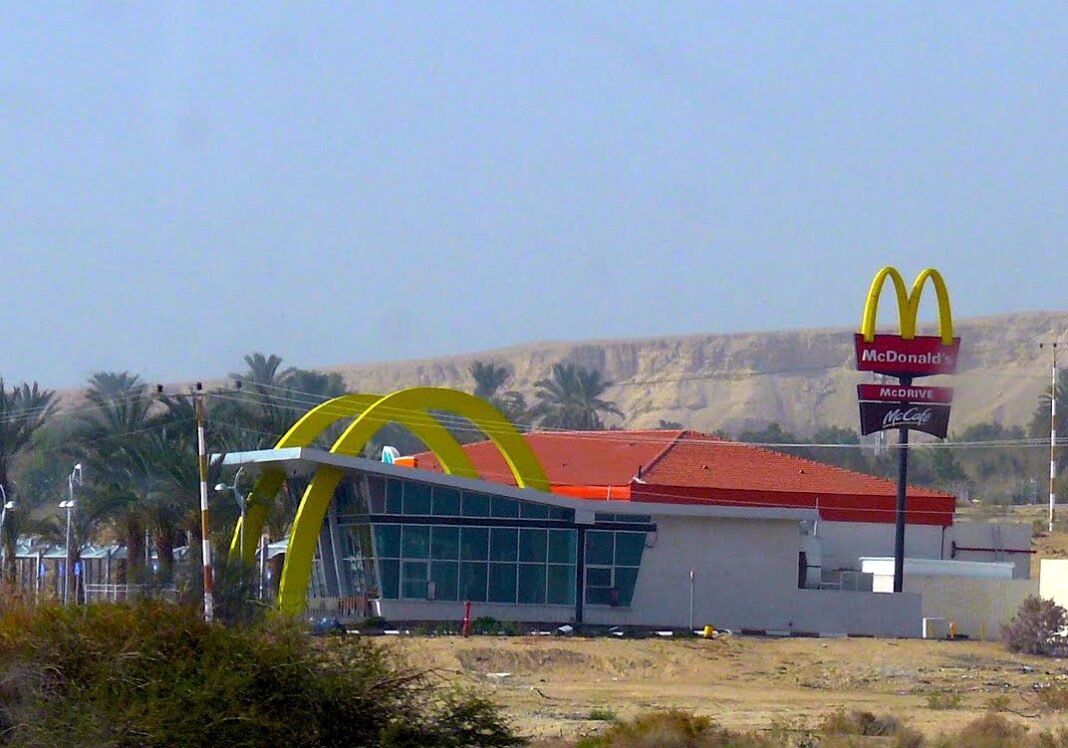
: Image via Bijan/flickr

For more on organic farming in the Middle East see:

Nature Reserve In Jordan Growing Organic

Qatar To Invest In 1,400 New Local Farms
Organic Farming On The Rise In Emirates

Under The Nile’s Organic Cotton Clothes & Toys For Babies

Arwa Aburawa
Arwa Aburawahttp://www.greenprophet.com
Arwa is a Muslim freelance writer who is interested in everything climate change related and how Islam can inspire more people to care for their planet and take active steps to save it while we can. She is endlessly suspicious of all politicians and their ceaseless meetings, especially as they make normal people believe that they are not part of the solution when they are the ONLY solution. Her Indian auntie is her model eco-warrier, and when Arwa is not busy helping out in the neighborhood alleyway garden, swap shopping or attempting fusion vegetarian dishes- with mixed success, she’d like to add- she can be found sipping on foraged nettle tea.

Read More

1 COMMENT
  1. The picture appears to have been taken at the base of Mt. Sinai (Jebel Musa) which I had the privilege of climbing back in 1974. It was a very memorable experience to say the least; and I still have color slides of photos I took there, including one of the sunrise from the summit.

    Hard to believe this occurred more than 35 years ago!

TRENDING

HelloFresh’s pride prepping ad raises a bigger question: we are we still outsourcing dinner?

The backlash against HelloFresh's Pride Month marketing campaign has sparked a wider conversation about food, labor, sustainability, and whether consumers should reconnect with local farmers, butchers, and home gardens instead of relying on subscription meal kits.

A visit to Amirim, Israel’s first all-vegetarian village in the Galilee

Just 15 kilometers from Tzfat there is a moshav that was founded in the late 50s that was ideologically influenced by organic, vegetarian and vegan principles. My hostess at Ohn-Bar, the tzimmer where I stayed, explained that the people of Amirim were among the pioneers of Israel’s strong vegetarian movement.

Farmer Focus Sold as Humane and Halal. PETA Says the Reality Is Far Less Ethical

According to documents obtained by PETA, and sent to Green Prophet, Farmer Focus accumulated 40 violations from the Harrisonburg-Rockingham Regional Sewer Authority between January and March 2026 for overly acidic wastewater and excessive pollutant levels.

Park Slope food coop boycotts “Gay Tahini” already boycotted by Muslims in Israel

The tragedy is that this kind of activism rarely builds peace. It builds tribes instead of humanity. It rewards outrage over dialogue. Once an enlightenment group starts deciding which nationalities are acceptable to boycott publicly, history suggests the line rarely stops where activists think it will.

Monitoring farmers’ tillage patterns from space

Tillage is one of the clearest signals of how a farm treats its soil. Intensive plowing can degrade structure, release carbon, and increase erosion. Conservation practices—no-till, cover cropping, minimal disturbance—do the opposite. They build soil, retain water, and support biodiversity. But until now, measuring these practices at scale has been slow, expensive, and often self-reported.

Yerukim Forms a New Green Economy Where the Money is Really Green

The Yerukim members who pick up the recyclables get to keep the monetary reward, the public earns "green" bills that can be used in shops, and business owners get to be associated with environmentalism.

Choosing Riyadh over Dubai? What Investors Should Know

Saudi Arabia is deploying capital at unmatched scale to catalyze tourism and advanced industry while rewiring its power-and-water backbone. The investable frontier is widening—especially in renewables, grid storage, water efficiency/desal retrofits, and hospitality operating platforms. Prudent investors will insist on phased delivery, enforceable KPIs (energy, water, biodiversity), and RHQ/zone compliance—while pricing political-economy and reputational risks alongside growth upside.

Sell your cooking oil for biodiesel money

Want to make money on old french fry oil? Sell it.

Qatar Alternative Energy Summit Pairs Investors And Innovators

Alternative energy investors and innovators can meet n' greet in Doha, Qatar March 16 and 17.

Here’s How To Implement The Four Pillars Of Employee Engagement

If you throw a party for your work team and they are vegans, don't make it a barbecue. Know the sustainability values of your team to boost moral and retain good people.

Locals From Rishon Fight IKEA

Big Box stores are a pretty new concept in Israel, and thank God that not every Israeli city wants them in their backyard. A word from someone who has see the beautiful farmland around her hometown Newmarket, Ontario stripped and converted into vulgar strip malls of big box shops: they have no place in a healthy and sustainable town or city.

The Jewish National Fund Meets An Inconvenient Truth

According to the JNF, it has transformed thousands of acres of barren land into green forests in Israel. They state that each person emits about 23 tons of carbon per year, estimating that each tree planted can absorb one ton of carbon in its lifetime. That's a whole lot of trees you'd need to be planting. Could so many fit in Israel?

How to quiet noise from construction in your office

Streets need to be resurfaced in New York but the humming and grinding noise is unsettling. Noise is environmental pollution. 

Popular Categories