Monitoring farmers’ tillage patterns from space

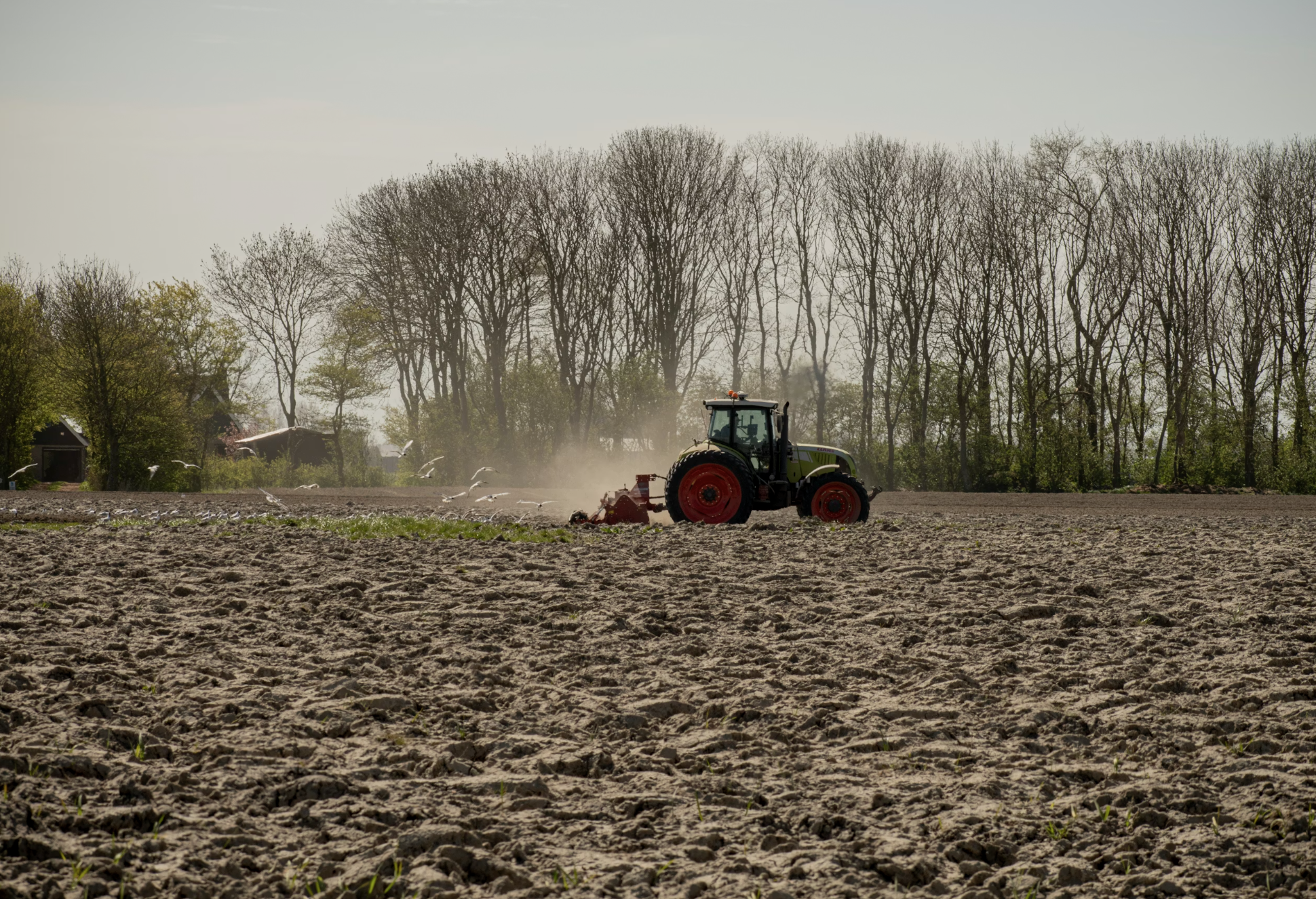
Tillage is one of the clearest signals of how a farm treats its soil. Intensive plowing can degrade structure, release carbon, and increase erosion. Conservation practices—no-till, cover cropping, minimal disturbance—do the opposite. They build soil, retain water, and support biodiversity. But until now, measuring these practices at scale has been slow, expensive, and often self-reported.

Conservation tillage practices, such as no-till and reduced till, are critical for sustainable agriculture, and they are gradually becoming popular with farmers across the Midwest. Monitoring tillage usage can provide insights into soil health, water levels, and nutrient loss, as well as guide management and policy decisions.

A University of Illinois Urbana-Champaign research team has developed a dynamic framework that uses satellite imagery and machine learning to detect tillage practices over large areas and long time periods. The team discusses their methodology and findings in a new paper.

Xiaocui Wu
Xiaocui Wu

“Conservation tillage helps reduce soil erosion, and it affects soil nutrients and moisture retention. Mapping tillage practices across large areas is also important to quantify soil carbon change. But current data are mainly obtained from farmer surveys, which lack timely and detailed spatial information,” said lead author Xiaocui Wu, a research scientist affiliated with the Agroecosystem Sustainability Center.

Other studies have applied remote sensing with hyperspectral or multispectral imagery to monitor tillage practices by estimating crop residue. But these approaches are typically limited to smaller regions, and the images are sensitive to soil and weather variations, which can lead to inaccuracies.

“We found that satellite signals could vary across regions, as they are affected by soil type, moisture levels, and weather variables. The model needs to account for those elements,” Wu said.

To address these challenges, the researchers developed a new framework that combines crop residue indices from remote sensing data with environmental factors and machine learning to create a dynamic model. They used the approach to estimate tillage percentage across the U.S. Midwest from 2000 to 2022.

“It is a novel solution as one of the first studies to have this level of detailed, long-term tillage information. We have filled a major data gap and scientific gap for this work,” said Kaiyu Guan, the principal investigator of the study, the founding director of the Agroecosystem Sustainability Center and ACES Levenick Professor.  “This is especially valuable for policymakers for conservation planning and policy evaluation.”

Overall, the researchers found that conservation tillage increased gradually across the Midwest for both corn and soybean from 2000 to 2022. The maps also revealed clear differences by crop and region: soybean fields generally showed higher no-till adoption, while corn fields relied more on reduced-till practices, and adoption trends varied substantially across the northern and eastern Midwest.

No-till adoption is more common in drier regions such as the Great Plains, where leaving crop residues on the soil surface helps conserve soil moisture. It is also more prevalent in warmer regions, where slower soil warming under residue cover does not strongly constrain planting, the researchers found.

“Understanding how farmers manage soil is essential for evaluating agriculture’s impacts on soil health, water quality, and long-term resilience,” Guan said. “These insights from our study can help agencies and policy makers refine programs and policies for greater effectiveness in the future.”

Tillage is one of the clearest signals of how a farm treats its soil. Intensive plowing can degrade structure, release carbon, and increase erosion. Conservation practices—no-till, cover cropping, minimal disturbance—do the opposite. They build soil, retain water, and support biodiversity. But until now, measuring these practices at scale has been slow, expensive, and often self-reported.

The findings are also important for researchers, who implement tillage practice effects in their modeling of soil, water, nutrients, and environmental impacts.

Bhok Thompson
Bhok Thompsonhttp://www.greenprophet.com
Bhok Thompson is an “eco-tinkerer” who thrives at the intersection of sustainability, business, and cutting-edge technology. With a background in mechanical engineering and a deep fascination with renewable energy, Bhok has dedicated his career to developing innovative solutions that bridge environmental consciousness with profitability. A frequent contributor to Green Prophet, Bhok writes about futuristic green tech, urban sustainability, and the latest trends in eco-friendly startups. His passion for engineering meets his love for business as he mentors young entrepreneurs looking to create scalable, impact-driven companies. Beyond his work, Bhok is an avid collector of vintage mechanical watches, believing they represent an era of precision and craftsmanship that modern technology often overlooks. Reach out: [email protected]

Read More

TRENDING

A visit to Amirim, Israel’s first all-vegetarian village in the Galilee

Just 15 kilometers from Tzfat there is a moshav that was founded in the late 50s that was ideologically influenced by organic, vegetarian and vegan principles. My hostess at Ohn-Bar, the tzimmer where I stayed, explained that the people of Amirim were among the pioneers of Israel’s strong vegetarian movement.

Tony Cho’s model for regenerative cities

Tony Cho is a regenerative developer and community builder focused on designing cities as living ecosystems that support human connection and ecological balance. A key figure in Miami’s urban transformation, he helped shape the Wynwood Arts District and founded the Magic City Innovation District. Influenced by an unconventional upbringing that included time in an ashram, Cho brings a spiritual lens to real estate, blending culture, community, and capital into what he calls regenerative placemaking.

Can biochar reduce ‘Forever Chemicals’ in food if it’s used in farms?

Biochar is produced by heating organic material in a low-oxygen environment so it does not burn. This process, known as pyrolysis, transforms plant matter into a stable, carbon-rich material.

Inflatable concrete homes: a California and Ontario case study

Across Ontario and California, builders are rethinking concrete housing through inflatable-shell design—an approach that replaces wooden formwork with air and innovation. A 1,000-square-foot low-carbon concrete shell, insulated with hempcrete, can be erected in a day and cost far less than conventional construction. Over time, the savings in energy, materials, and mortgage costs make this model a realistic response to rising living expenses and climate stress. With low-carbon cement, hempcrete walls, and renewable energy, inflatable concrete homes show how even the world’s most carbon-heavy material can become part of a sustainable future—if built smartly, and within local building codes.

Lizard tail stew, dhub mansaf, is a favored folk dish in Saudi Arabia

By exploring forgotten folk dishes like lizard stew, Green Prophet continues to connect the dots between culture, ecology, and the future of sustainable living in the Middle East.

Yerukim Forms a New Green Economy Where the Money is Really Green

The Yerukim members who pick up the recyclables get to keep the monetary reward, the public earns "green" bills that can be used in shops, and business owners get to be associated with environmentalism.

Choosing Riyadh over Dubai? What Investors Should Know

Saudi Arabia is deploying capital at unmatched scale to catalyze tourism and advanced industry while rewiring its power-and-water backbone. The investable frontier is widening—especially in renewables, grid storage, water efficiency/desal retrofits, and hospitality operating platforms. Prudent investors will insist on phased delivery, enforceable KPIs (energy, water, biodiversity), and RHQ/zone compliance—while pricing political-economy and reputational risks alongside growth upside.

Sell your cooking oil for biodiesel money

Want to make money on old french fry oil? Sell it.

Qatar Alternative Energy Summit Pairs Investors And Innovators

Alternative energy investors and innovators can meet n' greet in Doha, Qatar March 16 and 17.

Here’s How To Implement The Four Pillars Of Employee Engagement

If you throw a party for your work team and they are vegans, don't make it a barbecue. Know the sustainability values of your team to boost moral and retain good people.

Locals From Rishon Fight IKEA

Big Box stores are a pretty new concept in Israel, and thank God that not every Israeli city wants them in their backyard. A word from someone who has see the beautiful farmland around her hometown Newmarket, Ontario stripped and converted into vulgar strip malls of big box shops: they have no place in a healthy and sustainable town or city.

The Jewish National Fund Meets An Inconvenient Truth

According to the JNF, it has transformed thousands of acres of barren land into green forests in Israel. They state that each person emits about 23 tons of carbon per year, estimating that each tree planted can absorb one ton of carbon in its lifetime. That's a whole lot of trees you'd need to be planting. Could so many fit in Israel?

How to quiet noise from construction in your office

Streets need to be resurfaced in New York but the humming and grinding noise is unsettling. Noise is environmental pollution. 

Popular Categories