

 The international aid and development organization Oxfam recently revealed some alarming facts and future predictions on world hunger, warning that the world faces a real crisis in agricultural production and nutrition, with climate change exacerbating the crisis. The Middle East is cited as a “taste of what may be to come” as rising food costs contribute to a growing dependence on imports, widening social inequalities, food deprivation and social unrest.
Other observers are echoing the concern that food scarcity is becoming the new norm. Already in 2011, the UN Food Price Index has surpassed its previous all time global high, as of March climbing for eight consecutive months.
Today’s price hikes are driven by several factors, including what Oxfam refers to as a “broken agricultural system” driven by a minority of investors, whose primary purpose to deliver profit, a rapidly expanding population, temperature increases, and irrigation wells running dry.
Last month’s deadly tornadoes in the US, largest Icelandic eruption in 100 years, droughts and warming temperatures in wheat growing areas in parts of China, US and Western Europe add further evidence to the IPCC’s predictions that the number of natural disastrous are on the increase.
In the Middle East, rising temperatures and over pumping for irrigation has resulted in a situation where aquifers are depleting and can no longer be replenished.
Saudi Arabia will soon import all their grains while grain production is already declining in Syria and Iraq. The Arab Middle East is now officially the first geographic region where grain production has peaked and started declining because of water shortages, even as population grows.
As reported on Green Prophet in the past, the link between food insecurity and the current political situation in the region is not coincidental – Tunisia, which has the highest per capita wheat consumption in the world, Egypt, the world’s highest wheat importer, and Libya, a country that imports ninety percent of its grains, have all felt the effects of rising food prices even before the Russian wheat embargo last summer.
Although the price situation can be felt to different degrees everywhere in the region, of all the Middle Eastern countries facing the current food crisis, Yemen is the worst off. A United Nation’s World Food Programme (WFP) report states that seven million of Yemen’s 21 million people are “acutely hungry, making Yemen the 11th most insecure food country in the world.”
In Egypt, almost 20 million Egyptians live on two dollars a day or less, with an economy further hit by declining tourism and a quarter of a million Egyptians returning from Libya.
Other Arab countries like Syria and Tunisia are facing similar strains. Meanwhile, although GCC countries can afford to throw subsidies to buy allegiance, grab far away fertile land and buy foodstuffs on the international markets, in the longer term, these non-sustainable self preservation measures will not solve the problem.
The OXFAM report highlights a number of possible solutions for the international community to break the system, including rich country governments resisting their agricultural lobbies and investing in small farms of the developing world. The organization also calls for urgent and aggressive action to tackle global warming, and addressing waste – estimated at between 30 and 50 per cent of all food grown.
While calls for a global food system overhaul increase, more can be done at a regional and national level including curbing rising population through women education, changing diets, waste management by businesses and consumers, and helping farmers reduce pressure on land and water while efficiently and minimizing waste.
These measures may not seem urgent in these politically charged times, but they need to be prioritized to address the emerging food crisis of 2011 and avoid more failed states and social unrest.
More on food security
UAE Plans to Improve Food Security
Algeria to Boos its Food Security
Qatar Plans to Make Barren Land Arable to Increase Food Security
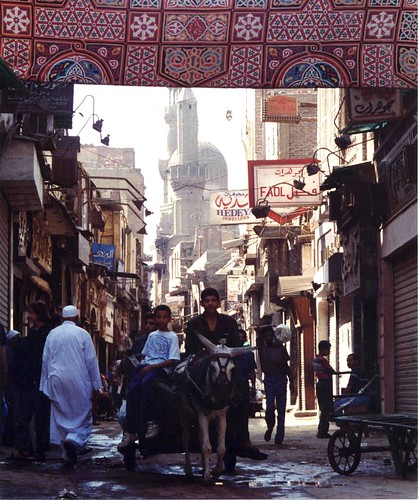
:: Image via flickr



Thank you for this insightful article. Food security is a major concern to be addressed the soonest. More articles on this subject are needed.
The New Internationalist in 2001 exposed Oxfam being complicit in the Rwandan Genocide – with an ex-employee spilling the beans. He accused Oxfam among other charges of following a philosophy where ends justify means.
This is only one example of Oxfam’s justice agenda being suspect. It took over a decade for Oxfam to condemn bio-fuels. This programme encouraged crop land conversion to biofuel production, reducing agricultural output of countries contributing to hunger and starvation. The question, if Oxfam is so concern over hunger, why it didn’t act earlier.
The Grow campaign continues the focus of converting cropland for (non-biofuel presumably) forestry. This has the same effect – cropland conversion for forestry reduces agricultural output, causing starvation and hunger. Why, according to Oxfam agriculture is responsible for 30% of all greenhouse gases and therefore this has to be slashed.
Through its growth programme, Oxfam will continue to have blood on its hands.
Read more: http://devconsultancygroup.blogspot.com/2011/06/oxfam-morphs-into-paul-ehrlich-clone.html
OXFAM morphs into a Paul Ehrlich clone: Claims world faces mass starvation
Mass starvation! This is exactly what Oxfam warns us in their new report, “Growing a Better Future in a Resource Constrained World”.
Oxfam’s future scenario of doom is a practical throwback to the 70s when Paul Ehrlich captured media headlines with his book Population Bomb where he warned of mass starvation deaths. Here’s an extract of the book:
“Population will inevitably and completely outstrip whatever small increases in food supplies we make….The death rate will increase until at least 100-200 million people per year will be starving to death during the next ten years.”
Has Oxfam caught the Ehrlich bug?
Read more: http://devconsultancygroup.blogspot.com/2011/06/oxfam-morphs-into-paul-ehrlich-clone.html