

Mohamed Kassas: Egypt’s Prophet Of Desertification

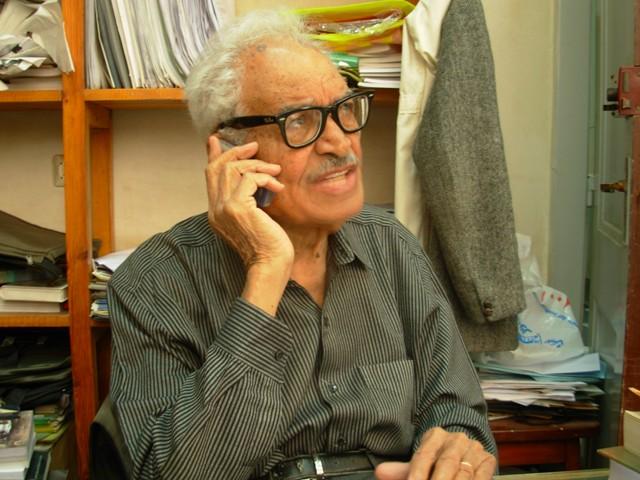
mohamed kassasProfessor Mohammed Kassas in his office at Cairo University, photographed by Louise Sarant

If Hassan Fathy is the Middle East’s father of sustainable architecture, then Mohamed Kassas is the prophet of desertification. The spry ninety year old Egyptian Professor of Botany told Almasry Alyoum that his love of nature sprouted in a fishing village along the shores of the Mediterranean, where people understood and accommodated nature’s cyclical temperament. He left to study in Cairo and then taught for a spell at the University of Khartoum in Sudan. It was there that Kassas discovered desertification before bringing it to the world’s attention.

Kassas told the paper that he studied the vegetation belts in Sudan, once clearly delineated by a wetter south or drier north during a three year teaching stint. Thirty years old between 1953 and 1956, the maps were clearly outdated.

The Botany Professor realized that the vegetation belts were receding to the south at a worrying rate of several kilometers a year – expanding the desert. This was not because the desert was spreading, but because productive lands were being improperly managed, overgrazed, poorly drained, and degraded.

Kassas took his concerns and subsequent studies to a 1969 international conference on arid lands held in Virginia. It was then that the term “desertification” first became ubiquitous. Until then, the problems that the Egyptian botanist revealed were not properly understood.

The following decade ushered in one of the worst periods of drought that increased the rate of desertification.

“Desertification became such a menace that the United Nations decided to hold the first world conference on desertification in Nairobi in 1977,” Kassas told Bikya Masr. Addressing desertification became an international priority.

“When you want to combat desertification, Kassas explains, you need to correct management systems on the land to make sure that the number of livestock heads is right, and respect the line when you should not cultivate more.”

Desertification is still a menace, perhaps more so three decades after Kassas first coined the term. But just how much our awareness has grown is largely thanks to a man who dared to lead an environmental impact assessment on President Gamal Abdel Nasser’s high dam project, and who was dispelled from the Shura Council for criticizing the Toshka project – a plan to divert water from Lake Nasser for agriculture.

Although his term as president of the International Union for the Conservation of Nature lasted only six years, from 1978 to 1984, his legacy in Egypt will be eternal.

:: Almasry Alyoum

More on environmental issues in Egypt:

Twelve Million Egyptians to be Affected by Climate Change

Egyptian Children Track Environmental Change With Disposable Cameras
Egypt Turns to Earthworms to Save its Environment

Tafline Laylin
Tafline Laylinhttp://www.greenprophet.com
As a tour leader who led “eco-friendly” camping trips throughout North America, Tafline soon realized that she was instead leaving behind a trail of gas fumes, plastic bottles and Pringles. In fact, wherever she traveled – whether it was Viet Nam or South Africa or England – it became clear how inefficiently the mandate to re-think our consumer culture is reaching the general public. Born in Iran, raised in South Africa and the United States, she currently splits her time between Africa and the Middle East. Tafline can be reached at tafline (at) greenprophet (dot) com.

Read More

1 COMMENT
  1. Yes, i think it may be understatement of the year to say desertification is still a menace. Hmm i think so, given the wisdom of using underground aquifiers to grow populations in the middle east.

    Heres an idea. Dig giant trenches along the coast, let the sea fill up groundwells, with the ground filtering out the bad stuff, then just pump it to people, or bring people to it. Cheaper and much more sustainable.

TRENDING

Regenerative Wool or Greenwashing? Zentera Responds to Critics

Zentera responds to questions about ZQ wool, animal welfare, regenerative farming, ethical fashion and the fallout from PETA's New Zealand investigation.

10 Amazing Facts About the Sidr Tree

Most people in the West have never heard of the Sidr tree. That's strange when you think about it. This tough, thorny desert tree has fed people, bees, birds, and camels for thousands of years. It appears in Islamic tradition. Its honey sells for astonishing prices.

Tanner Winterhof on the Custom Harvesters Quietly Holding American Agriculture Together

In late January, in a Des Moines hotel ballroom that smelled faintly of diesel and convention coffee, Tanner Winterhof spent three days hosting the members and attendees of the  U.S. Custom Harvesters Inc. annual convention on his podcast as Farm4Profit’s official media partner for the show.

Jujube, the sidr tree of medicine and magic

A magic holy sidr bath to deflect the evil eye? It needs 7 powdered sidr leaves stirred into a bucket of warm water. The hadith of the Prophet Muhammad allows to repeat healing prayers and verses from the Koran to increase the water’s potency. 5 grams, or 1 tablespoon of sidr powder equals 7 leaves.

The holy sidr tree can stop desertification

Al-Rumaydh describes the Sidr less as a single organism and more as a working ecological unit. Its deep roots reach down toward groundwater, while lateral roots spread wide to catch surface moisture. Its dense canopy slows wind instead of blocking it abruptly, reducing erosion.

Locals From Rishon Fight IKEA

Big Box stores are a pretty new concept in Israel, and thank God that not every Israeli city wants them in their backyard. A word from someone who has see the beautiful farmland around her hometown Newmarket, Ontario stripped and converted into vulgar strip malls of big box shops: they have no place in a healthy and sustainable town or city.

The Jewish National Fund Meets An Inconvenient Truth

According to the JNF, it has transformed thousands of acres of barren land into green forests in Israel. They state that each person emits about 23 tons of carbon per year, estimating that each tree planted can absorb one ton of carbon in its lifetime. That's a whole lot of trees you'd need to be planting. Could so many fit in Israel?

How to quiet noise from construction in your office

Streets need to be resurfaced in New York but the humming and grinding noise is unsettling. Noise is environmental pollution. 

EarthX and a blueprint for sustainable investing

Trammell S. Crow, a Dallas-based businessman and father of four, is focusing his efforts on impact investing, and media that focuses on saving the planet through EarthX.

Mining Afghanistan’s Mineral Discoveries Similar to Avatar

Now that American forces in Afghanistan are commemorating the longest period of any war that America has been involved in, including the 1965-73 Vietnam War, the recent discoveries of large and extremely valuable mineral and metal deposits may finally bring to light a reason to continue the presence of US fighting forces in this war torn and backward country.

From Pilot Plant to Global Stage: How Aduro Clean Technologies’ 2026 Expansion Signals a Turning Point for Chemical Recycling Investors Like Yazan Al Homsi

The company's Next Generation Process (NGP) Pilot Plant in London, Ontario, has officially moved into initial operating campaigns, generating the kind of structured, repeatable data that separates laboratory promise from commercial viability.

Nobul’s Regan McGee on Shareholder Value: “Complacency Is the Silent Killer” 

Why the governance framework designed to protect shareholders so...

Should You Invest in the Private Market?

startustartup Unlike public stock exchanges, which offer daily trading, strict...

Popular Categories