

 Since global media coverage has tugged at the diverse Muslim image, eco-fashion hasn’t always been able to speak out as a mainstream trend of the Muslim lifestyle. But more eco-aware Muslims are creating businesses and blogs to promote ethical clothing as an integral part of the Islamic faith. In part one to this short series, Green Prophet reporter Zaufishan explores why and how Muslim women are digging the eco-living.
What is an Eco-Hijab?
An ‘eco-hijab’ is a contemporary coined term used to describe the relationship between ecologically driven Muslims, and the Arabic word for the Muslim dress sense: hijab, meaning ‘barrier, covering or veil’. This eco-hijab fuses Muslims’ ‘green’ values with with their visual identity of modest clothing, for example organic hijabs made from bamboo.
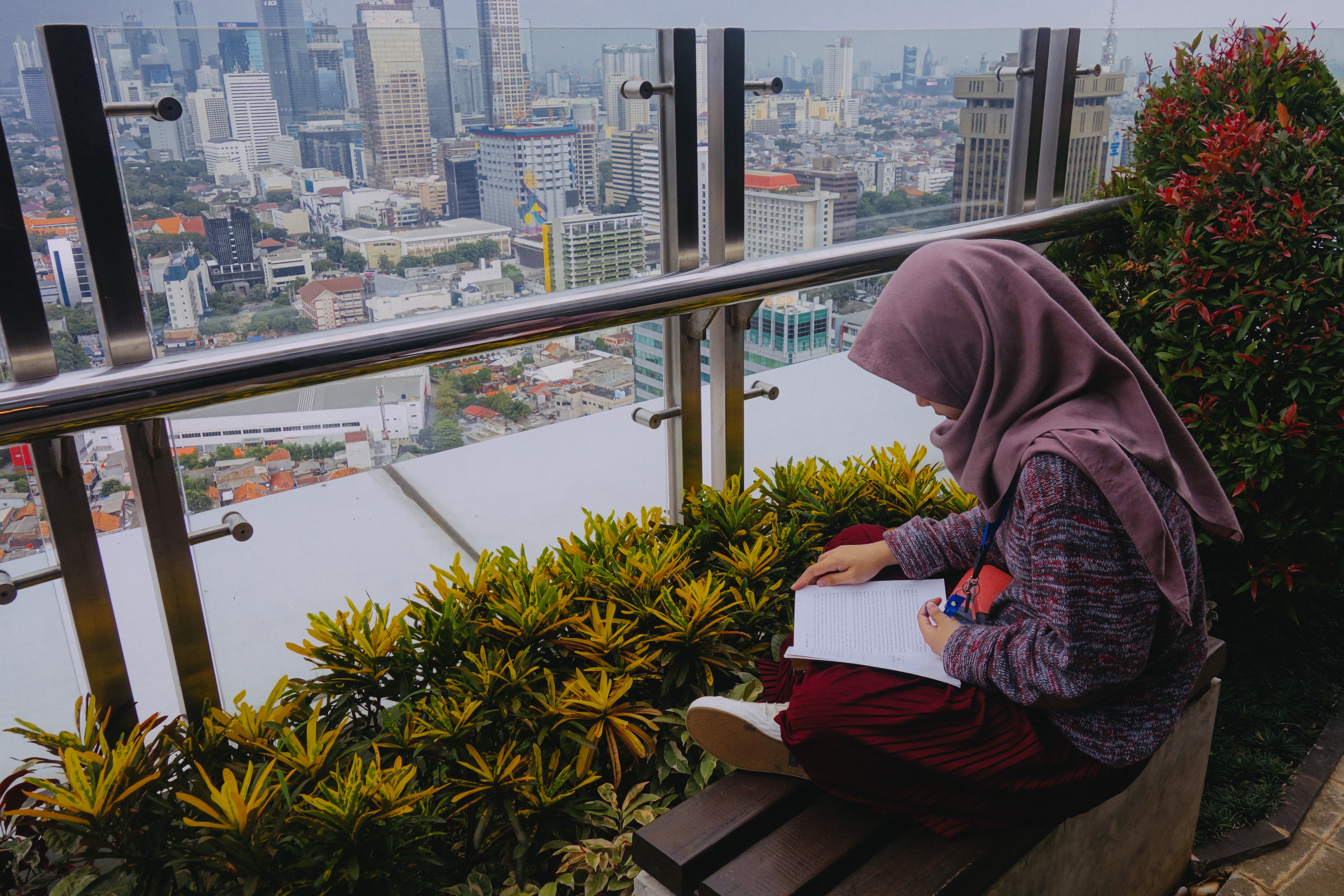
As a lifelong eco-hijabi* I too advocate greener living by adopting the 3 R’s: Recycle, Reuse and Reduce, and upcyling my own headscarves (hijab/tichel) – more on that later! Another term I personally use is ‘eco-Muslimness’ whereby a person may not necessarily be a hardcore Muslim environmentalist, but tries to follows the Muslim principles of moderation, environmental welfare and waste-reduction.
Eco hijabs on the rise
Muslim fashion trend setters began online through blogs, while ‘offline’ particularly in the Middle East, runways and design houses have expanded the niche for organic but chic fashion. In the fashion world, Muslim women are championing their entrepreneurial skills in self-run clothing businesses, which is proving a hit against top fashion industries.
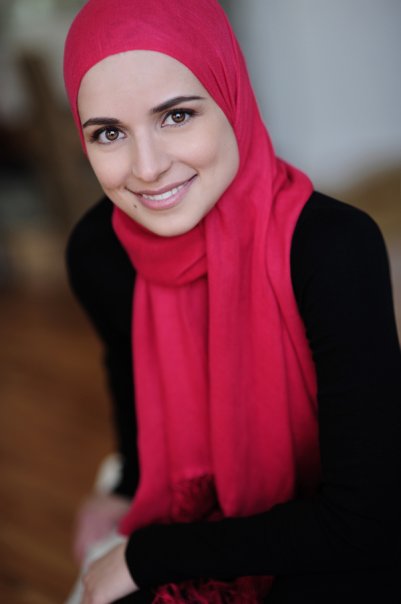
Zaufishan interviewed Mariam Sobh (photo-ed above in red), American eco-Muslim and lifestyle guru who founded the Muslim fashion blog HijabTrendz, on what her eco-living views are.
Green Prophet:Tell us a bit about your website. When and how did it begin? Who’s on the team?
Mariam: Hijabrendz is the original fashion, beauty and entertainment blog for Muslim women, which started in early 2007. But it’s also for anyone interested in modest fashion, so it’s pretty much open to everyone.
When I was on maternity leave from my job as a political reporter in ’07, I was trying to figure out how to use my frustration, with the lack of available media and fashionable clothing for Muslim women, and turn it into something positive.
The team consists of myself and columnist Nadia Malik, a former newspaper reporter who writes about pop culture from the angle of a Muslim woman.
How long have you known about or practiced eco-fashion? What encouraged you to get into and promote the contemporary lifestyle choice of ‘eco-Muslimness’?
I actually grew up very aware of the environment and being healthy. My parents were really into greener living, so I have to say that for me it was just part of my life. It wasn’t some new fad that I joined or wanted to be a part of. And I like the idea of ‘eco-Muslimness’. I think it’s important for Muslims to promote these types of ideals because Islam is very in tune with nature and promoting good. What better way to show how we value God’s bounty he has bestowed upon us, than by making sure it continues for generations to come?
What have the reactions to the eco-section on your website been like from the community?
I made a YouTube video a while back asking readers if they were concerned about eco friendly hijab options. The response was interesting. Some folks say they never thought about it, and others do tend to make a conscious choice to purchase items that are fair trade, organic, locally made etc.
Do you see any connections between the western Muslim’s eco-fashion and the Middle East?
A lot of the garments are shipped around the world from the Middle East, but many of those items are mass produced in China, or Pakistan and so to get things to become eco friendly, designers really need to be right there where it’s made, making sure they are using the best possible fabrics as well as ensuring their products are made under humane conditions.
In places like the United Arab Emirates I think it’s imperative they try their best to find more sustainable materials for their designs. They have become quite the hub for abayas (long dresses) and shaylas (scarves) and many people look to them for the next “big” thing in the area of hijab fashion. But items from the UAE also tend to symbolize “excess” and wastefulness. So it’s important to showcase that Muslims can be rich and have luxury, but at the same time be conscientious enough to do so in a responsible way. Perhaps incorporating some recycled pieces of fabric/trim into their designs.
In your opinion, how can living an eco-lifestyle help reduce waste?
I think the main thing is to be conscious of everything you do. You have to live in the now and be aware of your surroundings. When you do that you’ll notice that you can seriously get by on very little. You can still cut corners and you’ll be OK. One green tip I love is when you use detergent to clean your clothes use 1/3 of what the instructions say and you’ll still clean the clothes the same. Basically when you are conscious about your lifestyle, you’ll automatically reduce your waste.
What 3 lifestyle tips would you give to people, and Muslim women in particular for living a productive ‘greener’ life?
- Buy organic produce whenever you can. Fresh fruits and veggies along with clean drinking water-best beauty product ever!
- When you buy makeup, make sure the labels state clearly that they are free of chemical products. You’ll be surprised how much better your skin is when using natural items. Also, the product will last longer, so even if it’s pricey, it’s worth it in the long run.
- If you are sick of your old hijabs, have a hijab-swap party with your friends. Trading scarves will make you feel like you just bought some new stuff. And it’s a form of recycling.
How can designers make mainstream fashion trendy and eco for everyday Muslims?
Designers should try their best to use fabrics from sustainable sources. I know it’s hard for folks who are just starting a fashion line as they may not have the financial means to buy organic material.
Another thing they can do is have their garments made in an area where jobs are needed and make sure the people working are paid living wages. When it comes to eco-friendly, it doesn’t just have to be about using materials, but it can also be about sustaining the local community and helping to bring up its economy.
Finally, what changes do you hope to see in the Muslim community with regards to eco-fashion and environmental awareness?
I think the Muslim community needs to get more involved with local efforts in the mainstream to promote environmental awareness.
Green Prophet would like to thank Mariam for taking part in our Eco-Hijab series.
——————-
What’s that mean?
*Hijabi: Contemporary word describing a Muslim woman in hijab.
Eco-hijab: Modest Muslim fashion with awesome environmentally friendly roots.
Eco-Muslimness: Contemporary coined term describing the efforts of ‘green’ Muslims.
For More Eco-Muslims And Green Fashion:
Are Muslim Women Ready For Bamboo Hijab and Chadors?
From Rockstars To Recycling: Interview With Kristiane Backer – An Eco-Muslimah
“Organic and Islamic” – Muslims Showcase Ethical and Fair-Trade Fashion
PopLove Designs Brings Upcycled Eco Chic Fashion to Tel Aviv (and the Whole Wide World)
H&M Israel Brings Sustainable Fashion to the (Overwhelming) Masses


Hello my friend! I want to say that this post is awesome,
nice written and come with almost all vital infos.
I would like to see extra posts like this .
I constantly spent my half an hour to read this weblog’s articles every day along with a cup of coffee.
Thanks for your marvelous posting! I actually enjoyed reading it,
you’re a great author. I will remember to bookmark your blog and will come back in the foreseeable future.
I want to encourage yourself to continue your great posts, have a nice holiday
weekend!
Just desire to say your article is as amazing. The clearness in your post is
simply spectacular and i could assume you’re an expert on this subject.
Fine with your permission let me to grab your feed to keep up to date with forthcoming
post. Thanks a million and please carry on the gratifying work.
With havin so much content do you ever run into
any issues of plagorism or copyright violation? My blog
has a lot of completely unique content I’ve either authored myself or outsourced but it looks like a lot of it is
popping it up all over the internet without my
permission. Do you know any ways to help protect against content from being ripped off?
I’d really appreciate it.
Thanks for finally talking about > Eco-Hijabs on the rise among Muslim fashionistas, interview with Mariam Sobh |
Green Prophet < Loved it!
My relatives all the time say that I am killing my time here at net, but
I know I am getting familiarity every day by reading sujch good posts.
Also visjt mmy web-site … orquesta sinfonica [Dawna]
Hi there it’s me, I am also visiting this site daily, this web site is genuinely
nice and the visitors are truly sharing pleasant thoughts.
Valuable information. Lucky me I discovered your web site by accident, and I’m shocked why this
coincidence did not came about in advance! I bookmarked
it.
We’re a gaggle of volunteers and starting a brand new scheme
in our community. Your web site provided us with valuable info to work on. You have performed an impressive task and our entire neighborhood will be thankful to you.
very nice, truly muslims should promote hijab trend through web.
Nachdem das aber bei weitem nicht gerade einfach ist, entdeckst du hier die besondersten Geschenkideen für Kinder zu Weihnachten.
Thanks Arwa, this is exciting progress for eco-active women. It fits in nicely with the ‘Ecocide’ interview and hijabs made from bamboo.
(: Way to go eco-Muslims.
great article Z, thanks for this and I’m looking forward to reading the rest of the series 🙂
peace