Going Against The Grain of Desertification In Iran


Iran is home to two of the world’s largest deserts. But the country needs better planning to block these deserts from growing.

Desertification threatens biodiversity and reduces productivity capacity of land. Most of the land of Iran is located in arid and semi-arid climates and most of Iranians live in the most livable places outside the arid lands. So this makes it hard to develop an adequate regional planning, national-wide land-use planning, and use the productivity of all of the parts of the country.

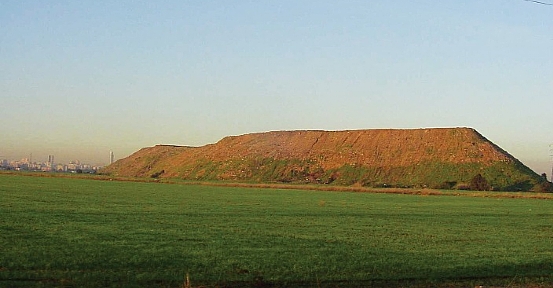
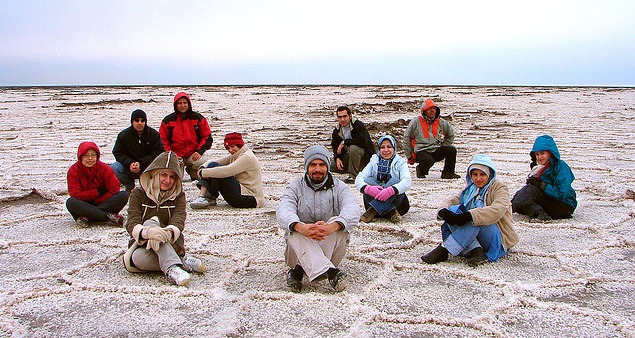
The Central parts of Iran includes two deserts:  Dasht-e-Kavir (the Great Salt Desert – above) and Lut Desert (below) which are among the largest deserts of the world. Dasht-e Lut, also spelled Dasht-i-Lut, is a large salt desert in southeastern Iran and is the world’s 25th largest desert.
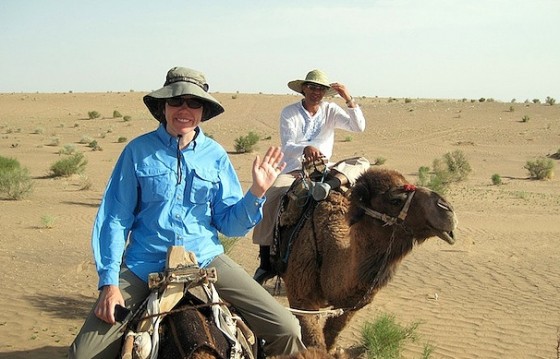
lut deset

The climates of deserts can seem different from each other. The north-African desert (Sahara), which is the biggest in the world, contains extremely hot temperatures, while the Gobi Desert in Mongolia is the coldest one.

The average rainfall in the Iranian deserts are about 50 millimeters per year, while the average for the whole Iran is 320 millimeters. The Iranian rainfall average is about one third of the one for the world.

Parsi Times cites these main reasons:

  • The population has doubled during last 25 years (since 1979).
  • More agricultural and pastoral products have forced people to use land extensively or convert forest and rangelands to cultivated land.
  • Over use of wood and plants as fuel for household cooking and heating and use of natural regulation tends to denude the soil and intensify desertification.
  • Denuded soil is exposed to wind erosion and shifting sand dunes destroy orchards, gardens, farming lands and threaten industrial and economical centers and leads to total collapse of economy, devastation of the environment, abandonment of settlements and migration of people to other cities and residential centers.

The central Iranian Plateau is a hot-arid land with very low rain fall average. Eighty percent of  Iran is of the semi-arid and arid climate. The remaining 20 percent is located in the north along the Caspian Sea, which has a Mediterranean climate with lots of rains, and also in North West of Iran – Zagros Mountains, which has acceptable rainfall caused by the western winds. The importance of the problem is in the interactions of population, infrastructure and desertification.

This is why the non-desertification plans have been discussed over during the past years. Of course the first plans of this kind were executed in 1940’s. Up to 2009, about 26,100 hectares of the hot, desert lands in central Iran were covered by planting heat-resistant trees and bushes. But the necessity of implementing more powerful strategies for blocking desertification is felt.

Read more on desert climates:
Water Problems in Cyprus Worse than Those of Israel, Syria and Lebanon
Morocco to Stave off Desertification with New Environmental Charter
Thailand to Help Jordan Make Artificial Rain

Top mage via hamed
Lower image via indigoprime

Mehrdad Parsipour
Mehrdad Parsipourhttp://www.greenprophet.com
Mehrdad Parsipour is an urban researcher who is based in Germany. He is originally from Iran and is interested in the traditional urbanism and architecture of Iran and Middle East. Mehrdad’s other research interests are western traditional urban development trends, Islamic cities, and sustainable urban forms, and finally the environment. Since 1997 he has been working in the field of civil engineering, and also urban and regional planning.

Read More

TRENDING

Dan Zaslavsky’s energy tower dream is rising again in Iran and China

The Energy Tower idea never made the leap from drawings and engineering studies to full-scale construction. But nearly two decades after most people stopped talking about it, the concept is quietly evolving in two unexpected places: China and Iran. The concept let dreamers dream and doers do - figuring out more pleasing designs and engineering.

Hormuz 2026 Conflict Poses an Energy and Food Security Dilemma in a Warming World

As tensions rise in one of the world’s most critical maritime chokepoints, the ripple effects go far beyond oil—touching food systems, climate pressures, and regional stability

Billie Eilish’s Mom Maggie Baird Launches “Climate Kitchen” on Public TV

Maggie Baird, best known as the mother of Billie Eilish and Finneas O’Connell, is stepping into a much larger spotlight, this time as a climate storyteller.

Adamah in Los Angeles wants to make Jewish climate action local, practical and spiritual

At a time when climate anxiety can feel abstract and overwhelming, and being Jewish something people may need to hide in big cities, Adamah Los Angeles is trying something different: turning Jewish values into local climate action with dirt-under-the-fingernails practicality.

Yerukim Forms a New Green Economy Where the Money is Really Green

The Yerukim members who pick up the recyclables get to keep the monetary reward, the public earns "green" bills that can be used in shops, and business owners get to be associated with environmentalism.

Choosing Riyadh over Dubai? What Investors Should Know

Saudi Arabia is deploying capital at unmatched scale to catalyze tourism and advanced industry while rewiring its power-and-water backbone. The investable frontier is widening—especially in renewables, grid storage, water efficiency/desal retrofits, and hospitality operating platforms. Prudent investors will insist on phased delivery, enforceable KPIs (energy, water, biodiversity), and RHQ/zone compliance—while pricing political-economy and reputational risks alongside growth upside.

Sell your cooking oil for biodiesel money

Want to make money on old french fry oil? Sell it.

Qatar Alternative Energy Summit Pairs Investors And Innovators

Alternative energy investors and innovators can meet n' greet in Doha, Qatar March 16 and 17.

Here’s How To Implement The Four Pillars Of Employee Engagement

If you throw a party for your work team and they are vegans, don't make it a barbecue. Know the sustainability values of your team to boost moral and retain good people.

Locals From Rishon Fight IKEA

Big Box stores are a pretty new concept in Israel, and thank God that not every Israeli city wants them in their backyard. A word from someone who has see the beautiful farmland around her hometown Newmarket, Ontario stripped and converted into vulgar strip malls of big box shops: they have no place in a healthy and sustainable town or city.

The Jewish National Fund Meets An Inconvenient Truth

According to the JNF, it has transformed thousands of acres of barren land into green forests in Israel. They state that each person emits about 23 tons of carbon per year, estimating that each tree planted can absorb one ton of carbon in its lifetime. That's a whole lot of trees you'd need to be planting. Could so many fit in Israel?

How to quiet noise from construction in your office

Streets need to be resurfaced in New York but the humming and grinding noise is unsettling. Noise is environmental pollution. 

Popular Categories