
She turns Jordan’s onions and olives into fashion

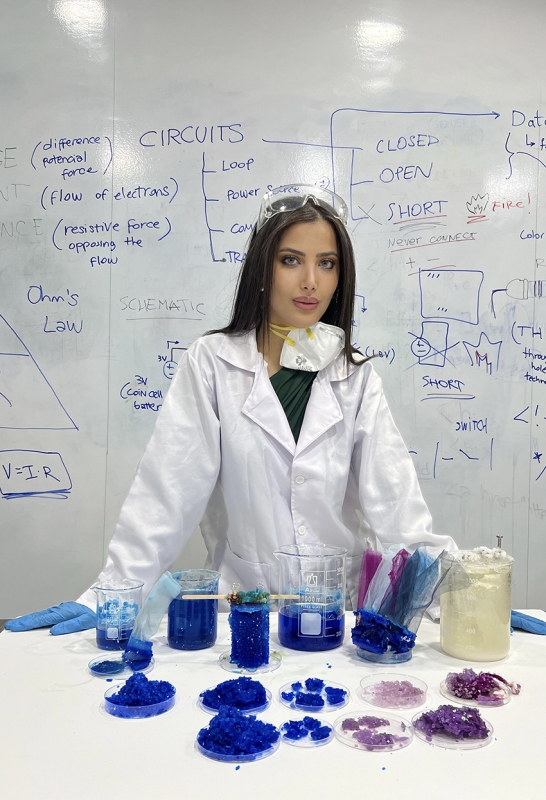
Designer Batoul Al-Rashdan, an engineer from Jordan, creates plant-based materials, which she turns into clothes and accessories. Via Batoul Al-Rashdan (UNEP) When Jordanian designer Batoul Al-Rashdan tells people she makes clothes out of ground olives and onion peels, she gets more than a few raised eyebrows. “It’s definitely a conversation starter,” laughs the founder of Jordanian fashion house Studio BOR.

Related: Stella McCartney creates shoes from cinnamon

“But once people learn more about it, they are like, ‘Okay, interesting.’”Al-Rashdan’s plant-based dresses, bags, and accessories have walked runways from Paris to Dubai and earned her a string of awards. Unlike the synthetic textiles that clog landfills for decades, her creations are designed to decay. “These clothes are not meant to last forever,” she says.

“They have served their purpose. It’s okay for them to go away.”
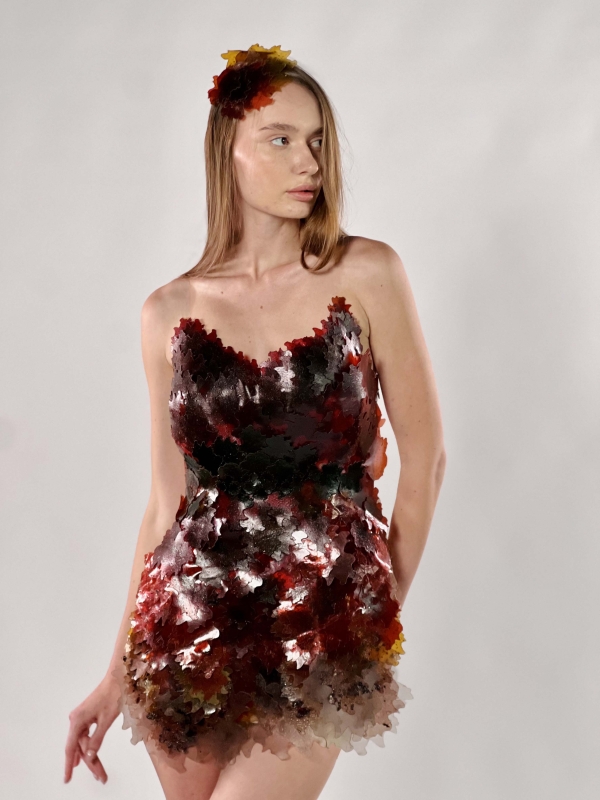
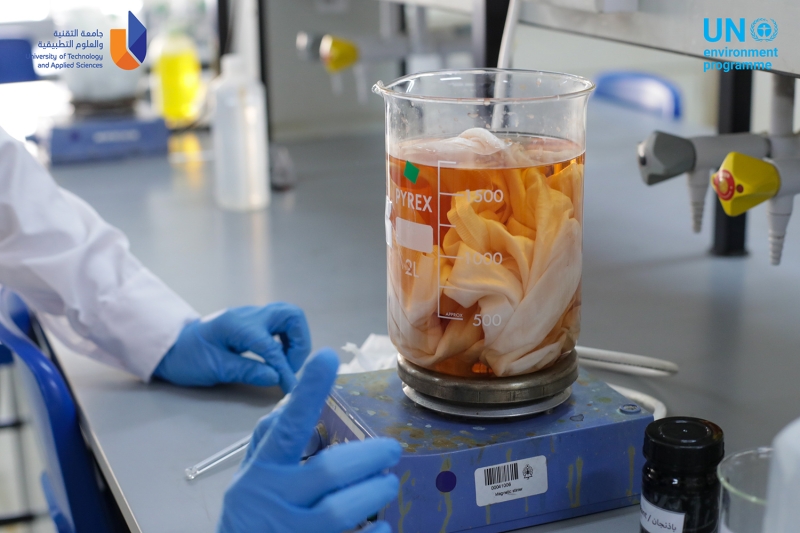
Designer Batoul Al-Rashdan, a trained engineer, creates plant-based materials, which she turns into clothes and accessories. Via Batoul Al-Rashdan (UNEP)An architectural engineer by training, Al-Rashdan began experimenting with plant-based textiles in 2015. She learned to transform food waste—like beetroot skins, olive pulp, and onion peels—into biodegradable materials. Some are fed into a 3D printer to make handbags, coins, and jewelry; others are spun into fabrics for high-fashion dresses.

“Iris of the sea” ? a 3D-printed dress from biodegradable material inspired by the breathtaking contours of the Dead Sea’s crystalline formations and Jordan’s national symbol, the Black Iris. ??? The Black Iris, a rare and endangered flower, thrives against the harsh desert environment, representing resilience and beauty amidst adversity. As environmental degradation threatens both the unique mineral landscape of the Dead Sea and the delicate ecosystems where the Black Iris blooms, this piece serves as a powerful reminder of nature’s fragility. ? Let’s work together to preserve these natural treasures for future generations.
“Iris of the sea” ? a 3D-printed dress from biodegradable material inspired by the breathtaking contours of the Dead Sea’s crystalline formations and Jordan’s national symbol, the Black Iris. 

One standout piece: a collaboration with designer Tony Ward on a wispy, biodegradable gown that debuted at Paris Haute Couture Fashion Week.

Every year, the fashion industry produces 92 million tonnes of textile waste—the equivalent of a garbage truck full of clothes dumped or burned every second. Much of it ends up in developing countries, releasing microplastics and toxic dyes into the environment.
According to UNEP, the sector is also responsible for up to 8% of global greenhouse gas emissions and is one of the most water-hungry industries on Earth.

Al-Rashdan’s work has been boosted by the West Asia Sustainable Fashion Academy, launched by the UN Environment Programme in 2021. The academy has trained over 150 designers, fashion students, and small businesses to use sustainable fabrics, extract natural pigments, and rethink waste.

Kylie Minogue wearing a parametric 3D printed on fabric biodegradable dress

Fellow participant Hazem Kais, head of Beirut’s GoodKill label, dyes garments with sage, walnut, and pomegranate instead of chemical dyes. “If we can dye clothes this way, why wouldn’t we?” he says.

For Al-Rashdan, every sustainable choice—no matter how small—counts. “I’m hopeful,” she says. “Every change, even a small one, matters.”

Read More

LEAVE A REPLY

Please enter your comment!
Please enter your name here

TRENDING

Meet Seramic Materials from Abu Dhabi

Based in Masdar City, Abu Dhabi, Seramic Materials was founded in 2019 by Dr. Nicolas Calvet and Dr. Jean-François Hoffmann, researchers working at the intersection of renewable energy and materials science. The company grew out of the Masdar Institute ecosystem and is supported by clean tech programs like The Catalyst, with early backing of around $150,000 and more than $2 million invested in research and development over time.

Make paper mache with flowers to create stunning vase

There’s something quietly beautiful about what Rebloom Studio is doing, and it starts with waste. At wholesale flower markets, mountains of unsold blooms are tossed out at the end of each cycle. Perfect flowers, just not sold in time. Most of them are burned or dumped. Rebloom takes that moment and turns it into something else.

Paris Modest Fashion Week offers style without exposure for Muslims

France is home to around 5 to 7.5 million Muslims according to estimates, and Özlem Şahin, head of the organization behind Modest Fashion Week, has described Paris as "one of the leading modest fashion capitals in Europe".

Levis is teaching Gen Z how to repair their clothes –– download all the teacher guides here

Somewhere between TikTok hauls and next-day delivery, we forgot how to fix things. We forgot how to cook without an app and a pre-made box, grow food without a kit, and sew a button back onto a shirt without throwing the whole garment away. Clothing, once stitched with intention (my mother made her ow dresses!), has become disposable. And with it, a quiet loss of skill, patience, and care.

How to quiet noise from construction in your office

Streets need to be resurfaced in New York but the humming and grinding noise is unsettling. Noise is environmental pollution. 

EarthX and a blueprint for sustainable investing

Trammell S. Crow, a Dallas-based businessman and father of four, is focusing his efforts on impact investing, and media that focuses on saving the planet through EarthX.

Mining Afghanistan’s Mineral Discoveries Similar to Avatar

Now that American forces in Afghanistan are commemorating the longest period of any war that America has been involved in, including the 1965-73 Vietnam War, the recent discoveries of large and extremely valuable mineral and metal deposits may finally bring to light a reason to continue the presence of US fighting forces in this war torn and backward country.

From Pilot Plant to Global Stage: How Aduro Clean Technologies’ 2026 Expansion Signals a Turning Point for Chemical Recycling Investors Like Yazan Al Homsi

The company's Next Generation Process (NGP) Pilot Plant in London, Ontario, has officially moved into initial operating campaigns, generating the kind of structured, repeatable data that separates laboratory promise from commercial viability.

Nobul’s Regan McGee on Shareholder Value: “Complacency Is the Silent Killer” 

Why the governance framework designed to protect shareholders so...

Should You Invest in the Private Market?

startustartup Unlike public stock exchanges, which offer daily trading, strict...

How to build a 100-year-company

Kongō Gumi is a Japanese construction company, purportedly founded in 578 A.D., making it the world's oldest documented company. What can we learn about building sustainable businesses from them?

How AI Helps SaaS Companies Reduce Repetitive Customer Support Work

SaaS products are designed for large numbers of users with different levels of experience, and also in renewable energy.

Popular Categories