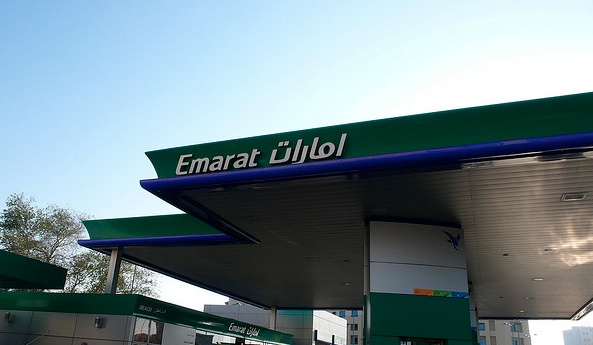
Dubai Gas Stations Running Out of Gas

Is it the story like the cobbler who doesn’t wear shoes?

Government regulated oil prices are forcing Dubai companies to charge lower fees than they pay to import the gas. Now, gas retailers in Dubai in the United Arab Emirates are finding it hard to deal with rising prices and government price controls. Emarat, one of four gas retailers operating in Dubai, have run out of gas at some of its stations as the company struggles to meet its financial engagements, the Dubai-based newspaper Gulf News is reporting.

The price of gas is regulated by the UAE government, which despite a 26 percent price increase this year alone, has forced the company to sell gas at far lower cost than what Emarat must pay to import oil. Dubai does not have any oil refineries, unlike neighboring Abu Dhabi that has two refineries and can control all aspects of production.

In addition to Emarat, Abu Dhabi National Oil Co. (Adnoc), Enoc and Eppco also operate in Dubai. All of these companies must sell gas at approximately $1.80 per gallon. The government of the United Arab Emirates offers a $0.33 per gallon subsidy on gas sales in the country, amounting to hundreds of millions dollars every year; however, in an effort to cut costs it decided earlier this year to scale back on such subsidies.

“It certainly is a problem across the Gulf,” Caroline Bain, senior commodities editor with the Economist Intelligence Unit told The Media Line. “It’s hard for retail companies to make a profit.”

Dr. Manouchehr Takin, a petroleum analyst with the Centre for Global Energy Studies in London agreed with Bain.

“I haven’t heard about this case but it’s common in all countries where there is gas production and the government is trying to control the prices,” Takin told The Media Line.

While the United Arab Emirates is the seventh largest oil producer in the world and is estimated to have the world’s fourth largest oil reserves, the oil is not spread equally across the seven kingdoms that make up the country.

When the United Arab Emirates was formed as independent country in 1971 the Al-Nahyan tribe, in what today is Abu Dhabi, being the largest tribe, was given that biggest cut when the internal borders were drawn. This has meant that the Al-Nahyans now control most of the country’s oil reserves.

The relative lack of oil in Dubai is often regarded as one possible explanation for why the country started to diversify its economy away from oil much earlier than surrounding countries.

One example of this forward thinking was the establishment of national airline Emirates Airlines in 1985, which helped to market the city as a tourist and logistics hub. Abu Dhabi followed suit in 2003, when it established national airline Etihad Airways.

::The Media Line – The Middle East News Source

Image via qilin

Read More

1 COMMENT
  1. No way! Example:U.S price, excluding taxes is around $2.00. If the UAE government is paying $0.33 in subsidies, so the cost to the companies is $1.67, and they are selling at $1.88. How could these companies be making losses?

TRENDING

OPEC and energy stocks in the UAE – insight from eToro

Energy equities are responding unevenly to the evolving landscape. Companies with direct exposure to UAE production growth and infrastructure are benefiting from increased activity expectations, while global oil majors face a more mixed outlook.

Dubai sets up smart feeding stations for abandoned cats

Dubai Municipality has set up 12 AI-powered "Ehsan Stations" to safely and officially feed strays. The city also officially supports Trap-Neuter-Return (TNR) programs. 

What are AWG air-water generators, and why they aren’t a golden-bullet solution (yet)

Atmospheric water generators (AWGs) sound like magic: machines that can pull drinking water out of air. The idea is mentioned in the Bible, where the elders would pray for water collected as dew on plants and the catch on turning this into a machine is in the physics. To turn invisible vapor into liquid, you must remove heat, especially the latent heat of condensation.

The Boring Company to add a Dubai loop

Dubai has announced this month that they will be working with Elon Musk's Boring Company to build tunnels in Dubai. 

BM Studios is designing systems, not just buildings in the UAE

Balsam Madi is an architect and systems thinker whose work bridges culture, sustainability, and design intelligence across the Middle East and Europe.

Locals From Rishon Fight IKEA

Big Box stores are a pretty new concept in Israel, and thank God that not every Israeli city wants them in their backyard. A word from someone who has see the beautiful farmland around her hometown Newmarket, Ontario stripped and converted into vulgar strip malls of big box shops: they have no place in a healthy and sustainable town or city.

The Jewish National Fund Meets An Inconvenient Truth

According to the JNF, it has transformed thousands of acres of barren land into green forests in Israel. They state that each person emits about 23 tons of carbon per year, estimating that each tree planted can absorb one ton of carbon in its lifetime. That's a whole lot of trees you'd need to be planting. Could so many fit in Israel?

How to quiet noise from construction in your office

Streets need to be resurfaced in New York but the humming and grinding noise is unsettling. Noise is environmental pollution. 

EarthX and a blueprint for sustainable investing

Trammell S. Crow, a Dallas-based businessman and father of four, is focusing his efforts on impact investing, and media that focuses on saving the planet through EarthX.

Mining Afghanistan’s Mineral Discoveries Similar to Avatar

Now that American forces in Afghanistan are commemorating the longest period of any war that America has been involved in, including the 1965-73 Vietnam War, the recent discoveries of large and extremely valuable mineral and metal deposits may finally bring to light a reason to continue the presence of US fighting forces in this war torn and backward country.

From Pilot Plant to Global Stage: How Aduro Clean Technologies’ 2026 Expansion Signals a Turning Point for Chemical Recycling Investors Like Yazan Al Homsi

The company's Next Generation Process (NGP) Pilot Plant in London, Ontario, has officially moved into initial operating campaigns, generating the kind of structured, repeatable data that separates laboratory promise from commercial viability.

Nobul’s Regan McGee on Shareholder Value: “Complacency Is the Silent Killer” 

Why the governance framework designed to protect shareholders so...

Should You Invest in the Private Market?

startustartup Unlike public stock exchanges, which offer daily trading, strict...

Popular Categories