
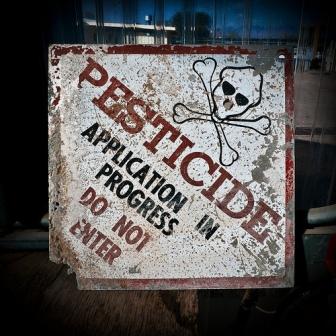
Israeli Company Makhteshim-Agan Industries Invests $1 Billion in Pesticides

Makhteshim-Agan Industries pesticidesAgrochemicals might be big business, but they are a bad deal for the environment and human health.

Israeli firm, Makhteshim-Agan Industries, believes that there is a bright future for chemical pesticides. It has just bet $1 billion dollars on this hope, buying out the Albough chemical manufacturer in a move which, according to Ha’aretz, will transform the Israeli company into the “biggest generic player” in North America’s pesticides industry.

There’s big money to be made from agrochemicals, although whether Makhteshim-Agan’s investment was wise financially remains a moot point since since Albough’s businesses focuses on a single product – the broad-spectrum herbicide, glyphosate:

“Glyphosate prices fluctuate tremendously, and there are clear signs of surplus production capacity around the world. Also, experts suspect that North American weeds are developing resistance to the chemical.”

But whichever way you add up the figures, investing in pesticides makes no ecological sense.  Glyphosate shot to (in)fame when Mosanto genetically modified crops to become resistant to the herbicide, sold under the brand name “Roundup.”

The biotech firm’s GM “Roundup Ready” crops can be sprayed with glyphosate to their heart’s content, killing all weeds and other plants, but leaving the corn or soya unscathed.

We don’t need chemicals to produce good quality food. Organic farming forsakes dependence on artificial pesticides and fertilisers (which, by the way, are increasingly expensive as oil prices rise) – and it can produce good yields, especially in developing countries, whilst conserving soil fertility and biodiversity.

Modern organic methods, first developed after World War Two, are now used by millions of farmers around the world. But investment in organic farming research and production methods is woefully underfunded. Imagine the difference $1 billion could make it if was spent more wisely.

Postscript: As glyphosate’s efficacy falls due to increased weed resistance, its price is expected to drop and Monsanto estimates that the contribution that Roundup makes to its gross profits will be slashed from $300 to £250. Perhaps it’s time to rethink their strategy.

::Betting a billion dollars on one weed killer, Ha’aretz

Photo via ken mccown

Michael Green
Michael Greenhttps://www.greenprophet.com/
Born into a family of auto mechanics and engineers in east London’s urban sprawl, Michael bucked the trend and chose a bicycle instead of a car. A relative newcomer to Jerusalem, he works as a freelance journalist writing for the Jerusalem Post and other publications. Before moving to Israel, he worked for an environmental NGO in England where he developed a healthy obsession with organic vegetables and an aversion to pesticides and GMOs. Michael’s surname is pure coincidence. Michael can be reached at michael (at) greenprophet (dot) com.

Read More

3 COMMENTS

TRENDING

Mona Khalil, Orange House Project founder, sea turtle protector killed in Lebanon

Mona Khalil spent decades protecting Lebanon's sea turtles and coastal ecosystems. Her death in the ongoing conflict between Israel and Hezbollah shines a light on a broader environmental tragedy unfolding across northern Israel and southern Lebanon. From damaged wetlands and disrupted bird migrations to threatened seed banks and endangered wildlife, the region's ecosystems are becoming casualties of a war with no clear end in sight.

Who Owns the Farm Robot? A State of Jefferson Startup Takes on Carbon Robotics

In California's self-proclaimed State of Jefferson, a small agricultural technology company is challenging the dominant laser-weeding business model. Laudando & Associates believes farmers should own and repair their AI-powered weeding tools rather than pay ongoing subscription fees. The approach has put the company on a collision course with industry leader Carbon Robotics, sparking a patent dispute that has pushed the Jefferson startup toward overseas markets while raising broader questions about ownership, right-to-repair, and the future of farm automation.

Regenerative Wool or Greenwashing? Zentera Responds to Critics

Zentera responds to questions about ZQ wool, animal welfare, regenerative farming, ethical fashion and the fallout from PETA's New Zealand investigation.

Dan Zaslavsky’s energy tower dream is rising again in Iran and China

The Energy Tower idea never made the leap from drawings and engineering studies to full-scale construction. But nearly two decades after most people stopped talking about it, the concept is quietly evolving in two unexpected places: China and Iran. The concept let dreamers dream and doers do - figuring out more pleasing designs and engineering.

A visit to Amirim, Israel’s first all-vegetarian village in the Galilee

Just 15 kilometers from Tzfat there is a moshav that was founded in the late 50s that was ideologically influenced by organic, vegetarian and vegan principles. My hostess at Ohn-Bar, the tzimmer where I stayed, explained that the people of Amirim were among the pioneers of Israel’s strong vegetarian movement.

Yerukim Forms a New Green Economy Where the Money is Really Green

The Yerukim members who pick up the recyclables get to keep the monetary reward, the public earns "green" bills that can be used in shops, and business owners get to be associated with environmentalism.

Choosing Riyadh over Dubai? What Investors Should Know

Saudi Arabia is deploying capital at unmatched scale to catalyze tourism and advanced industry while rewiring its power-and-water backbone. The investable frontier is widening—especially in renewables, grid storage, water efficiency/desal retrofits, and hospitality operating platforms. Prudent investors will insist on phased delivery, enforceable KPIs (energy, water, biodiversity), and RHQ/zone compliance—while pricing political-economy and reputational risks alongside growth upside.

Sell your cooking oil for biodiesel money

Want to make money on old french fry oil? Sell it.

Qatar Alternative Energy Summit Pairs Investors And Innovators

Alternative energy investors and innovators can meet n' greet in Doha, Qatar March 16 and 17.

Here’s How To Implement The Four Pillars Of Employee Engagement

If you throw a party for your work team and they are vegans, don't make it a barbecue. Know the sustainability values of your team to boost moral and retain good people.

Locals From Rishon Fight IKEA

Big Box stores are a pretty new concept in Israel, and thank God that not every Israeli city wants them in their backyard. A word from someone who has see the beautiful farmland around her hometown Newmarket, Ontario stripped and converted into vulgar strip malls of big box shops: they have no place in a healthy and sustainable town or city.

The Jewish National Fund Meets An Inconvenient Truth

According to the JNF, it has transformed thousands of acres of barren land into green forests in Israel. They state that each person emits about 23 tons of carbon per year, estimating that each tree planted can absorb one ton of carbon in its lifetime. That's a whole lot of trees you'd need to be planting. Could so many fit in Israel?

How to quiet noise from construction in your office

Streets need to be resurfaced in New York but the humming and grinding noise is unsettling. Noise is environmental pollution. 

Popular Categories