


Green Prophet in the Garden State

postcard from new jersey image

This prophet just made the flight from Tel Aviv to his childhood home of New Jersey. After a year of observing Israel and it’s eco-consciousness (and at times lack thereof), I was eager to see how the Garden State measured up to its nick name. I couldn’t help but compare my observations in New Jersey with the realities I’ve observed in Tel Aviv.

Transportation

As expected, the mini-vans and SUVs still dominate New Jersey roads despite the high gas prices. There are no scooters and very few small cars. A few hybrids can be spotted but they hardly enough to make a difference. Here Israel really has the advantage on New Jersey.

Recycling

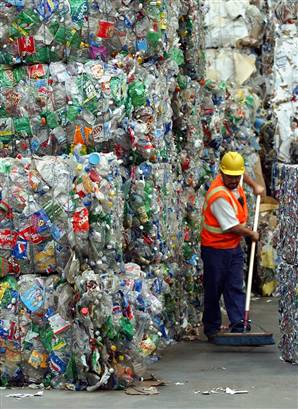
Perhaps the greatest thrill of in New Jersey was the simple act of drinking Root Beer in a glass bottle and then ever so simply placing it in the recycling bin. This is nothing new in New Jersey but it speaks to a major deficiency in Israel’s green policies. Israel’s lack of recycling has always frustrated me to no end. It’s appalling. At my most motivated I’d collected hundreds of glass bottles and separated them into different sizes and varieties and walked them over to various supermarkets, sometimes being turned away and sometimes being forced to wait for upwards of half an hour. At my weakest moments I’ve…[gasp] actually thrown away foreign wine bottles that the supermarkets wouldn’t recycle. It felt awful. Then there’s the whole issue of plastic bottle recycling being controlled by the Mafia, which makes it hard to feel happy when placing one’s bottles in those yellow cages in Israel’s streets
Organic

On a trip to a traditional small town New Jersey butcher shop, the butcher talked in great length about his work with a small town farmer who’s working on being certified organic. “It’s about time,” he told me. He also stocked Empire organic chicken, the largest kosher chicken company’s first venture into green. There is similarly in Israel a small, yet burgeoning organic meat sector. I look forward to both of their developments.

I also had the privilege of entering a Whole Foods, one of the dozens in the state. These giant health food shops are so widely patronized in New Jersey’s suburbs and are so part of the mainstream that for thousands of New Jerseyans these are the supermarkets. Organic, while still a point of class distinction, seems much more mainstream than it is in Israel. See: Getting My First Israeli CSA here.

And as is only beginning in Israel, farmstands and farmers markets have become fixtures of food shopping life in the Garden State’s small towns. Yesterday in beautiful Basking Ridge, New Jersey, the Crane Farm’s roadside vegetable stand was packed with beautiful produce and eager customers. I waited to buy a watermelon and lettuce as one of the workers was cutting fresh flowers from her field.

Compost

And somehow compost was in the air, or at least in people’s backyards. A number of mainstream New Jersey families had begun composts and even more had inquired about it. As an avid proponent of composting Tel Aviv, I was eager as ever to offer my suggestions to aspiring New Jersey composters. The size of people’s backyards makes it much easier for me. I was even escorted to a Garden State environmental center where an exhibit on compost and instructive diagram with all of the compost stages was meant to inform New Jerseyans about the simple decomposition process.


Jeffery Yoskowitz
Jeffery Yoskowitz
Jeff is a writer in Brooklyn, not far from his suburban childhood home where he first began his sustainable living crusade. As a child he collected his father’s discarded letterhead paper and used it in the printer. He has since accumulated various organic (as well as industrial) agricultural experiences, and is obsessed with the belief that how we eat affects our world as much as our bodies. Though he has moved from Tel Aviv, he still looks eastward in his writing and coverage of environmental and sustainable food issues. When he’s not writing he makes lacto-fermented foods and arts & crafts projects using recycled materials. Jeff can be reached at jeff (at) greenprophet (dot) com.

Read More

TRENDING

Mona Khalil, Orange House Project founder, sea turtle protector killed in Lebanon

Mona Khalil spent decades protecting Lebanon's sea turtles and coastal ecosystems. Her death in the ongoing conflict between Israel and Hezbollah shines a light on a broader environmental tragedy unfolding across northern Israel and southern Lebanon. From damaged wetlands and disrupted bird migrations to threatened seed banks and endangered wildlife, the region's ecosystems are becoming casualties of a war with no clear end in sight.

Self-repairing contact lenses and desalination membranes that fix themselves?

Could the humble contact lens become a sustainability breakthrough? Researchers in Korea have developed a self-healing hydrogel lens that repairs scratches with just one hour of UV light exposure. Beyond reducing waste from disposable contacts, the technology could one day help extend the life of solar panels, water filtration systems, and other plastic-based products.

Dan Zaslavsky’s energy tower dream is rising again in Iran and China

The Energy Tower idea never made the leap from drawings and engineering studies to full-scale construction. But nearly two decades after most people stopped talking about it, the concept is quietly evolving in two unexpected places: China and Iran. The concept let dreamers dream and doers do - figuring out more pleasing designs and engineering.

A visit to Amirim, Israel’s first all-vegetarian village in the Galilee

Just 15 kilometers from Tzfat there is a moshav that was founded in the late 50s that was ideologically influenced by organic, vegetarian and vegan principles. My hostess at Ohn-Bar, the tzimmer where I stayed, explained that the people of Amirim were among the pioneers of Israel’s strong vegetarian movement.

Israeli Hydrogen Startup H2Pro Are Trying to Solve Clean Energy’s Hardest Problem

The company has attracted backing from major investors including Breakthrough Energy Ventures, the climate fund founded by Bill Gates, along with industrial partners such as Sumitomo, ArcelorMittal, and Temasek, a multi-billion dollar company that owns Singapore airlines. H2Pro has raised more than $100 million USD and is moving from pilot projects toward commercial-scale deployments.

Yerukim Forms a New Green Economy Where the Money is Really Green

The Yerukim members who pick up the recyclables get to keep the monetary reward, the public earns "green" bills that can be used in shops, and business owners get to be associated with environmentalism.

Choosing Riyadh over Dubai? What Investors Should Know

Saudi Arabia is deploying capital at unmatched scale to catalyze tourism and advanced industry while rewiring its power-and-water backbone. The investable frontier is widening—especially in renewables, grid storage, water efficiency/desal retrofits, and hospitality operating platforms. Prudent investors will insist on phased delivery, enforceable KPIs (energy, water, biodiversity), and RHQ/zone compliance—while pricing political-economy and reputational risks alongside growth upside.

Sell your cooking oil for biodiesel money

Want to make money on old french fry oil? Sell it.

Qatar Alternative Energy Summit Pairs Investors And Innovators

Alternative energy investors and innovators can meet n' greet in Doha, Qatar March 16 and 17.

Here’s How To Implement The Four Pillars Of Employee Engagement

If you throw a party for your work team and they are vegans, don't make it a barbecue. Know the sustainability values of your team to boost moral and retain good people.

Locals From Rishon Fight IKEA

Big Box stores are a pretty new concept in Israel, and thank God that not every Israeli city wants them in their backyard. A word from someone who has see the beautiful farmland around her hometown Newmarket, Ontario stripped and converted into vulgar strip malls of big box shops: they have no place in a healthy and sustainable town or city.

The Jewish National Fund Meets An Inconvenient Truth

According to the JNF, it has transformed thousands of acres of barren land into green forests in Israel. They state that each person emits about 23 tons of carbon per year, estimating that each tree planted can absorb one ton of carbon in its lifetime. That's a whole lot of trees you'd need to be planting. Could so many fit in Israel?

How to quiet noise from construction in your office

Streets need to be resurfaced in New York but the humming and grinding noise is unsettling. Noise is environmental pollution. 

Popular Categories