

 Is now a good time to announce uranium sales to an unstable region like the Middle East?
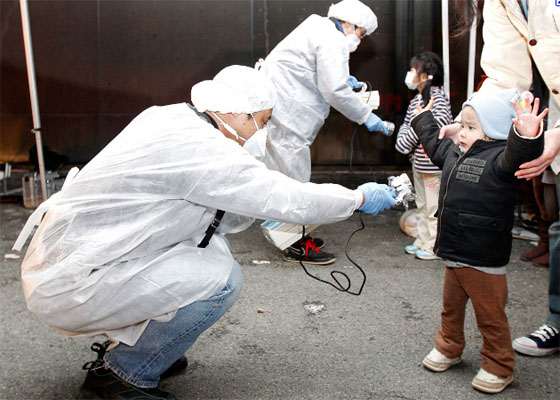
At a time when many nations are sharply curtailing nuclear power plans in response to the Japanese nuclear crisis, Australia’s government is formalizing the first steps towards selling uranium to the United Arab Emirates, in a deal being negotiated by former Prime Minister Kevin Rudd, who is now Foreign Affairs Minister. Australia provides 20 percent of the world’s uranium supplies for nuclear power, including the plants now in meltdown in Japan – which will now no longer need supplies of uranium.
The UAE plans its first nuclear reactors on a sparsely populated desert along the Persian Gulf near the border with Saudi Arabia. Like many in the region with rising demands of rapidly growing economies in the Middle East, it has severe electricity shortages.
At the announcement in Abu Dhabi, Rudd attempted to mollify critics back home by pointing out that the UAE has signed the nuclear non-proliferation treaty and has concluded nuclear safeguards agreements with countries including the United States, France, the United Kingdom and Japan.
But parliament members were not happy with the announcement, demanding that a list be published of just which nations are and which nations are not being considered for sales. Australia exports about 20 percent of the world’s uranium used in nuclear plants.
“Doesn’t matter whether you’re a communist dictatorship or a Middle Eastern emirate,” complained Green Party Senator Scott Ludlam – according to Global Security News, “it seems Australia is more than happy to do the bidding of the uranium mining companies.”
It is hard to follow or understand the reasoning behind which countries are permitted to have nuclear power plants, and which are not.
Australia has long refused to sell its uranium to the largest and most stable democracy in the Asian continent – India. Yet here it is making arrangements to sell it to a dictatorship, at a time when dictators are toppling throughout a now very unstable Middle East.
Rudd’s timing could hardly be worse, right at a time when the escalating nuclear catastrophe in Japan has even stolidly pro-nuclear power nations like Germany canceling nuclear projects.
For all the problems it is having with its tsunami-related nuclear accident, Japan has a stable and non-corrupt government and the most competent engineering workforce you could ever hope for to handle this level of catastrophe. Even all this is not enough to deal with nuclear disaster. Could the the UAE handle something like this?
On the other hand, the UAE plans the power plants in what it describes, controversially perhaps , as an isolated desert region, unlike the siting of Japan’s – which were jammed up close to heavily populated areas.
Perhaps the criteria for which nations get nuclear fuel should be that only countries with genuinely remote unoccupied locations qualify?
Related nuclear stories:
Earthquake Damage to Japanese Nuclear Power Plants Should be Warning to Mideast Planners
Nuclear-Powered Water For The UAE?
Who’s Going Nuclear in the Middle East?


I know this if off topic but I’m looking into starting my own blog and was curious what
all is required to get set up? I’m assuming having a blog like yours
would cost a pretty penny? I’m not very web savvy so I’m not 100% sure.
Any recommendations or advice would be greatly appreciated.
Thank you