Earth. Energy. Everything next.

Palestinian Mall Chain Could Bring Suburban Living to West Bank

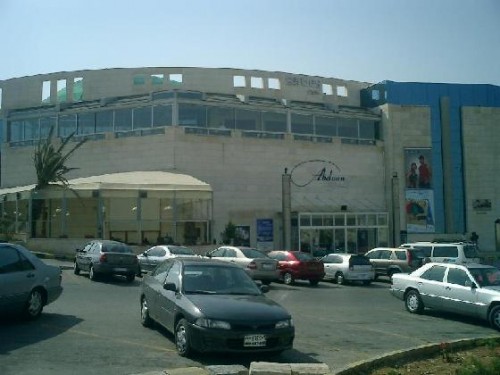
Abdoun_Mall-Jordan jenin mall photo palestinian photo

One of America’s most enduring gifts to the Middle East is the suburban indoor shopping mall. Israel’s first was the Ayalon Center outside of Tel Aviv (1986).  Istanbul saw the Atakoy Mall go up in 1987. Jordan’s pioneer was Amman’s Abdoun Mall in 2001 (Picture from virtualtourist.com), and Beirut‘s ABC Mall opened its doors in 2003.

This month, a new luxury mall opened on the outskirts of the northern West Bank city of Jenin. Haaretz reports that the five-story Hirbawi Home Center cost $5 million to build and is filled with foreign brands carrying upscale products, from espresso machines to plasma screens.

Most of the products are priced on par with Israeli figures, but furniture is a bargain in Jenin. 

Jenin’s mall – and those in the works for Ramallah, Nablus, Hebron and Tul Karem – will be an interesting experiment in Palestinian consumer culture and urban planning.

While malls in Israel and America have been blamed for draining business out of city centers, in the West Bank there is only a thin strata of people who can afford shopping in them. Therefore, the city centers may stay lively. Likewise, Hirbawi CEO Ziad Turabi said he is not too worried about a curfew on Jenin: “Let’s just say we don’t pin much hopes on shoppers from other areas,” he told Haaretz.

This could mean that the only people shopping in Jenin will be from the city, and not residents of mid-sized towns whose business would otherwise whither up thanks to the mall.

Suburbanization and shopping malls go hand in hand. For Palestinian cities and villages, that process has unfolded ever so slowly in large part because of the Israeli control of the area.

At the same time, in Israel suburbanization is on a tear, with new malls, outlet shopping centers and highways sprouting up nationwide. Jenin’s mall may be the start of a dramatic reorientation in Palestinian land use that makes the West Bank look much more like its neighbor.

Daniella Cheslow
Daniella Cheslowhttp://www.greenprophet.com
Daniella Cheslow grew up in a car-dependent suburb in New Jersey, where she noticed strip malls and Wal-Marts slowly replacing farmland. Her introduction to nature came through hiking trips in Israel. As a counselor for a freshman backpacking program at Northwestern University, Daniella noticed that Americans outdoors seemed to need to arm themselves with performance clothing, specialized water bottles and sophisticated camping silverware. This made her think about how to interact with and enjoy nature simply. This year, Daniella is getting a Master’s in Geography from Ben Gurion University of the Negev. She also freelance writes, photographs and podcasts. In her free time, she takes day trips in the desert, drops off compost and cooks local foods like stuffed zucchini, kubbeh and majadara. Daniella gets her peak oil anxiety from James Howard Kunstler and her organic food dreams from Michael Pollan. Read more at her blog, TheTruthHerzl.com. Daniella can be reached at daniella (at) greenprophet (dot) com.

Read More

4 COMMENTS

TRENDING

Petra by Night returns as Jordan tries brings tourists back to Wadi Rum

The Nabataeans understood that prosperity in the desert depended on respecting environmental limits. Two thousand years later, Petra's greatest attraction may still be the wisdom of the people who learned to live within them.

The pulsing planet and the earthquakes that shape our world

One of the most persistent questions in seismology concerns whether scientists will eventually be able to predict major earthquakes before they happen.

Amman’s traffic crisis is about more than cars. It’s about how we think

I believe Jordan needs a cultural transformation alongside its infrastructure investments. We must begin by redefining social prestige. Why should ownership of an expensive car be considered a greater achievement than making an environmentally responsible transportation choice? Why should travelling by bus carry a social stigma?

Why water-starved Amman keeps flooding and how underground rain tanks could help

Jordan's capital faces a troubling paradox: chronic water shortages and destructive winter floods. Hydrogeological expert Dr. Osama MN Gazal explains how underground rainwater tanks and green infrastructure could help Amman capture precious rainfall, reduce flooding and build a more water-secure future.

Can Amman become a walkable city? C40 is turning hot asphalt into green public spaces

Amman has never been an easy city to explore on foot. Now, C40 Cities and Community Jameel are reimagining Jordan's capital with cooler streets, shaded playgrounds and greener neighbourhoods. Could this sprawling city finally become more walkable?

Why Bronwyn Finnegan Chose the Nonprofit Sector Over Politics or Corporate Life

Bronwyn Finnegan could have pursued a career in politics or corporate leadership. Instead, she chose the nonprofit sector, where she focuses on financial sustainability, governance and helping mission-driven organizations build the capacity to survive and grow.

Scientists make lead-free perovskite solar cells that can weather the elements

Scientists have developed a “raincoat” for lead-free tin perovskite solar cells, helping them withstand air, moisture and heat while maintaining high efficiency.

The Essential Guide To Sustainability in Project Management

Sustainability is an approach where businesses and individuals balance the environmental, social, and economic aspects of a project such that current and future stakeholders are not overburdened with the impacts of the project in future.

Yerukim Forms a New Green Economy Where the Money is Really Green

The Yerukim members who pick up the recyclables get to keep the monetary reward, the public earns "green" bills that can be used in shops, and business owners get to be associated with environmentalism.

Choosing Riyadh over Dubai? What Investors Should Know

Saudi Arabia is deploying capital at unmatched scale to catalyze tourism and advanced industry while rewiring its power-and-water backbone. The investable frontier is widening—especially in renewables, grid storage, water efficiency/desal retrofits, and hospitality operating platforms. Prudent investors will insist on phased delivery, enforceable KPIs (energy, water, biodiversity), and RHQ/zone compliance—while pricing political-economy and reputational risks alongside growth upside.

Sell your cooking oil for biodiesel money

Want to make money on old french fry oil? Sell it.

Qatar Alternative Energy Summit Pairs Investors And Innovators

Alternative energy investors and innovators can meet n' greet in Doha, Qatar March 16 and 17.

Here’s How To Implement The Four Pillars Of Employee Engagement

If you throw a party for your work team and they are vegans, don't make it a barbecue. Know the sustainability values of your team to boost moral and retain good people.

Popular Categories