Iran Needs A "Green" Revolution In More Ways Than One

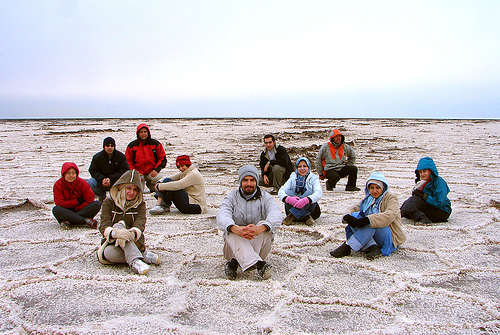
kavir-national-park--salt-lake-photo

Recent political turmoil in the Islamic Republic of Iran, is only part of the problems facing this country of more than 70 million. The country’s fragile eco-cycle is also at risk, much of this due to developmental aspects which have been occurring in many parts of county, while environmental issues have taken a back seat.

A good example of this is the 4,000 sq. kilometer Kavir National Park, located in north-central Iran. Established years ago in 1964 as a protected area, the semi-arid reserve was declared a national park by Shah Reza Pahlavi.

The park is home to a number of rare and now endangered animal species, including Persian leopards and Asiatic cheetahs.

Plans to drill of oil and natural gas in the park would cause severe damge and danger of the park and its wildlife, according to officials of Iranian environmental and nature protection organizations, including the Iranian Society of Nature: ISNA.

The fear is that besides the normal hazards caused by oil and gas drilling, including slush pools and run-off of raw petroleum and other bio-hazardous liquids, the drilling would also force large quantities of salt water to the surface, causing irreparable damage to the terrain and resulting in the deaths of many animals that might drink the poisonous waters.

A former head of the state environmental authority for the Teheran Province, Hasan Pirasteh, said that Kavir Park’s environment has already been “degraded” by the conducting of military exercises by the army as well as by allowing hunters with special permits to hunt wild game in the park.

He commented on this by saying: “if this habitat is destroyed, it’s like destroying a house on top of it’s inhabitants. When we commit ourselves to the world to name an area a protected area, it means the area is entrusted to nature alone.”

Another area facing environmental damage is in the southern Fars Province, where the construction of a large dam would endanger a number of archeological sites as well as grazing sites for both wild and domestic animals.

And along the Caspian Sea coast, two petrochemical projects and a planned oil refinery could destroy more than 120 hectares of forest, according to Hossein Akhani, a botanist and academic from Tehran University.

He said that these projects, if allowed to continue, would cause health hazards to local residents and would also result in the drying up of a swampy estuary that would “turn the area into a dust bowl.” He compared this situation with that of the Aral Sea, between the former Soviet republics of Kazakhstan and Uzbekistan, which has almost completely dried up due to disregard for the local environment.

Judging from these examples, the Iranian people have a lot to be concerned with these days, besides who is in charge of running the country’s political affairs.

::RFERL [image via hamed]

More on the environment in Iran:

  1. Iran Inaugurates Its First CSP Solar Power Plant 
  2. Iran Battles Red Tide, A Soap-like Super Foam That’s Killing Fish 
  3. Eco Tourism in the Middle East: Iran 
Maurice Picow
Maurice Picowhttps://www.greenprophet.com/
Maurice Picow grew up in Oklahoma City, U.S.A., where he received a B.S. Degree in Business Administration. Following graduation, Maurice embarked on a career as a real estate broker before making the decision to move to Israel. After arriving in Israel, he came involved in the insurance agency business and later in the moving and international relocation fields. Maurice became interested in writing news and commentary articles in the late 1990’s, and now writes feature articles for the The Jerusalem Post as well as being a regular contributor to Green Prophet. He has also written a non-fiction study on Islam, a two volume adventure novel, and is completing a romance novel about a forbidden love affair. Writing topics of particular interest for Green Prophet are those dealing with global warming and climate change, as well as clean technology - particularly electric cars.

Read More

2 COMMENTS

TRENDING

Self-repairing contact lenses and desalination membranes that fix themselves?

Could the humble contact lens become a sustainability breakthrough? Researchers in Korea have developed a self-healing hydrogel lens that repairs scratches with just one hour of UV light exposure. Beyond reducing waste from disposable contacts, the technology could one day help extend the life of solar panels, water filtration systems, and other plastic-based products.

Dan Zaslavsky’s energy tower dream is rising again in Iran and China

The Energy Tower idea never made the leap from drawings and engineering studies to full-scale construction. But nearly two decades after most people stopped talking about it, the concept is quietly evolving in two unexpected places: China and Iran. The concept let dreamers dream and doers do - figuring out more pleasing designs and engineering.

Collecting kinetic energy from roads; REPS turns traffic into a power plant

REPS announced a $23.6M equity financing round to scale...

Hormuz 2026 Conflict Poses an Energy and Food Security Dilemma in a Warming World

As tensions rise in one of the world’s most critical maritime chokepoints, the ripple effects go far beyond oil—touching food systems, climate pressures, and regional stability

Baby teeth read like tree rings paint a picture of toxins in early life

A new study from the Icahn School of Medicine at Mount Sinai in New York offers a striking insight into how the environments we are born into can quietly shape our brains years later. By analyzing naturally shed baby teeth, the ones tucked under pillows for the tooth fairy, researchers have reconstructed a detailed timeline of exposure to environmental metals during pregnancy and early infancy.

Yerukim Forms a New Green Economy Where the Money is Really Green

The Yerukim members who pick up the recyclables get to keep the monetary reward, the public earns "green" bills that can be used in shops, and business owners get to be associated with environmentalism.

Choosing Riyadh over Dubai? What Investors Should Know

Saudi Arabia is deploying capital at unmatched scale to catalyze tourism and advanced industry while rewiring its power-and-water backbone. The investable frontier is widening—especially in renewables, grid storage, water efficiency/desal retrofits, and hospitality operating platforms. Prudent investors will insist on phased delivery, enforceable KPIs (energy, water, biodiversity), and RHQ/zone compliance—while pricing political-economy and reputational risks alongside growth upside.

Sell your cooking oil for biodiesel money

Want to make money on old french fry oil? Sell it.

Qatar Alternative Energy Summit Pairs Investors And Innovators

Alternative energy investors and innovators can meet n' greet in Doha, Qatar March 16 and 17.

Here’s How To Implement The Four Pillars Of Employee Engagement

If you throw a party for your work team and they are vegans, don't make it a barbecue. Know the sustainability values of your team to boost moral and retain good people.

Locals From Rishon Fight IKEA

Big Box stores are a pretty new concept in Israel, and thank God that not every Israeli city wants them in their backyard. A word from someone who has see the beautiful farmland around her hometown Newmarket, Ontario stripped and converted into vulgar strip malls of big box shops: they have no place in a healthy and sustainable town or city.

The Jewish National Fund Meets An Inconvenient Truth

According to the JNF, it has transformed thousands of acres of barren land into green forests in Israel. They state that each person emits about 23 tons of carbon per year, estimating that each tree planted can absorb one ton of carbon in its lifetime. That's a whole lot of trees you'd need to be planting. Could so many fit in Israel?

How to quiet noise from construction in your office

Streets need to be resurfaced in New York but the humming and grinding noise is unsettling. Noise is environmental pollution. 

Popular Categories