

Home Blog Page 127

What Are All The Various Phases In A Clinical Trial?

0


Have an idea for a natural-based remedy? Chances are it will still need to be verified with clinical trials, supervised by the FDA.

Trial and Error

Clinical trials are an essential part of modern medicine. Trials like the ones run by Clinical Ink are how our medical professionals find out what works, why it works, what doesn’t work, and where they can improve. Without clinical trials, we would not have access to most of the medication and treatments that we take for granted today. Without doctors and researchers taking the time to properly conduct trials, taking note of any adverse effects, positive effects and after effects, medicine simply would not be what it is. 

Before we go into detail about the different phases of clinical trials, let’s take a look at some information about what clinical trials are from a medical point of view.

What Are Clinical Trials?

Clinical trials are a way for medical professionals to test new medications, new methods of diagnosing illnesses, and ways of slowing or preventing illnesses. The goal of any clinical trial is to determine whether these methods of treating or diagnosing medical conditions are safe and effective enough to offer to the general public. During the course of any clinical trial, many things are evaluated:

  • Different combinations of medications
  • One medication alone
  • Medical devices
  • New ways of using medications previously used for something else.

Intensive research is done before the trial can even begin, often using human cells or animals. Thankfully animal testing is becoming less prevalent. Funding may be secured for a full clinical trial if the initial results are promising. There are many phases within a clinical trial, each one building on the previous one. Let’s take a look at those phases now.

Phase O

This is the first and most minor phase of the trial, usually including no more than fifteen subjects. Medications or devices are tested in very low quantities or for very short periods. If there are no adverse effects for humans and the results are more or less what the researchers expected, the trial will scale up in the next phase.

Phase 1

During this phase, researchers take whatever time they need or are allotted to scale up their human trials. Now the testing to see how much of the medication or device a human being can handle, without adverse side effects, begins. At this stage, around twenty to eighty people are usually brought in as test subjects. Test subjects are monitored closely for reactions because the human body is unpredictable. In addition to the safety and side effects, researchers also test and take note of the safest and most effective ways to use devices or administer treatments. About 70% of trials make it past this phase.

man dosing with CBD cannabis oil
Natural oils are mostly unverified by clinical trials even though your apothecary swears by them.

Phase 2

The trial scales up again in this phase to as many as several hundred subjects. These subjects are people living with the disease that the client aims to help ease or cure, and they are usually given the same safe amount of the medication as the participants in the previous phase. This phase may last for months or even years as researchers monitor their subjects to see how long-term exposure to treatment will affect them. While this clinical trial phase is the largest yet, it is still not large enough to provide sufficient information about the treatment in question. The data collected in phase 2 assists researchers in phase 3. About 33% of trials make it to the next phase.

Phase 3

Once again, the trial will scale up. In Phase 3, trials usually use about 3,000 test subjects in varying stages of the condition in question. This stage of trials can go on for several years. The purpose of such a lengthy phase is to establish how the new medication or device performs compared to existing medications or devices used to treat the illness or condition. For the trial to move forward, there needs to be clear evidence that the new treatment is at least as safe as, but hopefully in some way superior to, existing ones. In this phase, the trial moves into something called “randomization.” Participants are either given the new medication or an existing one to test them against each other; this is usually done in a double-blind format, meaning that neither the researchers nor the participants are aware of who is getting which drug. This method eliminates any bias when interpreting the results. Phase 3 is usually the minimum trial phase for a medication to reach before the FDA will begin their approval process as it is the phase in which most long-term side effects will make themselves known. Between 25 and 30% of trials make it to the next phase.

Phase 4

Phase 4 of any trial only happens after FDA approval. Long-term effects and side effects are monitored as well as any other unexpected benefits. This phase also involves thousands of participants and can go on for many years.

Wrap Up

The numerous phases of clinical trials are all essential, and if any of them are skipped or undertaken without enough care, the results could be disastrous. If you’re applying to be part of a clinical trial, be sure to have all the facts about each phase before you sign up.


 

Your baby and air pollution

0


baby birth weight pollution
Your baby’s birth weight is affected by air pollution finds a new study.

Since babies with low birth weight often have poor health outcomes, there is considerable interest in identifying the factors that affect birth weight.  Air pollution has been identified as one possible factor, however several studies have produced conflicting results and there is scarce data from the Middle East region.

A recent study, initiated by Professor Hagai Levine of the Hebrew University showed unequivocally that air pollution is associated with low-birth-weight babies. Using personal, anonymized data and detailed high-resolution pollutant data enabled the Hebrew U. team to produce more accurate statistical analyses. Indeed, Levine maintains, “it is now clear that governments need to set up the infrastructure to integrate environmental and health data at the personal level.”  

This study, led by Wiessam Abu Ahmad, a doctoral student of Levine and Prof. Ronit Nirel at HU’s Department of Statistics and Data Science, looked at the link between an air pollutant known as PM2.5 and the birth weight of 380,000 singleton babies born to mothers all over in Israel during the years 2004-2015. Their findings were published this week in the prestigious journal Environmental Research.  

Israel, a country with the highest fertility rate among OECD countries and high levels of the air pollutant PM2.5, made it an ideal location to look for an association between low birth weight and poor air quality. Abu Ahmad explained that as the model included siblings, it enabled the estimation of the variance in low birth weight to be accounted for by variances between different mothers, leading to more accurate estimates. The data used by the research team included: personal anonymized data on the mothers, including the area where they lived and the weight of their babies at birth (provided by Maccabi Health Services); and daily air pollutant concentration over each square kilometer of Israel, derived from satellite data (provided by Ben Gurion University).   

The study clearly showed the association between the level of the air pollutant PM2.5 and low birth weight.  It also revealed that mothers who were underweight and those of lower socioeconomic status were more vulnerable to exposure to air pollution.  Further, the study found that the association with air pollution was stronger among female babies and first births – a fact that is thought to be due to a biological mechanism that has yet to be identified.     

The association of air pollutants with low birth weight raises the question of whether the Israeli government should take the impact on the developing baby into account and increase its efforts to reduce pollution.  That said, much of the pollution in Israel is carried in by the wind from other countries.    

The findings are, however, an important contribution in identifying a contributory cause to low birth weight. Most importantly, this study breaks new ground in establishing the value of collecting personal detail relating to individuals rather than taking averages over aggregated data.  

9 High-Paying Jobs In The Oil And Gas Industry

0

The oil and gas industry is one of the world’s largest industries. This makes sense since oil is essential in the global economic structure. Oil and gas are always needed to create common items, power vehicles, heat buildings, and generate electricity. As a result, more skilled professionals are needed.  

Most high-demand and high-paying occupations in the oil and gas sector require highly qualified and experienced individuals that typically posses the top paying college degrees, like chemical engineers. Keep on reading to learn about them. This will perhaps help you in choosing the ideal career that best suits your skills and qualifications.

Keep in mind that the salaries mentioned below are only national average salaries in the US; they may vary depending on which state you prefer working in.


Chemical Engineer

Chemical engineers are professionals who design processes for manufacturing chemicals and goods such as fuel, synthetic rubber, plastics, soaps, cement, paper, and pulp using chemistry, physics, and engineering concepts.

Chemical engineer pay is geographically diverse. Texas has the highest average chemical engineer income at USD$138,600 per year.

There are Oil & Gas Companies Hiring in Texas and other states that are looking for professionals other than chemical engineers. If you’re interested, now is the time to submit your application. Jobs in this industry are heating up as America tries to diversify from Russia and Saudi Arabian oil and gas. So oil royalties of oil and gas produced in the United States, stay in the United States.

Lease Purchase Operators 

Lease purchase operators are the highest-paid employees in the oil and gas business. They inspect the equipment of the company’s wells and ensure the production and pressures are working efficiently. 

They monitor conveying vehicles for defects, cracks, or other flaws that could disrupt petroleum product transit. They also inspect and repair drilling equipment when necessary.

Qualifications for lease purchase operators vary. An advanced mechanical understanding and a bachelor’s degree are required to apply for this job. They make an average of USD$102,000 annually.

Completions Engineer

An oil and gas completion engineer finalizes well assembly after drilling and lining. They monitor the well for structural or geologic issues that may delay completion. They plan the installation of other oil pumping equipment. And they create a system to handle varying conditions by studying, testing, and recording pressure and temperature.

Engineers that specialize in completion work in both on- and offshore drilling. The completion engineer’s compensation ranges from USD$95,000 to $166,000 annually.

Petroleum Geologists

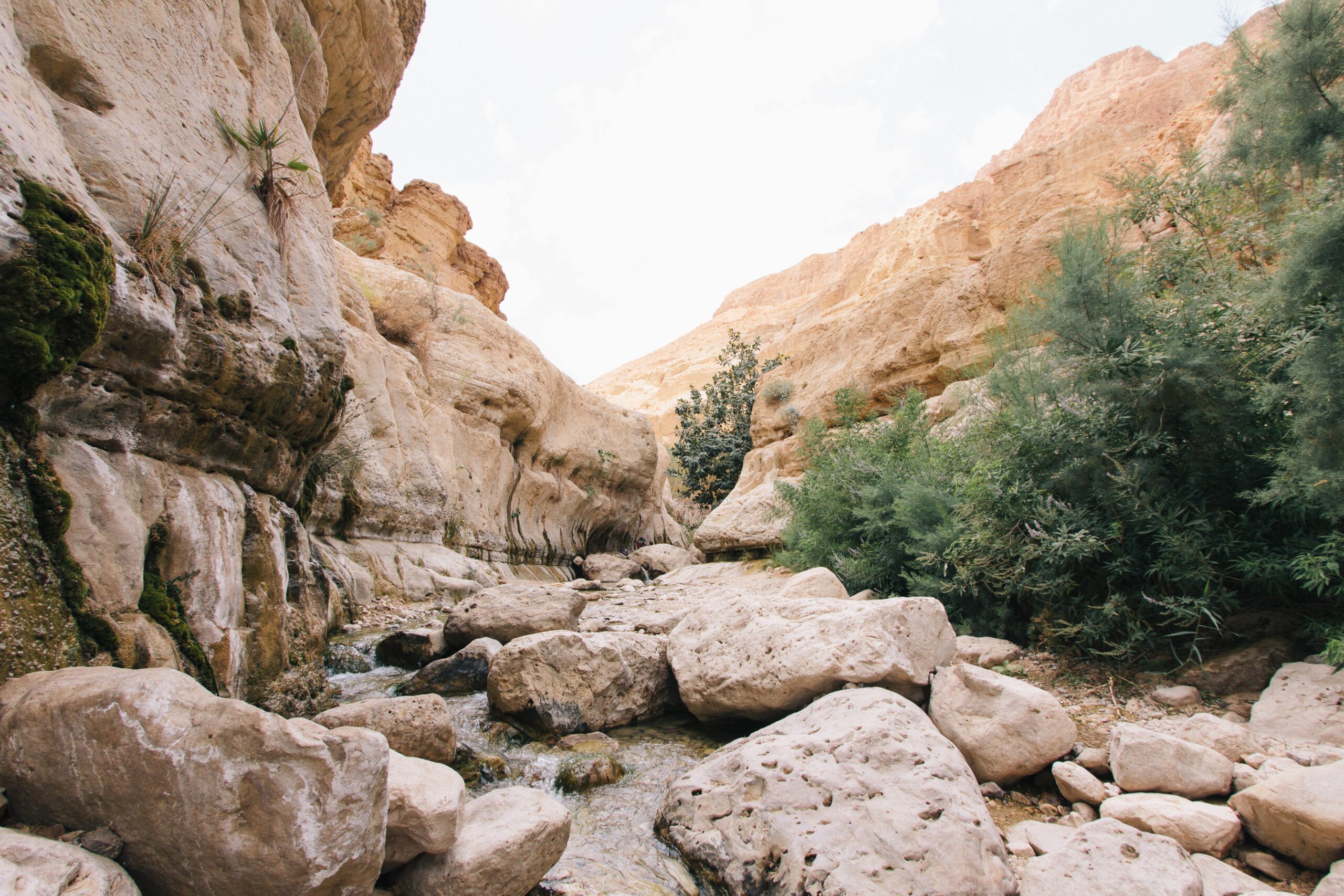
picture of rocks in a desert
Geologists know where to look for oil and gas

Petroleum geologists explore the earth for oil and gas resources. They use geological data to choose which places to drill for oil and which drilling methods to use based on the area of geology. They collect data using a variety of drilling equipment, gear, and specialized devices.

Entry-level petroleum geologists typically need a bachelor’s degree in geoscience. Their annual salary is estimated to be around USD$70,000.

Health, Safety, and Environment Manager

The health, safety, and environment managers or HSE managers plan and administer regulatory safety programs, review and update HSE regulations, and establish risk assessments to minimize dangers in the workplace.

An HSE manager requires a bachelor’s degree in environmental or occupational health. Their annual salary is predicted to be around USD$126,800.

Reservoir Engineer

These are the experts who study underground petroleum reserves. A reservoir engineer’s main duties include locating an ideal reservoir and establishing the best techniques for accessing its contents, frequently utilizing complex computer models. These engineers help businesses avoid underperforming wells that fail to satisfy demand.

This is a tech-heavy job like many others in the oil and gas industry. Those who aim to become reservoir engineers are usually well compensated as good positions normally need a graduate degree and industrial experience. Reservoir engineers earn an annual salary of USD$133,800 on average.

Mud Logger

Mud loggers are trained to observe and record drilling activities and provide information while extracting oil and gas. They are field professionals that gather samples for geologists. They supervise the collection, processing, management, and analysis of well samples.

They may also execute jobs such as field maintenance, describing rock samples, predicting adverse drilling conditions, and more. Their base salary is usually USD$103,035 per year. Pay can vary significantly depending on a person’s credentials, including education, certifications, additional expertise, and years in the field.

Offshore Oil And Gas Marine Specialist

Oil and gas companies need marine experts that can perform multiple tasks at sea. This is because ships and boats are regularly used to deliver crude oil, food, liquefied gas, etc. Their duties include refueling the ship, conducting underwater surveys, ensuring the safety and efficiency of oil and gas operations, and more.

A marine specialist’s average annual salary is USD$62,400 in the United States.

Technical Directors

Technical directors are among the highest-paid oil and gas professionals. They supervise the drilling teams, project managers, and other engineers. They also create and recommend company strategies.

A bachelor’s degree in Engineering or a similar subject is required. Approximately, their pay is $100,300 per year.

Professionals in the oil and gas industry have been in high demand and are well-compensated up to this day. These job opportunities require highly qualified people with the right skills and knowledge.

Find out which companies in the oil and gas sector are hiring right now and submit your application for the position that interests you.


Ukrainian Waldorf friends moving to Israel? The Spring School wants to help

0

olive branch waldorf school tel aviv

Shalom from the Aviv Waldorf community!

Are you coming urgently to Israel to settle? If yes, we are 400 families from the Tel Aviv-Jaffa community who want to help. (Russian to follow)

The Aviv School students and their families want to help Ukrainian refugees resettle in Israel. We want to help you find housing, supplies, education, community and opportunities that more closely match your way of life in the Ukraine.

We hope we can answer each and every request. Ask us in Russian, English, Hebrew or Arabic.

CONTACTS

English Contact Karin Kloosterman [email protected] WhatsApp +972 54-318-7449

контакт: Anna Kuntsman Rozenberg —> WhatsApp: +972 54 651 7951, [email protected]

Вальдорфская Школа Авив приветствует жителей Украины и предлагает свою помощь!


Если вам срочно пришлось переехать в Израиль, наши 400 семей из сообщества в Тель Авив- Яффо готовы помочь!

Ученики Школы Авив и их семьи хотят помочь украинским беженцам адаптироваться в Израиле. Мы готовы помочь в поиске жилья, провизии, образования, сообществ и всего, что может облегчить жизнь в данной ситуации!

Мы постараемся ответить на все интересующие вас вопросы на русском, иврите, английском и арабском языках

контакт: Anna Kuntsman Rozenberg —> +972 54 651 7951, [email protected]


Tips to get a killer smile

0
natural smile with plant help
Getting a smile may mean looking to natural solutions.

A set of gleaming white teeth not only enhances the beauty of your smile but also boosts your self-esteem as you face the world. But unfortunately, most of us suffer from multiple dental disorders, such as discolored yellow teeth, bleeding gums, cavities, toothache, and so on, due to our unhealthy dental habits and ageing, which has an impact on our personal and professional lives.

If you have difficulty deciding on the right ‘white teeth’ products, it is highly recommended that you do some research in advance. With so much information out there, it might sometimes be confusing what works.

Maintaining healthy teeth and gums minimizes the chances of developing periodontal disease and dental issues in the future. However, maintaining oral hygiene and keeping a beautiful smile is not always easy. 

Favorably, there are ways that can make it easier to keep your teeth white and your gums healthier, so you can have a healthy smile all year long. In this article, we will share with you some of the best remedies for white teeth and provide some valuable tips on how to go about it.

* Teeth whiteners 

The simplest way to get a good-looking smile is by using tooth whitener like super smile whitening, which helps you achieve pearly white teeth and a beautiful smile.

Nowadays, with the help of advanced technology, you can make your pearly white teeth with an at-home tooth whitening kit. All you need to do is apply the solution twice a day for two minutes for a month for best results, as it helps clean stained teeth due to alcoholic or carbonated drinks, junk food, and tobacco. 

* Oral Dental Hygiene

The best way to maintain healthy teeth and oral hygiene is by knowing and understanding the various factors that affect dental health. A lot of people are aware that good oral health is vital for overall health, but what about the cost?

Some estimates claim that the cost of poor dental habits is $42 billion each year. That’s why maintaining good dental practices is a great way to protect your wallet as well as your smile.

Maintaining good dental hygiene is all about keeping up with your brushing and flossing routine. These are essential steps, but there’s still more you can do to ensure a healthy mouth.

For example, you can use a dentist-recommended mouthwash that will keep your teeth clean, kill odor-causing bacteria, and leave your breath feeling fresh throughout the day.

One popular modern solution are NO BS Toothpaste tablets that provide a fluoride-free, mess-free alternative to traditional toothpaste while effectively maintaining oral hygiene. These tablets are easy to use and travel-friendly, making them a convenient choice for those looking to simplify their dental care routine.

* Mind your eating and drinking

It is strongly recommended that we keep track of what we eat and drink in order to preserve good health and strong teeth. We’re all aware that drinking water, eating vegetables and fruits, and doing daily exercise are the best ways to cure aching body parts.

On the other hand, fried junk food, excessive alcohol, coffee, tea, and tobacco use cause weak and discolored teeth and other dental issues connected to the enamel on your teeth.

Consuming these products leaves a stain on your teeth that makes your teeth look yellow and take away their sheen if not treated with time. In addition, it causes plaque, cavities, bad breath, and toothaches. 

* Visit the dentist regularly 

Most of us see our dentist when we have a tooth ailment, but scheduling two dental cleaning appointments per year and following their medical advice will spare you the headache of multiple dental problems.

If you catch tooth decay early, you’ll just require minor, less intrusive dental restorations. This preserves the tooth’s structure and stability while lowering treatment expenses. However, if decay is not treated, it can spread to other teeth and lead to illnesses throughout your body.

Why Does Your Organization Need A White Label LMS?

solar energy plant United Arab Emirates
A variable step size adaptive LMS algorithm is used for tracking in solar PV systems

An organization, while delivering training to employees, tries to highlight its brand and logo. However, developing an LMS often comes at a huge cost, and requires skills and technical expertise which the organization may not be able to meet. In such a scenario, they buy a ready-made and unbranded LMS software from a third-party vendor and give it their name. LMS can help optimize solar panel inputs and outputs and stabilize the grid. But the systems are costly. A white label LMS is a great solution for new green energy companies.

The term white label was first used in the music industry in the 90s. The DJs and radio stations would often put a white label on the CDs or cassettes to prevent the disclosure of the name of the source to their competitors. However, today, white labeling is widely used in different sectors like- clothing, software, cosmetics, and many more.

Now, before we move further, let us first also understand what is an LMS. 

A learning management system (LMS) is a web-based technology that helps in planning, delivering, and tracking online training programs. As the world is becoming more and more digitized, organizations too have changed the mode of training. Now training is given on a virtual platform. Seeing the way LMS is amassing immense popularity, the need for a white label LMS too has grown.

Need for a white label LMS-

  • Cost-saving-

The organization, instead of building an LMS from scratch, can outsource this work to a third-party vendor. In this way, it need not hire a team of technical experts who would charge exorbitant fees. The third-party vendor can customize the LMS as per the organization’s needs. 

  • Time-saving-

With a white label LMS, the organization can save time. It does away with the need to bring eLearning project managers and other experts on board to design an LMS for online training. Thus, the organization can focus on core business operations.

megapack tesla
Tesla’s megapack battery stations use an expensive but in house LMS
  • Plenty of alternatives-

White labeling LMS gives an upper hand to organizations to pick and choose the best LMS for their organization. This decision can be based on what kind of app you need, features you want, and whether your pocket can afford it or not.

  • Brand building

When the online learners or employees see an LMS platform under the organization’s name and logo, they become happier. Your organization’s brand is the basis for attracting online learners. When they see your organization’s logo and brand on the website, social media, and mobile apps, they can easily reach out to you. This aids in brand building of the organization that can help them funnel profits. 

  • Engage online learners-

Online learners’ engagement in the eLearning course depends on how the organization is trying to elevate the user experience. This can be explained as follows:

  • An off-shelf LMS will definitely push you out of the race and decrease the online learner’s engagement. However, with a white label LMS, the organization can customize and tailor the eLearning experience. For instance, they can decide on the theme, graphics, and colors along with other design elements on their own. 
  • White Label LMS provides cloud-based LMS solutions too. This eradicates the need to install any software or hardware. The online learners can get online training by simply clicking on the login option on the web portal. The online instructors and eLearning project managers can upload the eLearning courses and material on the cloud, which can be accessed anytime and anywhere.

Wrapping up-

The eLearning industry is fastly growing today and organizations are running after the best LMS platforms. Here, the white label LMS provides the best solution to tap into the world of online training and learning without any worries. 

How to grow roots in the air

hydroponics urban farming tel aviv
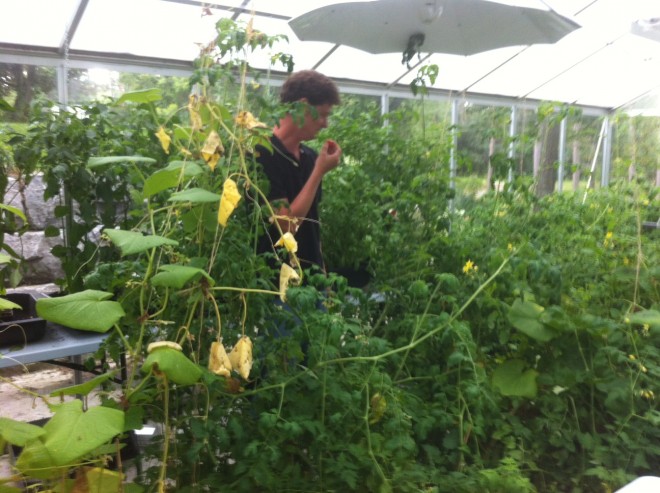
Refugees from Sudan in Israel learn how to be modern farmers using soilless agriculture called hydroponics.

Sometimes, to see the roots, you have to look up.

Roots are normally associated with things that live underground, in the damp and the dark. Think of turnips, radishes and yams. However, many plants make their roots above ground.  Ivy uses its roots to climb on buildings and the mighty ficus tree uses them to support their large branches.  What makes plants form roots in the “wrong place,” so to speak? That would be like us humans sprouting legs from our shoulders.

In a study published this week in the prestigious journal Science, Hebrew University of Jerusalem Professor Idan Efroni and his team found the hidden mechanism that enables aerial roots to happen. By decomposing the stem to individual cells, the team identified the extremely rare cells that, when conditions are ripe, cause roots to grow in the air.

“Superficially, these look like other plant cells which is why they evaded detection for so long,” Efroni explained. “We used new techniques to closely screen thousands of cells, one-by-one. We knew that by finding the cells that can make roots, we would be able to look for the ‘switch’ that turns them on.”

Plants make roots from small organs called meristems.  By closely examining these unique cells, Dr. Naama Gil-Yarom, a research associate at the lab, was able to catch them in the act of making a meristem and to identify the genes that are active right at the transition point.  One gene in particular stood out, and when the HU PhD student Moutasem Omary used CRISPR to delete this gene, the plants lost their ability to make aerial roots.

When Efroni and his team studied the genome, they were in for a surprise. Right next to the gene that controlled aerial roots production was a very similar gene. “We recognized it immediately from previous studies as the gene that controls the formation of underground roots,” shared Efroni, “I remember thinking that we have just stumbled upon the central hub that controls root formation.” Indeed, when the researchers disabled all of these genes, the plants could not grow any roots at all.

A tool for hydroponics and soilless agriculture?

hydroponics jordan, USAID
Hydroponics farming is a good solution for growing food in countries where water is scarce. A USAID program in Jordan gives training to local farmers so they can grow their own food and livelihood.

By tracing the evolution of these genes, the team found that many major crops, such as sweet potatoes, beans, tomato, rice, maize and wheat, share this dual root-control-system. “The ability to make aerial roots is highly advantageous to the plant,” explained Efroni. “In the event that the underground roots are flooded or damaged, the plant can grow aerial roots and survive the assault,” he added.  Plants evolved this ability early on and never forgot how to do it.

Looking ahead, the group plans to modify the DNA code at the root control cluster to make customized above- and below- ground root systems.  This could be applied in hydroponic, aquaponic and aeroponic agriculture systems.

As Efroni concluded, “here in Israel, to make the most use of the land we’ve got, we need to optimize the way our food crops grow and utilize resources.  Doing that is a daunting and complex task, but, step by step, we’re getting there.”


Use of Commercial Trucks and Tippers for Businesses

eco trucks and tippers


If you are a construction site owner or manager, you will be familiar with the need for sturdy trucks and tippers. Whether it is carrying a large load or working on a construction site, a tipper truck will be able to handle the load and keep the site safe. Choosing a truck for the task will depend on the types of materials to be moved. For example, if you are hauling loose material, you may want to consider a heavy-duty steel tipper. However, this will add weight to the truck.

Tipper Trucks Are Important To Everyone’s Business:

If you want a high-capacity tipper truck, consider the TGS tippers. These tipper trucks are available with six-wheel or eight-wheel configurations, with single or hub reduction axles. Each is equipped with a 9-speed gearbox and an air-conditioned cabin. If you need a higher-capacity truck, a higher-capacity model may be best for you.

Growing Market of Tipper Trucks:

Although the market for tipper trucks is growing day by day. Growth for truck manufacturers has been exceptional in the past few years. As the economy grows, demand will increase. Unlike in the past, newer models are better equipped to handle the increasing volume of raw materials being transported. It’s important to understand the market dynamics of the truck and tipper industry to make the right buying decision.

The market for trucks and tippers has been a slow-moving sector since the Covid-19 pandemic. Nevertheless, the sector has been gaining pace recently. While many projects were halted due to the epidemic, construction and infrastructure projects are picking up speed and demand has increased. With a truck and a tipper, you’ll be working with other professionals and have a consistent source of income. There are numerous benefits for a truck and a tipper.

Type of Material:

When choosing a truck and tipper for your construction, you should consider the type of materials you’re moving. The size of your tipper truck will determine the number of materials you need to transport. It will also impact the time it takes to load the truck and drive to the waste facility. If you’re working on a construction site, you can choose a vehicle for that worksite. For this, MAN TGX heavy-duty trucks are the best option for you. The size of the tipper truck is an important factor to consider.

Trucks and Tippers Manufacturing Companies:

Several companies manufacture and sell trucks and tippers for construction projects. This segment is driven by a variety of reasons, including the need to transport large amounts of material. Regardless of the purpose of the tipper, the industry is a vital one for both manufacturers and consumers. If you need a tipper, you’ll find plenty of opportunities in the construction and mining sectors. With a truck and tipper, you’ll be able to do more with your money.

Most tipper trucks are built with three or four axles. They can carry 20 tons of stone and soil. While this may seem like a large number, it’s important to consider the type of material you’ll be hauling. A heavier load will require a smaller vehicle than a light-duty vehicle. But if you need to move materials between buildings, you’ll need to use a tipper that has three ways of movement.


Vikki Nicolai La Crosse WI Explains 10 Small-but-Big Things You Can Do Right Now To Go Green

0
forest bathing, woman hipster contemplating nature in dark green forest
Feel you are reaching out to a forest of abyss? Time to go green

Going green is a huge trend right now, and for a good reason! It’s important to do our part to take care of our planet. But sometimes, it can feel overwhelming or impossible to make a difference. That’s why Vikki Nicolai La Crosse WI has put together this list of 10 small-but-big things you can do right now to go green! These are simple changes that will have a big impact on the environment. So what are you waiting for? Start going green today!

Plant A Tree

One of the simplest things you can do to go green plant a tree! Trees provide shade and help cool down cities, which is important in the summertime. They also absorb carbon dioxide and release oxygen, helping to improve air quality. And finally, trees are a natural filter for water, which helps reduce runoff and pollution. So plant a tree today and help make your community more sustainable!

Switch To Energy-Efficient Light Bulbs

Switching to energy-efficient light bulbs is easy to save money and conserve energy. LED light bulbs use up to 90% less energy than traditional incandescent light bulbs, and they last up to 25 times longer! So make the switch to LED light bulbs today and start saving money on your energy bill.

Unplug Electronics When Not In Use

Another simple way to conserve energy is to unplug electronics when not in use, says Vikki Nicolai La Crosse WI. TVs, computers, printers, and other electronics use a lot of energy when they’re plugged in but not turned on. So unplug them when you’re not using them to save some energy (and money!). You are saving an average of $100 per year by doing this!

Wash Clothes In Cold Water Whenever Possible

washing clothes in cold water can save a ton of energy! Not only does it conserve energy, but it also helps your clothes last longer. Washing clothes in cold water can save up to $60 per year, so make the switch today and start saving. If you have the option to wash your clothes in cold water, we recommend taking it!

Take Shorter Showers

Showering is one of the most common ways people use water (and electricity). So if you want to save some water (and money), take shorter showers! Aim for five minutes or less, and see how much of a difference it makes. You can also save water by not letting the water run while you’re brushing your teeth or washing dishes.

Use Less Water When Brushing Your Teeth Or Washing Dishes

Another easy way to conserve water is to use less when brushing your teeth or washing dishes. Please turn off the water when you’re not rinsing your mouth or dishes, and see how much of a difference it makes. You can save up to five gallons of water per day this way!

Get A Smart Thermostat

A great way to conserve energy (and money!) is to get a smart thermostat. Smart thermostats learn your habits and preferences, and they can automatically adjust the temperature in your home accordingly. This means that you won’t have to adjust the thermostat manually every time someone leaves the house or comes home, which can save a lot of energy!

Hang Your Clothes Out To Dry

There’s no need to use the dryer when you can hang your clothes out to dry instead! Not only does this conserve energy, but it also helps your clothes last longer, says Vikki Nicolai La Crosse WI. Plus, it’s a great way to save money on your energy bill, and it’s a great way to get some fresh air and sunshine!

Bring Your Own Bags To The Store

Another easy way to reduce waste is to bring your bags to the store. Most stores offer reusable shopping bags these days, and many of them are even made from recycled materials. So bring your bags to the store and help reduce the amount of plastic waste created each year. So make sure you always have a few bags in your purse or backpack so you can avoid using disposable plastic bags.

Recycle Everything That Can Be Recycled

Last but not least, recycle everything that can be recycled! This includes plastics, paper, aluminum cans, and more, says Vikki Nicolai La Crosse WI. Recycling is one of the easiest ways to reduce waste and help the environment, so make sure you recycle everything you can. By recycling these materials, we prevent them from ending up in landfills or waterways. And the best part is that many recyclable materials can be recycled for free!

While some of these steps may seem small, they can add up to make a big impact on going green. And the great thing is that many of these tips are easy and cost-effective ways to reduce your environmental footprint. So why not start today? Pick one or two of these tips and see how you can implement them in your own life. Going green doesn’t have to be hard – it can be as simple as making a few small changes.

Microplastics are pairing up with pollutants. This is bad news.

0
Microplastics testicles poster
Microplastics are in your testicles. By Laurie Balbo, 2024

Microplastics are tiny bits of plastics less than 5mm in size and they are everywhere. More than 10 years ago we championed reporting on the issue, covering the growing plastic gyres the size of countries in the Pacific Ocean – remember when we interviewed David de Rothschild about it? Microplastics are choking the seas, they are rolling around deserts where we breath them in, and recently are being found in the stool (poop) of newborns.

More worrying is that microplastics themselves are not inert, and they have the ability to pull along other environmental toxins with them, amplifying the toxicity effect, finds a new research study. 

“Microplastics are a kind of magnet for environmental pollutants, ferrying them through our digestive tract, and releasing them in a concentrated form in certain areas – thus causing increased toxicity,” report researchers in the journal Chemosphere. 

The researchers in the study from Tel Aviv University found that microplastics absorb and concentrate toxic organic substances at sea and increase this toxicity by a factor of 10, which may lead to a severe impact on human health. The study was led by Ines Zucker together with Ph.D. student Andrey Eitan Rubin. 

What exactly are microplastics again?

Microplastics are a general name for plastic materials that appear in a configuration of particles and microscopic fibers the size of tens of microns and up to a few millimeters. 

Microplastics are found almost everywhere: in water wells, in soil, airborne in deserts, in food products, in water bottles, and even in glaciers at the North Pole. The researchers explain that since plastic is not a natural material, it decomposes very slowly in nature, over thousands of years. Throughout the process, the microplastic particles encounter environmental pollutants that attach to plastic surfaces, and as a pair, they may pose a threat to the health of the environment and to humans.                  

Heading towards the Great Pacific Garbage Patch                                              

Zucker explains: “In this study we showed that even very low concentrations of environmental pollutants, which are non-toxic to humans, [stick] to the microplastic result in significant increase in toxicity.

Andrey Eitan Rubin adds: “The amount of waste dumped into the ocean every year is enormous – the best known example is the plastic island in the Pacific Ocean, which has an area 80 times larger than the State of Israel. But this is not just a remote problem – from our preliminary monitoring data show that Israel’s shores are among the most polluted with microplastic waste.”

Each of the microplastic particles secreted in these areas has tremendous potential for harm as they serve as an effective and stable platform for any pollutant that they may encounter on their way to the human body, the researchers point out. 

How to avoid microplastics?

plastic soup, boy with plastic heap at sea
Plastic Soup draws an atlas of plastics and where they are accumulating around the world.

The solution?

Zero Waste Shops

Stop buying plastic in all sorts of ways. In Canada and Europe zero-waste stores encourage the refilling of your own brought-from-home bags, jars and containers. In Israel my friend Alison has started a company called WeFill where you subscribe to a service that delivers dry goods and cleaning products in reusable sacks and containers that you send back with your new order every week. That’s a great way to start.

Google “refilling station for household and personal care products” and you will find a location that may do the same near you.

Water

Use tap water and purify it with a filter and refill stainless steel or glass bottles for everyday use.

Toys and Household

Avoid buying Dollar Store items (which emit other kinds of toxins) and purchase things you’d be happy to pass down. Toys made from wood and bamboo are a good start.

Fashion

Avoid synthetic clothing – which is hard to do. According to Plastic Soup: As consumers, we often feel hopeless when we hear about problems on such a global scale. Replacing your plastic bottle with a reusable one will not be enough this time. Make sure you ventilate and vacuum your home frequently to ensure that the plastic fibers are being collected. 

When purchasing clothing or textiles for your home, choose sustainably sourced natural materials as much as possible. Try to stay away from fast fashion, as this model only encourages overconsumption of clothes, especially synthetic ones like polyester.

Or ask your favorite fashion brand to take responsibility for the clothes they put on the market. They must guarantee that their products do not put our environment, ourselves, and, most importantly, the next generations at risk.

Microplastics found in baby poop

0

microplastics in babies, baby wrapped in yellow swaddle It started with the plastic Pacific gyre some years ago in the sea. David de Rothschild set sail with a plastic boat, The Plastiki, to document the extent of it all and we interviewed him about it, concerned obviously.

Fast forward and we have Dutchman Boyan Slat trying to clean it all up, and researchers taking stock on how many single flipflops wind up on the shores of paradise on the Seychelles

boyan slat ocean cleanup

But plastics – why should you care if you don’t care about turtles choking? It turns out microplastics are terribly bad for you if you consume them and can amplify the effects of other toxins in the environment by clinging to them, found a recent study out of Israel.

And the amount of microplastics being found in our bodies from drinking out of plastic bottles to eating fish that eat plastic, is frightening. One study has found an alarming amount of microplastics in the poop of babies. How it gets there and what will happen later in life is anyone’s guess – or your new research mission. 

Some of the microplastics were found in meconium, the first stool from a newborn, meaning they came through the mother. Some were found later and it is guessed that it is getting to the babies through teethers, water bottles, and toys. BPA-free? Probably not enough. Read below for more details on the pilot study.

What are microplastics?

Microplastics — tiny plastic pieces less than 5 mm in size — are everywhere, from indoor dust to food to bottled water. So it’s not surprising that scientists have detected these particles in the feces of people and pets. In a small pilot study, researchers reporting in Environmental Science & Technology Letters discovered that infants have higher amounts of one type of microplastic in their stool than adults. Health effects, if any, are uncertain.

Little is known about the magnitude of human exposure to microplastics or their health effects. Although microplastics were once thought to pass harmlessly through the gastrointestinal tract and exit the body, recent studies suggest that the tiniest pieces can cross cell membranes and enter the circulation system.

In cells and laboratory animals, microplastic exposure can cause cell death, inflammation and metabolic disorders. Kurunthachalam Kannan at the New York University School of Medicine and colleagues wanted to assess human exposure to two common microplastics — polyethylene terephthalate (PET) and polycarbonate (PC) — by measuring levels in infant and adult feces.

Microplasics in meconium?!?

The researchers used mass spectrometry to determine the concentrations of PET and PC microplastics in six infant and 10 adult feces samples collected from New York state, as well as in three samples of meconium (a newborn infant’s first stool).

All samples contained at least one type of microplastic. Although average levels of fecal PC microplastics were similar between adults and infants, infant stool contained, on average, more than 10 times higher PET concentrations than that of adults.

plastic soup, boy with plastic heap at sea
Plastic Soup draws an atlas of plastics and where they are accumulating around the world.

Infants could be exposed to higher levels of microplastics through their extensive use of products such as bottles, teethers and toys, the researchers say. However, they note that larger studies are needed to corroborate these findings.

How Much of an Environmental Impact Do NFTs and Cryptocurrencies Have?

0
eddy flux biodome grow food on mars
Crypto can be connected to blockchain data that helps save the world. But running crypto servers damage the world in special ways. 

The environmental impact of cryptocurrency has been greatly discussed in recent years. Both NFTs and cryptocurrency are based on blockchain which is still a technology that needs to be developed into a more sustainable form. Read more on the subject here.

NFTs are hotter than warm bread at the moment. But one of the massive issues surrounding NFTs and cryptocurrency as well as their environmental impact. Blockchain is responsible for the emission of millions of tons of carbon dioxide into the atmosphere. Some believe that this is a problem that we can and must solve quickly. 

While others are more skeptical about whether it is even possible to bring the emission down to a level where we can continue doing this. Now everything seems to be going in the direction of cryptocurrency and NFTs, so it looks like a problem that we will have to figure out how to solve. Luckily, many people are working on exactly this now. 

The hype around NFTs

First, let’s take a look at the hype. Cryptocurrencies are expanding rapidly all over the world, and today there are more than 5000 different types of crypto. In recent years, and last year NFTs exploded. The popularity of these non-fungible tokens went through the roof. Artists are making millions, and miners are working their way through play-to-earn games of every scale. If you want to know about what NFTs are, the hype around them, and how to invest yourself, you can go to https://buynft.com/ to get all the information.

The environmental issues of blockchain

You can’t deny the fact that blockchain takes up a lot of energy. But it’s important to remember that every single digital process takes up energy. As it is now, mining takes up massive amounts of energy. But things are changing in the world of crypto. The environmental impact is one of the top priorities for crypto platforms. Some companies are working in alternative information storage while others are focusing their mining on places that primarily use renewable energy. 

At the moment, a little more than a third of all bitcoins can be traced to renewable sources. Many are working on solving this problem and are highly optimistic about changing the emissions of blockchain for the better. One of the initiatives is a ZK which is a tool that can move transactions offline and thereby lowering the amount of energy needed for transactions. Innovations like this are what are going to make a big difference. 

What does the future hold?

As it is at the moment, everything seems to indicate that the big issues around blockchain and its high carbon-dioxide emissions will be solved. The future does without a doubt hold much more digital currency and assets, so this is an issue that will be taken care of. The question is how quick this is going to go and how the general public opinion will land on this issue. 

Eco-Friendly Travel Destinations in France 

0
Get lost in paradise: Sant’Amanza Beach (Beach Maora), Pietrosella, France

Being cautious and attentive to the environment is extremely important, especially nowadays. So, it should also be the case while traveling, and if you are an eco-activist planning your next trip to France, you should know the best eco-friendly destinations here. Check out the best ones that are both fulfilling and tourism-sustainable! 

Corsica

The fourth-largest Mediterranean island is a perfect choice if you want your holiday green and healthy! 

It has over 83 thousand hectares of natural reserves, and the surroundings are so clean and expansive that it has earned itself recognition for its natural heritage. Very well preserved, Corsica is the perfect environment for blooming marine life, and some of the areas are declared UNESCO World Heritage Sites! 

The island is perfect for eco-activists and tourists looking to spend time outside. You can go hiking, bike-riding and, of course, outings at the sea! Breathe in the fresh air, breathe out happiness! 

Click here to plan the best and most inspirational tours to France to your liking! 

Cevennes

Greenery everywhere you look – that is what awaits you here in the mountain range of the Cevennes! Set in the Massif Central, the area is known to be an excellent location for you to practice green tourism!

It is mainly known for a national park that spreads across 4.000 km2, with nature perfectly untouched and immaculate, and you will have a great time hiking, horse or donkey riding, and canoeing. But that is not all! When your muscles are sore, and your lungs are full of fresh air, treat yourself to a glass of wine. The locals are very proud of their wine-making heritage, and you will get to try out new, authentic flavors! 

Brittany

More than just a peninsula – Brittany is a traveler’s dream. Especially one’s that is into all things green and fresh! 

This area has over 20 green stations and 34 blue flag beaches, because of which Brittany was listed among the top 100 most sustainable destinations in the world! 

Here, you get to admire the natural landscapes and take long walks in the parks, forests, and lovely streets. Make sure to visit any of the three national, regional parks and, of course, enjoy the beach! 

Keep in mind that the coastline here is over 1.700 km long, so you will definitely find space for relaxation and alone time if needed! 

Ecrins National Park

Settled at the perfect location between the northern and southern Alps, Ecrins National Park is a greenie’s dream come true! The area is so perfectly preserved it will blow your mind, and you will get to challenge yourself by trying to climb any of the 150 high mountain peeks or getting close to some of the glaciers that are spread over 10.000 hectares. 

If spending your days on a picnic is not for you and you thrive for something inspiring and exciting, try your capacity at GR 54, a mythical, long-distance hiking route initially prepared for sports enthusiasts, who usually take 10 to 15 days to complete it! 

Vercors

A place given by nature, seemingly designed for people to find calmness, Vercors hits differently if you are practicing ecotourism. 

Set between Valence and Grenoble, the region is a top choice if you wish to disconnect from the rest of the world and find serenity in flora and fauna. You will not be disturbed in any way, as the locals are quiet and calm, and the tourists that come here are usually seeking the same solace. On top of all that, Via Vecros, the first mountain path in France, connecting the villages of the plateau, is forbidden to cars or any type of vehicles, so the silence is on your side!

New Aquitaine

Already priding itself with the seashore, moorland forests, and mountains, the region of New Aquitaine is famous for its greenery and locals that are exceptionally environmentally cautious. It has five regional nature parks and is actually home to the most extensive vineyards in France! 

If you are into biking, you will be happy to know that New Aquitaine is crossed by the Velodysee, the longest waymarked cycle trail! Apart from biking, you can explore the area on foot or by boat, which will give you a different view of the surroundings.

Also, we suggest you make time to head to Dordogne – one of France’s most popular locations for ecotourism. Inspect the countryside, authentic villages, and beautiful, natural scenery! 

As you can see, dear traveler, there are plenty of eco-friendly destinations for you to visit in France! You should probably avoid the more prominent cities, though, as they are sadly way more polluted and not as focused on keeping a safe environment. 

That being said, the smaller regions of France are more eco-aware, so you should have a great, fresh, green time on your trip! 

6 Tips on How to Spend Less on Utilities

0

save money on utility bills

Owning a home provides a sense of security, stability, and comfort. However, it also comes at a high cost. Apart from making monthly mortgage payments and spending money on repairs and maintenance, you also have recurring utility bills to deal with. 

At most, you will have to spend at least $400 on energy and water. If you have a growing family, the number could rise along with your utility consumption. Fortunately, there are a few ways that can help you save money on utility costs. 

  1. Upgrade your lighting

If you have been living in your home for more than a decade, consider upgrading your lights to energy-efficient bulbs. For this, you have the option between CFL and LED bulbs which consume less energy but generate a brighter illumination. In addition, these lights last longer so you won’t have to spend on replacement bulbs now and then.

  1. Install a programmable thermostat

A programmable thermostat offers a wide range of cost-saving features. It allows for greater climate control through zoned heating and cooling. Not only that, this piece of tech can adjust room temperatures automatically based on indoor conditions. This can be convenient since you won’t have to waste time bringing the indoor temperature to your preferred level.

  1. Patch up any cracks and gaps

During the summer and winter months, you will have to rely on your HVAC unit to provide you with optimal cooling and heating. However, you could end up wasting money if there are air leaks around your home. To get the most out of your HVAC system without spending above your utility budget, consider weatherstripping your windows and applying caulk on gaps and holes where cables and pipes run through. By sealing up your home, you can prevent cool or hot air from escaping.

  1. Shift to a more affordable energy plan

One of the best ways to reduce your electricity bills is to opt-out of your current energy provider. This would make sense if you notice that your monthly bills are going up even if you haven’t changed your consumption habits. You can shop around for energy plans at rates you can afford. If you are in Texas, consider getting a fixed-rate plan from companies like Energy Texas that offer 100% renewable energy at lower prices. 

  1. Upgrade your appliances 

Although buying new household appliances seems counterintuitive, it could help you save more money in the long run. That’s because outdated appliances tend to consume more power. On top of that, they may not perform like they used to, so it’s better that you swap these for Energy Star-rated appliances. The long-term energy savings should outweigh the cost of purchasing them.

  1. Keep track of your consumption 

It’s important to monitor how much energy and water you’re consuming every month. Reducing your utility bills boils down to your consumption habits. Even if you have bought the latest appliances and replaced your energy provider, learning to unplug electronics after use or adjusting your weather heater goes a long way.

If you want to save more money each month, consider these tips so you can bring your $400 utility budget further down.

Big Data invention saves wildlife using movement, GPS

0
bats fruit city TV
Bats, whales, bugs, fish and all creatures big and small move to stay alive. A new invention can track animal movements to avoid bird flu epidemics and help give wildlife an easier path to survival.

Movement is ubiquitous across the natural world. Whales and bats may navigate with the stars and the magnetic poles. And with light – though artificial city lights are messing up wildlife. All organisms move, actively or passively, regularly or during specific life stages, to meet energy, survival, reproductive and social demands.  Movement affects a variety of ecological processes and the ability of individuals to cope with human-induced, rapid environmental changes.

Professor Ran Nathan of the Hebrew University of Jerusalem, and colleagues around the world, reviewed a variety of technologies that have been used to gather information on the movements of mammals, birds, fish, and other wildlife in their natural environments. 

Ran Nathan, Tel Aviv University, GPS wildlife
Ran Nathan

Over the past decade, technological advances have transformed the field of movement ecology – the integrated study of organismal movement – from a data-poor to a data-rich discipline. 

In a review published in the prestigious journal Science, Nathan and his colleagues assessed the main tools, insights, challenges and opportunities of the big-data revolution in movement ecology. So if you are looking to save the planet this is how you might apply your engineering degree or MBA into something good for the planet

Wildlife tracking technologies vary in how they tackle the basic trade-offs between data collection rate, spatial coverage, tracking duration and the size of tracked animals. 

Look at reverse GPS

Among eight major tracking technologies examined in this study, a technology called “reverse-GPS” stood out in its exceptional capacity to produce big data on animal movement in a cost-effective manner. For background, see our 2011 story on bats getting wired with GPS

Other tracking technologies, such as GPS devices, computer vision systems and radars, can also produce big data, and the researchers recommended viewing all major tracking technologies as complementary rather than competing alternatives.       

whale underwater
Whales can be watched and maybe spared from being beached.


A new reverse-GPS system called ATLAS developed by Nathan and Professor Sivan Toledo of Tel Aviv University and their teams, at the Minerva Center for Movement Ecology.  It proved unparalleled in creating a rich database of wild animal movement by simultaneously tracking many dozens of wild animals with great accuracy (a few meters) at a high resolution (every second) and over a relatively long time period (months) using small, inexpensive radio tags attached to the animal. 

black winged kitw with GPS tracker
A black-winged kite with a GPS tracker used in the study.

The system has been installed in Israel, UK, the Netherlands, Germany and elsewhere around the world, allowing researchers to tackle basic movement ecology questions that were out of reach until today. 

“This sophisticated tracking system has ushered in a range of exciting discoveries and novel insights,” says Nathan. “including the first evidence for the existence of a cognitive map in a wild animal (a fruit bat), a pioneering study linking variation among individual birds (pheasants) in their cognitive ability and space-use patterns, and a discovery of a notable spatial segregation in foraging areas among bats that roost in two adjacent colonies, owing to an individual’s memory and information transfer among bats, with surprisingly no evidence for competition as a driving force,” Nathan added.

GPS for water-borne wildlife

Another reverse-GPS system known as “acoustic telemetry” uses acoustic tags to track fish and other aquatic animals under water.  Various systems of this kind were installed in rivers, lakes and seas around the world, yielding new scientific insights and important guidelines for dealing with human-inflicted risks for wildlife. 

For example, by using an acoustic tracking system in European rivers, researchers found that downstream-migrating eels–a critically endangered species– and Atlantic salmons change their behavior upon encountering dams, likely increasing their energy expenditure and mortality risk.

Another important tracking technology is GPS, which has been widely used to globally track relatively large animals and can periodically track animals at high resolution to uncover the factors generating variation in animal behavior and to assist biodiversity conservation and ecosystem management. For example, GPS tracking allowed Nathan and his students to reveal that young vultures from the declining population in Israel climb rising-air columns (thermals) much less efficiently than do experienced adult vultures when those thermals are drifted by winds.  Elsewhere, GPS tracking of critically endangered California condors can provide early alerts to avoid collision with wind turbines in the area, while GPS tracking of albatrosses can help locate illegal fishing vessels across vast oceans.

Pioneering movement ecology

In another example too recent to be included in the review, GPS tracking provided unique information about the avian flu epidemic that led to the death of thousands of cranes in Israel earlier during this winter. 

Nathan explains: “At the first sign of death among a few dozen cranes, a much greater proportion of our GPS-tagged cranes died or were suspected to be infected given the sudden reduction in their movement and activity. We informed the authorities that a drastic mortality event is coming, as unfortunately did happen, and that urgent measures should be taken. Later, the team was able to trace the fate of infected birds and found that some had eventually recovered.  We now closely watch the data from cranes that winter in Africa to monitor the possible second wave of the outbreak when millions of migrating birds will soon arrive,” Nathan emphasized.  

Movement ecology is rapidly expanding scientific frontiers, providing improved opportunities for conservation and insights into wild animal movements through large interdisciplinary and collaborative frameworks.