

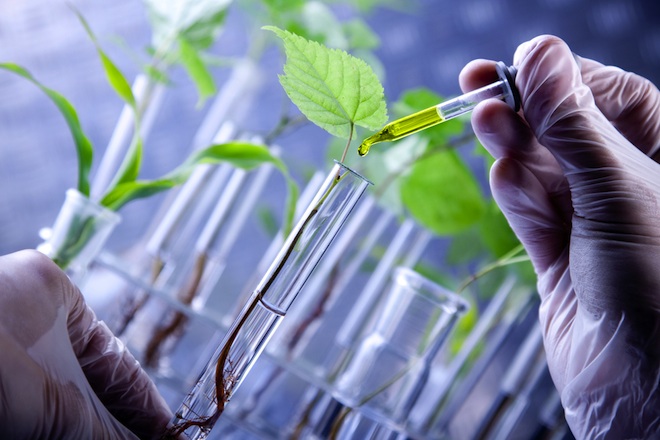
An Israeli researcher has come up with a biomimicry method for solving the wastewater problem by using nature’s wisdom.
Due to the low availability of water in the Middle East, Israel has become one of the world leaders in water reuse, recycling nearly 90% of its entire wastewater, primarily for agricultural purposes. Recently, a novel system has emerged aiming to further advance Israel’s efforts to supply its rapidly growing population with enough water.
“We gathered several existing technologies into a very efficient biomimicry method to treat this water,” said Dr. Ezra Orlofsky, an Israeli researcher of the Ben-Gurion University of the Negev.
Biomimicry is an approach to innovation seeking sustainable solutions to human challenges by emulating nature’s time-tested patterns and strategies. In the process developed by Orlofsky and his colleagues, the draining properties of the soil and the absorptive capacities of the plants are used to purify the brownish residual water produced by livestock industries, leaving it crystal clear and ready to reuse.
Aside from meat, milk, and eggs, livestock industries produce wastes that are harmful to the environment if not well managed. The production and accumulation of large volumes of waste have increased as a result of the quest for profit maximization by farmers in the face of the growing demand for their products. However, the disposal of these wastes continues to be a challenge from the standpoints of cost, environmental safety, and biosecurity.
The amount of waste produced by livestock and poultry in factory farms in the United States, for example, is almost 13 times higher than that of the entire human population. In the United Kingdom, every year, 150 million tons of livestock waste is dumped directly in the environment. But where does all of this waste end up?
Wastewater treatment facility
Orlofsky’s research takes place in Kiryat Shmona, in the North of Israel at a wastewater treatment facility that consists of a series of physical and biological stages. During the first steps, solid waste is filtered from the wastewater and separated for composting, while the liquid part flows through three individual artificial wetlands and eventually comes out as clean irrigation water.
Artificial wetlands are engineered systems that use natural functions from the soil, vegetation, and other organisms and are typically used to treat wastewater, greywater or stormwater runoff.
In a case study, Orlofsky’s and his team focused on the elimination of sodium in the wastewater. At the outset, the raw wastewater appeared brownish and cloudy, but after it went through the wetlands, it is crystal clear and odorless.
So how does it work? The plant roots acidify the soil with their eliminated carbon dioxide, which leads to sodium removal, while the plant itself takes up sodium from the soil for its own vital processes.
Orlofsky’s objective is to provide a closed system to circulate agro-industrial wastewater on the site on which it is produced while also complying with the standards for the reuse of treated wastewater.
The scientists believe that the new system might help solve the problem of wastewater treatment in regions with lower levels of infrastructure while simultaneously creating a source of clean water for crop irrigation.
The project was first presented at the Dahlia Greidinger International Symposium on March 2019 at the Israel Institute of Technology. This annual conference, organized and supported by The Dahlia Greidinger Memorial Fund, focuses on topics around sustainable food production, in this case, soil-water and environmental conservation. Every year, researchers from all over the world attend the international symposium.
One of the most significant findings of the study is the plant that the researchers found to be most suitable for the wastewater recycling process. This plant (Sesuvium portulacastrum, commonly known as shoreline purslane) – a succulent plant that grows in coastal areas throughout many parts of the world – turned out to also have cosmetic and pharmaceutical applications.
Value-added byproducts
In addition to cleaning wastewater and producing a source of irrigation water, there are some value-added byproducts generated by the plant during the purification process: antioxidant and emollients.
Seventeen bioactive compounds were identified, including squalene and vitamin E (emollients). “Truly one of nature’s greatest emollients, squalene is quickly and efficiently absorbed deep into the skin, restoring healthy suppleness and flexibility without leaving an oily residue” repeated Orlofsky from what Zih-Rou Huang had previously written in his scientific publication. “We are trying to find out if we can make a commercial value out of this byproducts as the plant itself is basically a no-cost crop,” stated Dr. Orlofsky.
“What we are proposing is a change of paradigm, from a linear to a circular agro-industrial economy,” says Orlofsky, who is interested in avoiding the dumping of wastewater. “In the linear concept there is a food input so that a product is made, and consequently there is a solid or liquid waste; while in the circular approach, farm animals are fed to generate the main product (meat, milk, eggs, etc.), which later leads to resource mining and waste valorization, and you also get a value-added byproduct”.
The problem: untreated wastewater
Orlofsky’s biomimicry method may not only be a solution to the intractable problems of wastewater treatment but, it could also have a positive effect on public health.
The disposal of municipal wastewater poses a threat to human health as drinking water sources potentially become contaminated by pathogenic microorganisms and toxic chemicals.
Transmission of diseases to humans through meat or dairy products from cattle or sheep grazing on wastewater-irrigated fields may happen. Also, irrigating crops that are often consumed uncooked, with raw untreated wastewater may lead to parasite infections in humans. Health problems can appear among sewage farm workers and population groups residing near wastewater-irrigated fields.
Therefore, the proper treatment and sanitary handling of wastewater should be of high priority if we are to protect public health and preserve the ecosystem services.
Yet, Orlofsky’s solution is simple: “the cattle are fed, the main product is created, and the residue is resource-mined. Thus, waste is valorized, and value-added byproducts are generated”.



[…] ZAVIT article was also published in The Jewish Journal on […]
[…] ZAVIT article was also published in The Jewish Journal on […]