
HelloFresh’s pride prepping ad raises a bigger question: we are we still outsourcing dinner?

Food, Sustainable Food, Agriculture, Home Gardening, Local Food, Consumer Culture, Labor Rights, Corporate Responsibility, Ethical Consumption, Green Living, Sustainability, Food Systems, Community Gardens, Packaging Waste, Organic Food, Climate Change, Social Responsibility
The backlash against HelloFresh’s Pride Month marketing campaign has sparked a wider conversation about food, labor, sustainability, and whether consumers should reconnect with local farmers, butchers, and home gardens instead of relying on subscription meal kits.

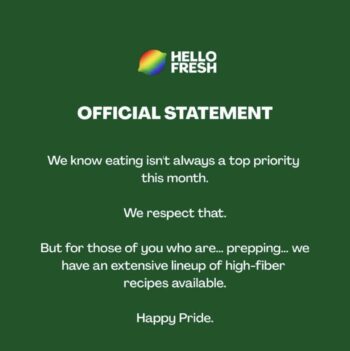
HelloFresh has found itself in the middle of an unexpected controversy after a Pride Month social media promotion suggested high-fiber recipes for customers “prepping” for Pride celebrations. Some customers laughed over the anal sex reference. Others were offended. The campaign quickly drew criticism online, with detractors comparing it to other recent corporate marketing misfires that became lightning rods in broader cultural debates, including campaigns from Bud Light and Jaguar.

But amid the outrage and social media arguments, a more interesting question has emerged: why have we become so dependent on corporations to tell us what to eat in the first place?

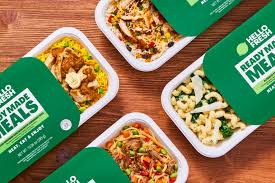
For years, meal-kit companies have sold convenience as a lifestyle. Fresh ingredients arrive at the doorstep. Recipes are pre-planned. Measurements are done for you. Dinner becomes a subscription. While it can be a great way to support an organic farm by ordering a box of food every week, portioned meal kits are something else.

The formula of box kits has been successful because modern life is busy. Families juggle work, school, caregiving, and endless digital distractions. A box of ingredients waiting at the door can feel like a solution. Yet the convenience comes at a cost.

Every meal kit represents layers of packaging, shipping, shippers, refrigeration, warehousing, plastics, and logistics. It also places consumers one step further from the source of their food.

The HelloFresh backlash took another turn when critics began sharing concerns about the company’s labor practices. Among them was Joshua Garrison, who posts on X as @Bearded_Bigot and says he previously worked as a contractor delivering for HelloFresh.

In a lengthy post, Garrison described what he viewed as a disconnect between corporate marketing efforts and treatment of workers. He criticized the company’s reliance on temporary labor and accused management of focusing on branding while delivery workers and warehouse staff faced low wages and job insecurity.

His account reflects personal allegations and opinions that Green Prophet has not independently verified. However, it touched a nerve among consumers already questioning the priorities of large food-delivery companies.

Those concerns are not entirely disconnected from documented events.

In 2024, the U.S. Department of Labor announced a settlement involving migrant children who had been employed by a staffing contractor supplying labor to HelloFresh facilities. The company stated that it did not knowingly employ children and said it had strengthened oversight procedures after learning of the violations.

For many consumers, the incident raised uncomfortable questions about how much they really know about the companies preparing and delivering their food. It also raises a larger sustainability question. What would happen if more people grew even a small portion of their own food? (We have the original Victory Garden handbook. You can download it here).
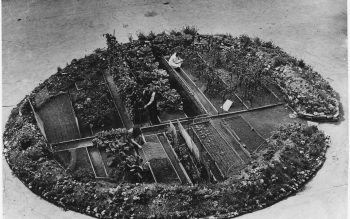
 

bomb crater, victory garden in London
Victory Gardens were made to help during wartime as food fell short

Imagine: a tomato plant on a balcony. A pot of basil on a windowsill, a community garden plot and a relationship with a local butcher or neighborhood produce vendor. These choices won’t replace global food systems overnight. Nor will everyone suddenly have the time or space to grow their own vegetables. But there is value in rebuilding a direct connection to food.

A home-cooked meal does not require a marketing department. A backyard tomato does not need a social media campaign. A chicken purchased from a local butcher comes with accountability that no national subscription service can replicate.

The irony is that most of the world’s great cuisines were built on simple ingredients.

Shakshuka is delicious and so easy to make

You don’t need a subscription box to make shakshuka, lentil soup, roasted vegetables, or a simple salad. You need a few basic ingredients, some confidence in the kitchen, and a willingness to experiment. The debate over HelloFresh’s Pride campaign will eventually fade, just as other social media controversies have. We remember an Italian pasta company being anti-gay, and they survived.

What may endure is a growing consumer realization that the most important questions are not about clever marketing slogans or seasonal campaigns. They are about who grows our food, who packs it, who delivers it, how workers are treated, how much waste is created, and whether communities are becoming more resilient or more dependent on distant corporations.


Karin Kloosterman
Karin Kloostermanhttp://www.greenprophet.com
Karin Kloosterman is an award-winning journalist, innovation strategist, and founder of Green Prophet, one of the Middle East’s pioneering sustainability platforms. She has ranked in the Top 10 of Verizon innovation competitions, participated in NASA-linked challenges, and spoken worldwide on climate, food security, and future resilience. With an IoT technology patent, features in Canada’s National Post, and leadership inside teams building next-generation agricultural and planetary systems — including Mars-farming concepts — Karin operates at the intersection of storytelling, science, and systems change. She doesn’t report on the future – she helps design it. Reach out directly to [email protected]

Read More

TRENDING

A visit to Amirim, Israel’s first all-vegetarian village in the Galilee

Just 15 kilometers from Tzfat there is a moshav that was founded in the late 50s that was ideologically influenced by organic, vegetarian and vegan principles. My hostess at Ohn-Bar, the tzimmer where I stayed, explained that the people of Amirim were among the pioneers of Israel’s strong vegetarian movement.

Park Slope food coop boycotts “Gay Tahini” already boycotted by Muslims in Israel

The tragedy is that this kind of activism rarely builds peace. It builds tribes instead of humanity. It rewards outrage over dialogue. Once an enlightenment group starts deciding which nationalities are acceptable to boycott publicly, history suggests the line rarely stops where activists think it will.

How to Effectively Promote Your Sustainability Progress

Before promoting sustainability progress, companies must ensure their initiatives are genuine and measurable. Today’s audiences are increasingly skeptical of vague environmental claims, particularly as awareness of “greenwashing” has grown.

Dragon fruit health benefits

Dragon fruit is also known by several other names depending on where you encounter it. In much of the U.S. and Latin America it’s commonly called pitaya or pitahaya, terms you’ll often see used interchangeably with dragon fruit on market labels. Botanically, the fruit comes from a cactus sometimes referred to as night-blooming cereus, a nod to the plant’s dramatic flowers that open after dark. Older or poetic names like strawberry pear, belle of the night, or queen of the night still appear occasionally, though today dragon fruit and pitaya are the names most shoppers recognize.

Stay at Michelberger in Berlin, your home base for the last cool city on earth

Berlin still feels like the last real city where you can just walk out the door and live without a schedule. Staying at Michelberger gave us a base in the middle of Friedrichshain’s raw energy – near RAW-Gelände, Skatehalle, Boxi and all the vegan food and alt shops you could want. From there, Berlin unfolds on foot, by tram, and without ever needing a tourist plan.

Locals From Rishon Fight IKEA

Big Box stores are a pretty new concept in Israel, and thank God that not every Israeli city wants them in their backyard. A word from someone who has see the beautiful farmland around her hometown Newmarket, Ontario stripped and converted into vulgar strip malls of big box shops: they have no place in a healthy and sustainable town or city.

The Jewish National Fund Meets An Inconvenient Truth

According to the JNF, it has transformed thousands of acres of barren land into green forests in Israel. They state that each person emits about 23 tons of carbon per year, estimating that each tree planted can absorb one ton of carbon in its lifetime. That's a whole lot of trees you'd need to be planting. Could so many fit in Israel?

How to quiet noise from construction in your office

Streets need to be resurfaced in New York but the humming and grinding noise is unsettling. Noise is environmental pollution. 

EarthX and a blueprint for sustainable investing

Trammell S. Crow, a Dallas-based businessman and father of four, is focusing his efforts on impact investing, and media that focuses on saving the planet through EarthX.

Mining Afghanistan’s Mineral Discoveries Similar to Avatar

Now that American forces in Afghanistan are commemorating the longest period of any war that America has been involved in, including the 1965-73 Vietnam War, the recent discoveries of large and extremely valuable mineral and metal deposits may finally bring to light a reason to continue the presence of US fighting forces in this war torn and backward country.

From Pilot Plant to Global Stage: How Aduro Clean Technologies’ 2026 Expansion Signals a Turning Point for Chemical Recycling Investors Like Yazan Al Homsi

The company's Next Generation Process (NGP) Pilot Plant in London, Ontario, has officially moved into initial operating campaigns, generating the kind of structured, repeatable data that separates laboratory promise from commercial viability.

Nobul’s Regan McGee on Shareholder Value: “Complacency Is the Silent Killer” 

Why the governance framework designed to protect shareholders so...

Should You Invest in the Private Market?

startustartup Unlike public stock exchanges, which offer daily trading, strict...

Popular Categories