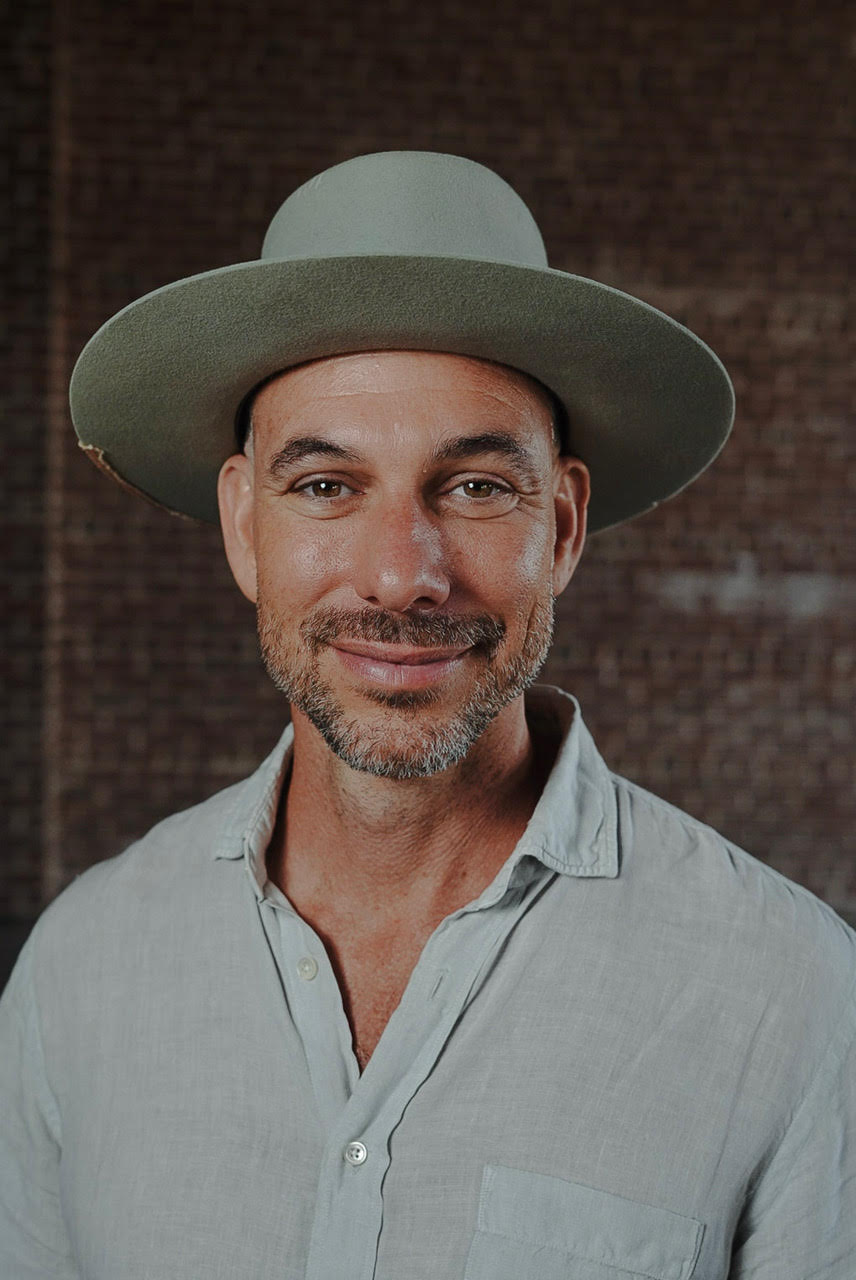

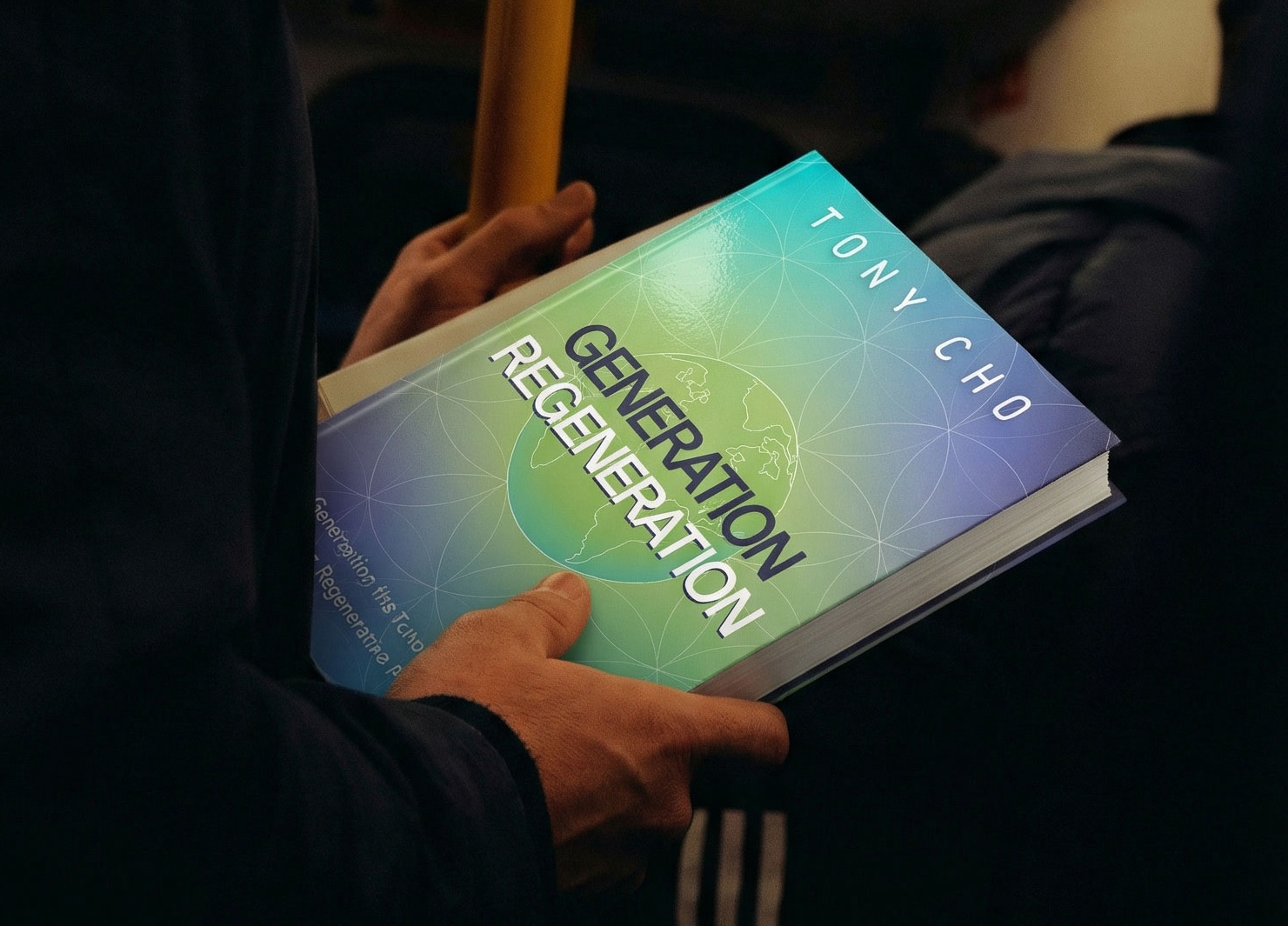
Generation Regeneration, launching August 2026, is a book by Tony Cho positioned as a blueprint for the future of cities: it’s a piece of thought leadership aimed at investors, planners, students, and policymakers trying to make sense of urban life in an age of climate stress and social fragmentation. When Green Prophet wrote about California’s first farm to table community in California called The Cannery, we received hundreds of emails about it. Back then the idea was fresh and new and it resonated with people looking for a new kind of suburb and intentional community.
But Tony’s new book explores the surface of what will make people and planet happy. Behind his book sits a message and a business: regenerative real estate development. District-scale projects like PHXJAX in Jacksonville and investment vehicles, including a Portugal-based fund tied to the Golden Visa program. In Cho’s model, culture, community, and ecology are not side effects of development, they are part of the value proposition.
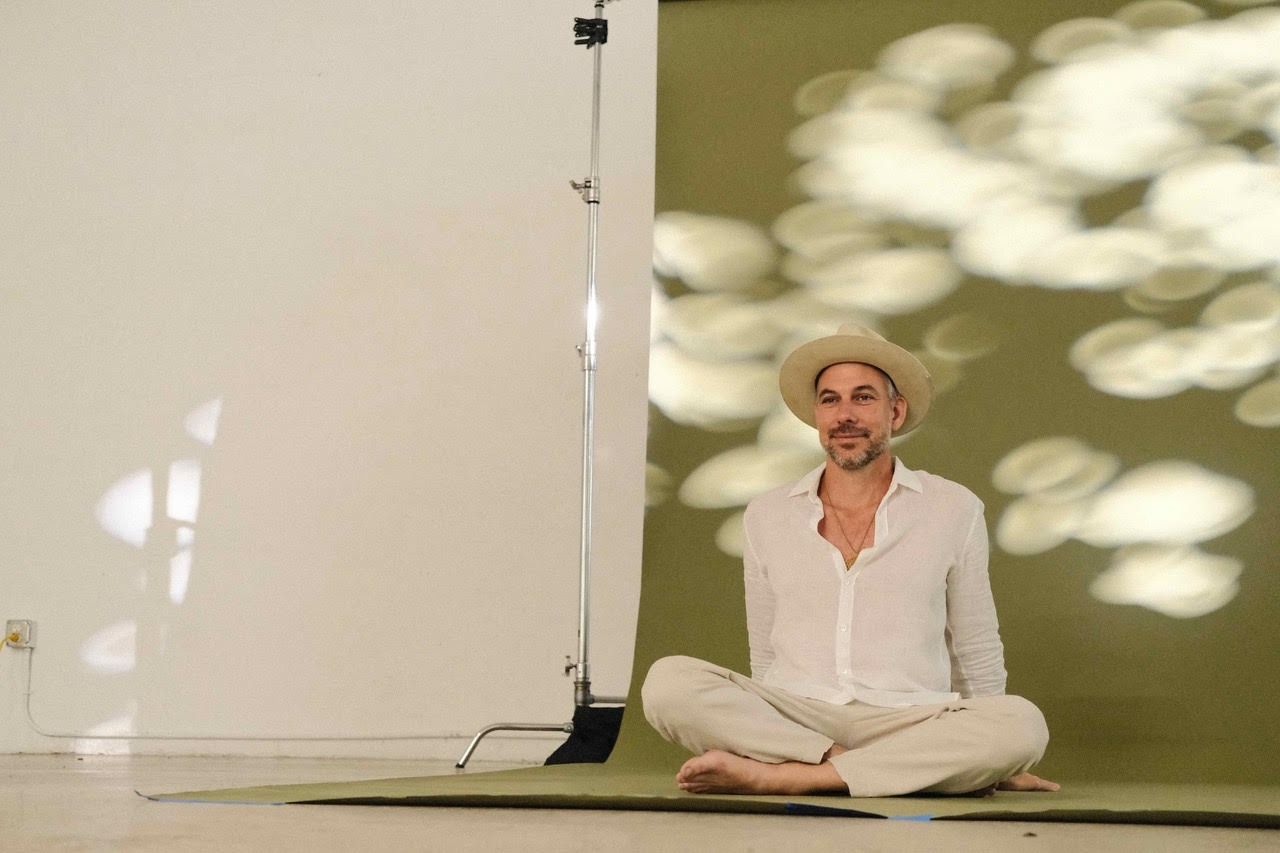
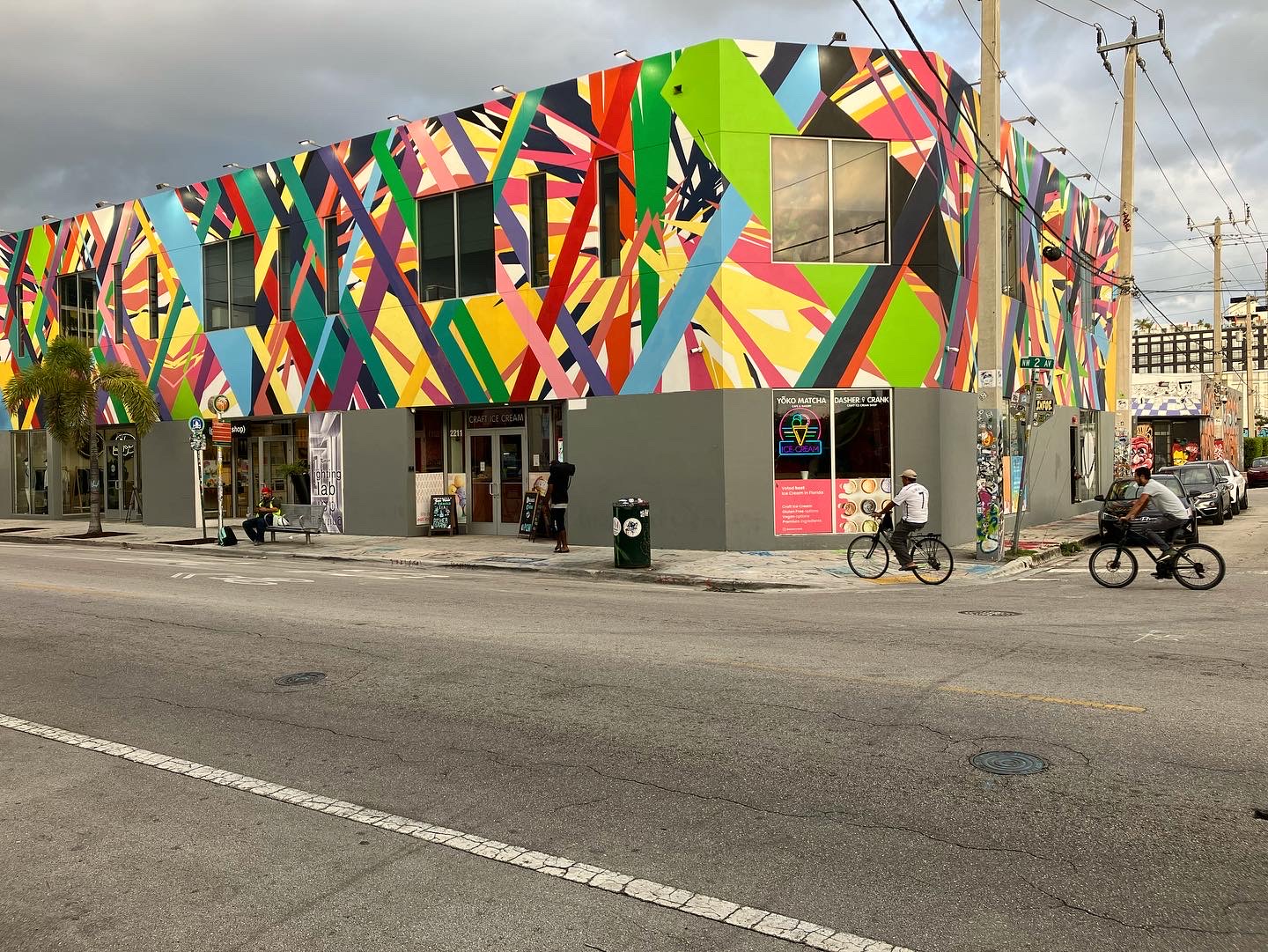
Tony is a regenerative developer and community builder focused on designing cities as living ecosystems that support human connection and ecological balance. A key figure in Miami’s urban transformation, he helped shape the Wynwood Arts District and founded the Magic City Innovation District. Influenced by an unconventional upbringing that included time in an ashram, Cho brings a spiritual lens to real estate, blending culture, community, and capital into what he calls regenerative placemaking.
Call it regenerative placemaking, or strip it down further: a new way of packaging cities as living systems that can generate both meaning and returns. We spoke with Cho about how the model works, who it serves, and whether cities can truly be built like ecosystems, without repeating the extractive patterns they claim to replace. Thousands of communities around the world have tried to build alternative communities, and communes. Nothing to date has survived to become a replicable model for greatness. Does Tony have new answers?
Interview: Tony Cho on Regenerative Placemaking and the Future of Cities
Green Prophet: You talk about regenerative placemaking almost like a living system. Where does money fit into that? Is it philanthropy, or something else?
Tony Cho: Real estate value creation is the financial engine — but its purpose should be to serve the community, not extract from it. Strategic public-private partnership is what unlocks a district’s potential in the first place: public investment de-risks the environment, private capital activates it, and together they generate the income streams that sustain operations over time.
That real estate-derived value then becomes the container — the stable financial infrastructure that allows grant programming and philanthropic investment to do what they do best: fund social and educational programming, community events, and youth engagement.
We’re actively demonstrating this across Florida, which I talk about in my forthcoming book Generation Regeneration: Codesigning the Future of Cities Through Regenerative Placemaking coming out this August.
Green Prophet: That sounds balanced in theory, but real estate has a long history of extracting value from communities. What keeps this from becoming just another version of that?
Tony Cho: Community participation has never been a box-ticking exercise for us — it’s been foundational from day one. From early visioning workshops to open meetings, surveys, and collaborative design sessions, residents and cultural stakeholders have helped shape public programming and activations, define what local success looks like, give feedback on design and build strategy, and co-curate arts, events, business incubation, and youth priorities.
We say “we build with you, not just for you.” That distinction is the difference between a development that lands in a community and one that grows from it.
Green Prophet: You’ve worked in Miami and Jacksonville — places with layered histories and tensions. What lessons translate to older port cities or culturally complex places like Jaffa?
Tony Cho: Decades of neighbourhood and district work has taught me a few things that I believe travel well across geographies and cultural contexts.
First — start with people and plants, not buildings. Before a single blueprint is drawn, we ask: who lives here, and what once grew here? Listening to long-time residents and reading the native ecology of a place — its soils, its waterways, its indigenous plant communities — are not separate acts. They’re the same act. Transformation that lasts is always rooted in what came before.
Second — pair cultural narrative with economic strategy. Historic and port cities aren’t just real estate opportunities; they’re living stories with layers of identity, memory, and meaning. The most resilient districts weave culture and commerce together — public art, festivals, and markets alongside mixed-use development and eco-literacy — so that each reinforces the other rather than replacing it.
Third — hybrid financing creates resilience. Blending private capital, public incentives, and mission-aligned funding rather than relying on any single source is what allows a project to weather political cycles, market shifts, and the inevitable friction of long-term development.
And fourth — let community programs lead, not just follow, development. Spaces enlivened by real community life — education, youth programming, makers, artisans — scale more equitably and more durably than places that simply layer new uses onto existing fabric without cultural rootedness.
In places with deep historical layering — where displacement and cultural erasure are not theoretical risks — these principles aren’t just best practices. They’re ethical imperatives.
The community isn’t the audience for the development. They’re its co-authors.
Green Prophet: You’re now expanding internationally, including into Portugal. Is regenerative placemaking becoming a global model, or is this just another way to package real estate for investors?

Tony Cho: Yes — and Portugal is where that expansion is taking shape most concretely right now. Future of Cities is expanding into Europe through a venture capital fund that qualifies for Portugal’s Golden Visa program. The fund is designed to invest in a portfolio guided by our Regenerative Placemaking strategy, with at least 60% of investments in Portugal and the remainder primarily in the U.S.
The two core investment themes are hospitality and community revitalization — which should feel very familiar to anyone who has followed our work in Jacksonville and Miami.
Portugal made sense for a number of reasons. It has been voted Europe’s best destination, holds one of the world’s most powerful passports, and is emerging as a genuine leader in regeneration and sustainability. But beyond the metrics, it’s a country with historic port cities, rich cultural layering, and neighborhoods that are ripe for the kind of adaptive, community-rooted development we practice.
More broadly, while there aren’t formal Regenerative Placemaking branches overseas just yet, the underlying framework is being discussed and explored in cities around the world — at global forums, summits, and in direct conversations with communities navigating growth.
The core idea travels: ground the project in community identity, align financial sustainability with social outcomes, and co-design with local stakeholders from day one.
Green Prophet: Final question, can cities really be built like ecosystems, or is that just language?
Tony Cho: The principles that are shaping our current projects — adaptive reuse, hybrid financing, community co-design, cultural preservation alongside economic vitality — are not uniquely American ideas. They’re responses to universal challenges that cities everywhere are facing. The idea is simple, even if the execution is complex: align human systems with living systems. When you do that, cities don’t just grow — they evolve.
In a world of smart cities and sensor grids, Cho is betting on something more resilient: when people are given a place to belong, they will do the work of regeneration themselves.