Hydrophilis SCUBA gear could make us one with the sea

Hydrophilis, Oliver Isler’s experimental rebreather suit, reimagines diving by reducing drag, eliminating bubbles, and bringing humans closer to the natural movement of marine life.

Oliver Isler didn’t begin with a product idea. He began with a dream. “More than fifteen years ago,” he said to In Depth Magazine, “I had a beautiful dream in which I was swimming peacefully among whales and dolphins,” he writes, recalling the moment that set everything in motion. When he woke, the thought stayed with him: perhaps with a small, integrated breathing system, a human could move through the ocean with something closer to that same ease.

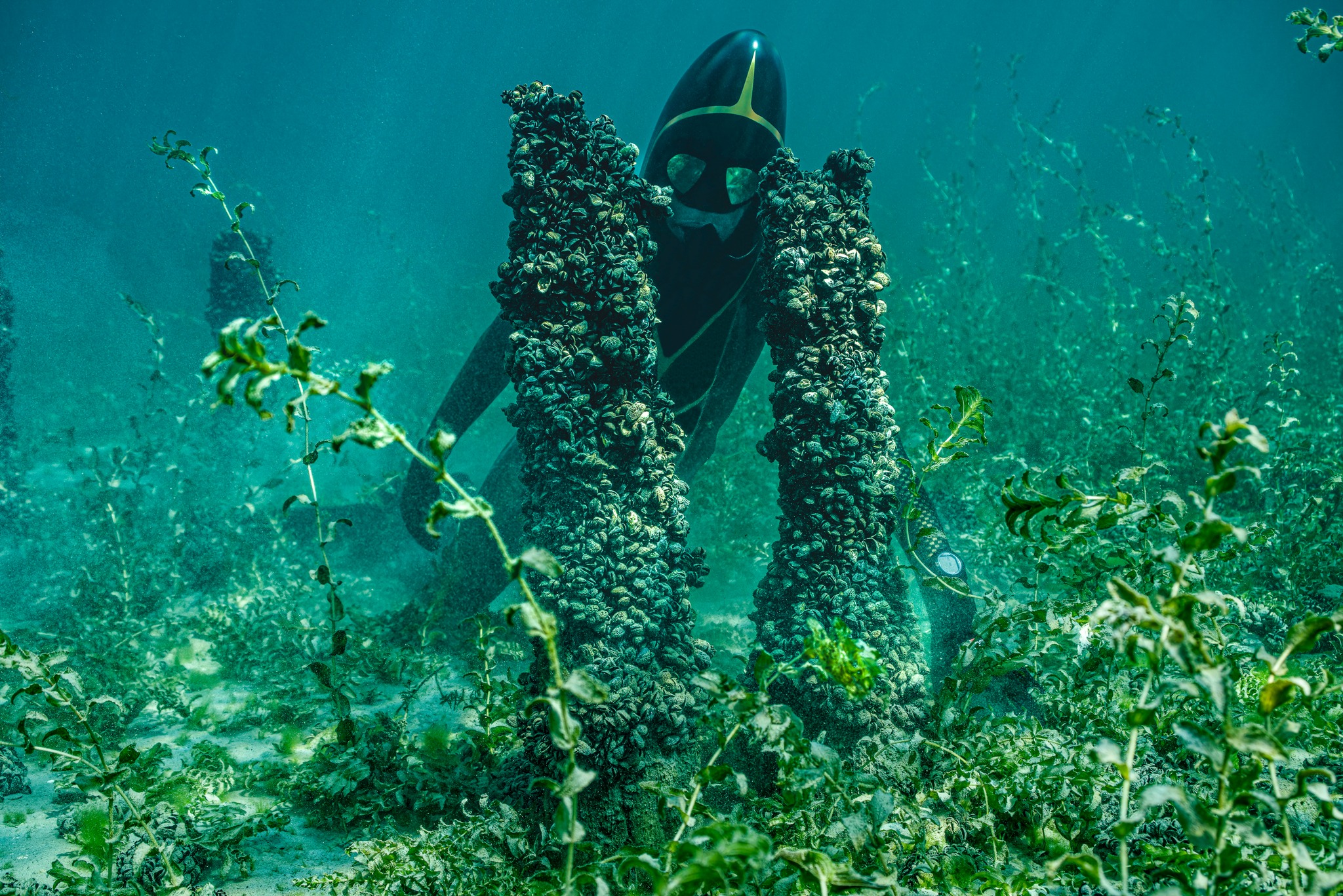
From that idea came Hydrophilis, a device that looks less like dive gear and more like an attempt to reshape the human body into something hydrodynamic. When I first learned to dive, it was no easy task connecting all the parts of the breathing apparatus. Under the water, it never really felt like it belonged to me. Could this new invention make Scuba diving more accessible and safe?

Related: Are diving trips to the Rea Sea safe? 
Hydrophilis, Oliver Isler, rebreather suit, closed circuit rebreather, future of scuba diving, underwater breathing technology, hydrodynamic diving gear, bubble-free diving, silent diving system, advanced dive equipment, mini rebreather, freediving innovation, scuba gear innovation, underwater exploration technology, Cousteau diving legacy, streamlined diving suit, low drag diving equipment, experimental dive gear, ocean technology, diving without tanks
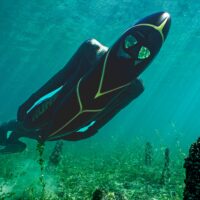
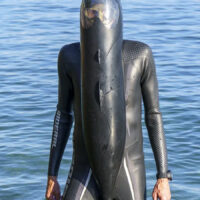
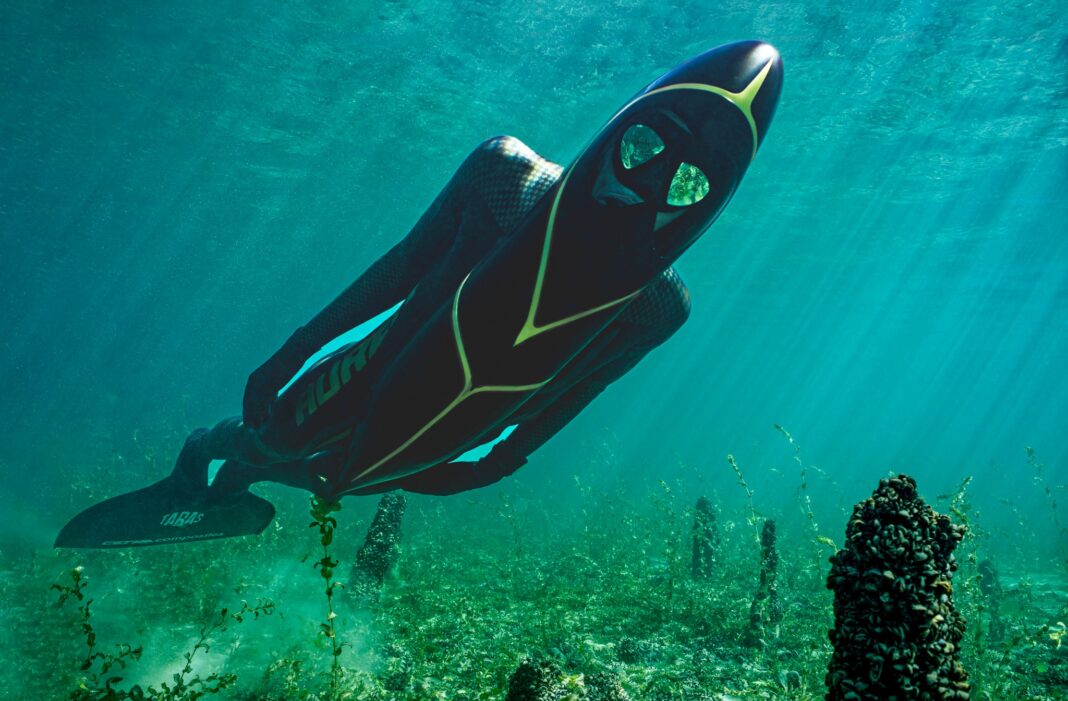
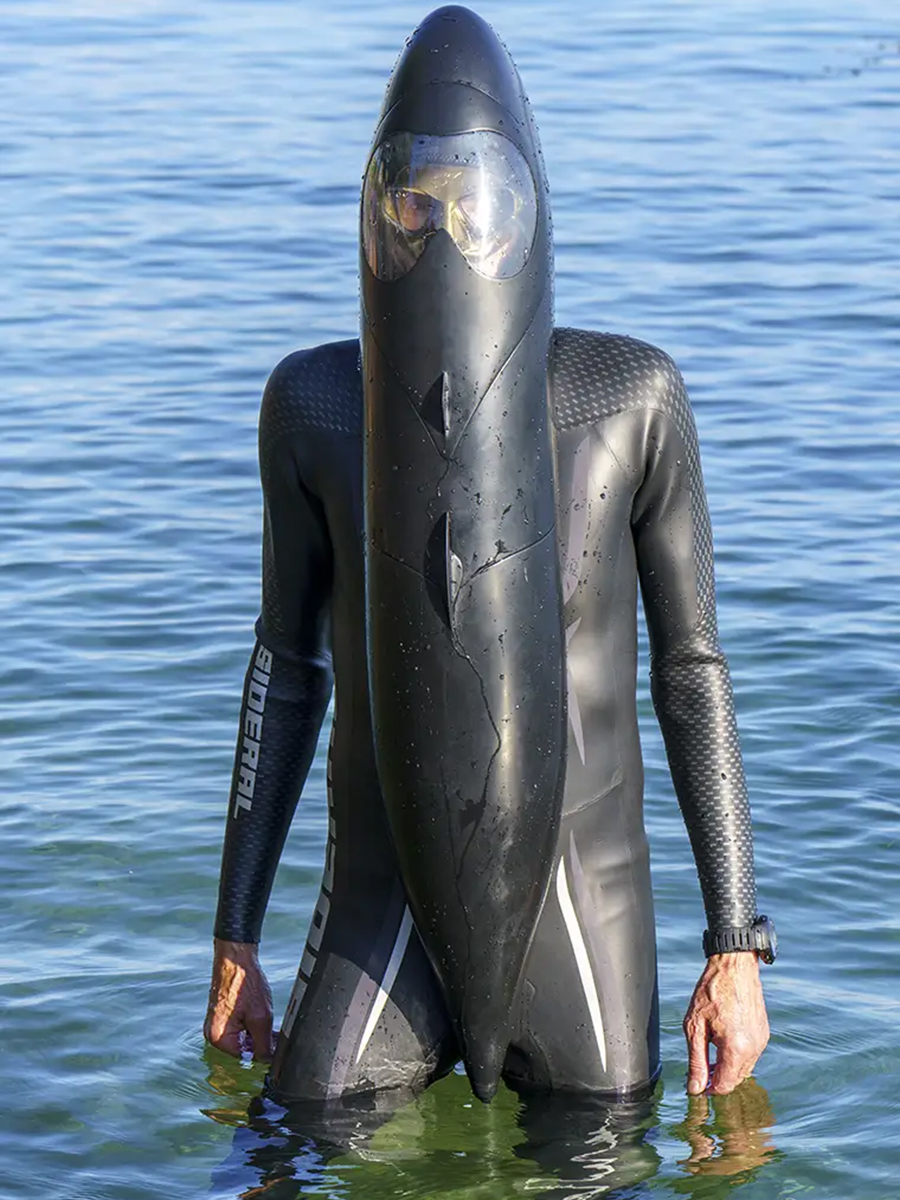
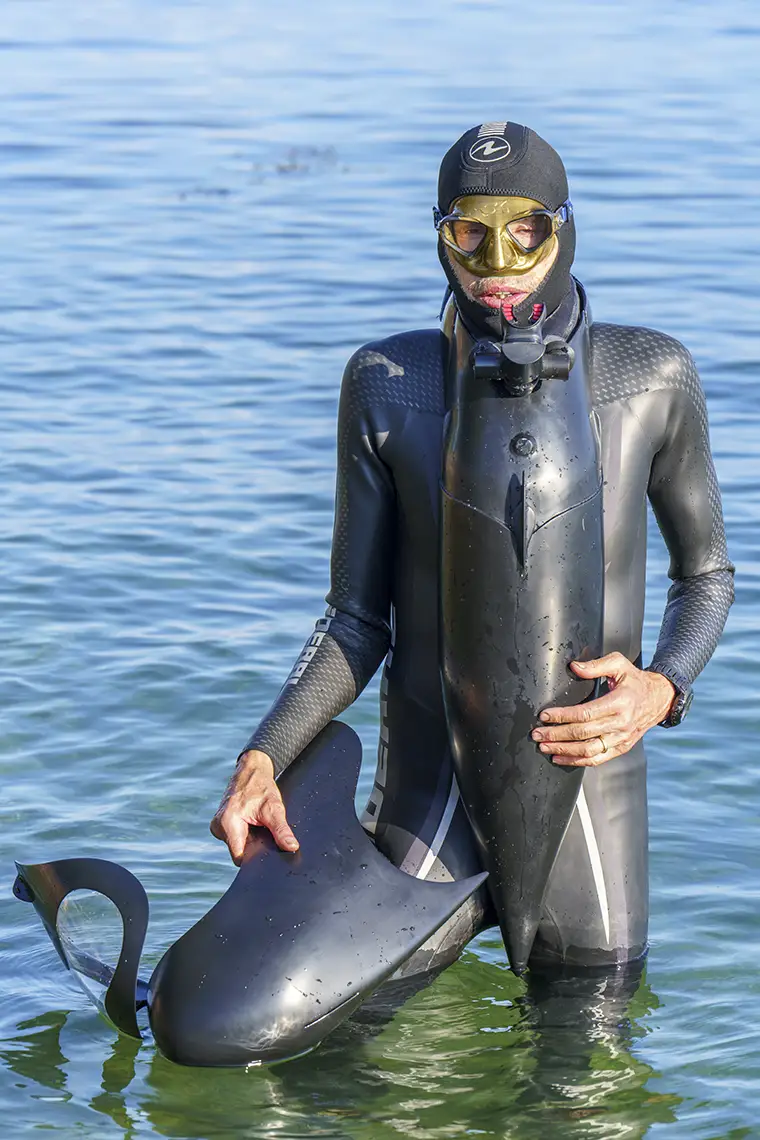
The Hydrophilis: a 10 kg, chest-mounted rebreather shaped to reduce resistance in the water. Fourteen years from concept to current prototype, with ongoing tweaks to buoyancy, visor geometry, and breathing behavior during dives.

The problem Oliver is trying to solve is not simply how to breathe underwater. That problem was addressed long ago. The deeper issue is how awkward, noisy, and inefficient humans remain in the water even with modern equipment. Complicated tanks, hoses, and regulators turn the diver into a slow, bubbling machine.

Even advanced rebreathers, while quieter, are still bolted onto the body, creating drag and distance between the diver and the environment. Hydrophilis tries to erase that separation. Isler approached the design as an aerodynamics problem, noting that “the ideal shape for minimum resistance is the National Advisory Committee for Aeronautics (NACA) airfoil,” and he built the entire form around that principle.
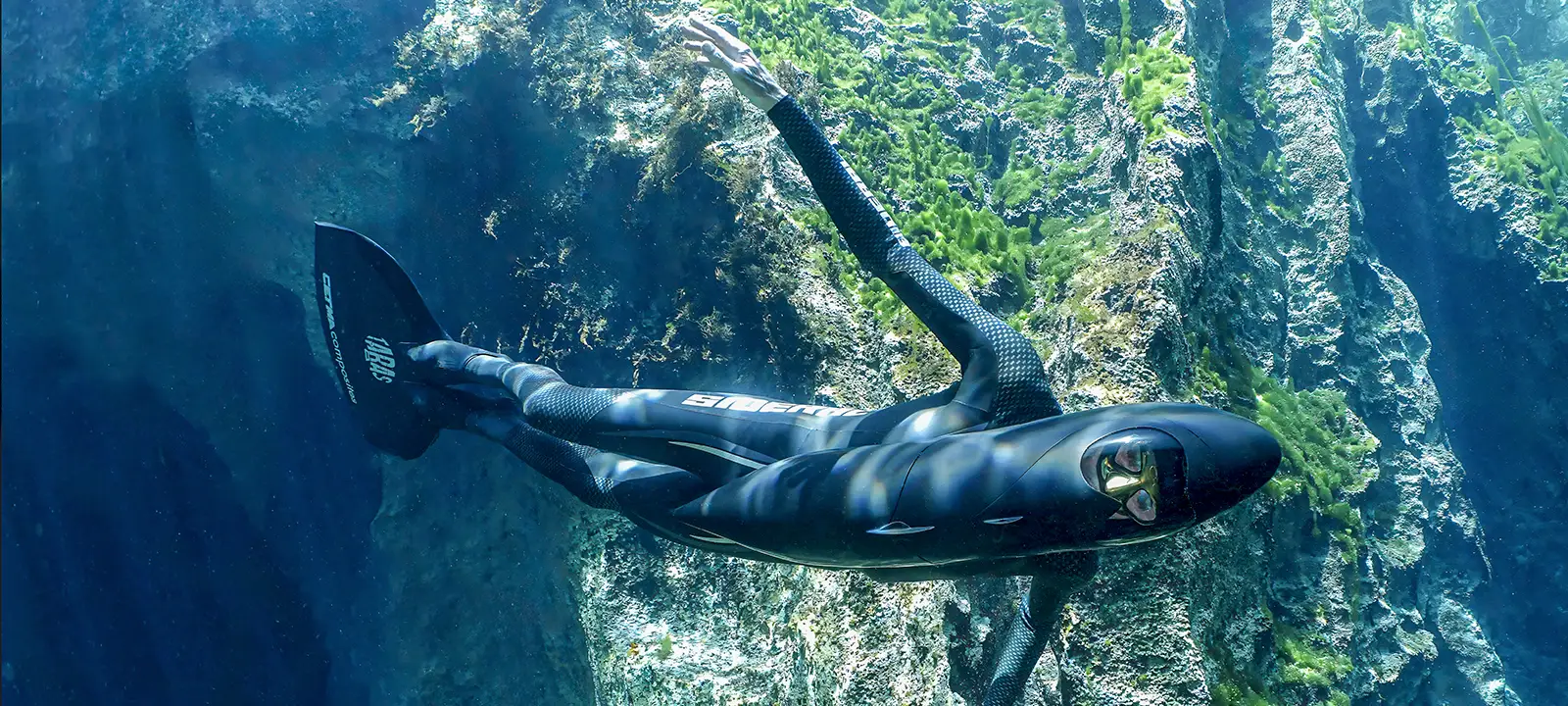
Hydrophilis by Oliver Isler

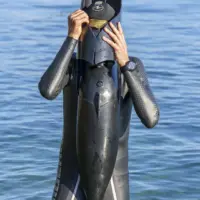
The result is a system where the breathing apparatus is not worn but integrated. The rebreather sits on the chest rather than the back, which he chose deliberately “to avoid Immersion Pulmonary Edema (IPE), a dangerous affliction whose risk is higher when inhaling… from a back-mounted counterlung.”

The helmet extends forward in a smooth cone, reducing turbulence, while the body remains close-fitted and free of external weights that would disrupt flow. Even the ballast is hidden in the fabric. Everything is shaped to move water aside rather than fight it.
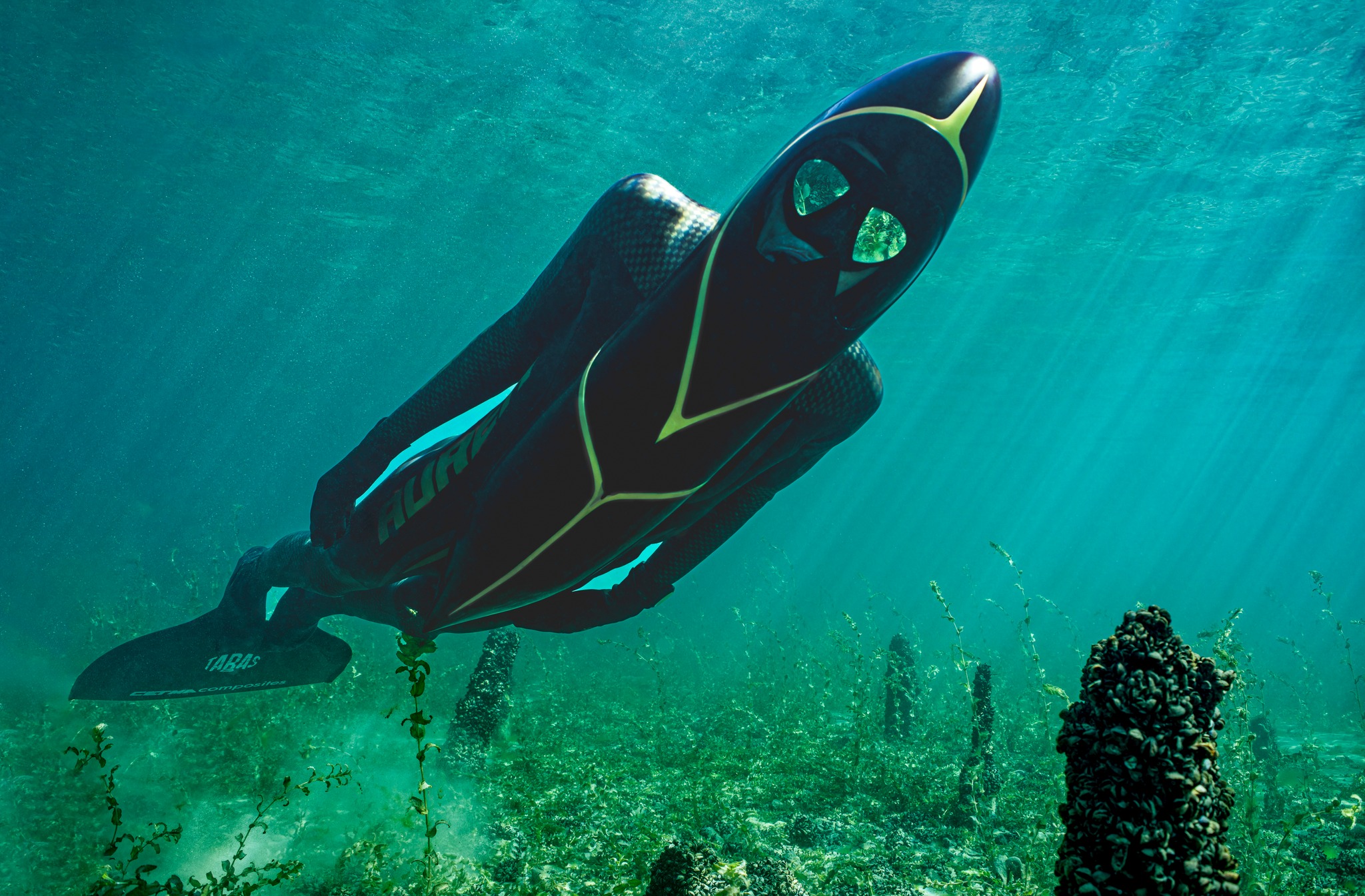
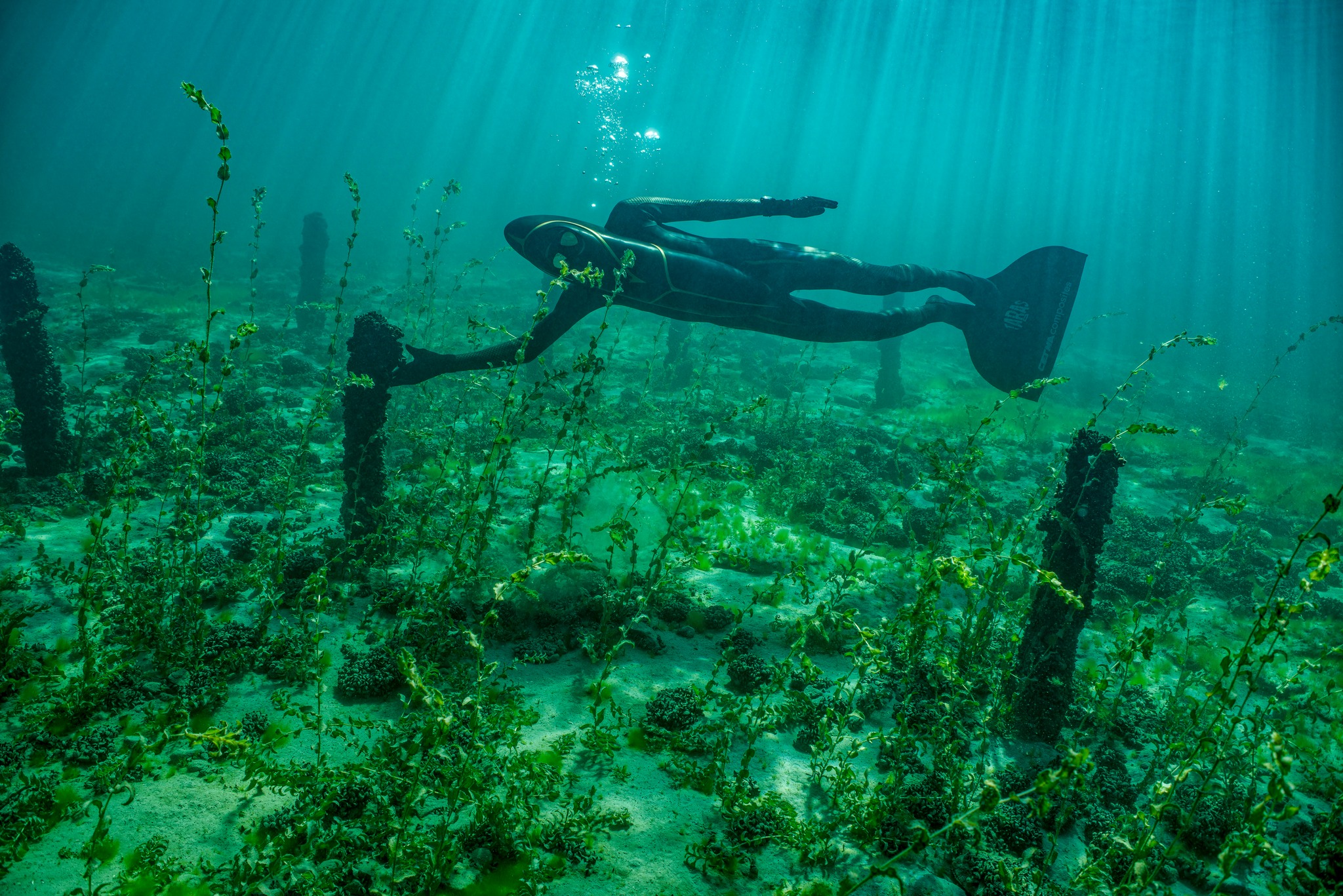
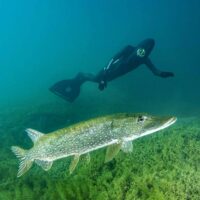
There is also a philosophical shift here. Traditional dive gear assumes resistance and compensates for it with power and air supply. Hydrophilis assumes that the better solution is to reduce resistance until less effort is needed in the first place. Isler reports that the system allows “reasonably good” speed with minimal effort, especially when paired with a monofin, and that autonomy reaches between 60 and 90 minutes depending on exertion.

That is achieved with a remarkably small system, built around a one-liter tank and a compact rebreather, far removed from the heavy configurations divers are used to.

Still, the project is not finished. Isler has completed a few dozen dives and continues to refine the design, adjusting buoyancy, improving visibility, and solving issues like occasional leakage under certain breathing conditions. There is no commercial version yet (angel funding anyone?), no certification pathway announced, and no clear date when something like this might be available beyond experimental use.

Even he is cautious about its future, writing that “it’s impossible to say whether it will become a model for the future,” though he clearly finds satisfaction in having built something entirely original.

What Hydrophilis does offer, even in its unfinished state, is a different direction. Jacques Cousteau helped free divers from the surface by giving them independent air, but the systems that followed defined the diver as someone carrying life support into an alien world. (Related: we interview Cousteau’s grand-daughter here).

Isler’s work suggests another path, one where the human form adapts to the physics of water instead of overpowering it. The silence of a rebreather, the reduced drag of a continuous shape, the possibility of moving without bubbles or strain, these are not just technical improvements. They change the relationship between diver and ocean.

LEAVE A REPLY

Please enter your comment!
Please enter your name here

TRENDING

Jordan’s $6 Billion Aqaba–Amman Desalination Project from the Red Sea Moves Forward

In 2025, the Jordanian government signed agreements with a consortium led by Meridiam and SUEZ, alongside VINCI Construction and Orascom Construction. Under a 30-year concession agreement, the consortium will design, build, finance, operate, and maintain the system before transferring it back to the Jordanian government. The total investment is estimated at approximately $6 billion USD.

The Saudi Startup Turning Desalination’s Toxic Waste Into Its Own Disinfectant

For millennia, the Middle East's water crisis seemed an immutable fact of geography — a region defined as much by what it lacked as by what lay beneath its sands. Today, a convergence of plummeting solar costs, advancing membrane technology, and hard-won engineering expertise is rewriting that story.

Ethiopians are Looking to Somaliland for Red Sea Access as Global Powers Move In

Somaliland, for its part, has operated as a de facto independent state since 1991. It has its own government, elections, currency, and security forces. It’s often described as one of the more stable and democratic political systems in the region, despite never being formally recognized internationally. 

Peace hospital opens between Jordan and Israel

The proposed medical centre, described by Emek HaMaayanot Regional Council head Itamar Matiash as “a centre for cancer treatment, so that people from Jordan or further away could come and receive treatment,” would become the flagship of a wider cluster of medical, academic and innovation-based services planned for the Israeli half of the zone.

Benban solar in Egypt and the companies that make the energy shine

Benban isn’t a single solar plant at all, but a collection of 41 facilities, each developed by different companies but connected through shared infrastructure. This structure is what makes Benban unique: dozens of developers working like nodes in a vast energy network, each feeding electricity into shared substations and Egypt’s national grid.

Nobul’s Regan McGee on Shareholder Value: “Complacency Is the Silent Killer” 

Why the governance framework designed to protect shareholders so...

Should You Invest in the Private Market?

startustartup Unlike public stock exchanges, which offer daily trading, strict...

How to build a 100-year-company

Kongō Gumi is a Japanese construction company, purportedly founded in 578 A.D., making it the world's oldest documented company. What can we learn about building sustainable businesses from them?

From Pilot Plant to Global Stage: How Aduro Clean Technologies’ 2026 Expansion Signals a Turning Point for Chemical Recycling Investors Like Yazan Al Homsi

The company's Next Generation Process (NGP) Pilot Plant in London, Ontario, has officially moved into initial operating campaigns, generating the kind of structured, repeatable data that separates laboratory promise from commercial viability.

How AI Helps SaaS Companies Reduce Repetitive Customer Support Work

SaaS products are designed for large numbers of users with different levels of experience, and also in renewable energy.

Pulling Water from the Air

Faced with water shortage in Amman, Laurie digs up...

Turning Your Energy Consultancy into an LLC: 4 Legal Steps for Founders in Texas

If you are starting a renewable energy business in Texas, learn how to start an LLC by the books.

Tracking the Impacts of a Hydroelectric Dam Along the Tigris River

For the next two months, I'll be taking a break from my usual Green Prophet posts to report on a transnational environmental issue: the Ilısu Dam currently under construction in Turkey, and the ways it will transform life along the Tigris River.

Related Articles

Popular Categories