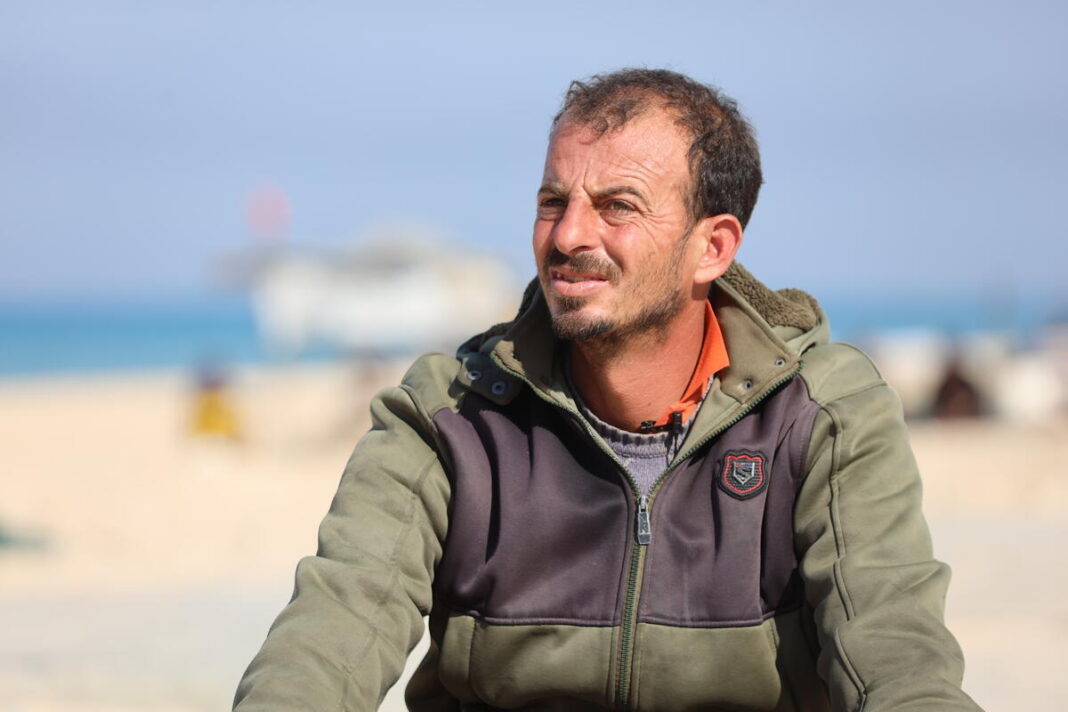
How to help Gaza fishermen

Reviving Gaza’s fishing sector hinges on restoring peace and safe access to the sea

When Hamas Palestinians attacked Israel they wouldn’t image this would lead to such a collapse of Gaza’s once thriving fishing sector. The situation could still be reversed quickly when peace is restored and fishers are granted safe access to fishing waters, along with the resumption of imports of essential fish production inputs and tools, says the UN’s FAO.

The impact of the ongoing escalation on the fishing sector is devastating, according to the UN. Gaza’s average daily catch between October 2023 to April 2024 dropped to just 7.3 percent of 2022 levels, causing a $17.5 million production loss.

The destruction of Gaza’s two main aquaculture farms, along with the hatchery facility, has also left the sector unable to produce alternative aquatic foods through aquaculture. According to one assessment, before the conflict over 6 000 individuals in Gaza, including 4,200 registered fishers and boat owners, relied on fishing as their main income. The sector supported around 110,000 people.

North of Wadi Gaza, which separates the northern and southern parts of the Strip, the Port of Gaza City has been severely damaged, with most fishing boats destroyed.

The damage to  Gaza’s fishing sector has exacerbated an already dire food security crisis. Fish, once a vital source of protein and other essential nutrients for Gazans, is now nearly unavailable. And with Hamas holding food stocks hostage, the people are at wit’s end.

“In Gaza’s fishing areas now lie broken boats, torn nets, and ruined infrastructure, standing in stark contrast to the once-vibrant industry that supported thousands of fishers for generations,” said the FAO Deputy Director-General, Beth Bechdol. It is not clear if she was there personally.

“For Gazans, the sea was not just a source of food, but a source of livelihood and identity. FAO can assist to help rebuild Gaza’s fishing industry, but for this to happen peace must first be established and fishers must be allowed to operate their boats and cast their nets without fear of harm,” she added.   

Ciro Fiorillo, Head of the FAO Office for the West Bank and Gaza Strip, stated, “FAO is ready to restart projects, replenish damaged boats and equipment, and inject emergency funds as soon as these key fishing inputs for production are allowed to enter the Strip, a sustained ceasefire is in place, and access to the sea is restored.

“This will help Gazan fishers resume their activities, revitalize livelihoods, contribute to economic recovery, and restore dignity to the people of Gaza.”

Before the escalation of hostilities, FAO supported over 4,000 Gazan fishers, improving food security, safety, and sustainability. Key initiatives like the marine cage project and enhanced fish stock monitoring, helped to establish inland fish farms, enhanced fishers’ skills, shared best practices, and supplied essential cold chain resources, including solar panels, ensuring a more resilient food source for Gaza.

Despite all the billions in aid given to Gaza, most of it was used to build tunnels and bombs and the fishing industry on its own could not survive without outside help, which raises an eye. How we can help Gazans?

All images supplied by the UN. December 2024. Deir al-Balah, Gaza Strip.

Read More

TRENDING

5 Reasons Why You Should Save Seeds (and plant them)

Saving seeds from tomatoes, peppers, herbs and flowers helps preserve biodiversity, strengthen food security, and keep heirloom varieties alive. Even a small balcony garden can make a difference.

Abortion Pills, Plan B and Mifepristone and what the new US mail ban means

Abortion pills, often confused with Plan B (the morning-after pill), and historically referred to as RU486 (mifepristone), are part of a broader category of reproductive health medications that women have been using for decades. But they are not the same thing.

Dubai sets up smart feeding stations for abandoned cats

Dubai Municipality has set up 12 AI-powered "Ehsan Stations" to safely and officially feed strays. The city also officially supports Trap-Neuter-Return (TNR) programs. 

Eco organization offices destroyed by Iran missile

Tel Aviv's eco organization, the Heschel Center, was impacted by an Iranian missile.

Yalla Parkour – A Gaza documentary of the movement before the war

Yalla Parkour, directed by Areeb Zuaiter, captures this culture from within. The film follows Zuaiter’s long relationship with Ahmed Matar, a parkour athlete in Gaza, as she reflects on loss, memory, and belonging after the death of her mother. What begins as a personal search gradually opens into a portrait of how movement shapes young lives under constraint.

Yerukim Forms a New Green Economy Where the Money is Really Green

The Yerukim members who pick up the recyclables get to keep the monetary reward, the public earns "green" bills that can be used in shops, and business owners get to be associated with environmentalism.

Choosing Riyadh over Dubai? What Investors Should Know

Saudi Arabia is deploying capital at unmatched scale to catalyze tourism and advanced industry while rewiring its power-and-water backbone. The investable frontier is widening—especially in renewables, grid storage, water efficiency/desal retrofits, and hospitality operating platforms. Prudent investors will insist on phased delivery, enforceable KPIs (energy, water, biodiversity), and RHQ/zone compliance—while pricing political-economy and reputational risks alongside growth upside.

Sell your cooking oil for biodiesel money

Want to make money on old french fry oil? Sell it.

Qatar Alternative Energy Summit Pairs Investors And Innovators

Alternative energy investors and innovators can meet n' greet in Doha, Qatar March 16 and 17.

Here’s How To Implement The Four Pillars Of Employee Engagement

If you throw a party for your work team and they are vegans, don't make it a barbecue. Know the sustainability values of your team to boost moral and retain good people.

Locals From Rishon Fight IKEA

Big Box stores are a pretty new concept in Israel, and thank God that not every Israeli city wants them in their backyard. A word from someone who has see the beautiful farmland around her hometown Newmarket, Ontario stripped and converted into vulgar strip malls of big box shops: they have no place in a healthy and sustainable town or city.

The Jewish National Fund Meets An Inconvenient Truth

According to the JNF, it has transformed thousands of acres of barren land into green forests in Israel. They state that each person emits about 23 tons of carbon per year, estimating that each tree planted can absorb one ton of carbon in its lifetime. That's a whole lot of trees you'd need to be planting. Could so many fit in Israel?

How to quiet noise from construction in your office

Streets need to be resurfaced in New York but the humming and grinding noise is unsettling. Noise is environmental pollution. 

Popular Categories