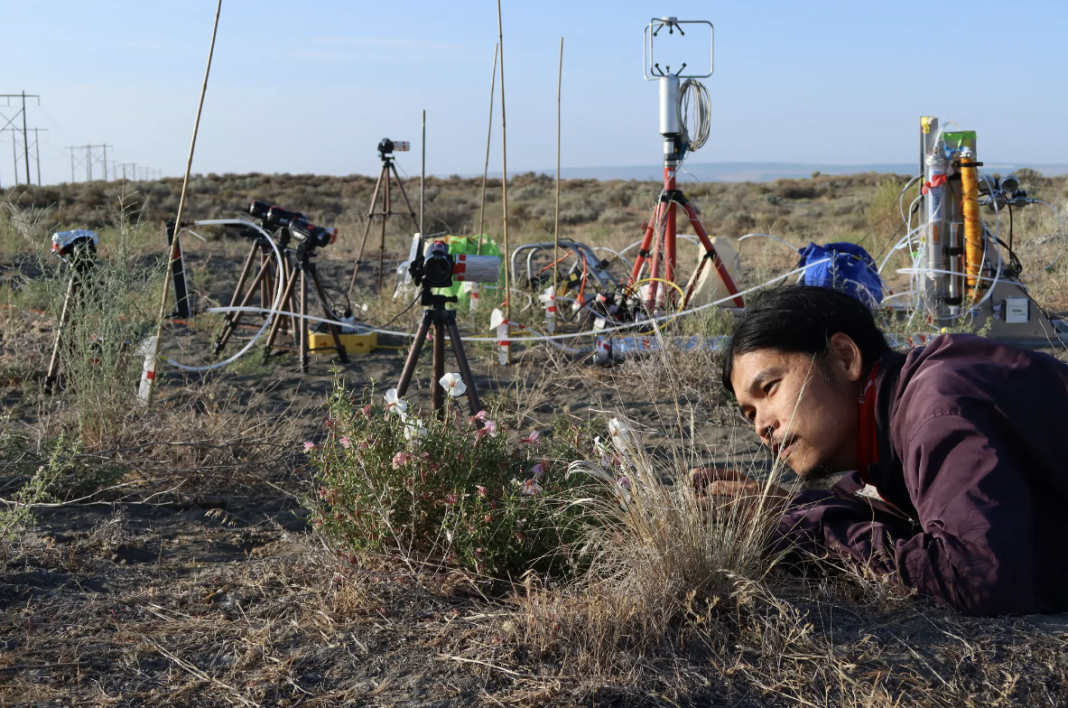
Buy a glowing petunia so you can bring GMO into the house

Glowing plant hits the US market
Genes from a bioluminescent fungus allow the glowing petunia to produce enzymes that can convert caffeic acid (an intermediate in the biosynthesis of lignin) into the light-emitting molecule luciferin and then recycle it back into caffeic acid.

Glowing plant hits the US market

Plant lovers in the United States will soon be able to buy glowing petunias (Petunia hybrida).

The $29 US plant, sold by biotech firm Light Bio, contains genes from a bioluminescent mushroom (Neonothopanus nambi).

glowing, bioluminescent plants

Because this type of petunia is not native to North America and is not considered an invasive species, the chances of the modified genes spreading should be minimal – says the company.

glowing plants

This is a “groundbreaking event”, says plant biologist Diego Orzáez. He suggests that having “something people can touch and bring home” could even help people to be less scared of genetic engineering.

Sehmus Erginoglu, 71, decided to do something about an area of wasteland in his home city of Mardin in southern Turkey. He began by clearing out rubbish from the site, then he installed water pipes and eventually started to plant saplings. Today the site is home to a small forest of around 11,000 trees, with thousands more planted in areas nearby. (All pictures by Murat Bayram/MEE)
Man poses with photo of trees he helped restore

Do you think genetic engineering should be taken this lightly and that plants that glow should be sent home to teach kids about how “cool” genetic engineering is? We should be teaching kids about protecting the diversity of plant life, and help them celebrate people who plant forests, and who save apple varieties across the United States.

We should be teaching them about the farming heroes like Vernon Hugh Bowman who stood up against Monsanto and other seed genetics companies who try to get a world monopoly on engineered seeds that don’t reproduce after they fruit.

Karin Kloosterman
Karin Kloostermanhttp://www.greenprophet.com
Karin Kloosterman is an award-winning journalist, innovation strategist, and founder of Green Prophet, one of the Middle East’s pioneering sustainability platforms. She has ranked in the Top 10 of Verizon innovation competitions, participated in NASA-linked challenges, and spoken worldwide on climate, food security, and future resilience. With an IoT technology patent, features in Canada’s National Post, and leadership inside teams building next-generation agricultural and planetary systems — including Mars-farming concepts — Karin operates at the intersection of storytelling, science, and systems change. She doesn’t report on the future – she helps design it. Reach out directly to [email protected]

TRENDING

He’s selling a book. But Tony Cho is really selling a new model for cities

Tony Cho is a regenerative developer and community builder focused on designing cities as living ecosystems that support human connection and ecological balance. A key figure in Miami’s urban transformation, he helped shape the Wynwood Arts District and founded the Magic City Innovation District. Influenced by an unconventional upbringing that included time in an ashram, Cho brings a spiritual lens to real estate, blending culture, community, and capital into what he calls regenerative placemaking.

Israel and the UAE find that animal conservation can be as easy as adding new watering hole

Sometimes conservation doesn’t begin with moving animals around in...

Is Britain creating a smoke-free generation by banning sales to those born after 2008?

Today, Britain is attempting something that would have seemed unthinkable way back when.

Japan wants to build a solar panel ring around the moon

Unlike solar power on Earth, which is limited by night cycles, weather, and seasons, the Moon offers something close to uninterrupted exposure to the Sun. By placing solar infrastructure in orbit or along the lunar surface, engineers could generate continuous clean energy at a scale that may exceed global electricity demand,  the Japanese scientists say.

African kids born in these Star Homes are less likely to die

What the Star Home demonstrates is something bigger: that health can be built into infrastructure. Instead of relying only on healthcare systems, communities can reduce disease at the source—through smarter design.

Nobul’s Regan McGee on Shareholder Value: “Complacency Is the Silent Killer” 

Why the governance framework designed to protect shareholders so...

Should You Invest in the Private Market?

startustartup Unlike public stock exchanges, which offer daily trading, strict...

How to build a 100-year-company

Kongō Gumi is a Japanese construction company, purportedly founded in 578 A.D., making it the world's oldest documented company. What can we learn about building sustainable businesses from them?

From Pilot Plant to Global Stage: How Aduro Clean Technologies’ 2026 Expansion Signals a Turning Point for Chemical Recycling Investors Like Yazan Al Homsi

The company's Next Generation Process (NGP) Pilot Plant in London, Ontario, has officially moved into initial operating campaigns, generating the kind of structured, repeatable data that separates laboratory promise from commercial viability.

How AI Helps SaaS Companies Reduce Repetitive Customer Support Work

SaaS products are designed for large numbers of users with different levels of experience, and also in renewable energy.

Pulling Water from the Air

Faced with water shortage in Amman, Laurie digs up...

Turning Your Energy Consultancy into an LLC: 4 Legal Steps for Founders in Texas

If you are starting a renewable energy business in Texas, learn how to start an LLC by the books.

Tracking the Impacts of a Hydroelectric Dam Along the Tigris River

For the next two months, I'll be taking a break from my usual Green Prophet posts to report on a transnational environmental issue: the Ilısu Dam currently under construction in Turkey, and the ways it will transform life along the Tigris River.

Related Articles

Popular Categories