
Without a hijab? Iran’s surveillance cameras will track and punish you

Like China  – using AI and surveillance cameras to pinpoint people breaking lockdown –  Iran’s morality police are using technology to catch women without a head covering, the hijab. Going in public without a hijab is a moral sin in Iran.

The heavy-handed Islamic extremist government of Iran is insistent that women, whether they chose to practice the religion or not must have their heads covered by the hijab. Until now morality police stopped women on the street, with recent incursions resulting in violence (see videos below). Enforcement has stepped up and Iran is now using security cameras and facial recognition to ID violators. 

Iran was once a thriving, liberal country in the Middle East and Tehran was often compared to being the Paris of the Middle East. An intolerant regime over the last 30 years has created an exodus of Iranians with the means to escape, and those without the means to live under an iron fist –– and now surveillance cameras.

What is the hijab?

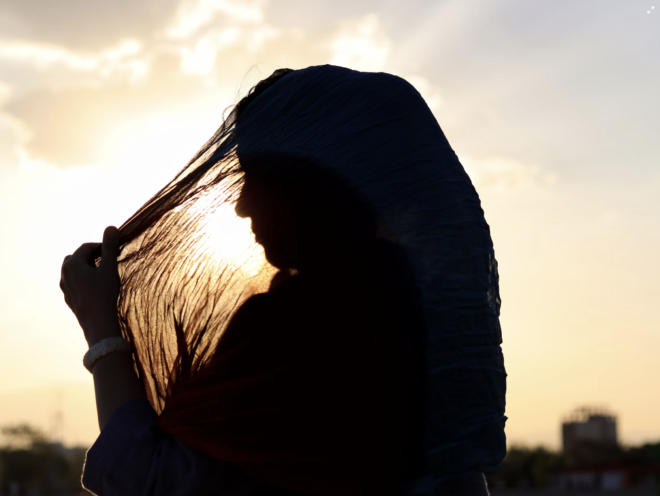
In modern usage, hijab refers to headcoverings worn by Muslim women. While Islamic head coverings can come in many forms, hijab often specifically refers to a cloth wrapped around the head, neck and chest, covering the hair but leaving the face visible.

While some Muslim women chose to wear the hijab (read dispelling the hijab myth here) there are many who don’t. And not complying with the rule might land you a fine, in jail or worse.
Radio Free Europe says that authorities in Iran are planning a video surveillance campaign that will install cameras in public places such as subways and sidewalks.

Wearing a hijab in mandatory in Iran for women, even if you don’t define yourself as a Muslim. Zoroastrians, Christians, Jews and agnostic people live in Iran but the country has a bad history of persecuting other religions, its oldest religion especially.

camera Iran

In a video published on social media, Mohammad Saleh Hashemi Golpayegani said this new measure is based on the July 5 order by President Ebrahim Raisi to enforce the so-called hijab and chastity law. It is the first time that an official in Iran has publicly admitted the presence of facial recognition technology in public surveillance cameras. 

Special security forces have been enforcing the law on the streets for decades.

At the top of Iran’s power structure is the Supreme Leader, Ayatollah Ali Khamenei, who succeeded Ayatollah Ruhollah Khomeini, the father of the Iranian Revolution, upon Khomeini’s death in 1989. Khomeini and Khamenei are the only two men to have held the office since the founding of the Islamic Republic in 1979.

Golpayegani is the secretary of Iran’s Headquarters for Enjoining Right and Forbidding Evil, which is responsible for determining and enforcing  “proper” Muslim and Islamic models in society.

Golpayegani has previously said to the media that women who publish their pictures without a hijab on the Internet, on let’s say Instagram, will be deprived of some social rights for a period of six months to one year.

If you are judged to be non-compliant here’s what might happen to you:  you won’t be able to enter government offices, you will be denied entry to banks, and you won’t be able to use public transportation.

VIDEO of women taping morality police

Women who don’t comply might also be “disappeared” and whisked away into vans. This is what has happened to the past to well-known bloggers we’ve interviewed like Hossein Derakhshan and to Faranak Farid who was beaten and tortured for trying to protect a disappearing salt lake, Lake Orumieh, in Iran. 

Guidance Patrols, or the morality police in Iran are known for becoming increasingly active and violent. The head covering worn by Muslim women became compulsory in public for Iranian women and girls over the age of 9 after the 1979 Islamic Revolution.

Some “extreme” practices in Islam are also misunderstood. Read here from our Muslim writer about khitan, or circumcision in males and females.And if you missed the link earlier in the article, here is an op-ed we published that dispels the myth of the hijab as weakening women. The author of the article presents herself without a hijab.


Karin Kloosterman
Karin Kloostermanhttp://www.greenprophet.com
Karin Kloosterman is an award-winning journalist, innovation strategist, and founder of Green Prophet, one of the Middle East’s pioneering sustainability platforms. She has ranked in the Top 10 of Verizon innovation competitions, participated in NASA-linked challenges, and spoken worldwide on climate, food security, and future resilience. With an IoT technology patent, features in Canada’s National Post, and leadership inside teams building next-generation agricultural and planetary systems — including Mars-farming concepts — Karin operates at the intersection of storytelling, science, and systems change. She doesn’t report on the future – she helps design it. Reach out directly to [email protected]

Read More

TRENDING

Dan Zaslavsky’s energy tower dream is rising again in Iran and China

The Energy Tower idea never made the leap from drawings and engineering studies to full-scale construction. But nearly two decades after most people stopped talking about it, the concept is quietly evolving in two unexpected places: China and Iran. The concept let dreamers dream and doers do - figuring out more pleasing designs and engineering.

10 Amazing Facts About the Sidr Tree

Most people in the West have never heard of the Sidr tree. That's strange when you think about it. This tough, thorny desert tree has fed people, bees, birds, and camels for thousands of years. It appears in Islamic tradition. Its honey sells for astonishing prices.

Farmer Focus Sold as Humane and Halal. PETA Says the Reality Is Far Less Ethical

According to documents obtained by PETA, and sent to Green Prophet, Farmer Focus accumulated 40 violations from the Harrisonburg-Rockingham Regional Sewer Authority between January and March 2026 for overly acidic wastewater and excessive pollutant levels.

Al-Khidr: Islam’s Original Green Prophet

Long before "sustainability" entered the modern lexicon, Islamic tradition had its own ecological saint. His name is Al-Khidr — The Green One. He appears briefly in the Quran, yet his presence has shaped Islamic thought, Sufi mysticism, and folk tradition across fourteen centuries. Today, he's emerging as an unexpected symbol for Muslims thinking seriously about the environment.

Muslim vegetarians? More young Muslims are saying yes

The halal food market is now worth trillions globally, and companies are beginning to notice growing demand for halal-certified vegetarian and vegan products.

Locals From Rishon Fight IKEA

Big Box stores are a pretty new concept in Israel, and thank God that not every Israeli city wants them in their backyard. A word from someone who has see the beautiful farmland around her hometown Newmarket, Ontario stripped and converted into vulgar strip malls of big box shops: they have no place in a healthy and sustainable town or city.

The Jewish National Fund Meets An Inconvenient Truth

According to the JNF, it has transformed thousands of acres of barren land into green forests in Israel. They state that each person emits about 23 tons of carbon per year, estimating that each tree planted can absorb one ton of carbon in its lifetime. That's a whole lot of trees you'd need to be planting. Could so many fit in Israel?

How to quiet noise from construction in your office

Streets need to be resurfaced in New York but the humming and grinding noise is unsettling. Noise is environmental pollution. 

EarthX and a blueprint for sustainable investing

Trammell S. Crow, a Dallas-based businessman and father of four, is focusing his efforts on impact investing, and media that focuses on saving the planet through EarthX.

Mining Afghanistan’s Mineral Discoveries Similar to Avatar

Now that American forces in Afghanistan are commemorating the longest period of any war that America has been involved in, including the 1965-73 Vietnam War, the recent discoveries of large and extremely valuable mineral and metal deposits may finally bring to light a reason to continue the presence of US fighting forces in this war torn and backward country.

From Pilot Plant to Global Stage: How Aduro Clean Technologies’ 2026 Expansion Signals a Turning Point for Chemical Recycling Investors Like Yazan Al Homsi

The company's Next Generation Process (NGP) Pilot Plant in London, Ontario, has officially moved into initial operating campaigns, generating the kind of structured, repeatable data that separates laboratory promise from commercial viability.

Nobul’s Regan McGee on Shareholder Value: “Complacency Is the Silent Killer” 

Why the governance framework designed to protect shareholders so...

Should You Invest in the Private Market?

startustartup Unlike public stock exchanges, which offer daily trading, strict...

Popular Categories