Radio Waves Carry News of Climate Change

Colin price
The ionosphere, one of the regions of the upper atmosphere, plays an important role in global communications. Ionized by solar radiation, this electricity-rich region is used for the transmission of long wave communications, such as radio waves. Now Prof. Colin Price of Tel Aviv University (he discovered the link between lightning and climate change) has found that the radio waves reflecting back to Earth from the ionosphere offer valuable news on climate change as well.

The new research shows that the strength of radio signals on the ground is a reliable indicator of temperature change above. Price and his team used simple radio antennae on the ground to measure radio waves broadcast by navigational transmitters around the globe, then compared information on the strength of these radio signals with data on temperature fluctuations in the upper atmosphere. They discovered that climate change in the upper atmosphere — caused by an abundance of greenhouse gases — may lead to a greater absorption of radio waves. Weaker signals could therefore be indicative of greater climate change.

Detailed in the Journal of Geophysical Research, this simple, cost-effective measurement can be a valuable contribution to the ongoing effort to track climate change, says Prof. Price, adding to measurements of ground and lower atmospheric temperatures to create a more holistic picture.

On the Earth’s surface and in the lower atmosphere, an increase of greenhouse gases has a warming effect, the gases acting as a “blanket” and keeping heat from escaping from the Earth into space. But these gases, including carbon dioxide, are increasing in the upper atmosphere as well, where they have a cooling effect.

When cooled, the ionosphere contracts and descends into the atmosphere to where air is denser — leading to a higher absorption of radio waves, Price explains. By examining satellite-gathered data on the temperature in the upper atmosphere and comparing results to measurements of radio wave amplitudes collected on the ground, the researchers were able to uncover a clear correlation, consistent over time. As the upper atmosphere gets colder, radio signals lose their strength.

While the sun is certainly the driving force behind changes in temperature in this region, it accounts for only 60 to 70 percent of temperature variations, says Prof. Price. The remaining variability could not be systematically measured until now. By adding measurements of radio waves taken on the ground to solar radiation estimates, researchers can now explain approximately 95 percent of temperature changes in the upper atmosphere.

According to Price, this new technique will be a valuable addition to current methods of monitoring climate change, such as the measurement of ground temperatures. Without the need for expensive equipment like satellites, monitoring the upper atmosphere can be done inexpensively and continuously. And because temperatures in the upper atmosphere fluctuate more dramatically than those on the ground — for every one degree of warming in the lower atmosphere, there is a corresponding ten degree cooling in the upper atmosphere — changes are far easier to monitor.

Using this system might reveal more about the ionosphere than ever before. The region is notoriously difficult to monitor; there are no weather balloons or airplanes that can go high enough, and it is too low for orbiting satellites. But with this method, it could be possible to study long and short term changes in the ionosphere, such as the impact of solar storms or thunderstorms on the upper atmosphere.

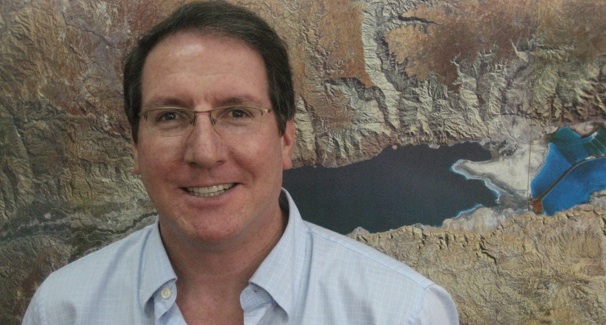
Image above of Colin Price

Karin Kloosterman
Karin Kloostermanhttp://www.greenprophet.com
Karin Kloosterman is an award-winning journalist, innovation strategist, and founder of Green Prophet, one of the Middle East’s pioneering sustainability platforms. She has ranked in the Top 10 of Verizon innovation competitions, participated in NASA-linked challenges, and spoken worldwide on climate, food security, and future resilience. With an IoT technology patent, features in Canada’s National Post, and leadership inside teams building next-generation agricultural and planetary systems — including Mars-farming concepts — Karin operates at the intersection of storytelling, science, and systems change. She doesn’t report on the future – she helps design it. Reach out directly to [email protected]

Read More

1 COMMENT
  1. They study the details but ignore the implications of approaching ecocide from humanity’s growing mass of pollution. That’s because they represent corporations that believe they can grow the economy forever without consequences. But in fact the biosphere is in crisis and slipping toward collapse.

LEAVE A REPLY

Please enter your comment!
Please enter your name here

TRENDING

5 projects to help kickstart your company’s sustainability journey 

True progress happens when environmental ambition meets action. Decarbonizing efficiently is possible for any business in any sector, but actually getting started can sometimes feel daunting.   The trick? It’s to start small and build momentum. Here are five potential projects to help you get started.  

Hormuz 2026 Conflict Poses an Energy and Food Security Dilemma in a Warming World

As tensions rise in one of the world’s most critical maritime chokepoints, the ripple effects go far beyond oil—touching food systems, climate pressures, and regional stability

Climate change traced in sea turtle shells

It's sea turtles which may in the end save islands in the Seychelles. They may also better help us understand climate change. Like rings on a tree, scientists have found a way to read sea turtle shells and how they are impacted by climate change tells a story. 

We’ve lived through the past 11 of the hottest years on record

Have we forgotten about global warming when the world...

Huge Fish Nursery Discovered Under Freezing Arctic Seas

In 2019, an underwater robot camera exploring the seabed...

How to quiet noise from construction in your office

Streets need to be resurfaced in New York but the humming and grinding noise is unsettling. Noise is environmental pollution. 

EarthX and a blueprint for sustainable investing

Trammell S. Crow, a Dallas-based businessman and father of four, is focusing his efforts on impact investing, and media that focuses on saving the planet through EarthX.

Mining Afghanistan’s Mineral Discoveries Similar to Avatar

Now that American forces in Afghanistan are commemorating the longest period of any war that America has been involved in, including the 1965-73 Vietnam War, the recent discoveries of large and extremely valuable mineral and metal deposits may finally bring to light a reason to continue the presence of US fighting forces in this war torn and backward country.

From Pilot Plant to Global Stage: How Aduro Clean Technologies’ 2026 Expansion Signals a Turning Point for Chemical Recycling Investors Like Yazan Al Homsi

The company's Next Generation Process (NGP) Pilot Plant in London, Ontario, has officially moved into initial operating campaigns, generating the kind of structured, repeatable data that separates laboratory promise from commercial viability.

Nobul’s Regan McGee on Shareholder Value: “Complacency Is the Silent Killer” 

Why the governance framework designed to protect shareholders so...

Should You Invest in the Private Market?

startustartup Unlike public stock exchanges, which offer daily trading, strict...

How to build a 100-year-company

Kongō Gumi is a Japanese construction company, purportedly founded in 578 A.D., making it the world's oldest documented company. What can we learn about building sustainable businesses from them?

How AI Helps SaaS Companies Reduce Repetitive Customer Support Work

SaaS products are designed for large numbers of users with different levels of experience, and also in renewable energy.

Popular Categories