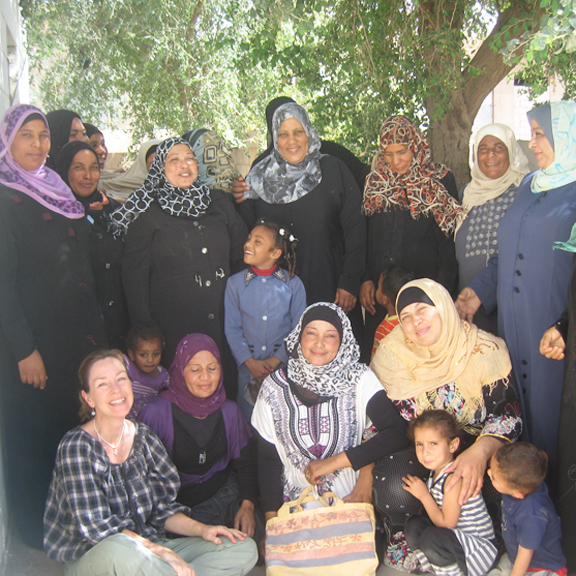
 Jordanian craftswomen near the southern Dead Sea are creating unique market bags, placemats and quilts colored with naturally sourced dyes, then painted and embroidered. The project was built by a Canadian woman and artist living worlds away. I discovered the group when their founder, Jean Bradbury, commented on a Green Prophet story about sewing handbags from plastic political posters: artistic resourcefulness that aligned with this guild’s eco-sensibilities. Bradbury is a remarkable Canadian artist and philanthropist living in Seattle. This year she broadened her Dead Sea mission to include teaching Syrian children in the Zaatari refugee camp. I met up with her on her last trip to Jordan and here is my interview with her.
GP: Pacific northwest to Middle East: how did that connection come about? JB: I first came to the Dead Sea in 1991 to work as an archeological illustrator at a site near Lot’s Cave with Dr. Konstantinos Politis [founder of the Museum at the Lowest Place on Earth]. Soonafter, a group of village women in nearby Ghour as Safi asked if I could teach them some handicrafts that they could sell.
GP: Was Safi your brainchild? JB: The women’s group was already established, but had no arts and crafts training nor real marketing experience. We focused on product development, working with cotton fabric colored with locally sourced and natural dyes like Petra mud, tea, pomegranate juice and iron. I encouraged the women to design quilts and clothing showing images from their own lives. It started with money from my own savings. With no outside funding, we’ve never had to answer to anyone and could explore whatever crazy ideas we liked. Mostly we had fun. It’s always been important that the women control the project. We’ve had many “failures”, but that’s part of the creative process, teaching people to take risks.
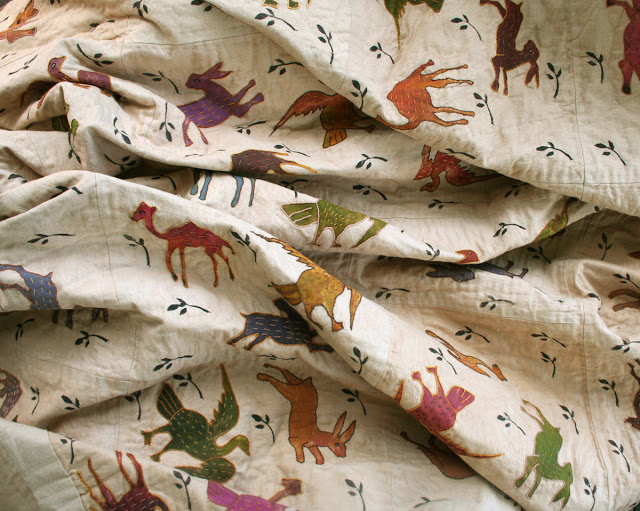 GP: You’ve got a unique blending of folk art with environmentalism. JB: Sustainability has been my main focus, in specific materials (natural dyes) and in the general way the project runs. Initially, the project was to provide the women with income and a social and creative outlet, too. We worked closely together for the first three years, but I stopped for about a decade, staying stateside to raise my small children. I returned in 2011 and found the project not only still running, but really thriving. How perfect is that? This project is truly owned by the Safi women, and I return twice a year to conduct workshops. Recently we’ve been exploring the more artistic side of the art/craft spectrum; we plan to exhibit our paintings at Al Aydi this year.
GP: This goes beyond arts & crafts. JB: My work has a dual purpose. We make things to sell, but we also experiment and express ourselves. I teach design, not just production. I think the most important lessons are creative and critical thinking, leading to higher self-esteem. That popular word from the 1970s – empowerment – applies best. The project pulls the women out of their homes, into a dedicated center. I think this social aspect is important and enjoyable for them.
GP: And the group has developed momentum? JB: At first I visited several times a year but, with young children, I could never stay long. Eventually, return trips didn’t fit into my life, but because we’d made sustainability paramount, the group continued. They secured grant money from USAID and built a women’s center where they can meet, work, and teach classes to village girls. We’re now experimenting with painting and sewing market bags and, this year, opened a shop in the museum. They manage their small revenue, allowing them to administer microloans to farmers. The group is much more than my workshops. My involvement is now supported through the generosity of Aramex Jordan who covers my airfare for twice yearly trips.
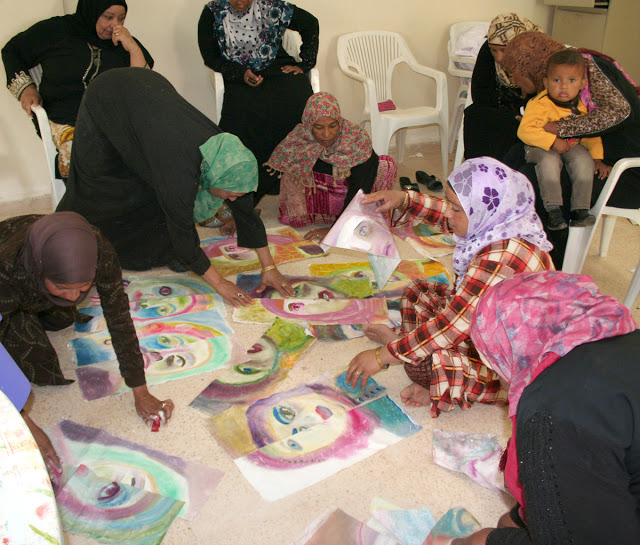 GP: Do you speak Arabic? JB: My Arabic was better ten years ago but I’m out of practice. I know enough “art” words and the women seem to understand me. The teaching is visual so that helps. Group leader Nofeh Nawasra translates when she’s available. Otherwise, I just say a lot of “quayez” and “mish quayez” and use gestures. It works surprisingly well. It’s quite funny – we’ve developed a sort of pidgin Arabic. I think the women understand me, so I’m surprised when I speak Arabic to strangers who have no idea what I am saying!
 GP: This last visit also got you involved in the Zaatari Camp for Syrian refugees. Talk a bit about that experience? JB: Since I was going to be in Safi teaching, I decided to stay longer to help with the refugee crisis in the only way I know how – through art. I collected money from friends and family and bought art supplies hoping to donate them to schools and care centers used by people fleeing the violence in Syria. I also asked around about teaching at the giant border refugee camp, knowing that security is tight and few agencies have time or infrastructure to accept volunteers. I was delighted to be invited by Save the Children Jordan to set up art classes. It was an exhausting, heartbreaking and heartwarming experience for me. I think it brought some color and fun into the lives of the children who made art with me that week, and a reminder that they have a creative voice and the ability to imagine a better world. I was enormously moved by the response of the women and children I taught, by the dedication and hard work of the staff and by the generosity of friends in Canada, the US and in Jordan. I wrote about my experience (link here).
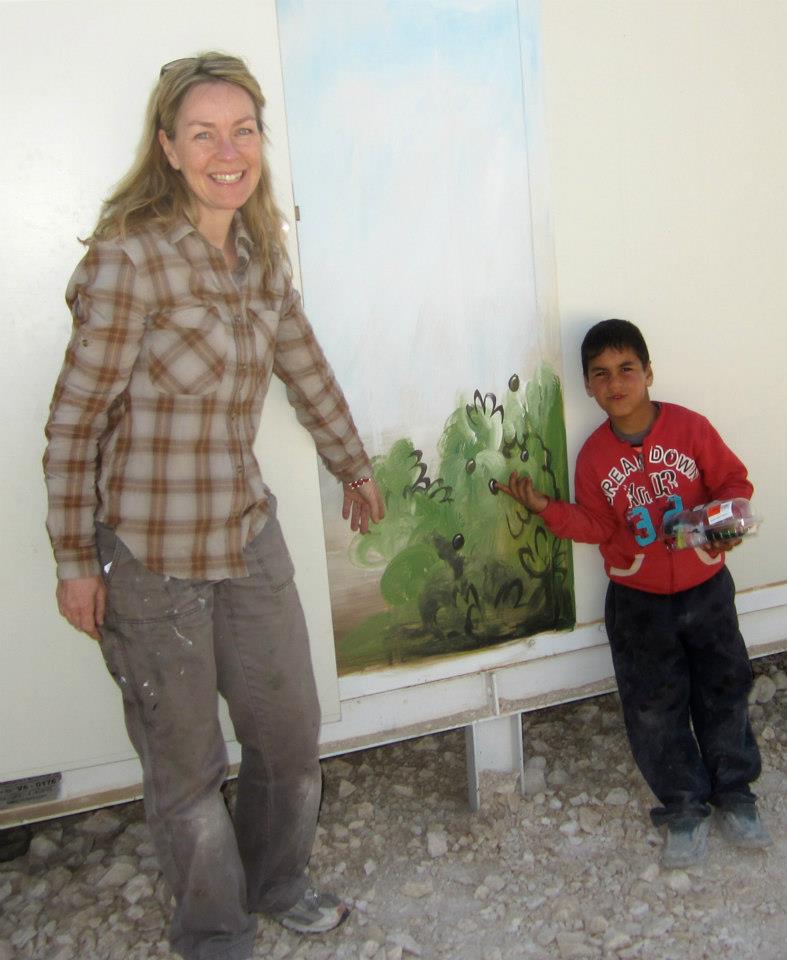 GP: What’s on the horizon? JB: My work in Jordan has attracted the attention of some wonderful people from all over the world who are offering to help me to continue and expand my efforts. Back in the USA, my daughter is in college and my son is in high school. When he heads off to university I look forward to spending more time in Jordan. I’m always so busy teaching when I’m there but I’d like to continue to make my own paintings and explore the amazing landscape.
All images from Jean Bradbury