During the last six years, the words energy security, water security, and food security could be found a lot in the Arab media. Since most of the Arab media is controlled by the Arab regimes, the appearance of these items shows that the environmental awareness of the Arab regimes has been on the rise.
Indeed, as a result of climate change and global warming the Middle East has been facing five major environmental security challenges: water security, food security, energy security, desertification, and land degradation.
These issues have been further aggravated by other socio-economic processes, which characterize the Middle East and include: the huge population growth, the rapid urbanization process and the development of mega-cities on the expense of rural areas.
The urban infrastructures, such as sewage and waste disposal, which have been inadequate anyway and are in dire need for modernization, could not stand the ever-growing human pressure and in a few cities, some of them have totally collapsed.
Moreover, the natural resources, such as water and food, which were just sufficient for the cities’ residents, have been stressed to the limit due to the huge population density within the cities. In addition, green spaces within the cities have given place to gray buildings which have been built whenever possible in order to supply the lodging needs of the incessant stream of new immigrants and local citizens.
While the natural resources in the urban areas have been stressed to the limit, the situation in the rural areas has not been much better. The people in the rural areas have been suffering from desertification, the expansion of desert areas, and, as a result, from the degradation of the land and the lack of natural resources to sustain themselves, which has forced them to move to the urban areas in search of a better future. In addition, due to the rapid urbanization process and the influx of more and more people to the urban areas, the rural areas have been diminishing in a very rapid pace.
Most Middle Eastern regimes have not been able to deal with the situation. That is why, in recent years, environmental issues have come to the fore in the region. Whereas until recent years environmental issues were often viewed as secondary in the political agenda, now they have become central within political debates concerning representation, accountability and social justice.
The people have resented the inability of the governments in the region to deal with their urgent needs. Even more so, they have resented the fact that the governments have ignored them and their rights to use and enjoy access to basic natural resources as well as to health and other essential services and goods.
This feeling of resentment felt by many people has just added fuel to an ongoing fire, which was initially fed by other resentments, such as political and ethnic discrimination, socio-economical hardships, political oppression, lack of basic freedoms (freedom of speech), and so on.
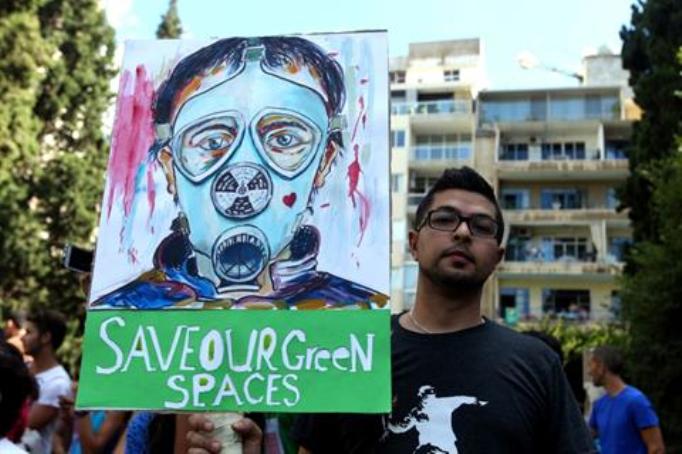
Thus, in recent years, the region has witnessed an ever-increased environmental activism and mass environmental protest movements whose aims have been to alter the policies of the governments so that they will take more care of the people’s needs as well as to protect the environment and to ensure that the people will enjoy access to basic natural resources, health and other services.
Indeed, protests about environmental issues (like Gezi Park in Istanbul) are also political and social claims about rights, access, livelihoods, and power, as can be seen very clearly in the current protest taking place in Turkey these days as well as in protests elsewhere. Mass environmental protest movements in the local and national level have been organized all over the region, from Morocco and Mauritania to Iran and from Turkey to Somalia.
Not all mass environmental protest movements have proven themselves to be successful. Its success has often depended on the ability of its organizers to mobilize the media, some of the politicians, and the civil society. When one or more of these players has not been present, it has usually meant failure to achieve the goals.
It should be mentioned that these environmental protest movements have served not only as a proof to the rise of environmental activism in the Middle East but also as a proof for the rise of civil society within the region.
To sum up, especially following the revolutionary wave of demonstrations, protests, riots and civil war in the Middle East, nicknamed the Arab Spring, which was originated and triggered, at least partly, by environmental issues, the environmental mass protest movements throughout the Middle East, including the current one in Turkey, should be taken very seriously. For the first time in the history of the Middle East, the people feel powerful and feel that they have the power to influence policies and to topple long-ruling dictators. They want that the governments in the region will hear them and take note of their demands and needs. In case the governments will not do so, the people have the power to replace or topple the current regimes.
Thus, for example, in the case of Turkey and Gezi Park at Taksim Square, even if the current mass environmental protest movement does not achieve its aims in the short run, it might still have the power to ignite a chain of reactions which will cause the downfall of Erdogan’s government in the long run.