
Egypt Cuts Tax and Open Land to New Renewable Energy Investments

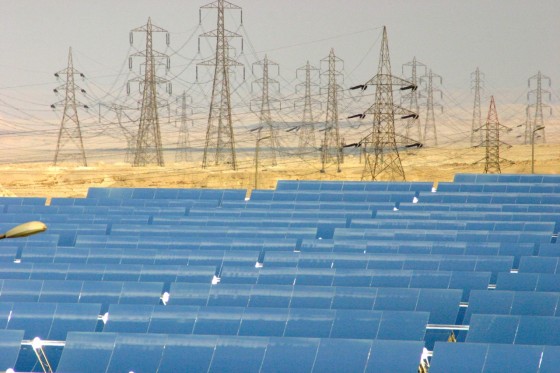
kuraymat egypt solar thermal power plant
A flailing Egypt still aims for 20 percent renewables by 2020.

Egypt’s Supreme Council of Energy last week pushed forward a new round of concessions aimed at boosting investment in renewable and clean energy in the country. According to the Council, it said it would exempt parts and components used in the production of electricity from customs and tax if they were to be implemented in either solar or wind power operations.

The move is a positive for Egypt’s renewable energy sector, which has largely been quiet since January 2011, when an uprising ousted the former regime from power. Since then, the economic woes in the country have seen numerous projects scrapped, but the Council believes that the new measures will entice investors to go green with their energy needs.

It also stated that the “allocation of plots of land belonging to the Renewable Energy Authority would be made available to private companies working in the field.”

The goal is to establish “production projects and the sale of electric power systems for not less than two percent the total energy produced annually from the project.”

While ambitious, Minister of Electricity and Energy Mahmoud Balba’a believes it can boost the investment potential of Egypt’s alternative energy sector (see our impressive coverage and photos of the Kuraymat solar plant), which had been growing dramatically in recent years before the uprising.

“The facilities include requiring the Egyptian Company for Electricity Transmission to purchase energy produced, or to authorize transfers to entities contracted, with a commitment to prices set by the Council of Ministers, according to the system slides approved for sale of electricity to the citizens,” he said.

The ministry, earlier this year, said they hope a new 1000 MW power project aims to contribute 1,000 megawatts of power to the country and will be fully functional by 2016 to help ease Egypt’s electricity needs.

The country hopes to be using some 20 percent of all power from alternative sources by 2020. Currently, Egypt has a 200 MW wind farm on the Red Sea coast with Spain’s Gamesa and the entire region is producing some 400 MW of total wind power. There is also a 150 MW solar thermal plant 90 km south of Cairo in operation.

Image of Kuraymat solar thermal plant by Tafline Laylin/Green Prophet

TRENDING

Shebara hotel Saudi Arabia – is it eco-luxury dream or desert illusion?

A new breed of luxury has landed on the Red Sea, mirrored pods floating above coral reefs, reflecting sky and sea like something not entirely of this Earth. Energy powered by solar powers, drinking water pulled from the sea using desalination. 

Hydrophilis SCUBA gear could make us one with the sea

Hydrophilis, Oliver Isler’s experimental rebreather suit, reimagines diving by reducing drag, eliminating bubbles, and bringing humans closer to the natural movement of marine life.

Jordan’s $6 Billion Aqaba–Amman Desalination Project from the Red Sea Moves Forward

In 2025, the Jordanian government signed agreements with a consortium led by Meridiam and SUEZ, alongside VINCI Construction and Orascom Construction. Under a 30-year concession agreement, the consortium will design, build, finance, operate, and maintain the system before transferring it back to the Jordanian government. The total investment is estimated at approximately $6 billion USD.

The Saudi Startup Turning Desalination’s Toxic Waste Into Its Own Disinfectant

For millennia, the Middle East's water crisis seemed an immutable fact of geography — a region defined as much by what it lacked as by what lay beneath its sands. Today, a convergence of plummeting solar costs, advancing membrane technology, and hard-won engineering expertise is rewriting that story.

Ethiopians are Looking to Somaliland for Red Sea Access as Global Powers Move In

Somaliland, for its part, has operated as a de facto independent state since 1991. It has its own government, elections, currency, and security forces. It’s often described as one of the more stable and democratic political systems in the region, despite never being formally recognized internationally. 

Nobul’s Regan McGee on Shareholder Value: “Complacency Is the Silent Killer” 

Why the governance framework designed to protect shareholders so...

Should You Invest in the Private Market?

startustartup Unlike public stock exchanges, which offer daily trading, strict...

How to build a 100-year-company

Kongō Gumi is a Japanese construction company, purportedly founded in 578 A.D., making it the world's oldest documented company. What can we learn about building sustainable businesses from them?

From Pilot Plant to Global Stage: How Aduro Clean Technologies’ 2026 Expansion Signals a Turning Point for Chemical Recycling Investors Like Yazan Al Homsi

The company's Next Generation Process (NGP) Pilot Plant in London, Ontario, has officially moved into initial operating campaigns, generating the kind of structured, repeatable data that separates laboratory promise from commercial viability.

How AI Helps SaaS Companies Reduce Repetitive Customer Support Work

SaaS products are designed for large numbers of users with different levels of experience, and also in renewable energy.

Pulling Water from the Air

Faced with water shortage in Amman, Laurie digs up...

Turning Your Energy Consultancy into an LLC: 4 Legal Steps for Founders in Texas

If you are starting a renewable energy business in Texas, learn how to start an LLC by the books.

Tracking the Impacts of a Hydroelectric Dam Along the Tigris River

For the next two months, I'll be taking a break from my usual Green Prophet posts to report on a transnational environmental issue: the Ilısu Dam currently under construction in Turkey, and the ways it will transform life along the Tigris River.

Related Articles

Popular Categories