


Learn the ropes of how to live in a Muslim country. Laurie goes over the 101 of Eid, Ramadan and some Muslim holiday rituals that might baffle the average westerner.
Eid in the summer in the Middle East, when most ex-pats’ minds turn to quick trips-to-get-out-of-this-dry-heat. This year, my second in Jordan, I go native and learn more about the home team’s culture.
We landed in Jordan last July: school was out and I was unemployed. The husband (already here a year) dropped the kid and me at a pool center called The Orthodox Club. “Orthodox”, to a New Yorker on hiatus from organized religion, conjures up black-suited Jews with impressive hats and beards, a wife in a wig and a herd of tiny kids any Irish Catholic would be proud of. But in Jordan, Orthodox means something different.
I languish in a Woody Allen moment, imagining a whole club of swimming Hasidim, ‘til I realize that “orthodox” in the Middle East here means Christians, eastern sect Christians, who can eat and drink and co-mingle in cringingly teeny Speedos all through the heat wave of an Ammanian summer (which in 2011, included Ramadan).
So begins my life as a cable TV special: sort of The Sopranos go to Amman.
A year on, I have a job, and co-workers and new friends, who – in fair exchange for imported bags of Reese’s peanut butter cups – have jumped in as my cultural counselors. Sure, there are Muslims all over Manhattan, and a few count me as their BFF, but religious practice is more muted and diluted amongst that city’s panoply of cultures. Islamic traditions are not clearly visible to the untrained eye.
Much easier to learn the ropes when living in a Muslim country, one quite tolerant of quizzical foreigners.
Ramadan is a time of prayer, fasting, and charity for a billion plus Muslims.
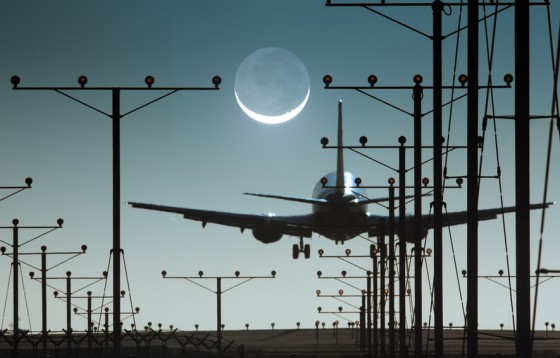
Islam uses a lunar calendar, with each month starting with the sighting of the new moon: Ramadan is the ninth month of the Islamic year. Elsewhere the solar calendar is used, with months 11 days longer than their lunar cousins. This discrepancy is why the Islamic holy days move forward, occurring later each year.
Muslims believe that the first verses of the Qur’an were revealed to the Prophet Mohammad by Allah through the angel Jibril (Gabriel) beginning 610 AD. The Qur’an can be considered as a book of guidance, and is composed of ayah, or verses, that form 114 suras, or chapters.
At many mosques during Ramadan, about one thirtieth of the Qur’an is recited each night in prayers known as tarawih. By the close of the holy month the complete scripture will have been recited. I’m giving the tome a re-read this month too; using an English translation which the young man at the book store assured me,”isn’t nearly the same as the original”.
Muslims fast, a practice called sawm, throughout the month of Ramadan.
Nothing is eaten or drunk (or smoked, praise to Allah on that, I say) between dawn and sunset. Able-bodied Muslims take part in sawm from about age twelve; illness or pregnancy or travel can exempt the faithful from fasting, although most will undertake the action later that same year.
During the holy month, most Middle Eastern restaurants close during daylight hours. The days begin with suhoor, a meal eaten before the sun rises. After the sunset, a meal known as iftar breaks the fast. Iftar usually begins with dates, simple soups and sweet drinks.
Then the real party starts. I tag daytime inertia not so much on fasting as on late night socializing with loved ones. Can there be a better reason to be shattered the next day?
Fasting is an opportunity to practice self-control. It cleanses both body and mind. It serves as a reminder of the suffering of the poor. As a child in a Catholic home, before Vatican II played with the rules, we did our fair share of fasting before taking Holy Communion.
For me, that was a matter of enduring hours without M&Ms. In summertime Ramadan, it can mean over 12 hours of no food, no drinks, no water.
My new friends tell me that increased solidarity with the wider community during this challenging month is the most gratifying take-away. There is a power to community. I fasted a few days alongside office friends. We eyeballed non-fasters slurping cold water like puppies; the connection I feel with those abstaining is real.
Ramadan ends with the festival of Eid al-Fitr.
Often abbreviated to “Eid”, and literally the “Festival of Breaking the Fast,” Eid al-Fitr is one of the most important Islamic celebrations. The three-day holiday marks the end of Ramadan. Everyone dolls up, homes are dressed with lights and decorations, kids get treats, and visits to friends and family go on steroids. The holiday is also called “Little Eid”.
Charity and good deeds (always important in Islam) take on special significance at the end of Ramadan, with people sharing their blessings by feeding the poor and making contributions to mosques.
Eid al-Adha marks the end of the Hajj
About a month onwards, Eid al-Adha marks the completion of the hajj (pilgrimage) rites at Mecca, which is observed by Muslims throughout the world to commemorate the faith of Ibrahim (Abraham). The holiday begins the day after pilgrims on Hajj descend from Mount Arafat.
This one’s known as “Big Eid”: a holy day seeped in rich tradition and context, although for foreigners it’s just another good excuse to take a trip. I’ll be back with a better account of Big Eid once I score some more peanut butter cups.
Isn’t world travel wonderful?
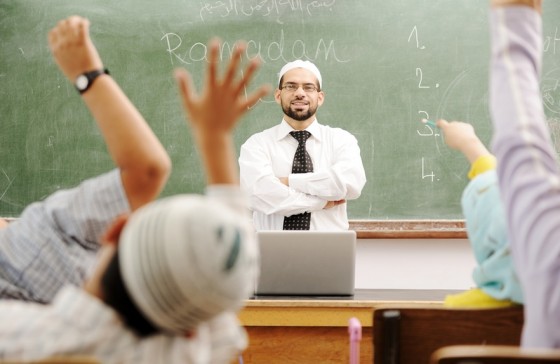
Image of Muslim classroom from Shutterstock


Very good article. Thanks a lot.
Thanks for the comment, Nuruddin, and for the clarification.
It would be interesting to know how else the Islamic lunar calendar is used in everyday life.
Very good article and imformative too and correct except Islamic holy occasions occur earlier every year by about 10 days.