
Egyptians Panic as Foot and Mouth Disease Sweeps Through the Country

FMD, epidemic, Foot and Mouth Disease, Egypt, Livestock, food, health, Many Egyptians have stopped buying meat after thousands of livestock have died from foot and mouth disease in the last three weeks.

Even though it is extremely rare for humans to contract foot and mouth disease, many panicky Egyptians have stopped purchasing meat since the virus began to spread through the country, leaving thousands of dead cattle in its wake. After last year’s revolution and subsequent mismanagement of natural resources and political matters, Egyptians are unable to trust government exhortations that they are monitoring the epidemic that has affected cattle and livestock in Alexandria, Cairo, and various other governorates.

The General Authority for Veterinary Services reported that 40,222 cattle have been infected and 4,658 cattle have died since the disease broke out three weeks ago.

Blister in the sun

“Foot-and-Mouth Disease (FMD) is a highly contagious viral vesicular disease of cloven-hoofed animals. Although seldom lethal in adult animals, it causes serious production losses and is a major constraint to international trade in livestock products. Severe mortality may occur in young stock, particularly lambs and piglets,” according to the Food and Agricultural Organization (FAO) of the United Nations.

Symptoms of FMD in livestock include blisters and erosions in and around the mouth, hooves, and on teats, excessive salivation and drooling, and lameness. According to FMD Info, the average time between infection and the appearance of symptoms is three to eight days, although it can sometimes take as long as two weeks before symptoms appear.

The National Health Service in the United Kingdom reports that only a few cases of human contraction have been reported and that the symptoms in those cases were like flu, although blisters occasionally occur. The last UK national to catch FMD in 1966 recovered in a matter of days.

The people aren’t buying

Dr. Amr Kandil, head of the Preventive Medicine Department of the Health Ministry, told Egypt Independent that the government “is keen on putting all facts about the current situation in the hands of Parliament.”

Egypt Independent said this statement refers to a meeting of the Shura Council agricultural committee last week, during which the epidemic and its potential impact on the Egyptian economy and national security were evaluated and presented to the public.

But the people aren’t buying. Many stores have closed down and one butcher, Mohamed Abdo, told the paper that he has increased sales of chicken since the FMD outbreak. Prices for chicken have skyrocketed by 20%.

Another woman told the paper they simply can’t trust what the government says.

Farmers suffer the most

Meanwhile livestock farmers are hardest hit by this epidemic and will receive no financial support from the government for their losses. 1,876 animals have died in the Gharbiya governorate and 17,678 have been infected, while 439 deaths and 5,426 have been reported in the Daqahlia governorate, according to Egypt Independent.

Dr. Hatem Farrag, assistant minister of agriculture for veterinary medicine, told Al-Masry Al-Youm that in the past, “farmers were not compensated for foot-and-mouth disease infections; however, the government is currently considering compensation for farmers.”

The government urged farmers to bury their dead livestock instead of dumping them in irrigation canals.

:: Egypt Independent

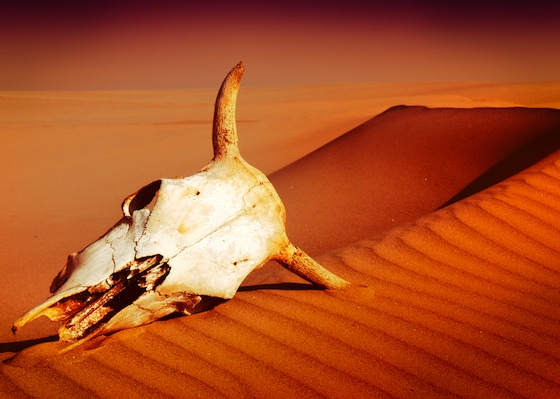
Image credit: Death in the Desert, Shutterstock

More on disease outbreaks in the Middle East:

Egypt Launches Anti-Bird Flu Campaign

Avian Flu Raises its Ugly Head in Israel and the Palestinian Territories

420 Cow Brain Seizure in Cairo Deprives Egyptians of a Tasty Dish
Tafline Laylin
Tafline Laylinhttp://www.greenprophet.com
As a tour leader who led “eco-friendly” camping trips throughout North America, Tafline soon realized that she was instead leaving behind a trail of gas fumes, plastic bottles and Pringles. In fact, wherever she traveled – whether it was Viet Nam or South Africa or England – it became clear how inefficiently the mandate to re-think our consumer culture is reaching the general public. Born in Iran, raised in South Africa and the United States, she currently splits her time between Africa and the Middle East. Tafline can be reached at tafline (at) greenprophet (dot) com.

Read More

TRENDING

5 Reasons Why You Should Save Seeds (and plant them)

Saving seeds from tomatoes, peppers, herbs and flowers helps preserve biodiversity, strengthen food security, and keep heirloom varieties alive. Even a small balcony garden can make a difference.

Lyme Disease And The Great Outdoors

Planning on being outdoors a lot this summer? We...

Make Guarapo De Piña (it’s fermented pineapple juice)

In Cuba, guarapo is simply freshly-pressed sugar cane juice, and is drunk on the spot, without waiting for it to ferment. But in Colombia, Venezuela, Peru and Mexico, they homebrew guarapo from pineapples or oranges, and the fragrant fluid sits on the kitchen counter top to ferment until it's bubbly.

Baby teeth read like tree rings paint a picture of toxins in early life

A new study from the Icahn School of Medicine at Mount Sinai in New York offers a striking insight into how the environments we are born into can quietly shape our brains years later. By analyzing naturally shed baby teeth, the ones tucked under pillows for the tooth fairy, researchers have reconstructed a detailed timeline of exposure to environmental metals during pregnancy and early infancy.

Poop in the East River shows the city’s rat problem and what people like to eat

New York ecology and health can be monitored by a jug of water a week.

Yerukim Forms a New Green Economy Where the Money is Really Green

The Yerukim members who pick up the recyclables get to keep the monetary reward, the public earns "green" bills that can be used in shops, and business owners get to be associated with environmentalism.

Choosing Riyadh over Dubai? What Investors Should Know

Saudi Arabia is deploying capital at unmatched scale to catalyze tourism and advanced industry while rewiring its power-and-water backbone. The investable frontier is widening—especially in renewables, grid storage, water efficiency/desal retrofits, and hospitality operating platforms. Prudent investors will insist on phased delivery, enforceable KPIs (energy, water, biodiversity), and RHQ/zone compliance—while pricing political-economy and reputational risks alongside growth upside.

Sell your cooking oil for biodiesel money

Want to make money on old french fry oil? Sell it.

Qatar Alternative Energy Summit Pairs Investors And Innovators

Alternative energy investors and innovators can meet n' greet in Doha, Qatar March 16 and 17.

Here’s How To Implement The Four Pillars Of Employee Engagement

If you throw a party for your work team and they are vegans, don't make it a barbecue. Know the sustainability values of your team to boost moral and retain good people.

Locals From Rishon Fight IKEA

Big Box stores are a pretty new concept in Israel, and thank God that not every Israeli city wants them in their backyard. A word from someone who has see the beautiful farmland around her hometown Newmarket, Ontario stripped and converted into vulgar strip malls of big box shops: they have no place in a healthy and sustainable town or city.

The Jewish National Fund Meets An Inconvenient Truth

According to the JNF, it has transformed thousands of acres of barren land into green forests in Israel. They state that each person emits about 23 tons of carbon per year, estimating that each tree planted can absorb one ton of carbon in its lifetime. That's a whole lot of trees you'd need to be planting. Could so many fit in Israel?

How to quiet noise from construction in your office

Streets need to be resurfaced in New York but the humming and grinding noise is unsettling. Noise is environmental pollution. 

Popular Categories