

Egypt Launches Anti-Bird Flu Campaign

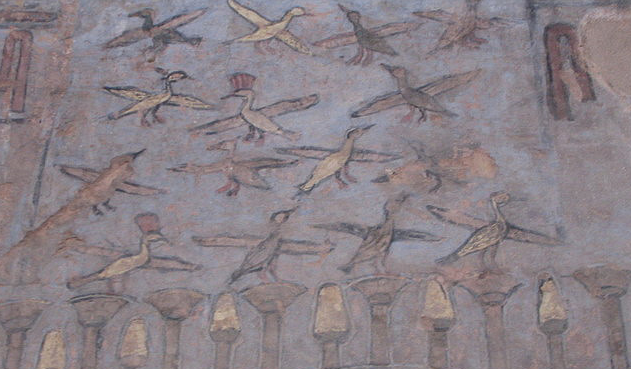
aswan bird
H5N1 has infected 159 and killed 55 people in Egypt since 2006.

A nationwide campaign to stop the spread of H5N1 avian influenza in Egypt is to be launched by the government in a few weeks, say officials, but details are still sketchy. The new plan, which will involve coordination between the Health Ministry, the Agriculture Ministry and poultry producers, requires close monitoring and various bio-safety measures.

“These measures are just a small part of a more general plan to curb the spread of the virus in our country,” Saber Abdel Aziz, a senior official from the state-run General Organization for Veterinary Services, told IRIN. “We will also offer incentives to poultry growers to look for signs of illness in their animals, report sick ones, and practice bio-security.”

H5N1 has infected 159 and killed 55 people in Egypt since 2006.

The most recent fatalities occurred on 19 January 2012 – a two-year-old girl from Cairo, and a 31-year-old man from Fayoum Governorate in the Nile Delta.

Epidemiological investigations indicated they had both been exposed to backyard poultry.

Abdel Aziz and his colleagues at the General Organization for Veterinary Services say they will work hard to prevent this from happening again by applying bio-security prevention measures.

“Taking commonsense precautions to prevent the disease from coming onto a farm is a cornerstone of keeping the poultry healthy,” he said. “But apart from these commonsense precautions, we will give training to poultry farm workers, make basic infection control, and promote the use of personal protective equipment.”

Aziz said, however, that funding for the plan was still being negotiated with the Finance Ministry.

The latest two avian flu deaths, along with a Health Ministry announcement that 2011 saw the highest number of H5N1 infections ever, has created anxiety across the country. The ministry said 40 people had contracted the virus in 2011, up from 23 in 2010. More shocking still, 16 of the 40 who contracted the virus last year died.

Amr Qandeel, head of preventive medicine at the Health Ministry, attributed the rise in virus infections to a weakening supervisory role of the government.

Exactly a year has passed since the start of the Egyptian uprising. During this time there have been three different health ministers; widespread strikes and political unrest; and the police have been either in a degree of disarray or preoccupied with containing demonstrations: Tackling H5N1 and enforcing bio-safety measures has inevitably, therefore, not been a top government priority.

In 2010, the government took measures to curb bird flu infections, including banning inter-governorate poultry movements and acting against poultry breeders who did not abide by the declared safety measures. But independent health experts like Saeed Aun say more needs to be done.

Egyptians, particularly in poor districts and the countryside, rear chickens and other animals at home. Aun describes this home breeding of birds as “risky”. Unlicensed poultry farms – numbering around 40,000 – are also a challenge.

“These are places the government does not reach,” Aun said. “This means that any talk about preventive measures will be futile as long as this very large number of farms is not part of the process.”

::IRIN news; image via kudomomo

Read More

TRENDING

Ethiopians are Looking to Somaliland for Red Sea Access as Global Powers Move In

Somaliland, for its part, has operated as a de facto independent state since 1991. It has its own government, elections, currency, and security forces. It’s often described as one of the more stable and democratic political systems in the region, despite never being formally recognized internationally. 

Egypt building nuclear power

Egypt is building a nuclear energy plant, expected to go online in 2026 when countries like Germany have shut down all its domestic nuclear power. The El Dabaa Nuclear Power Plant is the first nuclear power plant planned for Egypt and will be located at El Dabaa, Matrouh Governorate, Egypt, about 320 kilometers northwest of Cairo. 

More investments of 1.2 GW in Benban solar, Egypt

Egypt’s Ministry of Electricity and Renewable Energy, the Egyptian Electricity Transmission Company, and a consortium comprising Infinity Power and Hassan Allam Utilities Energy Platform signed an agreement to jointly develop solar power projects at Benban Solar, one of the world's largest solar energy parks in Egypt.

Benban solar in Egypt and the companies that make the energy shine

Benban isn’t a single solar plant at all, but a collection of 41 facilities, each developed by different companies but connected through shared infrastructure. This structure is what makes Benban unique: dozens of developers working like nodes in a vast energy network, each feeding electricity into shared substations and Egypt’s national grid.

Undercover divers find fatal flaws in Egypt’s dive boat industry

German magazine stern and broadcaster RTL have confirmed what Green Prophet has reported for months — the sinking of Egypt’s Sea Story dive yacht in November 2024, which killed 11 people, was no freak accident. Their undercover investigation reveals the captain had no licence, the operator lacked legal authorisation, and the vessel had serious stability flaws. A wider probe of 17 Red Sea liveaboard boats found every one had dangerous safety deficiencies, echoing Green Prophet’s earlier coverage of Egypt’s dive tourism safety crisis.

Yerukim Forms a New Green Economy Where the Money is Really Green

The Yerukim members who pick up the recyclables get to keep the monetary reward, the public earns "green" bills that can be used in shops, and business owners get to be associated with environmentalism.

Choosing Riyadh over Dubai? What Investors Should Know

Saudi Arabia is deploying capital at unmatched scale to catalyze tourism and advanced industry while rewiring its power-and-water backbone. The investable frontier is widening—especially in renewables, grid storage, water efficiency/desal retrofits, and hospitality operating platforms. Prudent investors will insist on phased delivery, enforceable KPIs (energy, water, biodiversity), and RHQ/zone compliance—while pricing political-economy and reputational risks alongside growth upside.

Sell your cooking oil for biodiesel money

Want to make money on old french fry oil? Sell it.

Qatar Alternative Energy Summit Pairs Investors And Innovators

Alternative energy investors and innovators can meet n' greet in Doha, Qatar March 16 and 17.

Here’s How To Implement The Four Pillars Of Employee Engagement

If you throw a party for your work team and they are vegans, don't make it a barbecue. Know the sustainability values of your team to boost moral and retain good people.

Locals From Rishon Fight IKEA

Big Box stores are a pretty new concept in Israel, and thank God that not every Israeli city wants them in their backyard. A word from someone who has see the beautiful farmland around her hometown Newmarket, Ontario stripped and converted into vulgar strip malls of big box shops: they have no place in a healthy and sustainable town or city.

The Jewish National Fund Meets An Inconvenient Truth

According to the JNF, it has transformed thousands of acres of barren land into green forests in Israel. They state that each person emits about 23 tons of carbon per year, estimating that each tree planted can absorb one ton of carbon in its lifetime. That's a whole lot of trees you'd need to be planting. Could so many fit in Israel?

How to quiet noise from construction in your office

Streets need to be resurfaced in New York but the humming and grinding noise is unsettling. Noise is environmental pollution. 

Popular Categories