
Eden Vardy Plants a Sustainable T.R.E.E. in Aspen

"aspen colorado permaculture"A sustainable T.R.E.E. grows in Aspen, where children learn about real food.

As a child, Israeli-born Eden Vardy wanted to know where his food came from.  And since he grew up in Aspen, Colorado, his food generally came from a supermarket and was probably transported from far away.  As he grew older and learned more about food, the locavore movement, and the environmental benefits of eating local food, he was dismayed to learn about the absence of eco-minded food instruction in Aspen.  After completing his studies (which included a Green Apprenticeship at Kibbutz Lotan in Israel), Vardy decided to do something to educate kids about real food back in his hometown and started Aspen T.R.E.E.

T.R.E.E. stands for “together regenerating the environment through education” and has many programs that try to achieve that goal.

One of the main goals of T.R.E.E. is to try to resolve the disconnect between modern society and its food sources.  (Or, in other words, explain to people that food doesn’t come from the supermarket.)  But Vardy does not focus on negativity, as he sees this as one of the weaknesses of the environmental movement.  Instead, Vardy and his organization focus on positive solutions.

“We focus on sustainable solutions,” Vardy said.  And if one is creative and artistic in the process, “that will inspire people.”

One of T.R.E.E.’s programs is the Cozy Point Ranch Sustainable Farmyard, which welcomed hundreds of kids this past summer as a summer camp program.  The Farmyard is essentially an outdoor classroom where children can learn about various species of plants and animals, and witness self-sustaining and self-sufficient agricultural ecosystems.

T.R.E.E. is also responsible for a free annual organic community Thanksgiving meal served at the Aspen High School that feeds up to 700 people.

Other programs include custom garden consulting and “nature nannies” – a child care service that introduces children to nature and more wholesome foods.

Vardy hopes that once T.R.E.E. is successful in Aspen, he will be able to export the concept to other communities in the United States.

: Aspen Daily News

Read more about eco-friendly food initiatives::
Interview with Locavore Expert Leda Meredith
Eating Real Food Can Save the Environment
Beirut’s Souk el Tayeb Farmer’s Market Celebrates Healthy Local Food Traditions

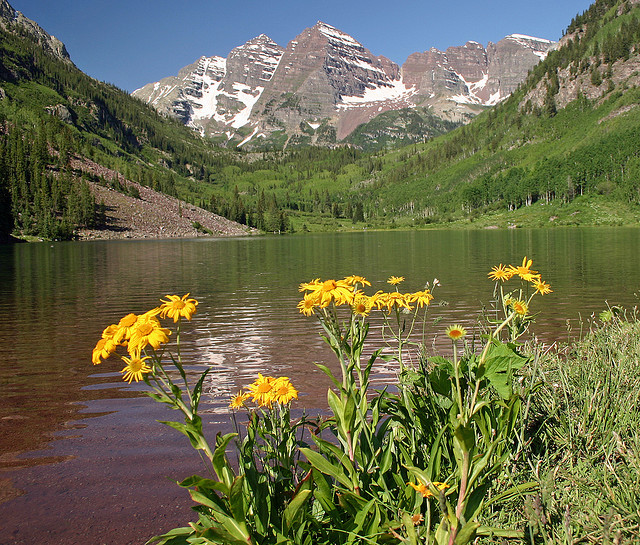
Image via: Frank Kovalchek

Karen Chernick
Karen Chernickhttps://www.greenprophet.com/
Much to the disappointment of her Moroccan grandmother, Karen became a vegetarian at the age of seven because of a heartfelt respect for other forms of life. She also began her journey to understand her surroundings and her impact on the environment. She even starting an elementary school Ecology Club and an environmental newsletter in the 3rd grade. (The proceeds of the newsletter went to non-profit environmental organizations, of course.) She now studies in New York. Karen can be reached at karen (at) greenprophet (dot) com.

Read More

1 COMMENT
  1. Hello Eden, I am trying to contact you through info@aspen_tree.org, yet my computer says typo in domain name?
    Please contact me when you have a chance. I would like to speak with you about your programs and any available opportunities to work this summer and/or this coming school year. My phone # 970-274-2267. Thanks, Greg Gissler

TRENDING

Understanding Food Production: Karl Studer on the Urban-Rural Knowledge Gap

Karl Studer occupies an unusual position in American business. As President of Quanta Services, he oversees electrical infrastructure operations across the United States, Canada, and Australia, managing thousands of employees and multibillion-dollar projects.

5 Reasons Why You Should Save Seeds (and plant them)

Saving seeds from tomatoes, peppers, herbs and flowers helps preserve biodiversity, strengthen food security, and keep heirloom varieties alive. Even a small balcony garden can make a difference.

Can Scientists Predict Coral Bleaching Before It Happens?

Now researchers at the Woods Hole Oceanographic Institution (WHOI) in the US say they have developed a way to predict coral bleaching five to six months before it occurs, potentially giving reef managers enough time to intervene and save vulnerable corals.

Lyme Disease And The Great Outdoors

Planning on being outdoors a lot this summer? We...

Make Guarapo De Piña (it’s fermented pineapple juice)

In Cuba, guarapo is simply freshly-pressed sugar cane juice, and is drunk on the spot, without waiting for it to ferment. But in Colombia, Venezuela, Peru and Mexico, they homebrew guarapo from pineapples or oranges, and the fragrant fluid sits on the kitchen counter top to ferment until it's bubbly.

Yerukim Forms a New Green Economy Where the Money is Really Green

The Yerukim members who pick up the recyclables get to keep the monetary reward, the public earns "green" bills that can be used in shops, and business owners get to be associated with environmentalism.

Choosing Riyadh over Dubai? What Investors Should Know

Saudi Arabia is deploying capital at unmatched scale to catalyze tourism and advanced industry while rewiring its power-and-water backbone. The investable frontier is widening—especially in renewables, grid storage, water efficiency/desal retrofits, and hospitality operating platforms. Prudent investors will insist on phased delivery, enforceable KPIs (energy, water, biodiversity), and RHQ/zone compliance—while pricing political-economy and reputational risks alongside growth upside.

Sell your cooking oil for biodiesel money

Want to make money on old french fry oil? Sell it.

Qatar Alternative Energy Summit Pairs Investors And Innovators

Alternative energy investors and innovators can meet n' greet in Doha, Qatar March 16 and 17.

Here’s How To Implement The Four Pillars Of Employee Engagement

If you throw a party for your work team and they are vegans, don't make it a barbecue. Know the sustainability values of your team to boost moral and retain good people.

Locals From Rishon Fight IKEA

Big Box stores are a pretty new concept in Israel, and thank God that not every Israeli city wants them in their backyard. A word from someone who has see the beautiful farmland around her hometown Newmarket, Ontario stripped and converted into vulgar strip malls of big box shops: they have no place in a healthy and sustainable town or city.

The Jewish National Fund Meets An Inconvenient Truth

According to the JNF, it has transformed thousands of acres of barren land into green forests in Israel. They state that each person emits about 23 tons of carbon per year, estimating that each tree planted can absorb one ton of carbon in its lifetime. That's a whole lot of trees you'd need to be planting. Could so many fit in Israel?

How to quiet noise from construction in your office

Streets need to be resurfaced in New York but the humming and grinding noise is unsettling. Noise is environmental pollution. 

Popular Categories