

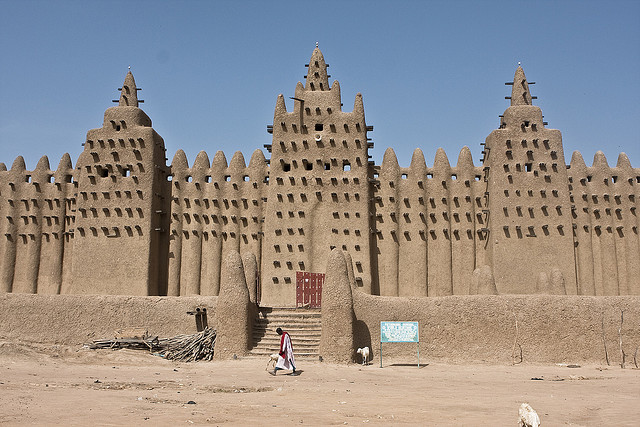
 Mud buildings have withstood the test of time; will they populate our futures too?
Think of Islamic mud structures and more than likely the iconic Great Mosque of Djenne in Mali will come to mind. The largest mud brick building in the world, the mosque is considered to be amongst the greatest achievement of Sudano-Swahelian architecture and one of the most famous landmarks of Africa.
But it’s not only Africa that boasts impressive (and sustainable) mud structures, the Middle East is home to some of the most stunning mud buildings in the world. From Shibam – the Manhattan of the Desert – in Yemen to the Bam citadel of Iran, these mud structures show that there’s more to Muslim architecture than Mecca and Masdar.
Why is Mud Building Sustainable?
For thousands of years, mud has been used as building material because it’s cheap, widely available and durable. Although many question its durability, there are numerous ancient mud buildings which have withstood the test of time. Mud construction is also an extremely environmentally-friendly method as it creates little waste, there is minimal energy consumption (mostly in the construction and transportation process), and it is easy to maintain and recycle.
In fact, Hassan Fathy, who has been hailed as the Middle East’s father of sustainable architecture and was behind eco-projects such as the Gourna village in Egypt wrote: “For centuries, the peasant had been wisely and quietly exploiting the obvious building material, while we, with our modern school-learned ideas, never dreamed of using such a ludicrous substance as mud for so serious a creation as a house.”

Modern Living in the City of Shibam
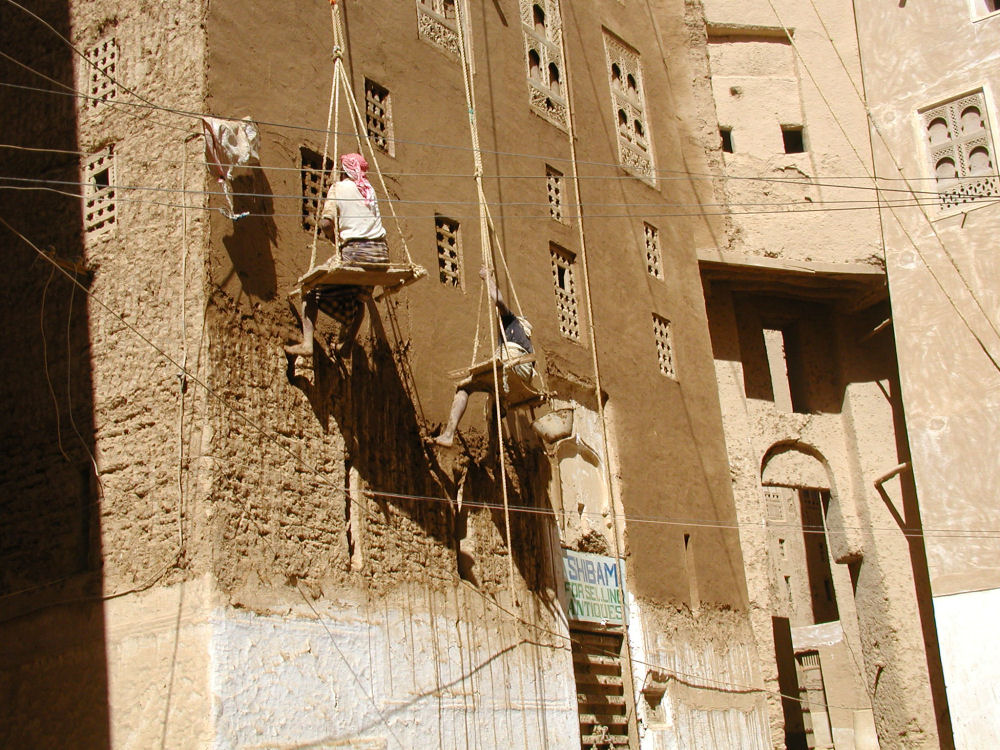
Yemen is home to one of the most impressive, one of the oldest and also one of the tallest mud cities in the world. Before the city scrapers of New York, the city of Shibam had built high rise apartments out of mud which tower to over 100 feet and are between 5 and 11 storeys high.
Dating back to around the 2nd century CE, the city was built using local clay and is still home to around 7,000 residents who live in the fortified city.
Although it is over 2,000 years old, rain and erosion necessitates constant maintenance, which efforts are now supported by restoration and urban development programs. Nicknamed Manhattan of the Desert, the city is testament to the durability of mud not just for single structures but also for modern high-rise living.

Another impressive city made of mud is Bam in Iran. Built using mud bricks known as adobe, the Bam tower or citadel (Arg-e-Bam) is believed to have been the largest adobe building in the world and was built over 2,000 years ago.
At its peak, the city served as a site of pilgrimage and was the trading centre of the Silk Road, which brought goods from the Far East to the capitals of Europe. Sadly, an earthquake in 2003 destroyed a large part of the historic city (around 70%) and killed over 26,000 people. There were more later showing that earth architecture has some limits.
Mud Castles, Walls and Mosques
Other notable mud structures in the wider Muslim world include the Bob Dioulasso Grand Mosque in Burkina Faso, and the Khiva Wall in Uzbekistan, which is built around a collection of Islamic schools and mosques. The Siwa Oasis in Egypt (which we visited and posted about here) and the Eastern Castle in Syria have also employed mud bricks in their construction, and research shows that the famous walls of Jericho were built using sun-dried mud bricks.
Whilst these mud buildings may seem like something of the past, they are in fact increasingly considered as options for low-carbon and low-cost construction. As well as having a small footprint, mud structures have been shown to reduce energy consumption as they are able to regulate temperature.
Hopefully mud architecture will not only decorate our past, but our future too.
Image of Great Mosque in Mali via Juan Manuel Garcia and image of Bisham in Yemen by Aysegul Tastaban.
Updated 2025

Love your article! I always wondered what the purpose was of the wooden stakes within the walls of mosques in Mali. Until I watched Rivers in The human planet.
Amazing mud structures. I love really old types of Architecture like this. Thanks for sharing.