Iran’s Earth Buildings are the Leading Cause of Quake Casualties

earthquakes, earth building, Iran, architecture, AFPWe’ve long extolled the virtues of earth building, but it turns out that Iran’s simple clay and mud brick buildings are a leading cause of casualties during strong earthquakes.

Over the weekend, two earthquakes measuring 6.3 and 6.4 on the richter scale hit the country’s east Azerbaijan province, killing at least 360 people and displacing and injuring thousands more.

Most of these casualties occurred because poorly-constructed buildings made with cheap materials collapsed, according to Kaveh Samiei, principal architect at AAG and a lecturer at Semnan University, crushing their inhabitants.

Leading causes of earthquake casualties

The Iranian authorities have been criticized for their emergency response to the earthquakes over the weekend after search and rescue efforts were called off within less than 24 hours.

But the Foundation of Housing, a branch of the Roads and Urbanism ministry should also be held to account as the development of rural areas falls under their jurisdiction.
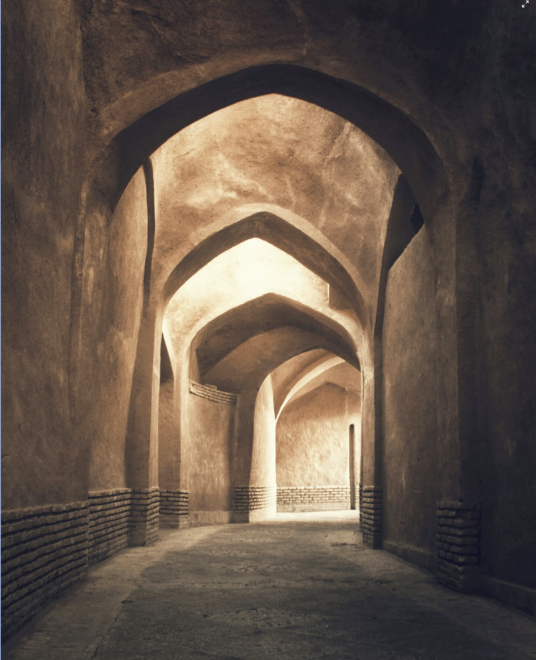
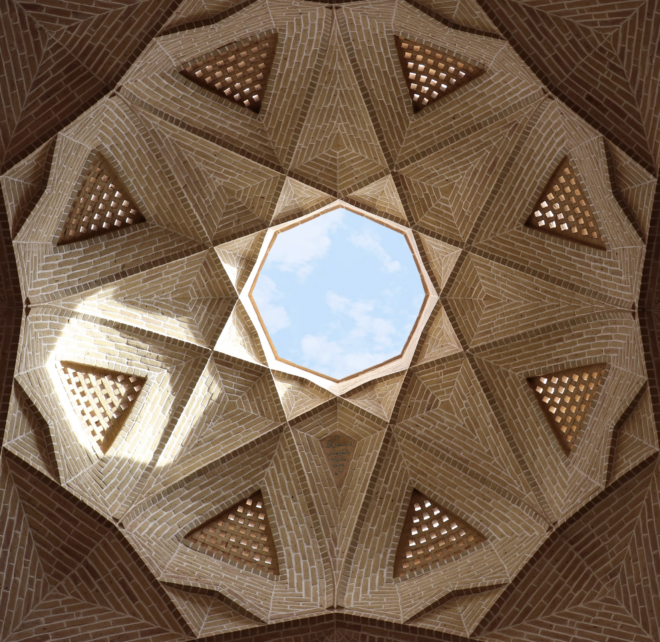
Yakhchal (Meybod), Yazd, Iran

The University of Tulane in the United States sites three main causes of high casualties in areas that are prone to earthquakes: a) population density, b) construction standards, and c) emergency preparedness.

Given that Iran is one of the most seismically-active areas in the world and that 126,000 people have been killed in earthquakes since 1900, the government should map fault lines and establish building codes accordingly.

“We can’t prevent earthquakes from happening,” Samiei told Green Prophet in an email interview, “but at least we can prevent the deaths of hundreds of people that are caused by collapsed buildings.”

Crushed by the earth in Bam, Iran
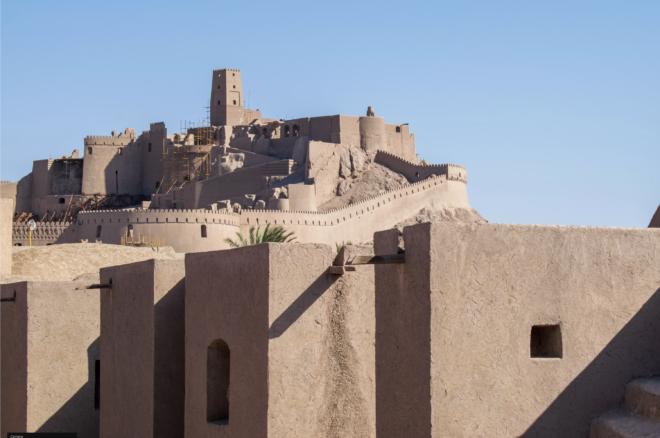
Bam Citadel, Iran

“If we can build safe and resistant structures, then we will decrease the rate of deaths and injuries,” he added.

Samiei explained that most rural Iranians live in buildings that have bulky walls and wooden ceilings that crush residents when large earthquakes strike.

“In the recent earthquake, almost all of the buildings that were damaged were constructed in this way. And exactly the same thing happened in Bam.”

Samiei is referring to the 2003 Bam earthquake in southeastern Iran that killed 150,000 people.

“The experience of some countries like Japan shows that it is possible to construct safer buildings,” the architect continued. He said that the use of “lightweight” construction materials in Japan is a strategic approach that could be implemented in Iran, though he emphasized that technology should be supplemented with appropriate safety education and disaster preparedness.

Earthquake preparedness in earth buildings

The worst earthquake in recorded human history killed 830,000 people in 1556, according to Tulane researchers. Most of the casualties were living in wind-deposited silt and clay caves in Shaaxi, China.

Earth construction may be great for staying cool in hot climates and reducing waste of natural resources, but this kind of construction must be coupled with sophisticated engineering to ensure safety – especially along fault lines.

“In some parts of Iran it will be necessary to deconstruct nearly 100% of the existing buildings and plan a new village,” Samiei warns.

“This will take a lot of time to complete.”
Tafline Laylin
Tafline Laylinhttp://www.greenprophet.com
As a tour leader who led “eco-friendly” camping trips throughout North America, Tafline soon realized that she was instead leaving behind a trail of gas fumes, plastic bottles and Pringles. In fact, wherever she traveled – whether it was Viet Nam or South Africa or England – it became clear how inefficiently the mandate to re-think our consumer culture is reaching the general public. Born in Iran, raised in South Africa and the United States, she currently splits her time between Africa and the Middle East. Tafline can be reached at tafline (at) greenprophet (dot) com.

Read More

TRENDING

Earth building with Dead Sea salt bricks

Researchers develop a brick made largely from recycled Dead Sea salt—offering a potential alternative to carbon-intensive cement.

Earthquake data can predict war

Seismic meters used to detect upcoming earthquakes may be used in the Art of War

Why Turkey earthquakes don’t hit Israel? It’s the Dead Sea Fault

The researchers add that the meeting area between the Dead Sea and East Anatolian Faults may be considered a natural laboratory for studying the processes in which tectonic junctions are formed between plate boundaries.

If I could travel to Yemen this is where I’d go

These important images remind us of the breathtakingly beautiful countries, rich with history, that may one day soon be reopened for exploration. That will be a happy day for Yemen, long ago described in Latin as the Happy Arabia.

Why was the Morocco quake so deadly?

At the base of Toubkal in the Atlas Mountains. We visited this kasbah a decade ago. And it has taken some damage from the earthquake but all residents and guests were safe.

Yerukim Forms a New Green Economy Where the Money is Really Green

The Yerukim members who pick up the recyclables get to keep the monetary reward, the public earns "green" bills that can be used in shops, and business owners get to be associated with environmentalism.

Choosing Riyadh over Dubai? What Investors Should Know

Saudi Arabia is deploying capital at unmatched scale to catalyze tourism and advanced industry while rewiring its power-and-water backbone. The investable frontier is widening—especially in renewables, grid storage, water efficiency/desal retrofits, and hospitality operating platforms. Prudent investors will insist on phased delivery, enforceable KPIs (energy, water, biodiversity), and RHQ/zone compliance—while pricing political-economy and reputational risks alongside growth upside.

Sell your cooking oil for biodiesel money

Want to make money on old french fry oil? Sell it.

Qatar Alternative Energy Summit Pairs Investors And Innovators

Alternative energy investors and innovators can meet n' greet in Doha, Qatar March 16 and 17.

Here’s How To Implement The Four Pillars Of Employee Engagement

If you throw a party for your work team and they are vegans, don't make it a barbecue. Know the sustainability values of your team to boost moral and retain good people.

Locals From Rishon Fight IKEA

Big Box stores are a pretty new concept in Israel, and thank God that not every Israeli city wants them in their backyard. A word from someone who has see the beautiful farmland around her hometown Newmarket, Ontario stripped and converted into vulgar strip malls of big box shops: they have no place in a healthy and sustainable town or city.

The Jewish National Fund Meets An Inconvenient Truth

According to the JNF, it has transformed thousands of acres of barren land into green forests in Israel. They state that each person emits about 23 tons of carbon per year, estimating that each tree planted can absorb one ton of carbon in its lifetime. That's a whole lot of trees you'd need to be planting. Could so many fit in Israel?

How to quiet noise from construction in your office

Streets need to be resurfaced in New York but the humming and grinding noise is unsettling. Noise is environmental pollution. 

Popular Categories