


Harvey Stein waxes lyrical on American author Cormac McCarthy’s soon to be filmed epic, post-apocalypse novel, ‘The Road’ :
“When he woke in the woods in the dark and the cold of the night he’d reach out to touch the child sleeping beside him. Nights dark beyond darkness and the days more gray each one than what had gone before. Like the onset of some cold glaucoma dimming away the world. His hand rose and fell softly with each precious breath.”
I couldn’t put it down.The novel “The Road” is an amazing, humbling, breathtaking book, containing both the most horrible nightmares you can imagine, and small moments of heartbreaking intimacy.
An “environmental” novel but not intentionally so, far from ideology, it fully deserves the Pulitzer Prize it won in 2007. (McCarthy has also won a Macarthur “genius grant” and has written 10 novels.) McCarthy has created a metaphorical world, but one that is so real we can taste, smell, gasp at it.
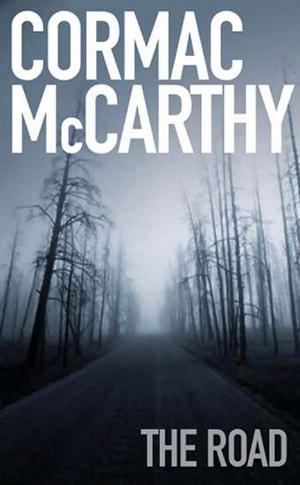 It is post-apocalyptic, taking place somewhere in the Eastern seaboard of the United States, after a disaster that is never made totally clear: post-nuclear, post-global warming.
In almost biblical cadence, the nameless man and boy walk, and walk, every morning the same:
“Are you okay? he said. The boy nodded. Then they set along the blacktop in the gunmetal light, shuffling through the ash, each the other’s world entire.”
Nature is everywhere in this novel, but it is almost entirely dead. Remember, ash is what has been burned. Many charred trees and plants stand, but if touched, fall to the ground. Rivers still twist and flow, but grey and lifeless.
One day, they find a small dam, by a lake.
The boy asks, “Will the dam be there for a long time?
I think so. It’s made of concrete. It will probably be there for hundreds of years. Thousands, even.
Do you think there could be fish in the lake?
No. There’s nothing in the lake.”
Nothing grows anymore in this world – their desperate daily search, in abandoned homes and cellars, is for the only food left – cans and preserved food packed away before the disaster. Once, by an abandoned orchard, they find an apple:
“He picked it up and held it to the light. Hard and brown and shriveled. He wiped it with the cloth and bit into it. Dry and almost tasteless…He ate it entire, seeds and all.”
The specific cause is not painted out, but it is starkly clear this dead world is man-caused. And in this world, the sight or signs of other humans is almost always a sign of mortal danger, because this world contains the worst of man: bands of cannibalistic survivors march down the roads.
There are daily moral dilemmas, which they must confront as any father and son would. One day, in a house they were exploring, they had found some chained humans.
That night, “The boy lay with his head in the man’s lap. After a while he said:
They’re going to kill those people, arent they?
Yes.
Why do they have to do that?
I dont know.
Are they going to eat them?
I dont know.
They’re going to eat them, arent they?
Yes.
And we couldnt help them because then they’d eat us too.
Yes.
And that’s why we couldnt help them.
Yes.
Okay.”
Through the story, man and boy push their metal cart, with a few tools, some “stinking robes and blankets,” a can or two, and a pistol. They travel with the vague purpose, besides survival, of somehow reaching the sea eastward.
There is no single climax in “The Road.” They do finally reach the sea, but it is just as lifeless as what has come before. The man’s cough gets worse and worse, blood coming up now. The boy realizes that the man will be gone soon, and he will have to somehow learn from all the things they have experienced together.
The man advises his son,
“You need to keep going…Just don’t give up. Okay?
Okay.
Okay.
I’m really scared Papa.
I know. But you’ll be okay. You’re going to be lucky. I know you are. I’ve got to stop talking. I’m going to start coughing again.
It’s okay, Papa. You don’t have to talk. It’s okay.”
On the final page of “The Road,” a memory of a time when nature still lived, and had magic:
“Once there were brook trout in the streams in the mountains. You could see them standing in the amber current…on their backs were vermiculate patterns that were maps of the world in its becoming.”
Why did I reread passages of this book over and over, why did scenes haunt me for weeks? The struggle for survival is boiled down, elemental: two humans, trying to find enough food for surviving another day, trying to avoid becoming food for the human beasts.
Can we create a world that will sustain us in return? Or will we slowly destroy our world – nature and other humans around us – that in its turn will create our own excruciating end? That is the question asked in “The Road.”
The answers seems to be found in day by day efforts, day by day choices. To gaze at, in one hand, the black nightmares that are already happening around us, to feel the hopelessness and despair that are impossible to ignore sometimes.
Or to feel our responsibility, like kin, towards the entire natural world, and towards each other. Because in the other hand are the utterly delicate seedlings of care and love, the only things that can grow life.

Harvey Stein is a filmmaker and writer, originally from New York, who moved to Israel in 2006. He is currently working on two feature length documentaries, “RxCannabis – a Freedom Tale” and “Heart of the Other,” and can be reached through either of these sites.

[…] the lights ever do go out (see review on The Road), this book would be a useful guide to creating home products from scratch. As it is, I’d […]
Thanks for this review – great to read what you thought of the book.
I’m an end-of-the-world fiction aficionado (as is my buddy who gave me the book), and I also couldn’t put it down. And I also kept picking it back up to read random pages. And I agree with your final open questions. This is the only one of the genre that didn’t make the end of the world seem fun and promising. The formula in all the others – 1) end of world; 2) survivor ponders why s/he survived; 3) survivor goes on a road trip to check out the post-apocalyptic world; 4) survivor meets other and they start a new society. Cool. This one wasn’t. It was frightening, pessimistic and realistic. And makes me want to avoid the end of the world. And hug my kids.
And an environmental post-script. I have a copy if someone wants it (pages starting to come out, but complete and readable). I’m in Haifa. James has my email.
Thanks again.