

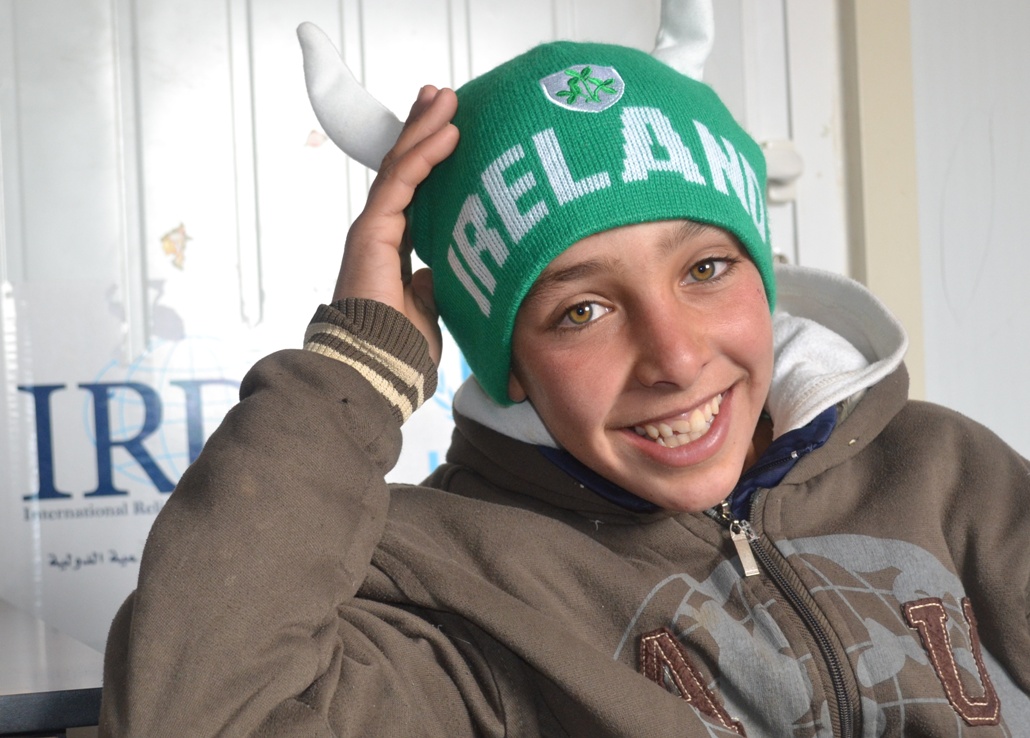
Cash is King. An essential ingredient of charitable giving; it greases the wheels when moving goods. A month after 4,000 hats were collected and shipped from Ireland to Jordan, they’re finally keeping some of Syria’s refugees a bit warmer. But in the end, it took money to drop the curtain on this act of giving.
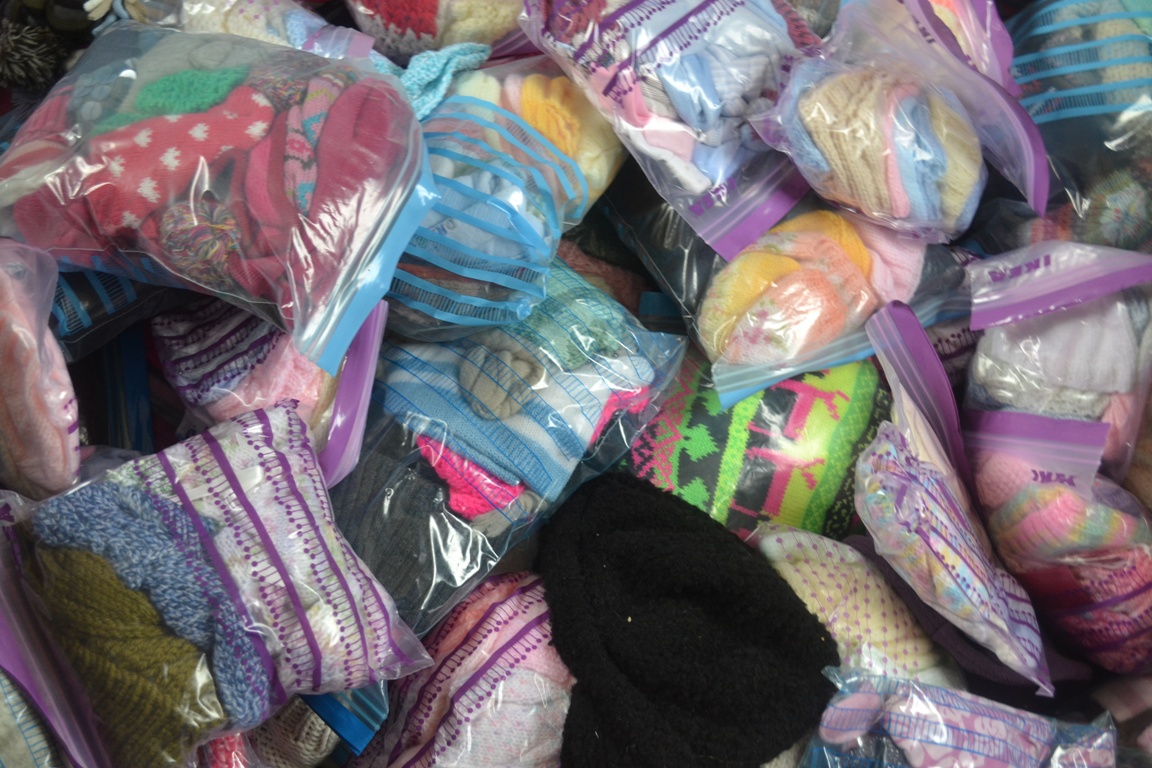
If you haven’t been following the tale of the Syrian hats, here’s the back-story. I had an idea to ask people from around the world to knit hats that I would then collect in Amman, Jordan and distribute to Syrian refugees in Zaatari refugee camp near the Syrian border. I live in Jordan and thought we would be able to use my coordinates to encourage people to do acts of goodwill.
Those hats embody so much: the empathy this crisis arouses, the genetically wired kindness of craftspeople, and the indomitable networking skills of my knitting partner in Ireland, Dubliner Virginia Nitz.
I learned a lesson: the most practical aid action is sending money to efficient relief agencies. But there’s a problem with that. Crises tap into our humanity. We feel pain; we want to help. We do; we feel better. Sure, you can feel great writing a check, but by limiting aid to cash donations you discount donors who prefer to give their time and talents.
 It’s clear why money talks. It’s a straight line between source and need without import hassles. And individual donors (and most NGOs) don’t have resources to manage transport, customs clearances, and distribution of goods and services.
But given the enormity of global need, surely there’s room for the personal initiative?
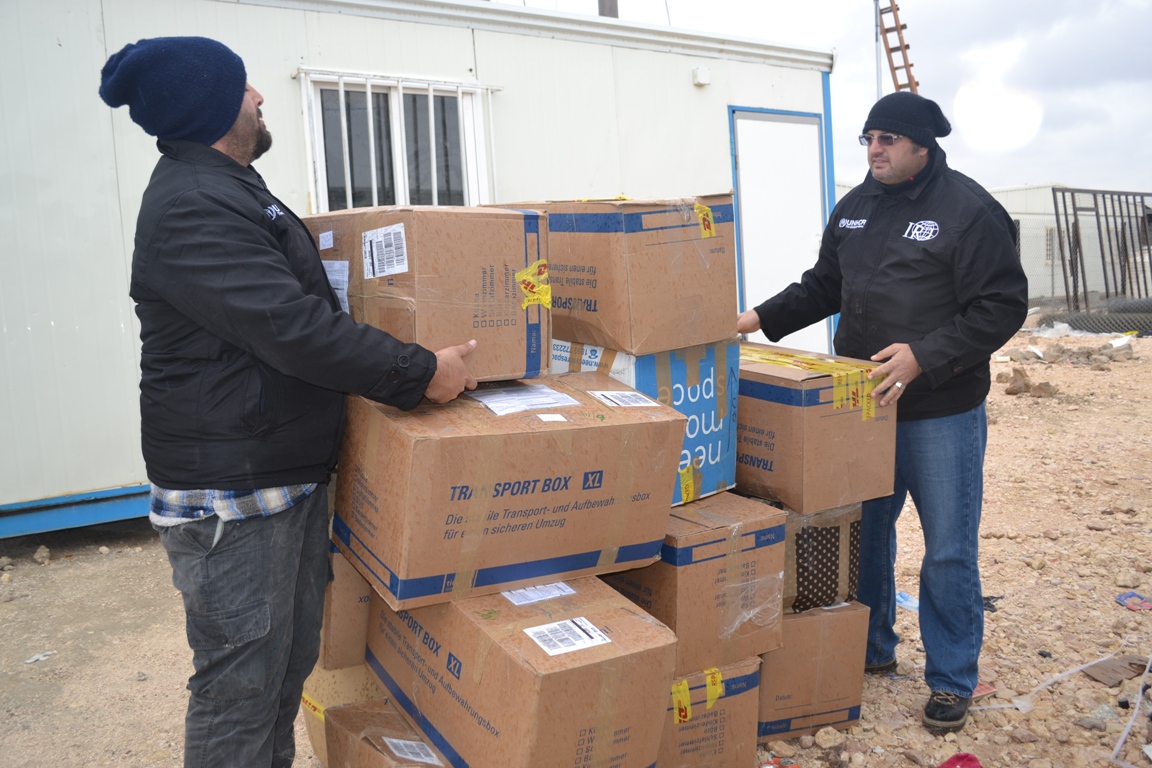
 Our hats arrived in Amman and, despite clear labeling as charitable goods, were assessed for exorbitant fees that far exceeded their worth. We didn’t do our homework. All imports are subject to customs fees here, and powers to exempt duties aren’t delegated to customs field offices.
We spent two weeks meeting with the Jordan-side shipper, customs officials on-airport and in Amman, and the receiving charity who was handling distribution. The hats remained warehoused while we chased processes that varied with each consultation.
It probably didn’t help that our project followed a Cabinet decision to slap a 20% customs duty on imported clothes. We’d need a letter from the Ministry of Foreign Affairs to free the hats – for free.
Finally, with an assist from the NGO’s “logistical expediter”, we learned that the hats would be ours for a cash payout of 500 JD ($700). This project ran tightly on a nonexistent budget; Virginia had managed free packing materials and free air freight too.
It was galling to now spend money on a process that did nothing to improve the plight of the refugees. This bill could buy 750 balls of yarn or 500 more Chinese-made hats in downtown Amman!
Time to think outside the hatbox. I booked a table at a school holiday bazaar, plopped down 60 new hats hot off the needles (meant to join the Irish boxes) and opened shop to raise the clearance fees. Signs explaining the project’s problem provoked conversation. My hats flew off the table. Kind hearts made cash donations. By the end of the day, we had enough to pay the tab.
One week later, and just in front of fierce desert snowstorm, they are in use in Zaatari.
There’s no moral to this story, it’s a cautionary tale. Due diligence is critical when undertaking charitable endeavors. Expect frustrations, and dip into your patience reserves. Because, in the end, if you are determined, there’s more than one way to skin a hat.
P.S. Hats, yarn, and cash donations are still very much accepted through Save the Babies and Studio Syria. We’re getting wiser every day.



Joe – it’s a real problem. In my years living in Dublin, I saw the Irish as a fiercely generous people whose response to the needy off their own shores is matched only by their aversion to be congratulated for their kindness. But that quiet charity gets deterred by frequent reporting (mostly on UK news) of scams and thieving…goods being used for profit and never reaching their targeted audience. We felt a very real responsibility to offer “proofs” that the hats made it to the camp, and the delay between shipping and final distribution worried me – adding credibility to the possibility that we were dumping the hats on eBay, etc…
Distribution within the camp and host communities run the same risk, as I’ve seen firsthand the power pyramids – some take more than their share, often leaving the neediest lacking. Will try and write about that in the near future.
And Maurice – compared to storm images I see in the northern Lebanese camps, Jordan is looking like Miami Beach! Let’s hope help is getting through everywhere – this is shaping up to be one hellish winter.
Good hearted Europeans (EU) are donating millions of Euros worth of goods to Arab refugees. But a lot of this stuff is going into private hands of locals and being resold to the needy. It’s a shame!
Appears those folk need a bit more than just some headgear.
I notice that during this bad storm we’ve been having, not much has been said in Israel regarding Palestinians or others in this region, including Jordan, who have been affected by the snow, rain and cold. Israel seems to have enough problems taking care of it’s own people; especially in Jerusalem.
And you’re right – money definitely does talk!