
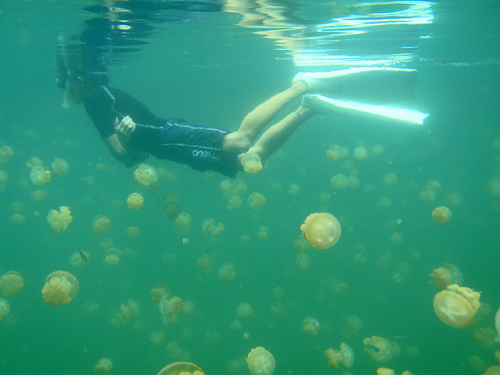


With summer coming on, beach enthusiasts must now begin to be on the lookout for swarms of jellyfish, otherwise known as “meduzot.”
The grey, blob-like masses appear every summer off the cost of Israel, Lebanon, and most other Mediterranean countries as well.
In fact the hypothesized “introduced species” that came to the Mediterranean Sea after the Suez Canal was built, have begun to become so prevalent off the Mediterranean coasts of Spain and other countries frequented by British holiday travelers, that the BBC and other British medias often give warning notices ot be on the lookout for the jellyfish, and what to do if stung by them.
Marine biologists studying the creatures, have been saying that the increasing numbers of jellyfish, and their size, are being attributed to a number of factors; including warming and increased salinity of the sea water, bringing them closer to shore, and over-fishing.
The jellyfish also are big fish eaters themselves, which put a further strain on the sea’s already critical ecological balance. Certain fish species, such as herring and sardines, who eat young jelly fish, have been decreasing in numbers, resulting in increases in jellyfish populations.
The jellyfish have been present in the Mediterranean for years, but seem to come towards Israeli beaches in a north and eastward direction from the northern Sinai coast and from the Suez Canal.
Whether they originated in the Red Sea or Gulf of Suez is not certain, however.
The simple organism’s sting is mostly harmless but can be quite painful and one does not necessarily need to be in close proximity to the jellyfish in order to be stung, as its venom is released into the waters as a sticky slime.
Israel’s Magan David Adom (MDA) suggests that bathers take a small bottle of vinegar to the beach with them, as this can help in alleviating the pain if stung by a jellyfish.
Salt water may also be used, but not fresh water. Some people also suggest urinating on the stings although not everyone would appreciate this advice.
The common practice of rubbing sand over the infected area actually worsens the pain, the MDA statement said.
After washing with vinegar, the infected area should be cleansed with water and soap. Ice in a plastic bag also helps relieve the symptoms of the sting, which although not lethal, can cause a powerful allergic reaction in some people.
[image via tata ata]
Read more on corals:
Corals Cope With Rising Sea Temperature By Eating High Protein Jellies
Corals Will Melt If CO2 Levels Double
New Research Ship To Paint Red Sea Green




[…] Tips Against Jellyfish Invasions […]
[…] Tips Against Jellyfish Invasions […]
[…] Dealing With Jellyfish Invasions off Israel and Lebanon Coasts AKPC_IDS += "76487,"; __spr_config = { pid: '4ef1a3d5396cef53f100007b', title: 'SafeMed Offers Course on Ballast Water and Invasive Species', ckw: 'ballast water,conservation,Education,environment,Invasive species,Mediterranean Sea,SafeMed', chan: 'travel-nature', no_slide: '', slide_logo: false, pub: '2012-06-18 05:52:56', url: 'http%3A%2F%2Fwww.greenprophet.com%2F2012%2F06%2Fsafemed-ballast-water-invasive-species%2F', header: 'RECOMMENDED FOR YOU' }; var content = document.getElementById('simplereach-slide-tag').parentNode, loc; if (content.className){ loc = '.' + content.className; } if (content.id){ loc = '#' + content.id; } __spr_config.loc = loc || content; (function(){ var s = document.createElement('script'); s.async = true; s.type = 'text/javascript'; s.src = document.location.protocol + '//d8rk54i4mohrb.cloudfront.net/js/slide.js'; __spr_config.css = 'document.location.protocol + '//d8rk54i4mohrb.cloudfront.net/css/p/4ef1a3d5396cef53f100007b.css'; var tg = document.getElementsByTagName('head')[0]; if (!tg) {tg = document.getElementsByTagName('body')[0];} if (tg) {tg.appendChild(s);} })(); […]
[…] on various beaches in both Israel and Lebanon, and previous Green Prophet articles have even offered tips on how to deal with the gelatinous blobs that to some people are very painful if stung by […]
[…] over-fishing; and from global warming. Global warming is causing water temperatures to rise – resulting in invasions of unwanted species like jellyfish […]
[…] islands of plastic debris, it does mention general pollution, rising sea temperatures, and an increase of creatures such as jellyfish; creatures that previous Green Prophet articles have noted as arriving in swarms every summer off […]