Home Blog Page 592

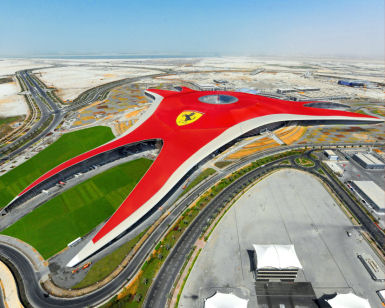
Ferrari Theme Park Revs Up Abu Dhabi’s Ecological Demise

4

ferrari-theme-parkAt a time when sane people are looking for ways to scale back their use of precious resources, Abu Dhabi continues to move full speed ahead.

More than once I’ve flattened the gas pedal on long country roads: trees whoosh by, road lines blur, and for those few moments of abandonment, I had not a care in the world.

But after a minute of throbbing adrenalin, my brain sent a warning signal: I’m driving one of the world’s most potent weapons and could easily lose control. So I slow down. Call it a strong desire to survive my thirties.

Our yearning for speed is akin to our desire to own fancy cars and big homes, to travel to every continent, and eat mangoes in the dead of winter. It’s human, it’s fun, but it’s not smart. We don’t want our kids to be boring old dullards, but we also can’t teach them that speeding through our natural resources is sustainable. Which is why Abu Dhabi’s latest “engineering feat” is no more than another triumph of really bad judgment.

Yoav David, City Architect of Tel Aviv, Goes “EUREKA” About Urban Sustainability

0

Commuter traffic and wasteful buildings are Tel Aviv’s biggest polluting culprits, according to City Architect of Tel Aviv-Jaffa, Yoav David.

As one of the events surrounding the EUREKA Israel Chairmanship this week, Deputy Mayor of Tel Aviv, Asaf Zamir, and Tel Aviv City Architect Yoav David  spoke to visiting European representatives about the city’s efforts to reach a higher level of urban sustainability.  Since the European EUREKA network is planning on launching a “Clean-Tech Initiative” campaign this coming February and it is the subject of much discussion during the representatives’ visit in Israel, the lecture served to illustrate another aspect of striving towards sustainability.

Israel Cleantech Intelligence: Solar Power Wars and 10 More Headlines

solar panels

BrightSource’s latest deals, Tel Aviv’s light rail, EUREKA in Israel and more headlines related to Israeli cleantech and the environment.

Innowattech and the Israel National Roads Company (INRC) have developed a new technology that can detect overloaded trucks without their having to stop. Natural building techniques are being reintroduced to Bedouins in Israel’s south and Israel’s development of solar energy (and other renewable energy) continues to be hindered by disputes between government officials. For these stories and more, see this week’s headlines below.

New Jellyfish Species Tells a Tale of Global Warming

jellyfish marivagia stellata
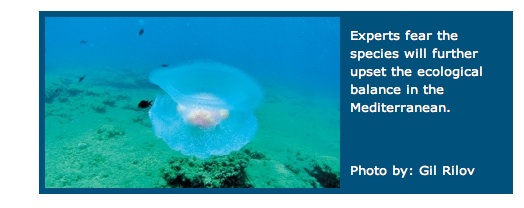
The new species, marivagia stellata, previously not known to science, doesn’t sting but is symptomatic of the environmental woes facing the Mediterranean Sea

A new species of jellyfish found off Israel’s coast the summer poses no threat to bathers but should serve warning to the countries bordering the Mediterranean Sea about the dangers posed by global warming and damage to the environment. Named Marivagia stellata and marked by a translucent hue of blue, patterned with red stars, dots, and streaks, two specimens were caught on the southern edge of Haifa Bay and off the coast of Beit Yannai beach this summer. Measuring 15 centimeters (six inches) in diameter, the fish does not sting humans.

Swimmers view them as a nuisance because of their toxic and painful sting, but scientists have much bigger problems with jellyfish.  Hardy survivors, jellyfish thrive in places where overfishing, chemical pollution and rising sea temperatures have killed off other species. Indeed, they serve as a barometer of ocean health.

“It’s bad news,” says Bella Galil, a senior scientist at Israel’s National Institute of Oceanography in Haifa: “We don’t know how this particular species will develop, but the phenomenon causes the displacement, and replacement of native local communities with invasive species, and can destabilize the food chain.”

Surrounded by countries with more than 400 million people, the Mediterranean is one of the most heavily used bodies of water in the world – a fishing grounds, a transportation corridor, and the receptacle for sewage and industrial waste. About a third of the world’s total merchant shipping travels on Mediterranean waters and many species have nearly disappeared because of pollution, including the Mediterranean monk seal.

Marivagia stellata is just the latest in a series of invasive jellyfish species that has been discovered in the eastern Mediterranean over the years. Galil said the new species had probably originated in the Red Sea or Pacific Ocean and had arrived after traveling through Egypt’s Suez Canal, which connects the Red Sea with the Mediterranean.

“The Mediterranean is a very well-studied sea,” said Galil, who was among the team of scientist to identify the new species. “Because the jellyfish was found so close to shore, it is very unlikely that this jellyfish would escape notice in a sea studied so extensively.”

In fact, Marivagia stellata probably found its way in to the Mediterranean at least a few years ago. Galil said a specimen was discovered off the Israeli coast in 2006, but was lost before it could be positively identified.  Another specimen was probably caught off the coast of Lebanon in October, according to local media reports, which Galil termed a “bad omen.”

“It means that it just arrived and already has established in a fairly wide population and that it has the potential to increase and go further,” she said.

The Mediterranean has been invaded by successive waves of outside species, a process that began after the Suez Canal opened in 1869 and linked the Mediterranean to the Red Sea and from there to the Indian Ocean, according to Professor Menachem Goren, a marine biologist at Tel Aviv University. Among the more infamous interlopers, is the jellyfish Rhopilema nomadica, which is called “hutit” in Hebrew and began swarming southeast Mediterranean in the 1980s, inflicting painful injuries on unwary swimmers.

“Recently this phenomenon has accelerated and the number of invasive species has increased sharply,” said Goren, who attributed the increase to rising water temperature resulting from global climate change.

Scientists say it is too soon to tell what impact the new species will have. But jellyfish are blamed for clogging water intake pipes at desalination plants and coastal power plants. Marivagia stellata  and the increased jellyfish population could disturb the underwater food chain, scientists say. Jellyfish consume the plankton that other fish eat and prey on fish larvae.

Goren was careful not to speculate on the threat posed by Marivagia stellata, but noted that, “another jellyfish almost completely destroyed local fisheries in the Black Sea ten years ago.”

Reprinted courtesy of the Middle East News Source, The Media Line

 

Lebanese Lentil Soup recipe

1

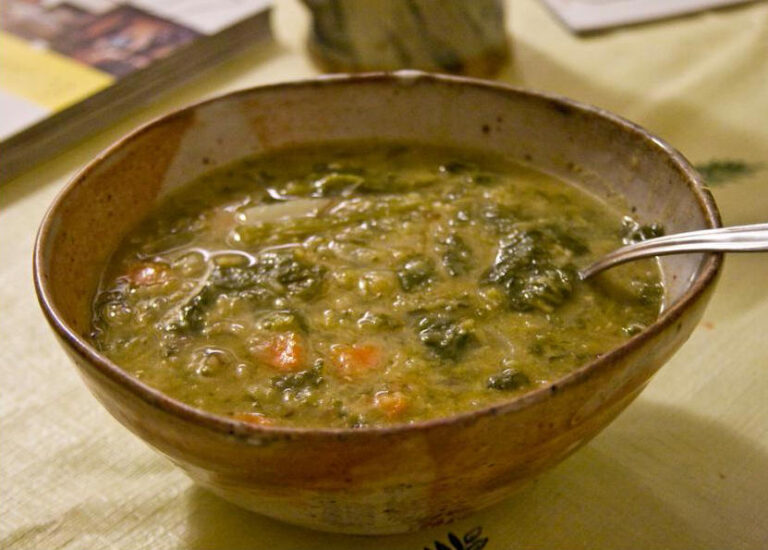
image-lentil-soup

What’s more comforting on a chilly day than a cup of soup? Try our twist on a traditional Lebanese recipe.

When fresh vegetables are scarce in remote areas of the Middle East, people rely on dried pulses stored for the winter in ceramic jars or burlap bags. Onions harvested in summer add piquancy. Samneh, clarified butter flavored with fenugreek, gives flavor and texture. Our creamy eggplant soup is a delicious way to take the chill off a winter evening, but try this soup from the Lebanese mountains too. We’ve added fresh ingredients to the basic Lebanese village recipe, with the option of substituting olive oil for samneh. And many people enjoy a dollop of labneh, a creamy yoghurt-based cheese, on top of each serving.

Lentil and Vegetable Soup

Serves 8

3 cups lentils, picked over and rinsed
1 bay leaf
1/2 cup raw, rinsed rice
1/4 cup olive oil or samneh
1 cup chopped onions
1 large carrot, chopped
1 tomato, chopped
1 small bunch fresh spinach or 1 cup frozen
1 1/2 tsp. salt
8 cups – 2 liters – water

  • Cook the lentils in the water, with the bay leaf. When they are soft, add rice and the salt and cook another 15 minutes.
  • Blend the lentils and rice to obtain a thick, smooth soup, if you like. Return the soup to the pot.
  • Saute the onions, carrot, tomato and spinach in the olive oil. When the vegetables have cooked through and a thin sauce forms, add them to the soup pot.
  • Cook another 10 minutes for the flavors to blend. Taste for salt; add pepper to taste.

Serve with one of our sandwiches, and enjoy!

More delicious Middle-Eastern recipes from Green Prophet:

Mulucheya Soup
Malabi, Silky Milk Pudding
Freekah, Ancient “New” Grain

Jordan Tries To “Ketchup” After Heat And Pests Wilt Tomatoes

2

leafminer-middle-eastLeafminers tunnel their way through Middle Eastern tomato leaves. Can Jordan’s crops “ketchup” in their wake?

It is difficult to imagine a Middle Eastern home without tomatoes. It is a crucial ingredient in virtually every popular dish, including shakshuka. But lower income families in Jordan, Egypt, Israel, Syria and Lebanon are having to acclimate to this exact reality.

Most of the Middle East is buckling under a tomato shortage as a result of the summer’s crippling heat, as well as the proliferation of a tomato pest. Roughly a month ago, Israeli farmers warned that prices will be high at the markets while Egyptian wives unable to afford escalating costs are adding ketchup and food coloring to their traditional dishes. Some Jordanians are optimistic that they will be able to stabilize prices. Others are less so. 

Mashrabiya “ecooler” Beats The Middle Eastern Heat

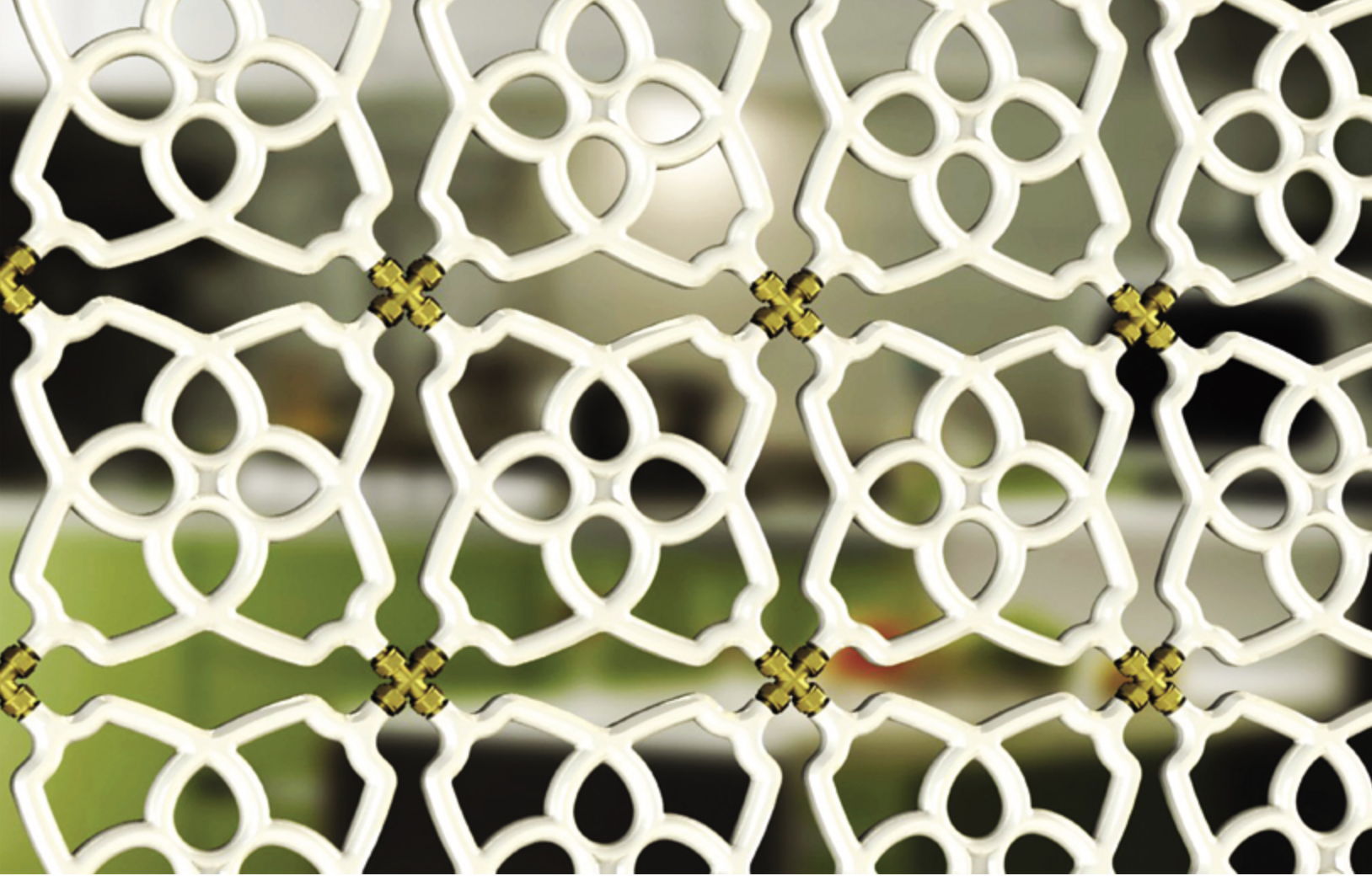
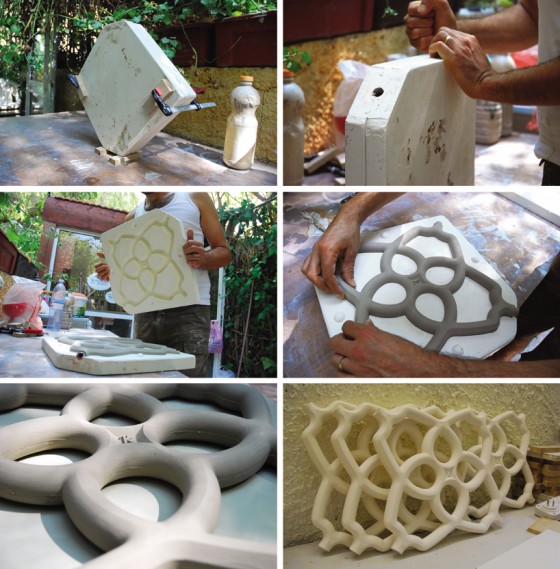
mey-boaz-kahnIsraeli design couple Mey and Boaz Kahn create the coolest network of hollow tiles based on two ancient Middle Eastern heat-beating concepts.

The Hebrew language demonstrates the extent to which ancient Jews valued or, more accurately, revered nature for its life-giving properties. My favorite example of this sacred interconnectedness is the word for rain, which literally translates into “the coming down of water from clouds in the sky.” While this is fairly obvious, we don’t usually think of rain in those terms.

mashrabiya goes high tech
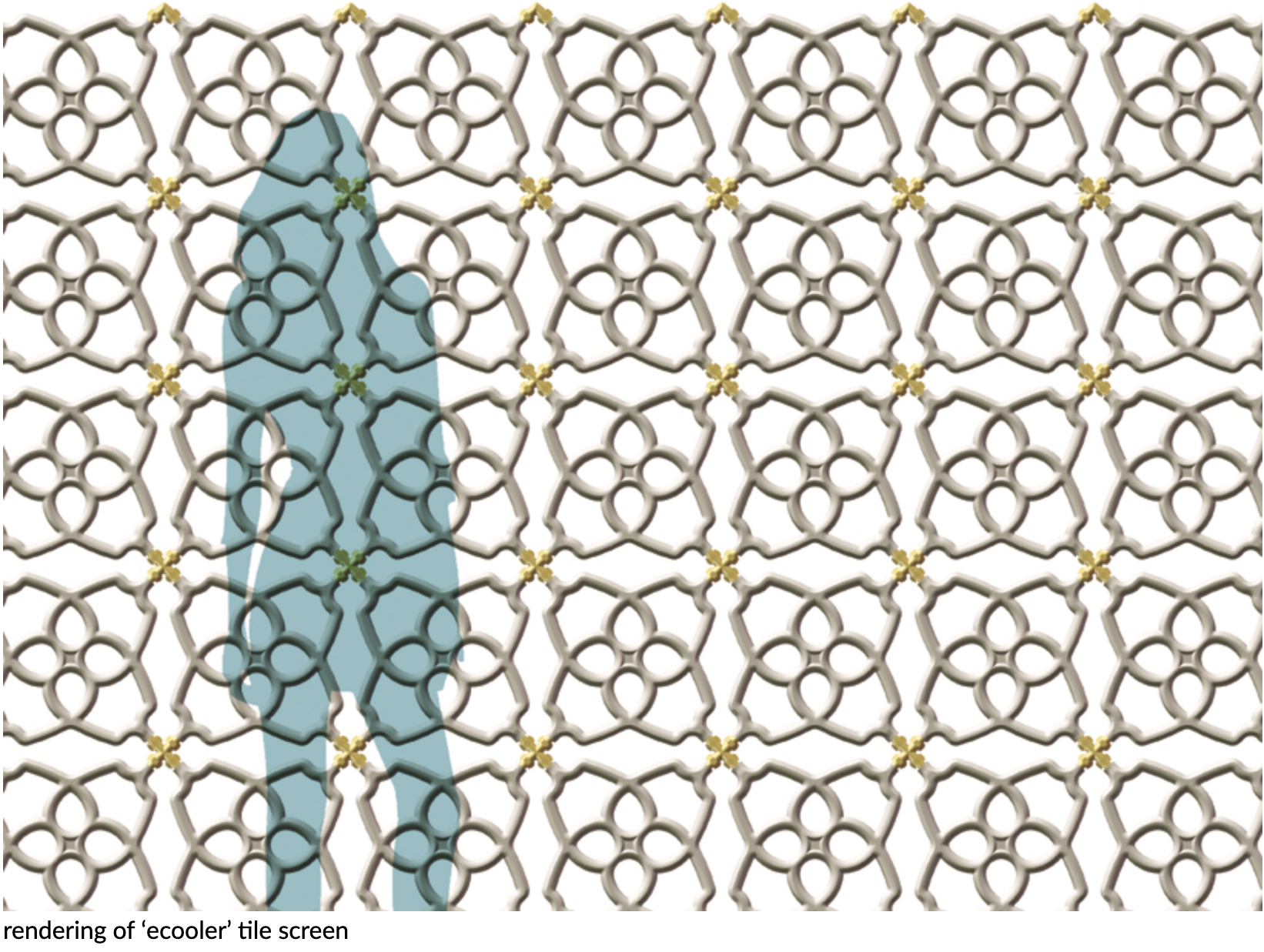
A hightech mashrabiya, passively cools and gives provacy

We think, “quick, where’s the umbrella?” or “drat, there goes my picnic lunch.” But the benefit of paying close, face-value attention to the mechanics of nature is that we can learn how to work within her parameters. This is something Israeli architects and designers have known for years, and consistently exploit in the most curvaceous, mind-bending ways. Mey and Boaz Kahn’s ecooler is no exception.

ecooler-israel-design

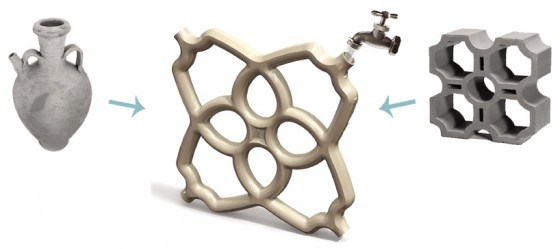
Based on two Middle Eastern concepts, of the clay jara and the mashrabiya, the ecooler is one of the friendliest examples of cooling I’ve ever seen, and so much more beautiful than the big lump of whirring metal we call the “air-conditioner.”

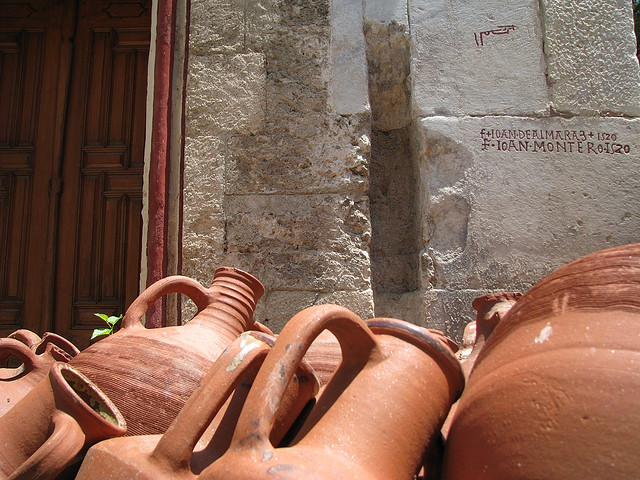
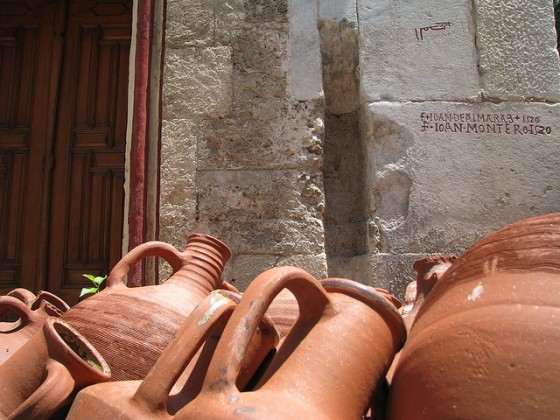
The clay Jara, an ancient jug, used to keep water cool by seepage and evaporation through the clay, according to the couple’s design explanation.

ancient clay jug for water
Does the jara or clay jug concept purify and cool water?

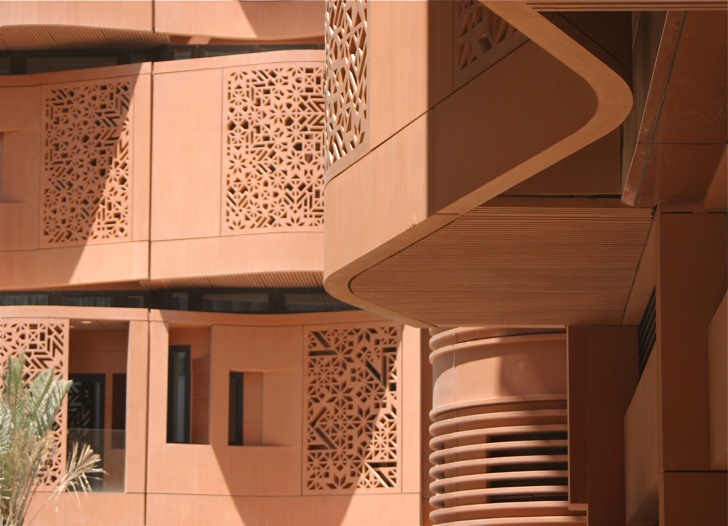
The mashrabiya, on the other hand, was a creative tool to separate indoor and outdoor spaces while still allowing for an infusion of air and light.

masdar-city, abu dhabi, zero carbon, green building, desert
Mashrabiya in Masdar

steps-ecooler-design

The Kahn’s combination of these two concepts culminates in water coursing through a cool network of hollow clay tiles joined together through designated connectors. Designed to connect to an almost infinite number of hand-crafted tiles, these cooling screens can fit any sized room.

And there is no need to banish the cooling-unit to the roof or spare bedroom since its aesthetic appeal is likely to make it any room’s feature. It requires no electricity, and incorporates all of the clever passive design nature intended us to use.

More creative artists and designers in Israel:

Fashion Contest Inspired by the Sea of Galilee

Are Kobi Levi’s Tongue Shoes Fit For Dancing?

EcoGir Flaunts Its Recycled Polyester Suits During New York Fashion Week

Pauline Wafts Through “Uses & Abuses of Plant-Derived Smoke”

incense-plant-based-smokePauline discovers in her review of “Uses & Abuses of Plant-Derived Smoke” that there is more to plant-based smoke than meets the eye. Read on for details.

You’ve heard of tobacco and cannabis but what about jimsonweed or torchwood?  This book demonstrates that there’s a lot more to smoke created from plant material than just nicotine and narcotics.

We are familiar with plants as a food source or sometimes a construction material, but this volume is a fascinating excursion into a facet of plants that I’ve never seen discussed in this way before.  There are over two thousand reported uses of plant-derived smoke.  It has been used down the ages as insecticide, medicine, fragrance, food preservative, recreational drug, poison, disinfectant, magical agent and spiritual purgative.

Tel Aviv Light Rail Train Chugs Away, Slowly

2

tel aviv trainWill Tel Aviv’s much-needed light rail train, ever, we ask again, ever, come to light?
After more than 30 years of planning, and on-off deliberations, Tel Aviv’s own light rail rail line may finally be getting off the ground – that is, if the residents of Israel’s largest city really want it to. Call it what you will, the light tram line, which was originally planned to be a part subway, part above ground rail line – it received the go ahead for the Cabinet to approve a proposal of Ministry of Finance and the Ministry of Transport officials to give the Ministry of Transport responsibility for the Red Line of the Tel Aviv light railway, and to finance the project from the state budget. The line has been talked about ever since the mid 1960’s, and was originally inaugurated during the administration of Prime Minster Levi Eshkol in 1967, with the Shalom Meir Tower, the city’s first skyscraper, being the main station. But it’s been more talk than action over the last years.

Israel and Palestine Declare War… Against Climate Change

5

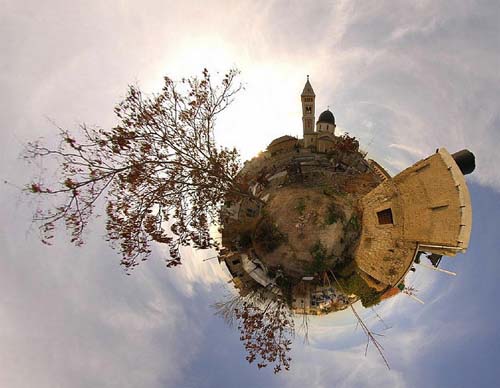
world israel palestine jerusalem
Israel and the Palestinian Authority are among 15 Mediterranean nations who have just signed a historic agreement to work together to combat the effects of climate change, one month ahead of the next United Nations conference on climate change, meeting at Cancun in November.

The Mediterranean Climate Change Initiative was inaugurated by Greek Prime Minister George Papandreou to develop common Mediterranean positions on climate change and was signed by the prime ministers or top environmental officials of 15 countries who agree that climate change threatens their way of life as peoples of the Mediterranean.

Most remarkable of all, both Israel and the Palestinian Authority signed on to the initiative.

Finders Keepers: Sport Divers Bag Turkey’s Underwater Bounty

0

amphorae-turkey diversSport divers mar ongoing efforts to preserve a massive underwater archaeological site, by bagging the bounty.

Turkey’s archaeological reserves are endless and often endangered. Whether by dams or industrial development, the nation’s cultural heritage is consistently threatened. Archaeologists now bemoan that its underwater artifacts are also at risk. Whereas Lebanon’s divers face muddy waters devoid of life, Turkey’s divers often discover treasures. Turning discovered bounty over to the appropriate authorities would ensure their addition to the historical record, but sport divers are bagging them instead. 

General Electric CEO’s Incomplete Blueprint For MENA’s Future

0

GE-nabil-habayebGE’s Nabil Habayeb connects growth and sustainability without a second thought. Is that still the best model?

General Electric has long maintained a presence in the Middle East and North Africa (MENA). In addition to setting up an Ecomagination headquarters at Masdar City, GE has recently helped connect Turkey’s electricity backbone to Europe through smart grid technology.

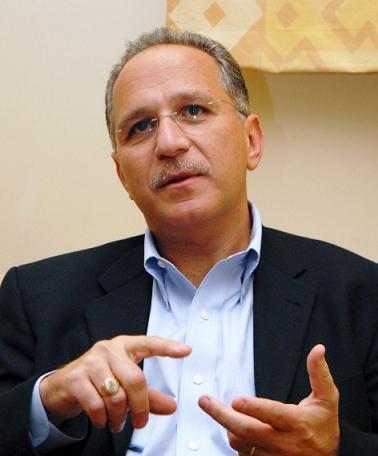
Now, as a participant in this year’s World Economic Forum on the Middle East and North Africa, Nabil Habayeb, GE’s President and CEO in the Middle East & Africa poses crucial questions about achieving a “sustainable” future. He then pushes further to define sustainability. But can we probe deeper still? Can we eclipse “economic growth” and “gross domestic product” to achieve a model of “sufficiency” instead?

EcoOcean Hosts Series of Marine Ecology Lectures

0
EcoOcean founder Andreas Weil

EcoOcean, an Israeli non-profit organization that acts to maintain a healthy eastern Mediterranean and Red Sea, believes that education and research are the main tools for treating marine ecological problems. Education is a “tool that contributes to reinforcing the connection between man and his surroundings.”

As such, EcoOcean is hosting a lecture series on the last Wednesday of every month in order to educate the local population about marine issues.

The lectures will be open to the general public and delivered by leading experts in the field of marine research.  The subjects will include: the condition of the Mediterranean and the means of preserving it, marine wildlife, the connection between man and nature, and marine voyages.

The following lectures have already been scheduled:

  • Dolphins, whales and other beasts of the sea, October 27th, 2010, Dr. Aviad Sheinin (Head of Machmali)
  • Bubbling up: underwater diving and photography, November 24th, 2010, Amir Gur (author of “Under Water”)
  • Treasures from the abyss: archaeological underwater excavation of ancient vessels, December 29th, 2010, Dr. Ya’akov Kahanov (Haifa University)
  • Last chance to sea: nature preservation in the Mediterranean, January 26th, 2011, Dr. Ruthy Yahel (National Parks Authority)
  • Intruders, extinctions and other troubles, February 23rd, 2011, Dr. Gil Rilov (Israel Oceanographic and Limnological Research)
  • Sailing yachts as a profession, March 30th, 2011, Ethan Kravchik (Ruppin College) and Yair Suari (Bar Ilan University)
  • Life on another world: the geothermal vents of the deep, April 27th, 2011, Dr. Giai Yahel (Ruppin College)
  • Noah and the flood: global warming and massive floods, May 25th, 2011, Professor Yossi Marf (Ruppin College)
  • Energy, man and sea: environmental conflicts in energy production, June 22nd, 2011, Dr. Anat Glazer (Israeli Electric Company)

The series is definitely in keeping with EcoOcean’s goal, which is “to make people more aware of the importance of maintaining a healthy and vibrant marine environment, motivate them to act and enjoy such an environment, and affect decision makers to promote legislation towards protecting it for the future.”

::EcoOcean website

Read more about EcoOcean:
EcoOcean’s Director Andreas Weil Goes Swimming With the Whales in Tonga
EcoOcean Opening a New Marine Research and Education Center This Week
Environment Educator EcoOcean Shows NGOs How to Create Advertising: Campaign Save the Turtles

Iran’s First Annual International Clean Energy Conference

energy conference iran

If you’ve ever wondered what’s happening in cleantech in Iran, here’s your event: The First International Clean Energy Conference will be held from February 23 to 24 in Kerman, Iran. The main focus of the conference will be on the latest technological developments in clean tech energy projects. Also issues related to electric power distribution and energy saving will be discussed. At the end of the two day conference, one extra day of sightseeing is arranged, which is a good chance to visit the historical places of the old city of Kerman in south east Iran.

Make Labneh from Yoghurt – it’s easy

1
image-labaneh labane
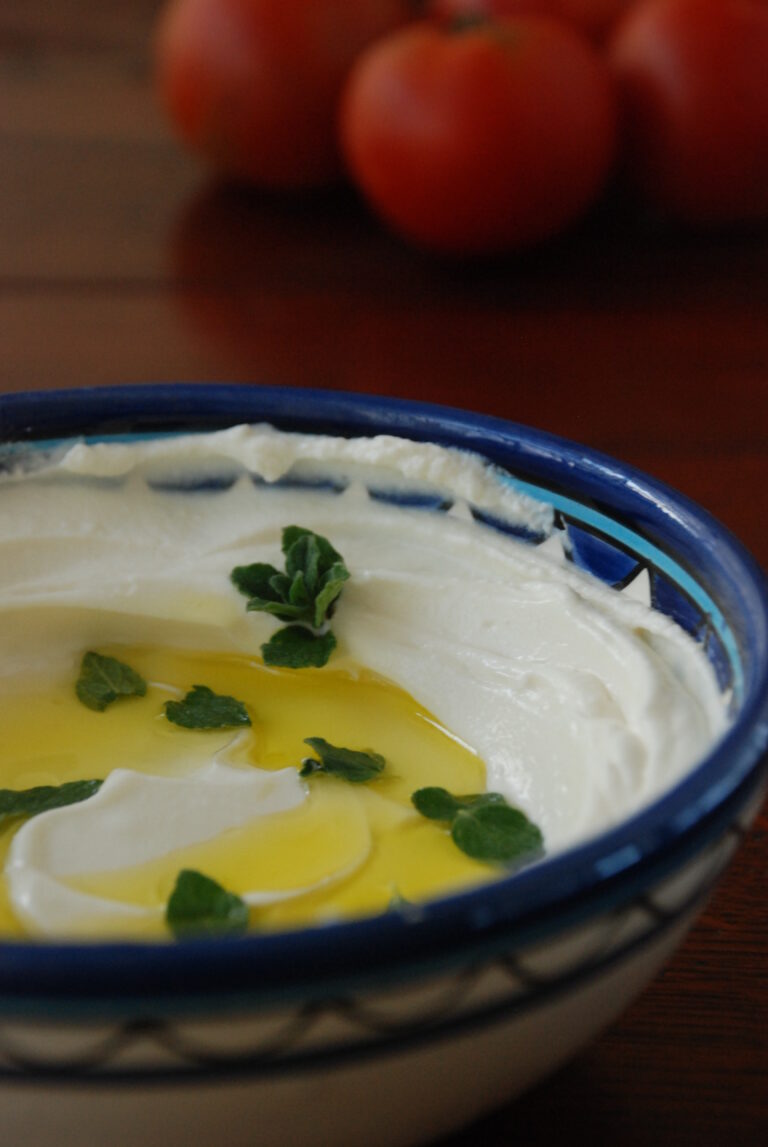
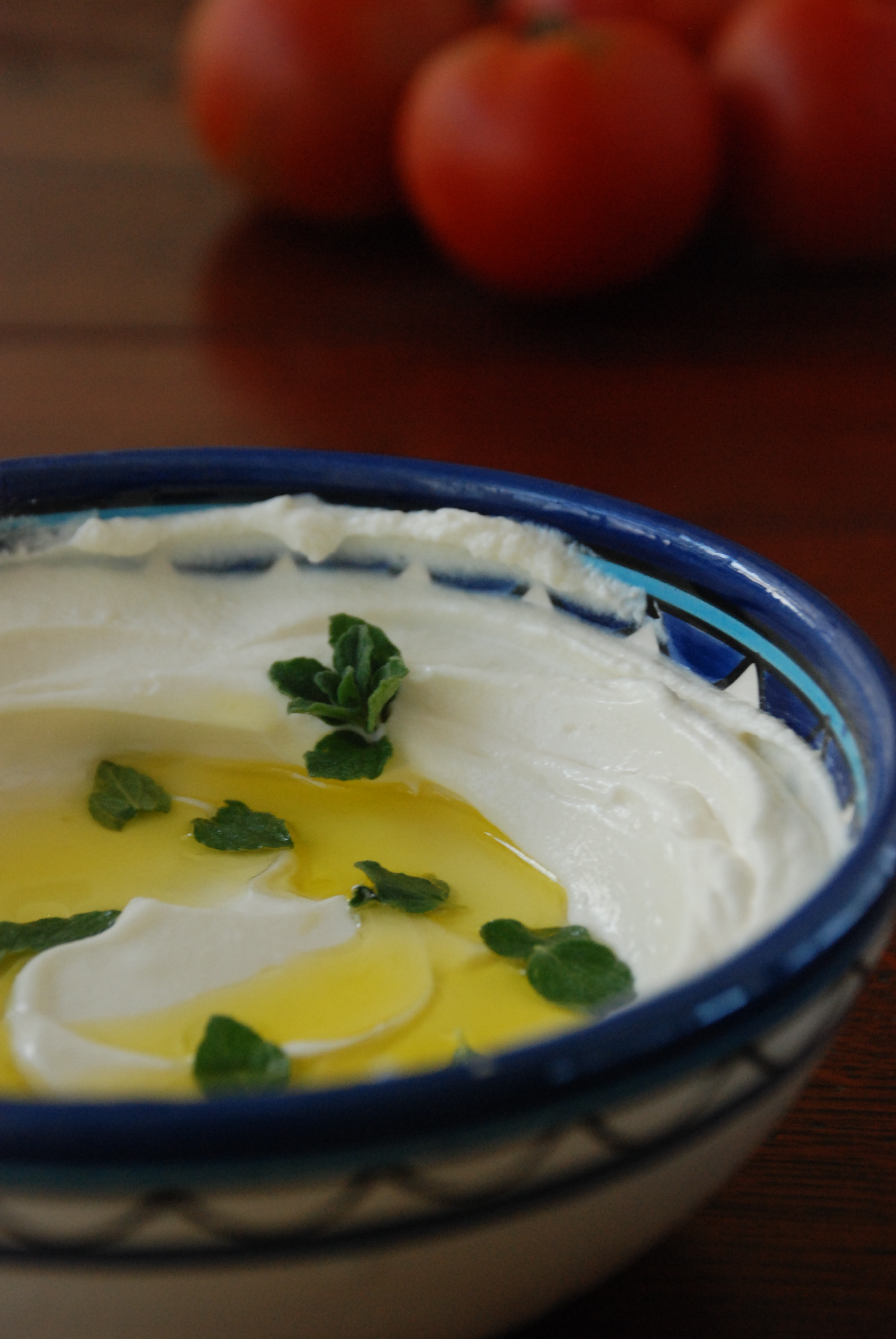
Labane is easy to make and is perfect with olive oil. At first it seems to sour to be right, then you fall in love with the zing.

Make your own cheese spread, Labneh. Easy and delicious!

Breakfast in the Middle East. There’s black coffee. Pita. Chopped cucumbers and tomatoes. Olive oil to drizzle at will. And labneh, or labaneh a thick, yoghurt-based cheese whose sour taste perfectly complements vegetables, bread like zalabya, and olive oil. Labneh is  as easy to make as our ricotta recipe. All you need is plain yoghurt and salt. Fancy equipment? Well, how about a clean kitchen towel and a colander, and a bowl? Because that’s all you need to make this versatile white spread.

Pita with labne, labaneh, creamy yoghurt cheese
Serve your labne with pita. Homemade if possible.

Labneh Ingredients:

3 cups plain white yogurt

1 teaspoon salt

  • Mix the yogurt and the salt well.
  • Place a wide, thin kitchen towel or several layers of cheesecloth in a colander (or sieve), and pour the salted yoghurt into it.
  • Gather up the corners of the cloth and tie them into a knot. Place a bowl under the colander to catch the dripping whey or hang the bag over the sink. Note: a brand-new, freshly washed cloth diaper works very well too.
  • Let the labneh release whey and become thick over 24 hours. It will have a texture like rough cream cheese. If you let it dry out two days, it will become quite firm.
  • Don’t throw the whey out! It’s full of protein. Use it in baking – our sourdough recipe is good for this.
  • Open the bag and remove the cheese, using a spatula or the edge of a spoon.  Store your labneh in the refrigerator for up to two weeks.

How To Serve Labneh:

  • Spread it evenly over a medium-sized plate. Sprinkle with fresh seasonal herbs like mint, za’atar, or dill – or place a few olives around the center of the plate. Drizzle a thread of olive oil over all. Serve with pita or other fresh bread.
  • Labneh may also be used as a substitute for sour cream in many recipes; for example, cheescake.
  • If you allow your labneh to drain for 2 full days or more, obtaining a soft cheese, you can roll pieces up into balls the size of small eggs and marinate these balls in olive oil to cover, 2 peeled garlic cloves, and a tiny chili pepper. Labneh preserved this way will stay good for two months. It does become more sour as time passes, so taste it once in a while to see when you want to finish it up.

More classical Middle-Eastern recipes from Green Prophet:

Make Smen

Moroccan Stuffed Artichoke Hearts

Majadra: Lentils and Rice