Home Blog Page 593

Interview: Bracing For A Warmer Future With Bill McKibben

4

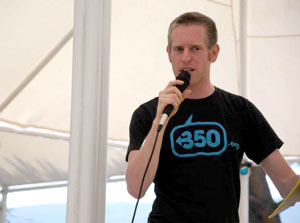
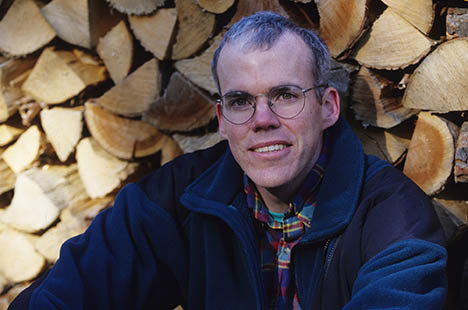
Bill McKibben, founder of 350.org

Bill McKibben talks about fossil fuels, a “slightly earlier time,” and 350.org’s goal to ensure a future for the world’s youth.

Bill McKibben needs very little introduction, but I’ll give one anyway. Not only is he considered one of America’s leading environmentalists, who has written a small sack full of books and contributes to numerous science magazines including Orion, Grist (on whose board he serves), and Mother Jones, but he is also captain of the 350.org ship.

This team of dynamic organizers has engaged the largest peaceful struggle against dogged carboneers the world has ever seen.

We first interviewed 350’s Phil Aroneanu, who gave us an in-depth description of what it means to amass a “green” movement in the Middle East (in 2020 we started to rebrand the region with a new name, the western East) and the wider implications of our willingness to engage.

His is an encouraging and passionate call to action that will hopefully inspire many readers. To Bill we looked for a more sobering account of global warming, and for a few pearls of wisdom that will help guide us away from our carbon addiction.

When you wrote your first book, “The End of Nature,” twenty years ago, did you imagine that climate change would reach such a dangerous climax? Or did you hope that the science would set us straight?

Well, I was 27 at the time, so I thought: people will read my book and get to work and solve the problem. A little naive!  I think we have all underestimated the determination of the fossil fuel industry to fight any real change, even if it means courting real danger for the whole planet.

What is the most toxic thing we do that we should stop immediately if there is to be any hope of stabilizing our planet’s climate?

Burning coal is probably the single most unsustainable thing we do. And we will keep doing it until we agree to impose a price on carbon for the damage it does in the atmosphere. At the moment, the fossil fuel industry is allowed to use the atmosphere as an open sewer–for free. That has to stop.
Do you think that projects like Masdar City in Abu Dhabi – which aims to be (a very expensive) zero-carbon, zero-waste initiative – are appropriate solutions to our problems?

I think it’s a powerful demonstration of what is possible–and the fact that it is happening in Abu Dhabi amidst the oil rigs makes it an especially powerful challenge to the rest of the world.
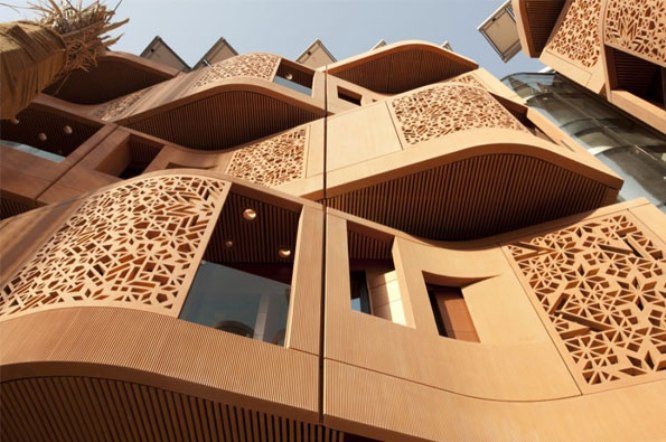
masdar city

But of course most of the world–even most of Abu Dhabi–won’t look like Masdar City; the technology developed there will need to be applied in more real-life situations.

You have proposed that in order to build resilience in the coming decades, it is necessary to localize communities, pick up a pitchfork and some seeds, and move away from carbon-dependent agriculture. How can we apply this model in the Middle East where such a small percentage of our land is arable?

In the future we’ll need to pay more attention to what is and isn’t possible in our particular areas, instead of pretending we can do the same thing everywhere. (This is already starting to happen–the Saudis abandoning their dairy industry, for instance).

In the harsh terrain of the mideast, people will need to make careful use of every bit of fertile soil and every drop of water–that is, to go back to the careful habits of a slightly earlier time.

On the continuum of regions likely to suffer most as a result of climate change, where does the Middle East stand?

Any place that is already living close to the margins is in the greatest danger. And of course the Middle East is close to the margin in terms of available water. That will be the hardest threat.

The New York Times recently published an article about Kansas City climate skeptics embracing clean energy. This demonstrates to me that the country’s lack of energy independence will best motivate the US to adopt alternative sources of energy. But in the Middle East, we practically have more oil than water. In your opinion, how does this deepen the challenge of quitting our carbon habit?

It makes it very hard–the need to move away from the thing that underpins the local economy. That there are even people like you taking up these questions in the Middle East is remarkable and wonderful.

350.org has amassed one of the largest bodies of proactive, dissident voices – ever – and yet our leaders consistently fail to mobilize to create a safer model. What are the consequences of this inaction? And what is it finally going to take to convince powerful profiteers that what we’re up against is serious?

Every year we go deeper into the globally warmed future–the summer of 2010 across the northern hemisphere was, I’m afraid, a foretaste of what’s coming in the early stages of climate change, especially the drought across Russia and the floods of Pakistan. I wish that would be enough to wake up the profiteers, but I fear only an engaged and active citizenry can do that, which is what all of us at 350.org keep trying to build. It’s mostly the voices of the young around the world that speak for 350.org, and they say the same thing: we want a future.

Bill, thank you very much for taking time out of your busy schedule to answer our questions. Your seemingly boundless determination to generate awareness and engage people around the world is an enormous inspiration.

More on Bill McKibben and 350.org:

350.org’s Phil Aroneanu On How To Build An Environmental Movement In The Middle East

Vision Signs MoU with SolFocus for 8 CPV Solar Plants in Saudi Arabia

CPV array developed by SolFocus
SolFocus CPV receivers will catch some rays in Saudi Arabia.

Saudi Arabia has taken another step toward integrating solar power into its energy mix: Vision Electro Mechanical Co. (Vision) has signed an MoU with California-based SolFocus to build eight solar power stations in the kingdom, starting with a 130-kilowatt solar plant in the Bahra industrial complex near Jeddah, according to ameinfo.com.

Vision, a subsidiary of Jeddah-based Construction Products Holding Company (CPC), was established in August with a mandate to develop, manufacture and operate solar power plants in Saudi Arabia. The solar plant at CPC’s Bahra complex will be the largest in the region to utilize concentrated photovoltaic (CPV) technology for generating electricity. (Two smaller CPV arrays, developed by MST and ZenithSolar, are installed in Israel.)

It Must be Peak Oil Driving Saudis to Solar

8

saudi solar peak oil
As oil supplies decline, Saudi Arabia’s own electricity is becoming expensive. By one estimate, it’s as much as 25 cents a kilowatt-hour, at wholesale. Saudi Arabia gets all of its electricity from the oil field. Flared gas provides 45%, heavy fuel oil provides 13%, diesel; 22% and crude provides the remaining 20%. So as oil prices rise, its domestic desalination and electricity costs rise too.

But the kingdom has solar insolation that is the envy of the world.

Israeli EUREKA Chair Hosts EU Reps and Promotes Cleantech R&D

"tel aviv cleantech conference"Israel chairs EUREKA this year and puts clean tech on the table.

The EU-based EUREKA network is an organization that seeks to promote international, market-oriented research and innovation by supporting a variety of enterprises, industries, and research institutions.  EUREKA’s support enables these organizations to introduce new products and services that better the market and, in some cases better the environment.  The network will be launching a EUREKA “Clean-Tech Initiative” campaign this February that aims to encourage projects that are focused on research and development in the cleantech sector such as renewable energy, environmental and water technologies.

This year Israel is holding a EUREKA Chairmanship, and as such it is hosting its first series of network events this week.  Since Israel is a leader in the cleantech field, it is only appropriate that the Israeli Chairmanship intends to strongly endorse the new EUREKA “Clean-Tech Initiative” this week.

How Oily is That Dress? 10 Tips for Reducing Petroleum Use in the Middle East

0

plastic bag dressPlastic bags, however you use them, is one reason for an increase in petroleum production in Middle Eastern countries.

How greasy is that outfit you’re wearing? People don’t always realize that today’s modern fabrics may contain petroleum. And petroleum is used in a surprising number of consumer items. Petroleum production and consumption increases greenhouse gases and means more drilling, especially in the Middle East. With the recent increase in oil consumption in the region, residents are polluting their own backyard.

The Eco MENA (Middle East and North Africa) community shares important tips for consuming less oil. Reducing petroleum consumption helps green the Middle East,  and the whole planet. Are you aware of how many ways you use petroleum daily? Follow these guidelines to cut back:

350.org’s Phil Aroneanu On How To Build An Environmental Movement In The Middle East
0

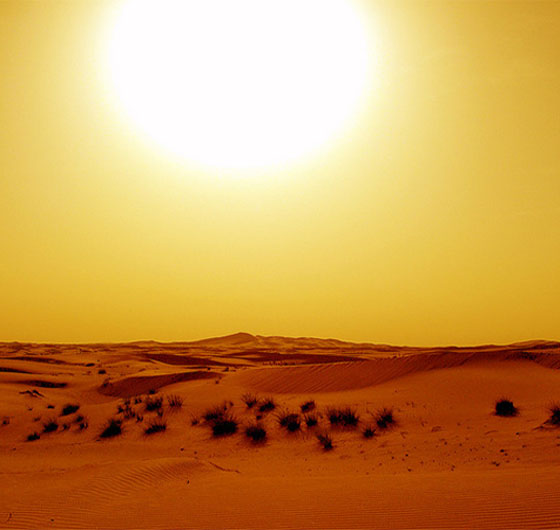
phil-aroneanu-350.orgWith a skype account and a compelling plan, Phil Aroneanu contacted organizers in just about every Middle Eastern country to amass an enormous 350.org following. Tafline asks him how it’s done:

Until now, few people would have lumped community-centered environmental activism and the Middle East in the same sentence. But that stereotype is being flipped on its head thanks to 350.org, led by the renowned author Bill McKibben, author of “Deep Economy” and other important books.

One of the world’s most successful campaigns, 350.org has stretched its arms to every edge of the planet, including ours. Behind the Middle Eastern environmental scenes is Phil Aroneanu, an American with virtually no ties to the Middle East apart from his Jewish background.

So when the 350.org family decided to broaden its scope to include the rest of the world, equally implicit in and victim to the carbon scandal, Phil picked up his earphones and skyped all manner of development and environmental organizations throughout the Middle East. As a result, hundreds of concerned Jordanians, Israelis, Egyptians and others embraced 350.org’s important message: reduce carbon concentrations to 350 parts per million. Phil lets us in on the secret of the 350.org campaign, which, you’ll find, is no secret at all.

Ecoweek Builds Israeli/Palestinian Peace One Workshop At A Time

0

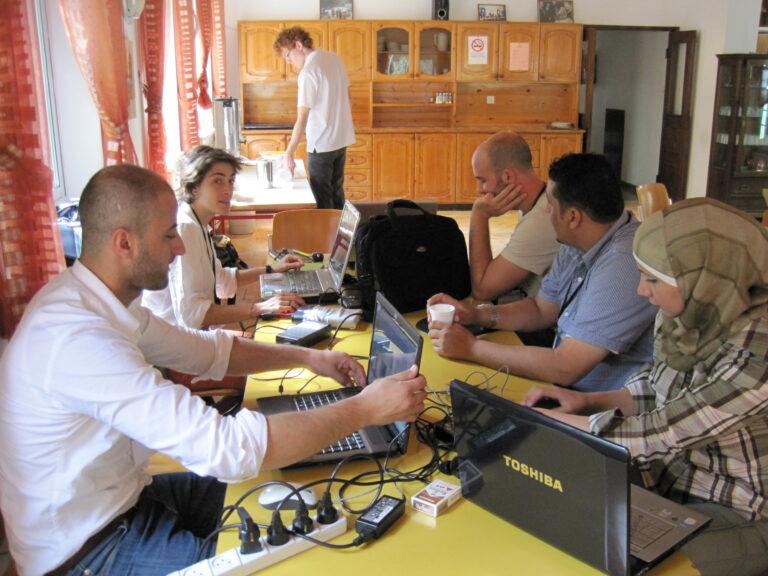
ecoweek-brainstormers-2010ECOWEEK is at it again, this time looking for green building solutions to Tantur, a theological school based in Beit Jala.

ECOWEEK unites budding, newly-minted, and established architects from around the world to sketch modern solutions to enduring challenges. Earlier this year, ECOWEEK – founded by Elias Messinas, an Israeli-Greek green architect – arranged lectures and workshops addressing building projects in Jerusalem, the West Bank, the Negev Desert, and the Biennale of Bat Yam. This past weekend architects gathered for yet another workshop, this time devoted to building a mixed-use cultural and community center for Israelis and Palestinians.

The workshop took place on October 22-23, 2010, during the Israel Palestine Center for Research and Information (IPCRI) Conference in Beit Jala, West Bank (Palestinian Authority). A group of Israeli, Palestinian, Greek and Italian architects, along with students, brainstormed their way through a series of proposals for what will become the green IPCRI Center at the Tantur Compound in East Jerusalem.

Egyptian Dolphin Dealer Attacks Activist With Pitbull?

8

The plot thickens as dolphin dealer holding dolphins in filthy swimming pool, allegedly attacks Animal Planet/The Cove’s Richard O’Barry (above).

Even environmental and animal welfare activists are not immune from attacks by Egyptian thugs. According to the Earth Island Institute’s Facebook page, The Cove’s Richard O’Barry was “attacked by [Egyptian] thugs” in Egypt’s Red Sea resort town of Hurghada. The attack comes as O’Barry continues efforts to save dolphins in the country, which were transported to the small resort city in order to be part of a planned dolphinarium. When O’Barry arrived in Egypt earlier this month, dolphins were being kept in a small swimming pool in the town.

TreeShirt Brings Graphic Tees and Planted Trees to Lebanon

0

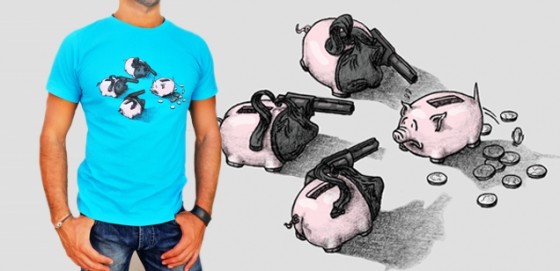
What is your T-shirt saying? Buy one of these and you plant a tree in Lebanon.

T-shirts have been used to convey messages for decades.  These days, popular messages on tees may indicate what city you’re a fan of (as in I heart NY) or what brands you like (in the form of a big GAP or fcuk written across your chest).  But the message can be more subtle, and even invisible to the naked eye.  The message can be behind the scenes as well, extending to the values that went into your T-shirt.  TreeShirt is a T-shirt business with a message, the message being that the reforestation of Lebanon is important and benefits everybody.

How Islam Could Help Fight Water Scarcity

2

water-shortage-islam-save

Muslim nations may face a lot of diverse problem but one concern they share is water scarcity. At the latest conference of Islamic environment ministers, water shortage was highlighted as one of the most pressing environmental issue facing the region and Muslim leaders stated it finding a solution was one of the ‘most important duties of our time’. Could reconnecting to Islamic water management principles help Muslim countries avoid the worst effects of water scarcity brought on by climate change?

What Islam Says About Water

As the ultimate source of life, water is held in high regard by most societies. It is considered a blessing, a gift and something which must be protected for the benefit of all of mankind.

According to an excellent report by Naser I. Faruqi entitled “Islam and water management: Overview and principles” water is of profound importance to Islam. In the Qur’an, water is a reoccurring motif of purity as it is used for ablutions (washing before prayers) five times a day and paradise is also described as “gardens beneath which rivers flow”.

The main principles which emerge from Islamic teachings is that every human has a right to clean water to quench their thirst and also that water is precious resource which must not be wasted even during abundance. The right to water is established by the notion that water (as well as land and fuel) is a shared resources which everyone must have access to.

In the fact the importance of sharing water equally was highlighted by a hadith in which the Prophet Muhammed (pbuh) said that one of the people Allah ignores on judgement day is the person who hoarded water excessively to the detriment of others. Whilst humans are judged to have first priority access to water, it must be shared with other creations and finally, if there is water remaining, it can be used for agriculture.

Saving Water And Changing Behaviours

Limiting waste and conserving water is also highlighted in Islamic teaching. The Qur’an tells mankind that they should care for precious resources and limit waste: “O Children of Adam… Eat and drink: But waste not by excess, for God loveth not the wasters.” Furthermore, there is evidence which states that the Prophet used just 2/3 of a litres of water to perform ablution and that he spoke of not wasting water even when it was abundant: “Do not waste water even if performing ablution on the bank of a fast-flowing, large river.”

Whilst these two principles may appear to be common sense notions, the strength of invoking these Islamic principles is their ability to reach out to a wide group of people and also to change behaviours in the Muslim world. Faruqi states in his report that considering the clear Islamic water ethic, “it is surprising that they are not used more widely to promote water conservation in predominantly Muslim countries.”

Whole scale behavioural change is one of the major stumbling blocks for dealing with climate change, but in the Muslim world at least, highlighting the Islamic notions of water care could be a useful solution to the region’s water problems.

For more on Islam and water issues see:

Muslim Countries Tackle Water Scarcity

Global Warming Message Goes Awry at UAE Water Park

Lebanon’s Mediterranean Apocalypse: Scuba Diving In Waters Devoid Of Life

BrightSource, Alstom Partner on Solar Thermal

BrightSource Energy solar panelsBrightSource Energy is expected to go public in 2011.

Israeli solar energy company BrightSource Energy and French power company Alstom have partnered to build solar thermal power plants throughout the Mediterranean and in Africa.

The plants will use BrightSource’s solution that relies on thousands of mirrors all focused on a central tower with a water boiler atop of it to heat the water and turn it to steam which then turns a conventional turbine that generates electricity.

Feng Shui Meets The Middle East in Jewish Tradition

jewish kosher feng shuiIs Feng Shui kosher? An Israeli world musician Yisrael Borochov discovers some unusual connections between the Chinese practice of Feng Shui and ancient Jewish traditions of how to live in harmony with nature

I was skimming through one of the main books dealing with detailing the Jewish mitzvas (commandments), and was really surprised to feel like I was actually reading a Feng Shui guide. Some of you might say: “Oy, those religious people are at it again. But I’m not going to create an ideology of living one’s life according to the Torah, and I also promise not to try to sneak in a sermon recommending a return to the lifestyle of the period before Thomas Edison invented the light bulb.

My intention is to share an “enlightening” experience that I had when reading a chapter of the book, The Abbreviated Shulchan Aruch, a Jewish code of law book. I found an incredible parallel between what was written there, and what I’ve read about the Chinese practice of Feng Shui.

High Waste Generation and Low Level Recycling in Iran

2

Iranians throw our about a half kilo of trash, per person, per day. That’s high for a developing country.

There is a growing rate of waste generation in Iranian cities. According to the R&D Deputy of the Environment and Sustainable Development Committee of Municipality of Tehran, every resident of Tehran produces 320 kilograms of solid waste per year. In other words, every person produces 6 times more trash than his/her own body weight. This amount has had a growth of 1.1 percent between the year 2001 and 2006. Also the average waste generation in Esfahan, the third biggest city of Iran, is between 0.55 to 0.6 kilogram of trash per person, per day.

Although this statistic sounds worrying, there is still a huge difference between waste production in Iran and in the more developed and western countries. In America it’s about twice the amount of Iran. In 2000, the record in municipal waste generation in the US was 760 Kgs per person per year; Australia  was 690 Kgs, the United Kingdom was 560 Kgs and for comparison Japan was 410 Kgs. But while the waste generation (Kg/capita/day) is estimated to be 0.4 to 0.9 Kg/per capita/per day in low-income countries, 0.5 to 1.1 in medium-income countries, and 1.1 to 5 for high-income countries, the figure is 0.66 for Iran. Quite high.

Palm Oil May be “Healthy” But Rainforests are Destroyed to Grow It

2

palm oil arabicWe may not realize it, but palm oil, made from both coconuts and palm nuts, is one of the main causes of the wholesale destruction of rainforests in many parts of the world, especially in Indonesia.
The Indonesian rainforests, or what’s left of them, are home to some of the most threatened animal species on earth; including the Sumatran tiger (only a handful remain in the wild), and Man’s first cousin, the orangutran, whose name translated in English means literally “forest people”.

Now why does this wholesale destruction of rainforests to produce palm oil have an effect on countries in the Middle East, many of which are mostly desert or near desert in their geographical makeup? Very simple: people in the Middle East are big purchasers of palm oil and products made from it.

An economic study was conducted in 2005 dealing with the demand for palm oil in MENA countries and found that the demand for palm oil was significantly dependent on the income of the area populations. The study found that more healthy substitutes such as soy bean oil being used in countries such as Algeria, Egypt, Iran, Jordan, Morocco and Turkey; and that the major substitute oil for palm oil in Saudi Arabia and Libya is now corn oil.

Will Israel be a Leader in Introducing Electric Cars? Ask the Tax Man!

2

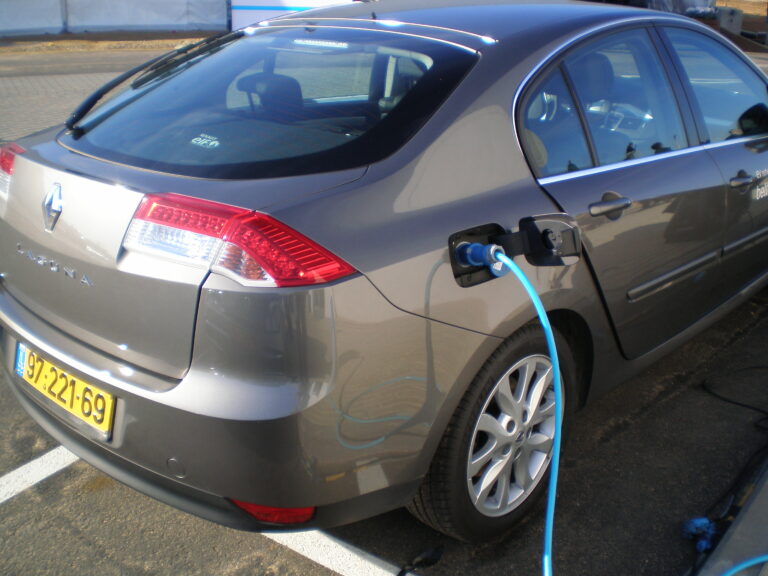
There’s more involved in running an electric car in Israel than just the electricity.

The year 2011 is deemed by some to be the year when electric cars and their infrastructures will hopefully begin a trend in which people will begin using these environmentally friendly cars over those burning fossil fuels. The Better Place infrastructure for recharging these vehicles, as well as exchanging their specially innovated lithium ion batteries for fresh ones to extend the car’s cruising range will begin to be installed next year; allowing the first batches of  these cars to hit the roads of Israel. There may be a bit of a problem involving the costs of these cars, however,  in that Israeli tax authorities may not allow attractive enough reductions in the tax structure for the cars; according to an article in Globes financial news.