General Electric CEO’s Incomplete Blueprint For MENA’s Future

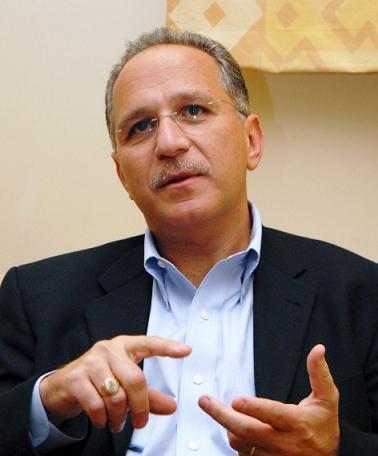
GE-nabil-habayebGE’s Nabil Habayeb connects growth and sustainability without a second thought. Is that still the best model?

General Electric has long maintained a presence in the Middle East and North Africa (MENA). In addition to setting up an Ecomagination headquarters at Masdar City, GE has recently helped connect Turkey’s electricity backbone to Europe through smart grid technology.

Now, as a participant in this year’s World Economic Forum on the Middle East and North Africa, Nabil Habayeb, GE’s President and CEO in the Middle East & Africa poses crucial questions about achieving a “sustainable” future. He then pushes further to define sustainability. But can we probe deeper still? Can we eclipse “economic growth” and “gross domestic product” to achieve a model of “sufficiency” instead?Mr. Habayeb writes on GE’s blog:

I take pride in  knowing that the company I represent has had a long history of protecting the environment and still is a steadfast believer in doing all we can to promote a sustainable environment for the future. Ecomagination has guided the development of our products by putting into practice our belief that financial and environmental performances are complimentary. This belief is fundamental to what defines us as General Electric.

But he notes that sustainability is not only an environmental concern. It is also an economic concern. He reminds us to take stock of a series of irresponsible and unsustainable economic decisions that caused widespread economic collapse. Which is good.

Cause for pause was his casual use of the word growth.

“True sustainable growth lies in achieving sustainability in the economy as well as society,” he wrote.

While growth is the standard by which we currently measure the wealth and health of a society, and though this economic model pulled us out of a listless pre-industrial era, it has also promised us a growth in greenhouse gases, floods, and temperatures, as well as a reduction in biodiversity, food production, and water resources.

The Post Carbon Institute (TPCI), made up of a collection of 29 leading experts on climate change and transition, argue that we need to veer away from the growth model and prepare for an energy downturn instead. If we do this intelligently, we need not stock up on canned foods and huddle together in a bullet-proof basement, because we can still enjoy quality of life.

Mr. Habayeb adds:

But I believe that technology alone is never enough. Over 60% of MENA’s population is under the age of 25. This concentration of youthful vigor represents a huge reservoir of untapped human resource and talent. To help the region achieve true sustainability, it is important to empower MENA’s youth through knowledge sharing and technology transfer. Who better to draft the blueprint for the region’s sustainable future than its people?

We couldn’t agree more with this sentiment. Our youth stand to lose the most as their future is compromised by poor political judgment – both past and present. They must be empowered. But why not provide a model that emphasizes not only clean energy, but energy efficiency and conservation, a model that aims not to engorge itself but to achieve what TPCI claims is all we really need: sufficiency.

:: Post Carbon Institute and GE Blogs

More on General Electric in the Middle East:

Turkey’s Smart New Connection to Europe

GE Ecomagination Centre in Masdar City

Tafline Laylin
Tafline Laylinhttp://www.greenprophet.com
As a tour leader who led “eco-friendly” camping trips throughout North America, Tafline soon realized that she was instead leaving behind a trail of gas fumes, plastic bottles and Pringles. In fact, wherever she traveled – whether it was Viet Nam or South Africa or England – it became clear how inefficiently the mandate to re-think our consumer culture is reaching the general public. Born in Iran, raised in South Africa and the United States, she currently splits her time between Africa and the Middle East. Tafline can be reached at tafline (at) greenprophet (dot) com.

Read More

TRENDING

6 Ways Landlords Can Improve Cash Flow from Eco Rentals

Want your rental property to pay the mortgage? Build a sustainable home that practically advertises itself. From solar-heated hot tubs and energy-efficient appliances to pet-friendly yards and Nordic-style saunas, eco-conscious upgrades can justify higher rents, attract better tenants, and reduce costly vacancies. This guide explores practical ways landlords can improve cash flow without major renovations, including working with property managers, adjusting rental rates strategically, reducing operating expenses, and uncovering new revenue streams. Whether you're running an Airbnb, a vacation cabin, or a long-term rental, sustainability isn't just good for the planet—it can be good for your bottom line. A greener property often becomes a more profitable one.

Can Scientists Predict Coral Bleaching Before It Happens?

Now researchers at the Woods Hole Oceanographic Institution (WHOI) in the US say they have developed a way to predict coral bleaching five to six months before it occurs, potentially giving reef managers enough time to intervene and save vulnerable corals.

AC Water Uses: How to Reuse Air Conditioner Condensate Water for Plants, Cleaning and Water Conservation

That means the water dripping from your air conditioner may already be usable for gardening, cleaning, flushing toilets, topping up humidifiers, or cooling systems — instead of disappearing into the sewer. A new study. Is it safe?

Hormuz 2026 Conflict Poses an Energy and Food Security Dilemma in a Warming World

As tensions rise in one of the world’s most critical maritime chokepoints, the ripple effects go far beyond oil—touching food systems, climate pressures, and regional stability

Baby teeth read like tree rings paint a picture of toxins in early life

A new study from the Icahn School of Medicine at Mount Sinai in New York offers a striking insight into how the environments we are born into can quietly shape our brains years later. By analyzing naturally shed baby teeth, the ones tucked under pillows for the tooth fairy, researchers have reconstructed a detailed timeline of exposure to environmental metals during pregnancy and early infancy.

Yerukim Forms a New Green Economy Where the Money is Really Green

The Yerukim members who pick up the recyclables get to keep the monetary reward, the public earns "green" bills that can be used in shops, and business owners get to be associated with environmentalism.

Choosing Riyadh over Dubai? What Investors Should Know

Saudi Arabia is deploying capital at unmatched scale to catalyze tourism and advanced industry while rewiring its power-and-water backbone. The investable frontier is widening—especially in renewables, grid storage, water efficiency/desal retrofits, and hospitality operating platforms. Prudent investors will insist on phased delivery, enforceable KPIs (energy, water, biodiversity), and RHQ/zone compliance—while pricing political-economy and reputational risks alongside growth upside.

Sell your cooking oil for biodiesel money

Want to make money on old french fry oil? Sell it.

Qatar Alternative Energy Summit Pairs Investors And Innovators

Alternative energy investors and innovators can meet n' greet in Doha, Qatar March 16 and 17.

Here’s How To Implement The Four Pillars Of Employee Engagement

If you throw a party for your work team and they are vegans, don't make it a barbecue. Know the sustainability values of your team to boost moral and retain good people.

Locals From Rishon Fight IKEA

Big Box stores are a pretty new concept in Israel, and thank God that not every Israeli city wants them in their backyard. A word from someone who has see the beautiful farmland around her hometown Newmarket, Ontario stripped and converted into vulgar strip malls of big box shops: they have no place in a healthy and sustainable town or city.

The Jewish National Fund Meets An Inconvenient Truth

According to the JNF, it has transformed thousands of acres of barren land into green forests in Israel. They state that each person emits about 23 tons of carbon per year, estimating that each tree planted can absorb one ton of carbon in its lifetime. That's a whole lot of trees you'd need to be planting. Could so many fit in Israel?

How to quiet noise from construction in your office

Streets need to be resurfaced in New York but the humming and grinding noise is unsettling. Noise is environmental pollution. 

Popular Categories