Electric bikes and scooters has transformed the way pedestrians can zoom around a city and town with ease – especially during the last mile of public transport. City and town life can be a whirlwind of bustling streets, crowded public transportation, and fast-paced changes.
For seniors, navigating this dynamic environment can pose unique challenges, particularly when it comes to maintaining independence and mobility. This is where e-mobility solutions, especially electric tricycles, step in as a game-changer. Mooncool sent us an electric bike to review and we are waiting for our off-grid “pilot” Raven to have enough winter battery and snowmelt for her review.
The Mooncool bike comes 80% assembled in a big box, ready to roll. Easy for older people to put together.
Meanwhile:
Why E-Mobility Matters for Seniors
Mobility isn’t just about getting from point A to point B; it’s about preserving autonomy, staying socially connected, and maintaining mental and physical health. Just like new moms enjoy using the baby stroller for carrying small purchases made at the mall or market, an e-bike can help older people maintain mobility and allow them to do their every day shopping and errands. As people age, traditional modes of transportation may become less accessible. Buses are hard to alight, and can be slow and overwhelming. Driving can be stressful or unsafe due to declining reflexes or vision issues. Some people choose to not keep a car in the town or city for its restrictive cost and upkeep on insurance and repairs.
Enter electric tricycles—a perfect blend of stability, ease, and efficiency. With three wheels, these bikes offer the balance seniors need, eliminating the fear of tipping over. Plus, the electric assist reduces the physical strain, making it easier to travel longer distances without exhaustion. E-bikes are getting their moment in the sun for wheeling kids around the city. Seniors want their turn.
The Advantages of Electric Tricycles
Enhanced Stability and Safety: The three-wheel design offers a solid foundation, reducing the risk of falls. This is where company’s like Mooncool safety design for elder people truly shines, providing extra features tailored to senior needs, like anti-slip pedals, low step-through frames, and ergonomic seating. The grandkids like to jump on the back!
Affordable Transportation: Owning a car comes with hefty expenses—fuel, insurance, maintenance. Electric tricycles, on the other hand, are a one-time investment with minimal upkeep costs. They’re an affordable solution for seniors looking to maintain mobility without breaking the bank.
Eco-Friendly Choice: E-trikes produce zero emissions, making them a green alternative to cars. Seniors who care about leaving a positive environmental legacy will appreciate this eco-conscious option.
Health Benefits: While the electric assist helps on tough terrains, riders can still engage in light physical activity, promoting cardiovascular health, joint mobility, and mental well-being.
Mooncool Safety Design: Built with Seniors in Mind
When it comes to senior mobility, safety isn’t negotiable. Mooncool safety design for elder people prioritizes features that address common concerns:
Low Center of Gravity: Reduces the risk of tipping over, even on uneven surfaces.
Comfortable Seating: Ergonomic seats with back support reduce strain during longer rides.
Visibility Features: Built-in lights and reflectors improve visibility in low-light conditions.
These thoughtful design elements help seniors feel confident and secure, encouraging more frequent use and greater independence.
Affordable Freedom in the City
For seniors, the cost of mobility options can be a barrier. But electric tricycles are an affordable alternative that offers long-term value. They eliminate the recurring costs associated with cars and provide the freedom to explore the city without relying on public transport or family assistance.
Moreover, many cities are expanding bike lanes and e-mobility infrastructure, making it safer and more convenient than ever to use electric tricycles. Seniors can run errands, visit friends, and enjoy outdoor spaces, all while maintaining control over their schedule.
These open, hand-held breads are really in a class of their own. You bite into a light, flexible crust that holds a spicy lamb filling. It’s so good. Take another bite or two. Before you know it, you’re already reaching for another one.
It’s an easy enough recipe, but it does require time and some exotic ingredients: tahini, pomegranate molasses, and sumac powder. All are available at Mediterranean grocery stores or online, and it’s worth buying and getting to know them. Tahini, or sesame seed paste, is a familiar condiment in Middle Eastern cuisine. (Discover 8 ways to eat tahini) Pomegranate molasses is a syrup of pomegranate juice that lends a slight sweet/sour taste to food. (Try our Almond Torte with Pomegranate Molasses.) I like to add a small amount of it to salad dressings. In meaty dishes such as this, it balances the earthiness of tahini and the bright flavors of the ground spices. Sumac imparts a sourish taste, like lemon, and an attractive red color.
When I first started eating these non-Western foods in Israel, I was startled by the presence of cinnamon in lamb dishes. But I soon realized how right it tastes. It sets off the slight gaminess of the meat and brings all the elements together.
Lahmacun, or lahmajoun are fun to eat folded over and out of hand, as a snack or finger food. If you prefer to make bigger pastries, they also make a satisfying meal.
Serve with a good mixed salad.
How to make Turkish flatbread with meat
How lucky that making this incredibly flavourful Turkish classic at home is so simple.
For the dough
2 1/2 cup all-purpose flour
1/2 tablespoon salt
1 1/2 teaspoon active dry yeast
1/2 teaspoon baking powder
1 tablespoon sugar
1 large egg
1/2 cup sunflower or olive oil
1/2 cup water
2 tablespoons olive oil for brushing dough circles
For the topping
10 ounces ground lamb
1 large onion
2 medium tomatoes
2 tablespoons tahini (the raw paste, not prepared, ready-to-eat tahini)
1 1/2 teaspoon salt
1/2 teaspoon ground cinnamon
1 teaspoon ground allspice
2 tablespoons parsley (finely chopped)
1 tablespoon fresh lemon juice
1 tablespoon pomegranate molasses
1 tablespoon ground sumac
4 tablespoons tablespoons pine nuts (reserved)
A pinch cayenne pepper (or more to taste)
Make the dough.
In a large bowl, blend the flour, salt, yeast, baking powder and sugar.
In a small bowl, beat the egg and add the oil. Mix.
Push a space open in the center of the flour. Pour the egg mixture into the space. Start adding the water, stirring.
Mix to obtain a light dough. Knead a few minutes. The dough will be greasy; that’s fine.
Cover the bowl with plastic. (Or you can recycle a clean grocery bag.) Set in a warm place to rise 1 hour.
Make the topping. Chop the onion finely in the food processor, or by hand.
Chop the tomatoes finely; no need to peel them. This is best done by hand.
Keep the pine nuts separate. Mix onion, tomatoes, and the remaining filling ingredients in a bowl. Use a wooden spoon to mix everything extremely well, or knead the mixture by hand until all the ingredients are integrated.
Preheat the oven to 375° F (180° C).
Line two baking trays with baking parchment.
Divide the dough either into 8 or 16 equal pieces. It won’t have doubled in size. Roll out the pieces into circles 1/16” thick (2 mm.). Brush each circle with olive oil on top and bottom. Set the dough circles to rise, 15 minutes.
Top the dough circles with the lamb mixture. If baking large lachmajoun, use 2 tablespoons each. If baking snack-sized ones, use 1 tablespoon. Spread the topping out to the edges of the dough. Sprinkle some pine nuts over each lachmajoun.
Allow to rise another 15 minutes.
Bake 15 minutes. The dough should be baked through but still flexible, and the lamb cooked through but not dry.
Serve warm.
You may need to adjust the flour quantity to obtain a dough that’s light, but not ropey nor stiff. You won’t need to flour your work surface, as the dough won’t stick.
Lahmajoun pastries re-heat beautifully, so they’re a good make-ahead choice for party fare or as one of those foods you freeze for lazy weekends. Take them straight out of the refrigerator or freezer and pop them into the oven preheated to 350° F (175° C). Heat refrigerated pastries 10 minutes; heat frozen lahmajoun 15 minutes.
Saudi Arabia Railways (SAR) and the Italian hospitality company Arsenale have officially unveiled the final designs for the ‘Dream of the Desert’, the first five-star luxury train in the Middle East.
This milestone follows the 2024 agreement between SAR and Arsenale to bring this groundbreaking project to life.
Designed by architect and interior designer Aline Asmar d’Amman and her studio, Culture in Architecture, the train’s interiors draw inspiration from desert landscapes and traditional Saudi architecture. The design features exquisite craftsmanship, earthy tones, luxurious textiles, and intricate details, evoking iconic landmarks such as Hegra and Hail.
The train comprises 14 carriages, including 34 luxurious suites, offering a one-of-a-kind experience for travelers. Departing from Riyadh, it will traverse the Northern Railway network, allowing passengers to explore Saudi Arabia’s rich heritage and stunning natural sites.
Onboard, guests will enjoy specially curated cultural programs developed in collaboration with the Ministry of Culture, transforming the journey into an immersive celebration of Saudi traditions.
Set to launch by late 2026, Dream of the Desert is not just a luxury train—it symbolizes Saudi Arabia’s bold vision for the future of tourism.
Seres Therapeutics started its first FDA-approved product, a drug called Vowst made of bacterial spores derived from donated feces at $17,500 a course in 2016.
The study, published Jan. 25 in Nature Communications, is part of a phase 2 clinical trial led by clinicians at Fred Hutch Cancer Center. The study builds on earlier research of the role of the gut microbiome in helping patients recover after stem cell transplantation.
“The gut microbiome is an organ in itself, and it is connected to the immune system,” said lead author Armin Rashidi, MD, PhD, a medical oncologist at Fred Hutch. “Since the process of stem cell transplantation damages the gut microbiome, we want to see if FMT will help restore microbial diversity and promote the beneficial bacterial species that support a healthy immune system.”
Vowst by Seres
The study included 20 patients who underwent allogeneic stem cell transplantations for various blood disorders including blood cancers. They then received FMT via oral capsules taken three times a day for seven days. The capsules contained a purified community of microbes derived from stool samples from three healthy donors.
Fecal microbiota transplant (FMT), also known as a stool transplant, is the process of transferring fecal bacteria and other microbes from a healthy individual into another individual. During a normal vaginal birth, mothers pass stool samples to their children providing them gut immunity in the early days of life.
The capsules were manufactured by the University of Minnesota Microbiota Therapeutics Program in accordance with the FDA-approved investigational protocols and strict pharmaceutical standards.
One fecal donor had the most powerful poop in the study.
“Although the capsules were originally developed for treatment of recurrent Clostridioides difficile infection, they are now being investigated for a multitude of different indications,” said Alexander Khoruts, MD, coauthor of the paper and a gastroenterologist at the University of Minnesota Medical School. “Unlike treatment of C. difficile, most indications require optimized formulations of gut microbes.
“The Fred Hutch trial illustrates this next phase in the development of donor-derived microbial therapeutics.”
Key Findings:
Donor Differences Matter: The trial analyzed three different FMT donors and found notable differences in how well each one established itself in the recipient. Donor 3 emerged as the most effective, achieving a 67% microbiota engraftment rate. This means of all the microbes after FMT whose origin could be determined with certainty, 67% came from the donor and the remaining were from the patient. This “winning” donor was characterized by high levels of Bifidobacterium adolescentis, a beneficial microbe.
Microbiota Diversity Influences Success: Consistent with prior research, the study found that lower pre-FMT microbiota diversity in patients was associated with better donor microbiota engraftment. This suggests that less diverse pre-FMT gut environments may make it easier for transplanted microbes to establish themselves.
FMT is Safe: FMT was shown to be safe even in highly immunocompromised patients. The transfer of millions of live microbes to the patient did not cause any infections, likely because they were “healthy” microbes from a healthy donor. Engraftment reached 100% for some microbial species known to support overall gut health and protect against graft-versus-host disease.
“Our study shows that when done following proper regulation in a clinical trial, FMT is safe,” Rashidi said. “There had been concerns of giving live microbes to people who are immunocompromised, but this study and our 2023 study before it show no major toxicity, which should be reassuring to patients and their families.”
“The hope of using FMT with people receiving stem cell transplants is that FMT will help prevent acute GVHD without adding more immunosuppression, improve quality of life, and decrease mortality after transplant,” Rashidi said. “Our findings published in Nature Communications give another evidence-based example of how the gut microbiome can be used to improve human health.”
Other clinical trials investigating fecal transplants focus on treatments for autism, colitis, inflammatory bowel disease, and irritable bowel syndrome.
In 2023, the U.S. FDA approved oral FMT to treat an infectious form of diarrhea.
Get paid to poop?
Get paid to poop
GoodNature company collects poop from healthy people, which is then used to create therapies and medical treatments for patients with stomach-related infections. They pay them to poop.
Jennie Starr is the Marketing and Communication Director for GoodNature, which is owned by Seres Therapeutics. “It all has to be done here, and that’s intentional,” said Starr. “We see you in person, so we have control over the materials you provide.”
Prospective donors can see if they’re eligible by filling out an online questionnaire at goodnatureprogram.com. They must then pass a phone interview and have a few stool samples taken to see if they qualify. Approved donors can then decide how many times they want to stop by every week to make a deposit, earning between $25 and $75 per visit.
CBD can have a positive effect on the love hormone. New research says it holds back the urge for alcohol.
CBD, a component from medical cannabis, may hold promise as a tool to help people reduce problem drinking, according to a new study published in Alcohol: Clinical and Experimental Research.
Cannabidiol, commonly known as CBD, modifies the activity of the parasympathetic nervous system and reduces physical signs of anxiety and self-reported craving for alcohol in people with alcohol use disorder. No adverse side effects, such as drowsiness or cognitive issues, were observed during the short-term regimen.
The authors of the study recommend more research to determine whether CBD could be an effective treatment to help people recover from alcohol use disorder.
CBD is non-psychotropic chemical found naturally in cannabis. It can be isolated from other molecules such as THC so that you don’t experience the high when you use it. CBD can be found in drinks, vitamins and even coffee products in the US.
The latest study sought to examine whether CBD could modify craving and dysregulated responses to alcohol cues in people with alcohol use disorder. CBD is a natural component of the cannabis plant that does not produce psychoactive effects.
Australian researchers administered 800 milligrams of CBD per day or a placebo for three days to adults with alcohol use disorder. Participants’ craving and mood were assessed periodically using questionnaires, and physiologic responses were measured using electrodes on the skin, including while the participants were in the presence of alcohol, and audio and visual cues related to drinking.
CBD was found on several measures to have beneficial effects on anxiety and craving, compared to placebo. Participants who had been administered CBD showed elevated high-frequency heart rate variability, indicating increased activity in the parasympathetic nervous system, which helps the body relax during times of stress and may reduce the feeling of needing a drink.
Participants in the CBD sessions also reported reductions in anxiety from baseline to exposure to alcohol cues, while the placebo group reported increases in anxiety. During exposure to alcohol cues, activity in the parasympathetic nervous system did lessen somewhat, but after the alcohol cue task, the CBD group reported reduced craving for alcohol, whereas the placebo group did not.
The study also found that participants tolerated CBD well; no significant side effects were reported. There were no significant differences between the CBD and placebo groups on any measures of cognitive functioning, including visual attention, processing speed, and basic motor function. Participants did not report significantly higher sedation following CBD administration compared to placebo.
Previous research has found that heavy drinking is associated with heightened levels of anxiety and stress and contributes to relapse. Animal studies have found CBD to have neuroprotective effects and reduce anxiety and craving. The current study’s findings that CBD may reduce symptoms of anxiety and craving without negatively affecting executive function or alertness signify that it may have therapeutic potential for people with alcohol use disorder. The study’s generalizability is limited by its small sample size, particularly of male participants, but it provides guidance for larger and longer human therapeutic efficacy studies.
Israeli American physician Alan Shackelford was the first to treat children, using CBD. He helped legalize cannabis as medicine in Colorado where he practices.
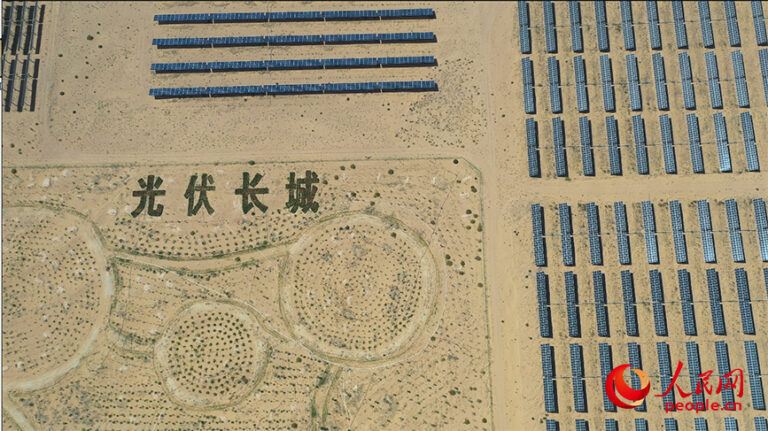
Deep in the Kubuqi desert in north China’s Inner Mongolia Autonomous Region, rows of blue solar panels glisten under the winter sun, converting sunlight into electricity that flows into thousands of households. Sandy and mostly devoid of life, the Kubuqi Desert in Inner Mongolia once had a reputation for being a “sea of death.”
Now, according to NASA tracking solar power developments in China, China’s dune fields have become a sea of solar energy, transformed by a surge of newly installed solar panels. The construction is part of China’s multiyear plan to build a “solar great wall” designed to generate enough energy to power Beijing. China is now the world’s biggest producer of solar power.
The project, expected to be finished in 2030, will be 400 kilometers (250 miles) long, 5 kilometers (3 miles) wide, and achieve a maximum generating capacity of 100 gigawatts. So far, Chinese officials say they have installed about 5.4 gigawatts. The US Geological Survey which is part of the Department of The Interior captured photos from 2017 to 2024 to show how quickly the plant has expanded.
China wall of Sun, via NASA
The Kubuqi’s sunny weather, flat terrain, and proximity to industrial centers make it a desirable location for solar power generation. Panels are being installed in a long, narrow band of dunes just south of the Yellow River between the cities of Baotou and Bayannur. NASA’s OLI (Operational Land Imager) and OLI-2 on Landsat 8 and 9 captured this pair of images showing the expanding footprint of solar farms between December 2017 (left) and December 2024 (right).
The solar farm that resembles a galloping horse—Junma Solar Power Station—was completed in 2019, setting a Guinness world record for the largest image made of solar panels.
It generates approximately 2 billion kilowatt-hours of electricity each year, enough to meet the yearly electricity needs of 300,000 to 400,000 people.
Junma means “fine horse” in Mandarin.
In addition to generating power, planners hope that the installation will have other benefits. They think it may help curb desertification by preventing the movement of dunes and slowing winds. Also, the elevated panels create shade that slows evaporation and may make it easier to grow pasture grasses and other crops beneath them. Analysis of Landsat data indicates that solar projects have contributed to the greening of deserts in other parts of China in recent years.
Since 2024 China leads the world in solar energy production
As of June 2024, China led the world in operating solar farm capacity with 386,875 megawatts, representing about 51 percent of the global total, according to Global Energy Monitor’s Global Solar Power Tracker.
The United States ranks second with 79,364 megawatts (11 percent), followed by India with 53,114 megawatts (7 percent).
The solar great wall in China
China’s solar growth has been particularly rapid during the past decade. Between 2017 and 2023, the country’s operational solar capacity surged by an average of 39,994 megawatts per year. The solar capacity of the United States expanded by an average of 8,137 megawatts over the same period.
Beneath the panels, different types of shrubs stand tall despite their dormant yellowed leaves, shielding the land from wind and sand.
“By the end of 2023, this one-gigawatt solar power project was successfully connected to the grid, transforming over 30,000 mu (about 2,000 hectares) of desert into a sea of solar blue, with thriving vegetation flourishing beneath the panels,” said Na Guiting, who is responsible for the solar great wall project.
The project Na is working on is the first phase of the Kubuqi Desert Ordos Central-Northern New Energy Base.
As one of China’s first large-scale renewable energy bases with a capacity exceeding 10 gigawatts, the base is set to develop eight gigawatts of solar power, four gigawatts of wind power, and four gigawatts of supporting coal power.
The electricity generated will be transmitted to the Beijing-Tianjin-Hebei region through an integrated system combining solar, wind, coal, and energy storage, with 230,000 mu dedicated to photovoltaic sand control.
Once the project is completed, it will deliver approximately 40 billion kilowatt-hours of electricity annually to the Beijing-Tianjin-Hebei region, with over 50 percent coming from clean energy sources, according to Na.
It is equivalent to saving about 6 million tonnes of standard coal and reducing carbon dioxide emissions by around 16 million tonnes each year, Na added.
The solar great wall
The Kubuqi project exemplifies China’s broader effort to integrate renewable energy with ecological restoration. In the arid expanses of northern China, advanced technology is reshaping the battle against desertification, turning it into a narrative of resilience and renewal.
“I never would have imagined that as a farmer, I could find work in the sand dunes,” said Qin Zhaoping, a resident of Hengliang Township in Gansu’s Gulang County. His job involves adjusting the sprinkler irrigation systems beneath photovoltaic panels and tending to the thriving sand plants.
According to official data, 53 percent of China’s treatable desertified land has been restored, leading to a net reduction of approximately 4.33 million hectares of degraded land.
In November 2024, a three-gigawatt solar power station in Otog Front Banner of Ordos, built by CHN Energy Investment Group, was connected to the grid. It is currently the largest single-capacity solar power base built on a coal mining subsidence zone in China.
The power station is expected to generate 5.7 billion kilowatt-hours of electricity annually, sufficient to meet the yearly energy needs of two million families.
An environmentally-friendly preparation of plant material from pine could serve as a substitute for petroleum-based chemicals in polyurethane foams. The innovation could lead to more environmentally friendly versions of foams used ubiquitously in products such as kitchen sponges, foam cushions, coatings, adhesives, packaging and insulation.
The global market for polyurethane totaled more than $75 billion in 2022.
“It’s quite novel in terms of the material we generate and the process we have,” said Xiao Zhang from Washington State University. “Our extracted lignin offers a new class of renewable building blocks for the development of bio-based value-added products.”
This wood-based foam works better than plastic foams. It’s also friendlier to the environment. Amir Ameli/Washington State University.
Petroleum-based plastic materials are an increasing waste problem. They take centuries to break down, but they are expensive and difficult to recycle, most often producing an inferior second-generation product. Because it costs more to recycle than to generate new plastic, the plastics recycling rate has consistently stayed below 20%, said Zhang.
The research team used an environmentally-friendly preparation of lignin as a substitute for 20% of the fossil fuel-based chemicals in the foam. The bio-based foam was as strong and flexible as typical polyurethane foam. They report on their work in the journal, ACS Sustainable Chemistry and Engineering.
“It’s basically a no-win situation if you’re using petroleum-based plastics,” he said. “The ultimate solution is to replace them with naturally derived materials.”
Lignin is the second most abundant renewable carbon source, making up about 30% of the non-fossil fuel-based carbon on Earth, second to cellulose. It is the main component in wood. It is also notoriously difficult to extract from plants. The material is usually separated during papermaking and biorefining, but these processes often contaminate and significantly alter its chemical and physical properties, decreasing its value.
So most lignin is either burned to produce fuel and electricity or used in low-value products, such as for cement additives or as a binder in animal feed.
This boat on the Seychelles is full of plastic that washed up on shore. The world needs plastics alternatives.
In their work, the researchers used a mild, environmentally friendly solvent to separate a high-quality lignin from pine. Compared to other lignin formulations, their formulation was homogenous with good thermal stability — similar to native lignin. The structural homogeneity is important in being able to produce high-value products.
When they tested their formulation, their product was stable and performed as well mechanically as the conventional foams.
“This work demonstrates that our prepared lignin formulation has a great potential for generating flexible, bio-based polyurethane foams,” said Zhang.
A homemade cold water plunge bath. Cold weather needed
Our Finnish friends did it before anyone we know and when we were in university we enjoyed a hot tub and then a jump in the snow. But cold water plunges, as our writer Brian does every year in the New Year is a growing trend that has emerged out of the Wim Hoth method.
Want to go for a plunge and don’t live near an ice cold river, lake or sea? The easiest way to make an ice bath is to fill water in an old standalone freezer and if you live in a cold climate just leave it outside. Or buy some blocks of ice for $5 a bag and make a cold plunge out of your bath.
If you live in nature, you can carve a path into the lake or pond in the winter and secured by a rope and a spotter plunge to your heart’s desire. But if you are regular city cold water plunger and live in a warm climate and want the ability to cold plunge at your leisure there are a growing number of products on the market. Mark my words, you will find something in Costco by this summer.
One of the new products is created by a US company called Ice Barrel which makes the Ice Barrel 500. With the name from the 80s this cold water chiller is an upright, spacious, chiller-ready cold therapy tool made to fit nearly every body type and space.
Wyatt Ewing, Founder & CEO of Ice Barrel says: “While we continue to educate consumers on the physical and mental health benefits of cold therapy, we are dedicated to creating innovative products that are effortless to use while providing maximum personal benefit, holistic well-being, and optimal human performance.”
But then again it’s still a sort of luxury item, all plastic, and retailing for $1500.
Key Features include:
Fully Insulated: Whether you’re using ice or a chiller, the thick polyurethane foam insulation throughout the barrel and lid helps keep your water at your desired temperature longer, especially in warm climates. Comes chiller-ready without modification, with a fully insulated and UV-resistant lid, a UV and water-resistant cover, and hardware (drain spout, plugs, bulkheads, and seals).
With an integrated seat and generous interior space, the Ice Barrel 500 allows you to enjoy a comfortable, upright seated position to easily plunge up to your neck and shoulders for maximum full-body benefit.
Keep it on your roof? Easy To Drain and Clean: Can hold 356 liters (94 gallons) of water and 104 lbs. when empty. Requiring very little maintenance, it is recommended to change the water every four weeks or as preferred using a water stabilizer to keep the water clean. Ice Barrel’s maintenance kit includes everything needed to keep your Ice Barrel 500 clean and functional.
Some people report that cold water plunging helps with pain relief, low moods and improves their immune system. While your city lifestyle might prevent you from getting in nature, we can guarantee you a better experience cold water plunging in nature.
There are plenty of tutorials online on how to make a cold plunge bath cheaper than $1500:
The Plunge is a read-made cold bath you can install on your porch.
The Plunge is a bougie bath perfect for LA and Florida
After archaeological studies which included C14 dating of different samples of bones and textiles, the Salt Man was dated to about 1,700 years ago. By testing a sample of hair, the blood group B+ was determined.
In the winter of 1993, miners at the Chehrabad Salt Mine in Iran made a remarkable discovery while bulldozing for salt. They found a body with long hair, a beard, and several artifacts with it. Among the items found were a lower leg inside a leather boot (pictured below), three iron knives, a woolen half-trouser, a silver needle, a sling, parts of a leather rope, a grindstone, a walnut, pottery shards, fragments of patterned textiles, and broken bones.
The body was buried deep inside a tunnel about 40 yards long. Cause: the salt mines they were working in collapsed. Salt can be bought for a song and a dance today but once it was a much more valuable commodity. Read about the economic importance of salt in this feature article here.
The head of salt man
By 2010, the remains of six men had been discovered, and it is believed that most of them accidentally killed by the collapse of galleries in which they were working while they too were mining for salt. The head and left foot of Salt Man 1 are on display at the National Museum of Iran in Tehran.
In 2004, yet another salt man mummy was discovered just 50 feet away, followed by a third in 2005, and later that same year, the remains of a teenage boy.
These “salt men” are ancient corpses that were either killed or crushed in the cave and naturally mummified by the harsh, salty conditions. The dry salinity of the mine preserved hair, flesh, and bone but also internal organs, including stomachs and colons, in remarkable detail.
One salt man found to have the remains of a tapeworm in his gut at the time of death. Parasites lived with us then and they live with us today.
President Donald Trump was recently made aware that there was $50 million more taxpayer money being earmarked to send free condoms to Gaza. Like molotov cocktails, and water pipes turned into rockets, the condoms are used as improvised guerrilla warfare devices to install harm on people, forests and agriculture land in Israel. Special poems are written about this so Israeli children don’t touch balloons, balls and condoms they find on the street.
The incendiary device found in a community in the Shaar Hanegev Regional Council on June 21, 2018. (Israel Police)
White House press secretary Karoline Leavitt on Tuesday defended President Donald Trump’s order to freeze federal funding, claiming that $50 million had been earmarked for the distribution of condoms in the besieged Gaza Strip.
Leavitt briefed reporters that the newly-established Department of Government Efficiency (DOGE) and the White House Office for Management and Budget (OMB) found “that there was about to be $50 million taxpayer dollars that went out the door to fund condoms in Gaza”.
In 2023 USAID revealed that no condom money was sent to Gaza, however.
An exploding soccer ball meant to harm children who kick it, sent to Israel from Gaza. An explosives-laden soccer ball that was apparently flown from the Gaza Strip using balloons is seen in an open area of the Sha’ar Hanegev Regional Council on January 23, 2019. (Courtesy)
The only shipment to the Middle East that year was a $45,680 delivery to Jordan, which was noted as the first condom shipment to the region since 2019. Since news of the condom bombs in 2018, it is likely a government office in the US had the foresight to stop shipments.
Watch out for explosive condoms. Photos from 2018 in Israel.
The Department of Government Efficiency (DOGE) and the Office of Management and Budget (OMB) found “that there was about to be 50 million taxpayer dollars that went out the door to fund condoms in Gaza,” Leavitt told reporters during her first press conference. “That is a preposterous waste of taxpayer money.”
The Trump administration has frozen nearly all foreign assistance programs for at least 90 days, in an attempt to understand how the US is funding UN organizations such as the World Health Organization.The US is the largest source of international assistance out of all countries in the world.
A bundle of balloons attached to a model plane found near Neot Hovav on January 21, 2020. (Israel Police)
Over the years the Israeli public have taught their children to take care when they find balloons or balls, as they may be fitted with explosives. In 2020 the Israel Defense Forces’ Home Front Command on Friday released a poem for children warning them against the dangers of the balloon-borne bombs flown into southern Israel from the Gaza Strip.
Titled “What does the wind bring with it?”, the poem tells children to call an adult and run away if they see a suspicious object.
“Sometimes, the wind brings with it/dangerous things/which come from over the fence/they are not mine/and they’re not some friend’s,” wrote the poem’s author,Tali Versano-Eisman, the head of the Home Front Command’s child-outreach department.
A condom bomb poster handout
Are condoms permissible in Islam?
According to Islamqa, it is permissible to use condoms so long as this does not cause any harm and so long as both husband and wife consent to their use, because this is similar to ‘azl (coitus interruptus or “withdrawal”). But it reduces the sensation of pleasure, which is the right of both partners, and reduces the chance of conception, which is also the right of both partners. Neither one of them is allowed to deprive the other of these rights. (Related: read our article on female circumcision in Islam).
Red Sea helps farmers prosper near dead or dying aquifers
RedSea LLC, a company founded in the heat of Saudi Arabia has cracked the code for sustainably growing plants in high heat conditions. They offer the answer to increasing cultivation on dead and dying aquifers.
Growing food in greenhouses in a European winter makes sense. The Dutch invented the idea in the 1800s when botanist Charles Lucien Bonaparte wanted to grow medicinal plants in Leiden. These greenhouses retain heat in the enclosures, allowing cultivation even during the cold Northern European winter months.
Hydroponics –– or growing trees and plants in a water medium with nutrients –– is having a moment now but it started with a California botanist in the 1800s and was perfected in the 90s by cannabis growers in Canada. Hydroponics tech is now used for growing salads in food deserts everywhere. Hydro-grown has its challenges, and high costs, however.
Drip irrigation, designed to precisely control the delivery of scarce water and costly fertilizer directly to plant roots is credited to the Polish-Israeli agronomist Simcha Blass. This solution allowed cultivation in arid climates where the growing season was limited. More recently, American-Israeli Daniel Hillel received the World Food Prize for devising drip irrigation systems in the developing world and this technology, delivered by companies like Netafim and Rivulis, is now a multi-billion dollar global business.
Redsea grafts more desirable plants onto graft-stock which is saline resistant
Climate change and increasing world temperatures now presents additional challenges for agriculture –– especially where climates are becoming more hostile, and water less available. A growing world population, and concerns over food security in the hottest countries in the world has shifted the focus of innovators to ask the question of how to sustainably feed this growing population, and how to overcome the challenges of cultivating in increasingly arid climates.
RedSea LLC, a company founded in the heat of Saudi Arabia, has cracked the code for sustainably growing plants in high heat conditions and they offer the answer to increasing cultivation on dead and dying aquifers.
The founders include an Australian plant biologist Prof. Mark Tester, known as the Indiana Jones of the plant world, Prof. Derya Baran, a leading materials scientist and Dr. Ryan Lefers, an expert on water systems and water preservation in agriculture. The trio have built a platform of technologies that adapts the best of the innovative pioneers before them in materials, AI, hydroponics, smart farms, and drip irrigation and have applied know-how in materials, water and plant genetics to sustainably grow crops in hot and dry climates.
Founders Mark Tester, Ryan Lefers (right)Derya Baran, a RedSea founder
This starts with the water, as access to fresh water is an increasing challenge with agriculture currently using up to 70% of available fresh water to grow crops. The challenge was how to grow plants in increasingly arid conditions on dead or dying aquifers. Tester went to the Galapagos on a mission to figure it out and came home inspired by the tomato plants that he found there growing on rocks right next to the sea.
Darwin Lake in the Galapagos is twice as salty as the sea. Plants that grow there must be salt tolerant.
He tells Green Prophet that he questioned whether these tomato plants could handle the salt, and if so, could they be modified to be grown commercially while reducing the draw of fresh water resources? Brackish water is saltier than water that comes from the tap and plants don’t like it. It is the water found in estuaries where rivers meet the sea. It is also the water found in aquifers near the sea or in deserts –– or in areas where climate change, and overpopulation has depleted aquifers.
Mark Tester, Indiana Jones of the Plants on the Galapagos
In all parts of our drought-facing world, and especially in the dry Middle East and regions of California and Texas, brackish water in damaged and dead aquifers is common. Tester has made it his life mission, and with his co-founders established a successful company now scaling into new markets, to grow food on dead and dying aquifers.
“It really depends on the crop, but when our technologies are combined this means you can build greenhouses near dead or dying aquifers. In reality there are a lot of factors in play, but this is the idea,” says Tester, pointing to a suite of agri-climate technologies RedSea has built: “The fundamental idea to address is to reduce the use of freshwater for producing fresh food and if we can do that by using more saltwater, then that is definitely a useful contribution.”
Tester was educated in the UK at Cambridge. He is a research professor at KAUST, King Abdullah University of Science and Technology, Saudi Arabia.
But Tester’s background is in plant biology, not just tech, furthering the understanding of salt tolerance in plants for desert agriculture. He has developed methods for developing new types of seeds that are used as a hearty rootstock which can handle brackish water. Other plants, which are not as tough, but which are tasty can be then grafted onto these rootstocks.
“I am a plant guy and in this company I am delivering the fruits of my lifetime’s research which is fundamental science: how plants move solutes in and out of the plants, and applying it to salinity tolerance. With my co-founders Ryan Lefers and Derya Baran a suite of products was developed and commercialised that can leverage this research,” he tells Green Prophet.
Grafting is used with many varieties of plants, such as apples, cherries, roses, watermelons, nut trees, and tomato plants. Developing new types of rootstocks that can handle brackish water and other challenges such as heat and drought is the aim –– and “then we graft the edible bits on top,” says Tester.
In some cases, RedSea can graft across species, but only closely related ones: “We can graft a tomato onto a wild tomato, an eggplant onto a wild eggplant, and sometimes even a tomato onto a wild eggplant, but we can’t graft an orange onto an apple, for example. They have to be fairly closely related.”
The work of grafting also allows the farmer to extend the growing period of the plant, says Tester: “We can help tomatoes be economically productive for longer, such as from 10 months to 11 months in a greenhouse.”
The RedSea technology works on a soil-based substrate, hydroponics or on open fields in soil: “We are developing rootstocks for all of these conditions,” says Tester.
“In tomatoes, for instance, we are working with brackish water, which is more dilute than seawater but more salty that you and I can drink, is the reality is that in many places around around the world a lot of our food is grown using groundwater and every major aquifer is being depleted. As it gets depleted, it gets salty.
“We have few aquifers straight outside our university that have been abandoned because of that – now we can access water that’s currently not being used.”
Turning greenhouses inside out
Apart from the unique rootstocks that RedSea is providing, the company has a number of technologies now being sold in export markets. While greenhouses typically need to be heated in Holland or Canada, in the Middle East, the reverse is true. It gets too hot. So RedSea has also helped solve that problem.
They have developed a range of heat blocking greenhouse covers. These are based on additives that can be incorporated into any polymer based cover that blocks damaging heat from penetrating into the greenhouses –– a product called iyris SecondSky which incorporates a nanoparticle technology invented by Baran. “Derya developed a nanoparticle that when dispersed in plastics absorbs near infrared radiation – which in layman’s terms translates to heat. This absorption of the heat load that would otherwise be damaging to plant health delivers a huge reduction of the resources that are needed in such structures to control the climate and manage plant health in the greenhouse,” says Tester.
RedSea facilities in Saudi Arabia at KAUST
The technology can be easily Integrated into standard plastic greenhouse covers, be that polycarbonate, polyethylene or net, resulting in a product that is a one for one replacement of standard greenhouse covers – just better – because the heat blocking is already integrated into the plastic during the manufacturing process. This means that there is very little compromising impact on the PAR (photosynthetic active radiation) transmission through the cover compared to alternative heat blocking methods.
Alternative heat blocking solutions include additional reflective films, chalking or internal shade screens, which are, in the case of films, expensive, an operational nuisance and potentially degrading to the plastic. In the case of chalking and compromise the PAR transmission within the greenhouse. Results achieved with the use of SecondSky have been impressive, Tester reports.
Ryan Lefers, the CEO of RedSea explained more about the potential of how disruptive this integrated heat blocking can be within high heat regions: “Greenhouse technology has become highly developed in Northern European countries such as the Netherlands, offering a solution to keep heat in winter so that crops could be grown out of season, but here in the Middle East and over vast areas of the planet we need to keep the heat out in summer, so our thinking was to take the original greenhouse and turn it inside out,” he tells Green Prophet.
“Water scarcity is another major challenge, so finding ways to operate farms with a lower environmental impact, while empowering farmers to continue to farm without an expectation that they make fundamental changes in the way that they farm was a key driver for us.”
The saltwater greenhouse dream
In facilities where SecondSky is installed, farmers can save up to 30% on water and fertilizer use when compared to hydroponic systems and up to 90% compared to soil based cultivation. Many farms also use a reverse pressure pad and fan cooling system in the region to assist in coping with the extreme temperatures. Farmers can save up to an additional 32% in energy costs once a SecondSky cover is installed.
RedSea has developed an add-on to their technology suite that enables farmers to use brackish water in these cooling systems further reducing the environmental impact of farming in hot climates.
Kairos saltwater greenhouse cooling tech made by RedSea
RedSea was founded in 2018, and to date has raised a total of about $36.5 million USD. Saudi Arabia’s oil company Aramco through their investment fund Wa’ed is among the investors. A new Series A funding round will close shortly, adding investors and additional funds for the company’s planned expansion.
Rapid growth of sales and revenues is the company’s focus at the moment, with expansions into other countries. RedSea technology is being sold through manufacturers and distributors, but also directly to farms. There are installations in 16 countries to date and this number is growing.
But Tester, a plant guy at heart with a passion for the environment, has his eye on the bigger prize: “We wanted to have a company that is profitable and truly sustainable and highly impactful –– where we are across the world developing and selling technologies to reduce the environmental footprint of our food productions in both developed and developing countries.
“And that’s where we came from –– Ryan and me. We started with this idea of increasing sustainability in agriculture in developing countries –– that’s in the DNA of the company.”
The National Center for Vegetation Cover Development and Combating Desertification (NCVC) has launched a project to catalog and analyze wild plants in Saudi Arabia with medicinal, aromatic, toxic, nutritional, and economic properties.
This initiative, in collaboration with the College of Pharmacy at King Saud University, aims to expand scientific knowledge of the Kingdom’s native plant species and provide research-based guides to support sustainable resource use and conservation. Such pharmacological data could lead to new discoveries in medicine.
The project will create detailed guides featuring scientific and geographical insights on wild plants with medicinal, aromatic, toxic, nutritional, and economic value. It will document key findings, map plant locations and characteristics, and benchmark them against the latest regional and global research. Additionally, the initiative includes the development of tailored media content and digital resources to raise awareness among all segments of society about the importance of native plants and their diverse applications.
This effort aligns with the NCVC’s mission and supports the goals of the Saudi Green Initiative and Vision 2030. It strengthens research partnerships among government agencies, academic institutions, and private sector stakeholders, fostering environmental and economic sustainability. By safeguarding the Kingdom’s plant resources, the project further underscores the NCVC’s role as a leading authority on vegetation cover and biodiversity conservation.
The NCVC remains committed to protecting and rehabilitating vegetation sites across Saudi Arabia, combating illegal logging, and managing rangelands, forests, and national parks. These efforts contribute to sustainable development and the preservation of the Kingdom’s natural heritage, in line with the objectives of the Saudi Green Initiative.
Here is a list of 10 unusual medicinal plants found in Saudi Arabia, along with their common names in Arabic and English, and their traditional uses:
Plant Name
Common Name (Arabic)
Common Name (English)
Traditional Use
Calotropis procera
العشار (Al-‘Ashar)
Apple of Sodom
Used for treating skin diseases and as an anti-inflammatory agent.
Ziziphus spina-christi
السدر (As-Sidr)
Christ’s Thorn Jujube
Employed to treat various ailments, including digestive disorders and infections.
Reichardia tingitana
الهندباء (Al-Hindiba)
Wild Chicory
Its leaves are used to treat constipation, colic, and inflamed eyes.
Ruellia tuberosa
غير متوفر
Minnieroot
Used as a diuretic, anti-diabetic, antipyretic, analgesic, antihypertensive, and to treat gonorrhea.
Rumex crispus
الحميض (Al-Humeidh)
Curly Dock
The root is used for treating anemia, skin conditions, respiratory issues, and enlarged lymph nodes.
Commiphora gileadensis
بلسان مكة (Balsan Makkah)
Balm of Gilead
Renowned for its aromatic resin used in perfumes and traditional medicine for its healing properties.
Soda rosmarinus
الأشنان (Al-Ushnan)
Saltwort
Historically used for producing potash and as a cleansing agent; also employed in traditional medicine for oral health.
Anethum graveolens
الشبت (Al-Shabat)
Dill
Commonly used to aid digestion and soothe upset stomachs.
Mentha longifolia
النعناع البري (Al-Na’na’ Al-Bari)
Wild Mint
Popular in teas, sauces, and desserts; also used for digestive comfort.
Peganum harmala
الحرمل (Al-Harmal)
Syrian Rue
Traditionally used for its analgesic and anti-inflammatory properties.
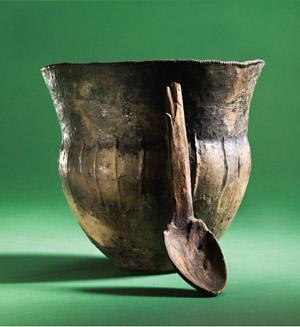
Does this look like a pot you’d cook in? Soup, possibly? This 6000 year old clay pot was recently retrieved from a bog in Denmark. A neolithic householder had cooked seafood in it, according to the analysis made of food residues scraped off from the inside. Cooking in clay has been around for a long, long time.
Porous clay retains and releases flavors. I imagine everything cooked in that pot 6000 years ago tasted like fish. I’d advise modern cooks to save one or two clay pots only for seafood. And keep your dessert ramekins for dessert only – you don’t want your creme brulee to taste like garlic custard.
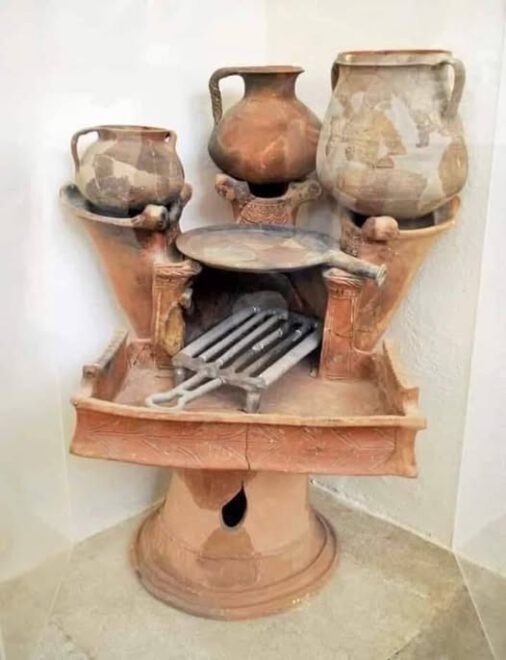
How about this ancient Greek setup? With the exceptions of the skillet and the grill, the whole stove and the pots are made of clay. Clay keeps a steady, slow heat going as long as the fuel lasts. The ancient Greek obviously expected to cook soup, stew, or pottage in the three pots poised on those funnel-like chimneys. I’ll bet the whole thing got hot enough to burn the hand. Since cooking in clay is a low and slow process, they must have started cooking early in the morning to be on time for lunch.
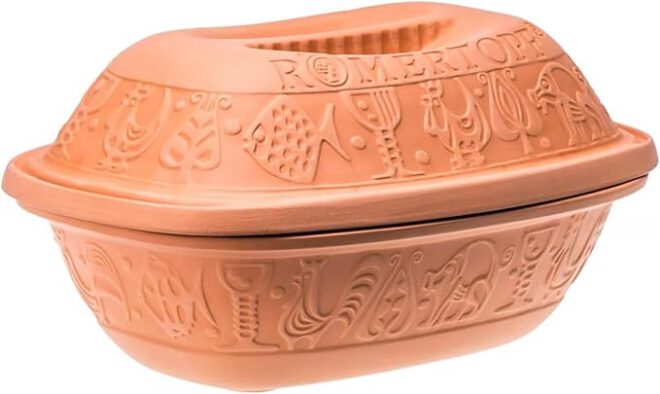
Dug out from the earth itself, clay needs patient processing to yield clean, malleable material. Most clay pots need a one-time preliminary seasoning in order to cook out the taste of raw clay. And they’re fragile. They must be protected from thermal shock to prevent cracks. Drying one isn’t a matter of wiping it out with a dish cloth; it has to be air-dried to prevent mold. And unless you’re lucky enough to live near a potter, you can expect to pay nicely for a beautifully-turned out tajine or Romertopf pot.
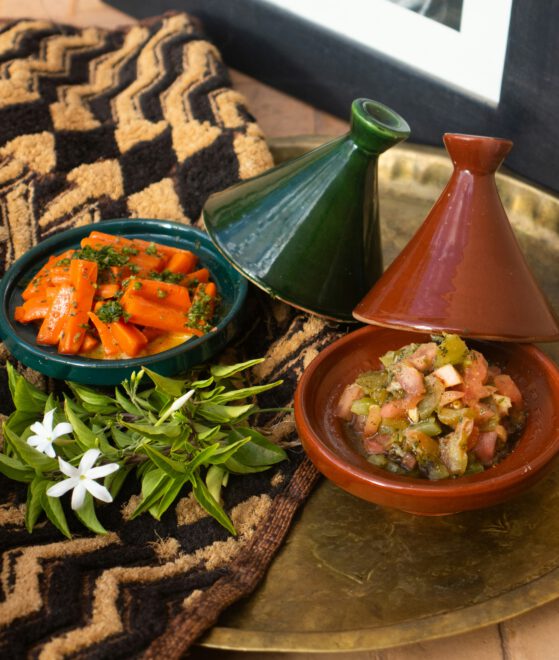
Unless you fly out to Morocco, where you can pick up a traditional tajine like this one in the souk:
So why bother to cook in clay when you can pick up all the metal cookware you need in your neighborhood supermarket?
First, flavor. Anything cooked in clay tastes better. If you appreciate traditional foods cooked low and slow, you’ll enjoy the deep flavors and textures that clay pots grant. Slow, even heat ensures that the ingredients’ flavors bloom and blend, and that foods requiring long cooking, like beans and tough cuts of meat, emerge from the pot tender and juicy.
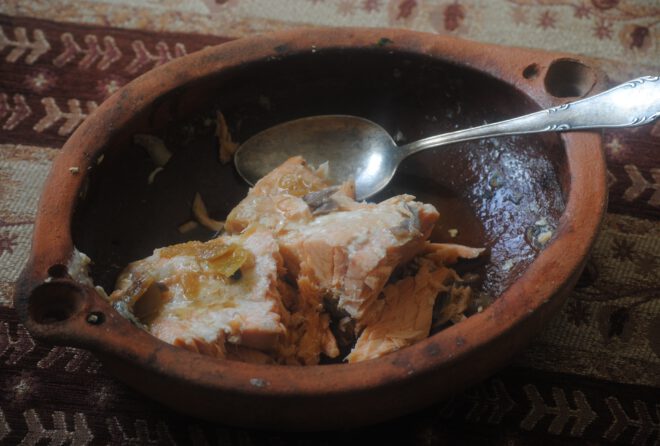
The more often you cook in a clay pot, the better the food from it tastes. To put it poetically, the clay retains some of the soul of the food – the flavors of spices and fats – which it releases to the next potful. A well-used and cared-for clay pot, even a simple tagra like the one below, becomes a treasure over time. (The photo shows slow-cooked salmon and lemons.)
Then there’s the satisfaction of handling a pot made from sustainable prime material; especially if the pot is beautiful.
Clay pot styles vary a lot. Tajines, for example, require very little or no liquid for stews or braised dishes. Cooking vapors condense inside their conical tops and drop back down on the food, resulting in foods with undiluted flavor.
Romertopf pots are another specific type, with their glaze and two parts. Being soaked before cooking starts, the closed Romertopf releases steam around the food inside, producing deliciously roasted, juicy chicken and meat. (To create a golden, crisp crust, you remove the top and cook the dish a further 20 minutes.)
Cooking in clay takes longer, because you start with low heat and gradually increase it. But clay retains heat for a long time, which guarantees that the food stays hot for a long time after you take the pot off the stove or out of the oven.
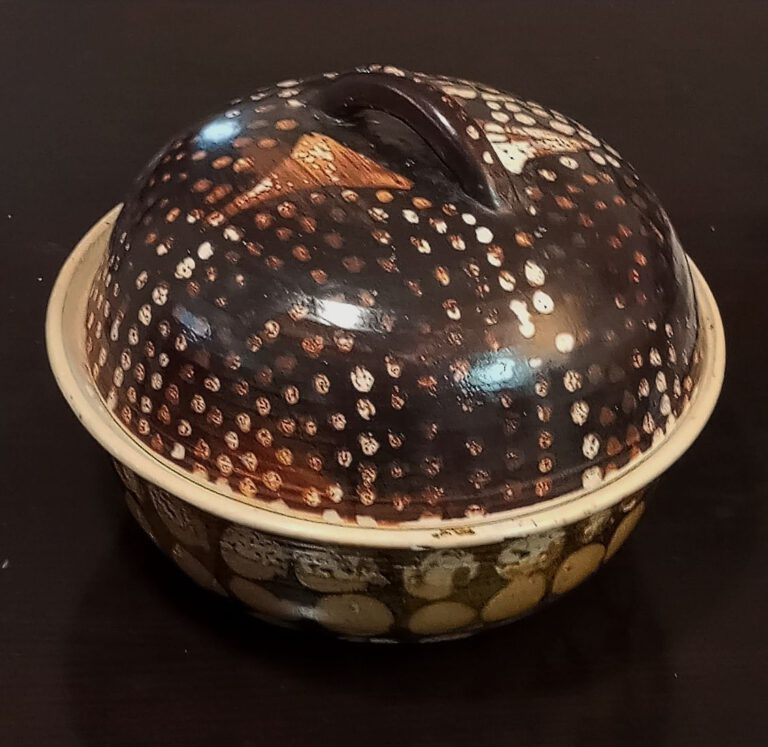
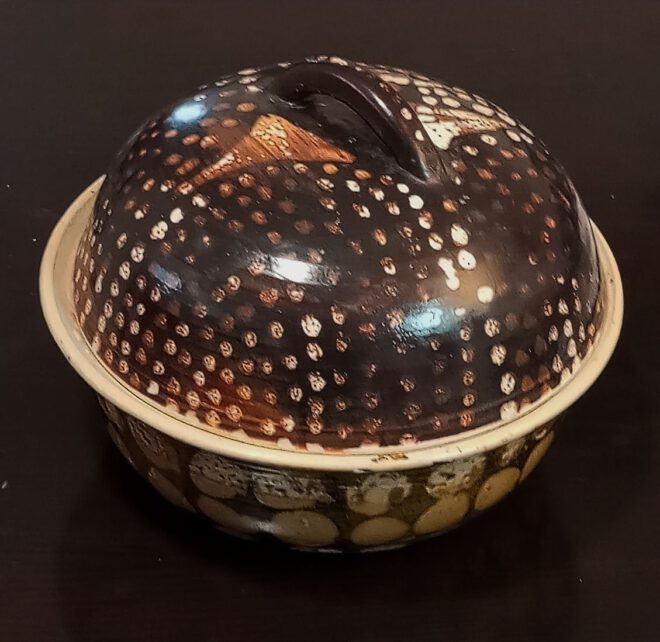
There are clay pots for every use. Stews, soups, and beans are the first foods that come to mind, but there are traditional clay vessels for casseroles, frittatas, baked potatoes, bread forms and even custard cups. I love the pot that Green Prophet’s founder Karin Kloosterman made in her own kiln.
It could make slow-cooked stew or soup, but I prefer to use it as a bread cloche. Here’s the bread:
If you live within reach of a potter, or travel to places where clay pots are made locally, buy them there. Where I live, there’s a warehouse that imports housewares from Morocco. I’ve bought tajines and tagras there. A heavy guvec stew pot on my shelf came from Turkey. I’ve also found clay cookware in a trendy shop in the local mall. Otherwise, you can order clay pots online via Amazon, Etsy, and similar sites.
You don’t need a exotic spices and herbs ordered online to make good use of clay pots. Below is a chicken tajine I cooked recently. Just chicken, veg, and the ground spices I keep around: cumin, turmeric and paprika. I could have substituted thyme, bay leaf, and a splash of white wine just as easily.
Regarding safety and fear of lead in glazed pots: all cooking pottery sold in the U.S. is regulated by the U.S. Food and Drug Administration. If you like to use a slow cooker on these cold winter days, remember that all the inserts of slow cookers are made of glazed clay, so you’ve been cooking perfectly safely with what’s basically a clay pot.
Unglazed pots are fine.
Don’t cook in antique pots you pick up in yard sales. Keep them for display. If you’re determined to cook in an old pot – unless it’s your Grandma’s familiar, treasured and well-used one – buy a lead test in your local hardware store and apply it to the pot.
For an authoritative book on cooking in clay, I recommend Paula Wolfert’s classic, Mediterranean Clay Pot Cooking. In it the most common types of clay pots are detailed, with valuable tips on handling clay pots, cooking different types of foods, and incidental recipes like preserved lemons and tomato paste. The book includes lists of food sources and clay pot sources. The bibliography is worth going through. The recipes largely reflect the foods of Morocco, Turkey, France, and Italy.
Follow Green Prophet for delicious recipes cooked in clay (or other) pots:
“The problem is bigger than just the smoke we’re inhaling.”
WVU toxicologist Timothy Nurkiewicz said the January fires burning in the Los Angeles area will create air pollution that can reach hundreds of miles in distance.
As the deadly California fires persisted into a second week, a West Virginia University air quality expert said people within hundreds of miles may experience the effects.
Timothy Nurkiewicz, professor of the physiology, pharmacology and toxicology in the WVU School of Medicine, said he also believes that — beyond any immediate health concerns — a swift, thorough cleanup must occur to prevent lingering effects in the environment.
“The folks within a 10-mile radius are in the greatest peril. With extremely high air pollution resulting from the fires, even a healthy person may have irritation of the eyes and complications breathing. What we’re seeing in hospitals are people with asthmatic events and bronchitis.
Timothy Nurkiewicz, professor, Department of Physiology, Pharmacology and Toxicology, WVU School of Medicine
“For those with pre-existing conditions, cardiovascular diseases can be exacerbated after inhalation exposure to this smoke. That could mean symptoms such as elevated blood pressure and chest pain.
“What we’re seeing in Los Angeles is called a ‘wildland urban interface fire.’ This is different from a typical wildfire. In a wildland urban interface fire, you have housing and urban environments built up against and in the wildlands.
“Now we’re getting two different profiles of toxicants — one from the wildlands and one from the urban environment and its building materials. The frequency and intensity of these fires will continue to increase with ongoing development and building into the wildlands.
Nurkiewicz directs the Center for Inhalation Toxicology, a research hub for investigators to measure, identify and discover how air particles affect human health.
“It’s fair to estimate that the smoke will travel hundreds of miles away. But the smoke will be diluted down by the time it reaches mid-America,” he warns.
How can authorities and people help slow the damage?
“While everyone’s focused on the immediate effects, as they should be, there must be cleanup after the fire, says Nurkiewicz. “A smoke plume is going to cover a tremendous area and that smoke will settle into the environment we’re interacting with. It’s like cigarette smoke. If someone’s sitting in a room smoking cigarettes, it will settle onto surfaces. It’s the same thing with these fires. You can’t just leave all these ashes around and not have some sort of exposure.
“The problem is bigger than just the smoke we’re inhaling.”
How do eco resorts like Keemalah get noticed? You can’t find them in the jungle but you can see this 5 star eco resort on social media. Image by Green Prophet
What do you use social media for? To chat with friends, share interesting facts, or read the news? Great, but these powered resources offer far more opportunities than just entertainment and casual interactions. These platforms have become essential tools for developing professional pages, expanding businesses, and generating new orders. Having a strong presence is no longer optional for companies—it’s mandatory. Your clients are already online, scrolling through their feeds, searching for solutions, and engaging with brands.
But not every brand succeeds in standing out. Some struggle to attract buyers, some fail to compete effectively, and others simply don’t know how to interact with their subs. While the reasons for failure may vary, one thing is clear: achieving success requires a solid strategy. Whether through creative content, audience connecting, or leveraging services like Viplikesto purchase important interactions such as followers or comments, you can position your eco-business for growth. In this article, we’ll explore one paid and two free methods to make your eco-brand flourish.
Content Optimization (Free)
Creating amazing content is essential, but it’s wasted effort if users don’t see it. That’s where optimization comes in. Hashtags are one of the simplest tools you can use to make your posts discoverable by your target audience. However, using too many hashtags can backfire, making your content look spammy or desperate.
The key is to focus on quality over quantity. Choose 2–3 highly relevant hashtags for each post, ensuring they align with your audience’s interests and your niche. For example, if your company focuses on sustainable packaging, hashtags like #Sustainability, #EcoFriendly, and #GreenLiving can be effective.
To maximize results, conduct research to identify the hashtags that resonate best with your audience. Test different combinations, track their performance, and refine a strategy over time.
Connect with Users (Free)
Sites thrive on interaction. Entrepreneurs that actively engage with potential buyers build stronger relationships, foster trust, and generate loyalty. Start by responding to comments on your posts, thanking users for mentioning your brand, and answering their questions. These small actions show that you value your audience’s input and care about their opinions.
Additionally, take the initiative to engage on other profiles. For example, if someone posts, “Does anyone know a good eco-friendly product brand?” don’t hesitate to join the conversation. Share your expertise, suggest your brand, and connect with clients.
Investing in Your Page (Paid)
The rapid growth of marketing has given rise to various services designed to help succeed online. One of the most working strategies for accelerating your growth is using sites to purchase targeted boosts for the company’s page.
For instance, if you frequently post links to your website or products, buying instant link clicks can significantly increase traffic. Similarly, you can purchase subs, likes, comments, and shares to enhance your profile’s credibility. These metrics make your page look more established and trustworthy, encouraging organic subs to interact with your posts.
In 2025, investing in such services is a cost-effective way to stay ahead of the competition. Even a modest advertising budget can yield substantial results. For eco-businesses, where building trust and showcasing authenticity are crucial, these paid boosts can provide the foundation for long-term success. By using Viplikes, you can focus on creating meaningful content while letting strategic investments handle the initial growth phase.
Brilliant engagement isn’t just about replying to comments—it’s about creating a community around your brand. Encourage your potential clients to share their stories, post testimonials, and participate in challenges or giveaways. This organic interaction not only strengthens your online presence but also amplifies your reach through word-of-mouth marketing.