“In the midst of uncertain time, renewable energy remains consistent and steadfast in its expansion,” said Francesco La Camera, IRENA’s Director-General. “A more decentralised energy system, with a growing share of renewables and more market players, is structurally more resilient.”
Health insurance is a regulated financial product. Insurers operate under binding contracts, overseen by state insurance commissioners, that legally obligate them to pay claims meeting policy terms. Policyholders who believe a covered claim was wrongfully denied have legal recourse through state regulatory channels.
The New Zealand Merino Company, now rebranded as Zentera, has quietly removed the phrase “world’s leading ethical wool brand” from its website, a notable change that comes after a disturbing investigation by PETA Asia-Pacific into the company’s ZQ-certified wool supply chain, PETA reports to Green Prophet.
Somehow vegetables with short seasons excite the imagination and appetite more sharply than produce that’s available all year around. Good Middle Eastern cooks have many recipes for delicate fava beans, and this turmeric-fragrant soup is one.
“In the midst of uncertain time, renewable energy remains consistent and steadfast in its expansion,” said Francesco La Camera, IRENA’s Director-General. “A more decentralised energy system, with a growing share of renewables and more market players, is structurally more resilient.”
Health insurance is a regulated financial product. Insurers operate under binding contracts, overseen by state insurance commissioners, that legally obligate them to pay claims meeting policy terms. Policyholders who believe a covered claim was wrongfully denied have legal recourse through state regulatory channels.
The New Zealand Merino Company, now rebranded as Zentera, has quietly removed the phrase “world’s leading ethical wool brand” from its website, a notable change that comes after a disturbing investigation by PETA Asia-Pacific into the company’s ZQ-certified wool supply chain, PETA reports to Green Prophet.
Somehow vegetables with short seasons excite the imagination and appetite more sharply than produce that’s available all year around. Good Middle Eastern cooks have many recipes for delicate fava beans, and this turmeric-fragrant soup is one.
“In the midst of uncertain time, renewable energy remains consistent and steadfast in its expansion,” said Francesco La Camera, IRENA’s Director-General. “A more decentralised energy system, with a growing share of renewables and more market players, is structurally more resilient.”
Health insurance is a regulated financial product. Insurers operate under binding contracts, overseen by state insurance commissioners, that legally obligate them to pay claims meeting policy terms. Policyholders who believe a covered claim was wrongfully denied have legal recourse through state regulatory channels.
The New Zealand Merino Company, now rebranded as Zentera, has quietly removed the phrase “world’s leading ethical wool brand” from its website, a notable change that comes after a disturbing investigation by PETA Asia-Pacific into the company’s ZQ-certified wool supply chain, PETA reports to Green Prophet.
Somehow vegetables with short seasons excite the imagination and appetite more sharply than produce that’s available all year around. Good Middle Eastern cooks have many recipes for delicate fava beans, and this turmeric-fragrant soup is one.
“In the midst of uncertain time, renewable energy remains consistent and steadfast in its expansion,” said Francesco La Camera, IRENA’s Director-General. “A more decentralised energy system, with a growing share of renewables and more market players, is structurally more resilient.”
Health insurance is a regulated financial product. Insurers operate under binding contracts, overseen by state insurance commissioners, that legally obligate them to pay claims meeting policy terms. Policyholders who believe a covered claim was wrongfully denied have legal recourse through state regulatory channels.
The New Zealand Merino Company, now rebranded as Zentera, has quietly removed the phrase “world’s leading ethical wool brand” from its website, a notable change that comes after a disturbing investigation by PETA Asia-Pacific into the company’s ZQ-certified wool supply chain, PETA reports to Green Prophet.
Somehow vegetables with short seasons excite the imagination and appetite more sharply than produce that’s available all year around. Good Middle Eastern cooks have many recipes for delicate fava beans, and this turmeric-fragrant soup is one.
“In the midst of uncertain time, renewable energy remains consistent and steadfast in its expansion,” said Francesco La Camera, IRENA’s Director-General. “A more decentralised energy system, with a growing share of renewables and more market players, is structurally more resilient.”
Health insurance is a regulated financial product. Insurers operate under binding contracts, overseen by state insurance commissioners, that legally obligate them to pay claims meeting policy terms. Policyholders who believe a covered claim was wrongfully denied have legal recourse through state regulatory channels.
The New Zealand Merino Company, now rebranded as Zentera, has quietly removed the phrase “world’s leading ethical wool brand” from its website, a notable change that comes after a disturbing investigation by PETA Asia-Pacific into the company’s ZQ-certified wool supply chain, PETA reports to Green Prophet.
Somehow vegetables with short seasons excite the imagination and appetite more sharply than produce that’s available all year around. Good Middle Eastern cooks have many recipes for delicate fava beans, and this turmeric-fragrant soup is one.
“In the midst of uncertain time, renewable energy remains consistent and steadfast in its expansion,” said Francesco La Camera, IRENA’s Director-General. “A more decentralised energy system, with a growing share of renewables and more market players, is structurally more resilient.”
Health insurance is a regulated financial product. Insurers operate under binding contracts, overseen by state insurance commissioners, that legally obligate them to pay claims meeting policy terms. Policyholders who believe a covered claim was wrongfully denied have legal recourse through state regulatory channels.
The New Zealand Merino Company, now rebranded as Zentera, has quietly removed the phrase “world’s leading ethical wool brand” from its website, a notable change that comes after a disturbing investigation by PETA Asia-Pacific into the company’s ZQ-certified wool supply chain, PETA reports to Green Prophet.
Somehow vegetables with short seasons excite the imagination and appetite more sharply than produce that’s available all year around. Good Middle Eastern cooks have many recipes for delicate fava beans, and this turmeric-fragrant soup is one.
“In the midst of uncertain time, renewable energy remains consistent and steadfast in its expansion,” said Francesco La Camera, IRENA’s Director-General. “A more decentralised energy system, with a growing share of renewables and more market players, is structurally more resilient.”
Health insurance is a regulated financial product. Insurers operate under binding contracts, overseen by state insurance commissioners, that legally obligate them to pay claims meeting policy terms. Policyholders who believe a covered claim was wrongfully denied have legal recourse through state regulatory channels.
The New Zealand Merino Company, now rebranded as Zentera, has quietly removed the phrase “world’s leading ethical wool brand” from its website, a notable change that comes after a disturbing investigation by PETA Asia-Pacific into the company’s ZQ-certified wool supply chain, PETA reports to Green Prophet.
Somehow vegetables with short seasons excite the imagination and appetite more sharply than produce that’s available all year around. Good Middle Eastern cooks have many recipes for delicate fava beans, and this turmeric-fragrant soup is one.
“In the midst of uncertain time, renewable energy remains consistent and steadfast in its expansion,” said Francesco La Camera, IRENA’s Director-General. “A more decentralised energy system, with a growing share of renewables and more market players, is structurally more resilient.”
Health insurance is a regulated financial product. Insurers operate under binding contracts, overseen by state insurance commissioners, that legally obligate them to pay claims meeting policy terms. Policyholders who believe a covered claim was wrongfully denied have legal recourse through state regulatory channels.
The New Zealand Merino Company, now rebranded as Zentera, has quietly removed the phrase “world’s leading ethical wool brand” from its website, a notable change that comes after a disturbing investigation by PETA Asia-Pacific into the company’s ZQ-certified wool supply chain, PETA reports to Green Prophet.
Somehow vegetables with short seasons excite the imagination and appetite more sharply than produce that’s available all year around. Good Middle Eastern cooks have many recipes for delicate fava beans, and this turmeric-fragrant soup is one.
I recently had the opportunity to interview poet laureate and known environmental activist Robert Hass (full interview is here).Hass was in Israel for the “Poetic Natures” conference in Tel Aviv last week, and while he was here he explored some of Israel’s unique environmental features.Among many topics, Hass spoke about the environmental parallels between Israel and California, as well as Israel’s unique responsibility as a flyaway for nearly a billion birds a year. (Hass expressed an interest in seeing the Hula Valley, home to diverse species of birds.)
“I worry that the environmental movement is always in a defensive position. It’s always arguing against development, or a dam, or economic development someplace, and so then the developers say ‘We’ll be reasonable and take half.’ Ten years later, they take another half.”
In Judaism it is traditional to make blessings. In fact sometimes it can feel, for the initiated, that one makes blessings for everything! It can be inconvenient, however, I believe that what lies behind, is the true nature of what it means to be green.
From the same gal that brought us the inflatable kayak skirt (the Evacuation Skirt), which is great for flash floods when global warming sets in, comes the 2-in-1 slipper rocker chair.
This is our first season in Jerusalem and can we tell you – it is freeezing here.
We think if we had one of these rockers we’d be able to turn our little space heater down (save energy), warm our toes, and get some much-needed exercise at the same time.
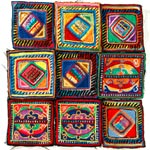
Israel offers such an incredible potpourri of cultures. They all seem to melt together through Rachel Oren’s Ethnicware.There you can find one-of-a-kind cushions handcrafted by Bukarians, Ethiopian embroidery, a Bedouin bag… so many treasures and delights.We love the driftwood bowl, but imagine that it’s been imported from India.No matter, Green Prophet thinks it’s a good thing to support local craftswomen, wherever they live.On the site Tchotskes, where we first saw this link, they say buying locally is a mitzva. Can’t argue with that.Here are some words and rationale for Ethnicware, from Ms. Oren herself: Ethnicware Limited was created with a view to offering and selling to overseas markets a wide range of home furnishings, hand-crafted in Israel by the diverse ethnic groups and religious factions living together in this country.
The beginning of this year opened up a new hunting season, hunting smokers! According to Haaretz smokers beware! They’re out to get you! “It seems that no law has ever been enforced in Israel with such speed and efficiency. An army of municipal inspectors invaded cafes and bars, as did dozens of activists and volunteers acting independently, filing suits in court against smokers.”
Barely two weeks after advertisers were forced to cover up billboards along Tel Aviv’s Ayalon highway, as a prelude to taking them down altogether, the powers that be have decided to allow the billboards after all. After the signs were ruled illegal by no less than the High Court of Justice, Israel’s wise lawmakers, led by Labor MK Yoram Marciano, have formulated a bill to legalize advertising billboards along Tel Aviv’s major traffic artery.
Why the sudden alacrity of the part of the Knesset? After all, the Ayalon billboards are opposed by the Ministries of Justice, Interior and Environment and the Traffic Police, and have proven offensive to numerous segments of Israeli society, as well as distracting to already stressed-out drivers.
By now, many people have heard of the electric car grid project that Israeli entrepreneur Shai Agassi is launching with $200 million capital. Agassi plans to build a grid of charging stations in all parts of the country that would provide a free power charge to electric car batteries. The idea is to provide an incentive for people to buy eco-friendly cars.
The only thing standing in Agassi’s way has been lack of funds for the project…but now the project might be full speed ahead, as car manufacturers Renault Nissan are expected to invest in the enterprise.
[youtube]http://www.youtube.com/watch?v=1qkZCLg9TbM&rel=1[/youtube]Well it’s not that scary, and a bit naive, but it does beg the question: what’s really happening in Haifa? Israeli guys that we know say that the best looking girls in Israel are from Haifa.Could it be an interesting mutation from all the pollution?Nature’s little joke?
I love composting. It is pure satisfaction for anyone remotely interested in growing things, and watching how things can grow, sprout, shoot up, and also decay, die and rot.
When you turn the soil, and see the half-eaten tomato, or ear of corn, or artichoke leaves from a recent dinner, and know that they are slowly decomposing and will be used to aid new plant growth, well … to this gardener, that’s an earthly heaven.
In later posts, I will go into the science of composting a bit more, and discuss the necessity of nitrogen and stuff (I had better go away and do my research first), but here, gentle green reader, allow me to wax lyrical some more about the benefit of worms, tiny mitochondria, bacteria of all types, the humble woodlouse, and the glory of recycling urea.
I haven’t yet had the fortune to become a parent, but if all that nurturing and feeding is half as much fun as tending a warm, burbling and hungry heap, then maybe I’m half qualified.
Today, I started digging out the pile of maturated compost and distributing it to borders and flowerbeds and potted trees and plants, that need and appreciate this healthy winter adrenaline shot.
While doing this, I hoped to discover and report here that the bio-degradable drinks bottle, made by Belu, bought in London last August and cut up into little pieces and scattered into this very heap the same month; by now was no more, and that its bio-ness had worked.
But alas, the pieces remain, and will be reburied in the next heap which I’m starting tomorrow. Also, I’m going to be advocating community composting through these posts, here in Jerusalem, and in Tel Aviv, Be’er Sheva, Haifa, Holon and Pisgat Ze’ev.
Lets get all our lettuces, cabbages (who else gets sometimes 2 a week in their vegetable box? See our story: Eating Organic at Reasonable Prices), peelings and all manner of stuff all mulchin’ down together.
And if that isn’t happening, let’s ride those personal wormeries!
If you live in an apartment, consider making an indoor compost:
Finance Minister Ronni Bar-On has presented, today, the proposals of the committee on green taxation to the government.
The proposal suggests a sliding-scale taxation model based upon how good the car is for the environment. A car will be given “green points” from 1-100 based upon how bad, or good, the car is for the environment. Based upon its “green points” the car will be taxed as little as 10% and can be taxed as much as 60%.
It’s a yearly ritual in Israel: we worry about rain. We worry when we don’t have rain in the winter, when it is supposed to fall; and we worry when we get rain if it’s the wrong time for the crops. This is not a new phenomenon: the Jewish religion is richly interwoven with customs regarding prayer for rain, and lack of rain is directly linked with divine retribution.
Recently, there have been dire predictions regarding rainfall in Israel; that because of global warming, we are seeing less and less rain. Noam Halfon of Haifa University has conducted a study of rainfall in Israel over the past 60 years, with surprising results.
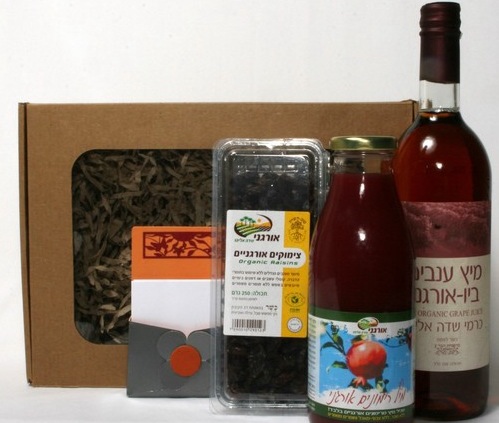
Just in time for Tu B’shvat is a Sde Eliyahu organic gift package that you can pick up after an on-site bio tour. The kibbutz where’s yours truly spent almost a year, is home to Mario Levi, Israel’s grandfather of organic gardening.
[youtube]http://www.youtube.com/watch?v=uASd-doKOlk&rel=1[/youtube]We have never seen these “green police” in action, but we’d like to believe that they exist, if only in our dreams. This video is a cheesy commercial for Israel’s Environmental Protection Ministry police, and what they will do to you if you pollute. Watch out! It’s in Hebrew, which makes their Cops-esque slogan sound even scarier: “Those who pollute, will pay.”Rumor has it, that Israel has great laws for protecting the environment, but great difficulties in enforcing them. Budgetary contraints are the reason. A while back, we read that the Ministry was to be hiring private firms that would be collecting fines levied on polluters. It would be interesting to know if any progress has been made.
A great place for marketing your handmade goods is the online arts and crafts website, Etsy. While standing in the rain selling your wares at arts markets, like Nachalat Binyamin can be fun, it can also be extremely time-consuming and boring.
Take our word for it. We’ve been there. Enter Etsy:
The online trading fare, which resembles an Ebay for arts and crafts without the bidding element, has reached a critical mass, with over 100,000 virtual store-owners around the world.
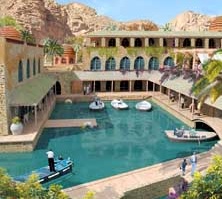
Timna Valley north of Eilat in the Arava Desert, believed to be the ancient site of King Solomon’s mines, is under threat. The pristine valley is in danger of being turned into a Disney-land style hotel complex and spa, and convention hall.
Four hotels are planned for the site, Daniel reports in the Jerusalem Post. There is a “prestigious” spa hotel, a “luxurious” convention center-hotel, a family-style hotel and one especially suited for jeep tours, all linked by a winding waterway for boats and gondolas.
The blueprint also reportedly includes shops, restaurants, pubs, discotheques and a children’s water park attractions.

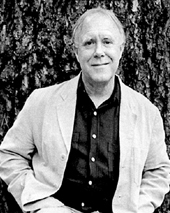
 I recently had the opportunity to interview poet laureate and known environmental activist Robert Hass (full interview is here).Hass was in Israel for the “Poetic Natures” conference in Tel Aviv last week, and while he was here he explored some of Israel’s unique environmental features.Among many topics, Hass spoke about the environmental parallels between Israel and California, as well as Israel’s unique responsibility as a flyaway for nearly a billion birds a year. (Hass expressed an interest in seeing the Hula Valley, home to diverse species of birds.)