

Earth. Energy. Everything next.

Interview With Entity Green, Jordan’s Sustainable Development Organization

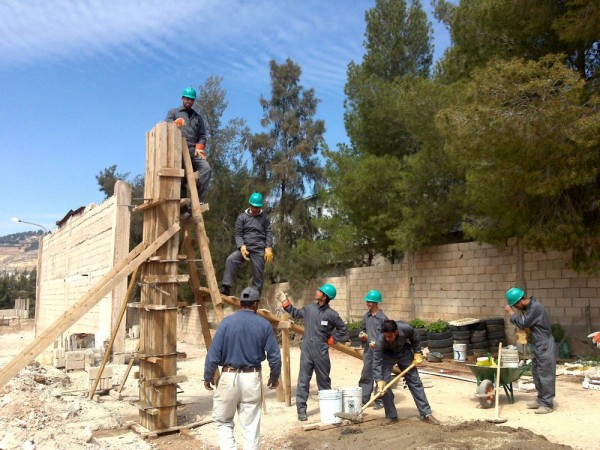
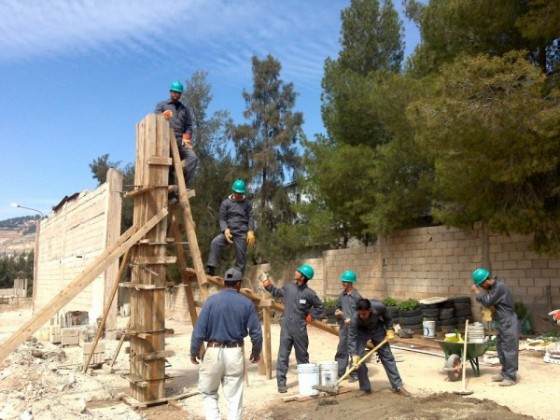
Entity Green brings greener development, recycling, and eco-friendly lifestyles to Amman, Jordan. Above, an EG team constructing a new building.

After learning about the farmer’s market, Souq al Balad, that Entity Green helped organized in Amman a few months ago, we decided we wanted to know what else this organization was up to. And so we spoke to Anselm Ibing, manager of the organization’s recycling program, to learn more. Here’s what he had to say.

Please tell us a little about Entity Green (EG), and why it was founded.
The basic answer is that is was founded because we were seeking a new approach to development in Jordan.  The founders had been working in Jordan for several years and witnessed many failed projects and wasted money.  We brought together experts from the non-profit sector and business and attempted to combine the best of both trades.  We wanted to use the efficiencies and self-sustainability of business and apply it to development projects in Jordan.  Our recycling program is a great example of this.

Who were the founding members of EG, and what were their backgrounds?
Philip Griffith – Spent many years working within the the NGO sector of the Middle East.  Is no longer with the company.

Wajih Ireifej – Originally from Jordan but grew up in the United States.  Educated as an engineer, however, spent most of his professional career in the IT industry.  Arrived in the Middle East approximately 5 years ago to manage an IT project.  Within a couple years EG was created and he’s been the GM ever since.
Aaron Bouchane – Worked for in Jordan’s NGO sector before joining EG, has a background in environmental management and international development.

How did you become involved with EG?
Myself, I’m originally from Germany, studied Arabic and International Relations in Scotland and then started working in the Middle East (in SEKEM in Egypt). I’ve lived in Jordan since mid-2007, studying and working in the environmental field and started working with EG in October 2009. I originally managed the whole recycling program and together with my colleagues, helped to grow it from a very small and unsustainable project of working with 1 hotel and 2 embassies, to the large, financially feasible program that it now is, employing 30 people, working with ten 5-star hotels, six embassies, two major supermarkets, Jordan’s largest mall, various factories and dozens of other accounts, currently recycling 7-10 tons of materials per day.

Are your activities centered mainly in Amman, and if so, do you have goals to expand to other areas in Jordan in the future?
Our training program is based in Ein al-Basha, just north-west of Amman and all training currently takes place there.

With regards to recycling, though the bulk of our activity is in and around Amman, we have a branch in Aqaba now, which opened about a month ago, working with hotels and schools down there; we are working with 3 big hotels at this side of the Dead Sea; we have a small project starting in Jerash – greening the famous archeological site there; we also work in the industrial areas east of Amman, such as Sahab and Zarqa.

We are planning to expand our work to Petra very soon and into the industrial areas, not only east of Amman, but also in the various Qualified Industrial Zones around the country (e.g. Mafraq, Irbid) and the new Development Zones (e.g. Maan, King Hussein Bin Talal, Jabal Ajloun etc).

In the composting program, we are hoping to work in the Ma’daba area, as well as throughout the Jordan Valley.

We know that you are devoted to sustainable programs within Jordan, but do you have any more regional projects in mind?
Currently, we are not involved in any activities or projects outside Jordan. However, we are slowly building a network of interested individuals, organizations and companies across the region and hope for opportunities to work beyond Jordan in the near future.

Please tell us about some of the programs you are currently operating.
Recycling in basically two streams:
1) offering recycling as a service to those who’re after green certification (hotels, restaurants, schools etc) and
2) providing complete recycling solutions to large producers of waste
Recycled Design – using waste materials as the basis for designing products that will then be produced by using local labour force from marginalized communities.

::Entity Green

Read more about Entity Green:Get Your Organic Produce at Amman’s Souq al Balad Farmer’s Market
Welcome Home: Meet Theo Who’s Running Jordan’s Alternative Eco Aqaba House

Karen Chernick
Karen Chernickhttps://www.greenprophet.com/
Much to the disappointment of her Moroccan grandmother, Karen became a vegetarian at the age of seven because of a heartfelt respect for other forms of life. She also began her journey to understand her surroundings and her impact on the environment. She even starting an elementary school Ecology Club and an environmental newsletter in the 3rd grade. (The proceeds of the newsletter went to non-profit environmental organizations, of course.) She now studies in New York. Karen can be reached at karen (at) greenprophet (dot) com.

Read More

TRENDING

Petra by Night returns as Jordan tries brings tourists back to Wadi Rum

The Nabataeans understood that prosperity in the desert depended on respecting environmental limits. Two thousand years later, Petra's greatest attraction may still be the wisdom of the people who learned to live within them.

The pulsing planet and the earthquakes that shape our world

One of the most persistent questions in seismology concerns whether scientists will eventually be able to predict major earthquakes before they happen.

Amman’s traffic crisis is about more than cars. It’s about how we think

I believe Jordan needs a cultural transformation alongside its infrastructure investments. We must begin by redefining social prestige. Why should ownership of an expensive car be considered a greater achievement than making an environmentally responsible transportation choice? Why should travelling by bus carry a social stigma?

Why water-starved Amman keeps flooding and how underground rain tanks could help

Jordan's capital faces a troubling paradox: chronic water shortages and destructive winter floods. Hydrogeological expert Dr. Osama MN Gazal explains how underground rainwater tanks and green infrastructure could help Amman capture precious rainfall, reduce flooding and build a more water-secure future.

Can Amman become a walkable city? C40 is turning hot asphalt into green public spaces

Amman has never been an easy city to explore on foot. Now, C40 Cities and Community Jameel are reimagining Jordan's capital with cooler streets, shaded playgrounds and greener neighbourhoods. Could this sprawling city finally become more walkable?

Why Bronwyn Finnegan Chose the Nonprofit Sector Over Politics or Corporate Life

Bronwyn Finnegan could have pursued a career in politics or corporate leadership. Instead, she chose the nonprofit sector, where she focuses on financial sustainability, governance and helping mission-driven organizations build the capacity to survive and grow.

Scientists make lead-free perovskite solar cells that can weather the elements

Scientists have developed a “raincoat” for lead-free tin perovskite solar cells, helping them withstand air, moisture and heat while maintaining high efficiency.

The Essential Guide To Sustainability in Project Management

Sustainability is an approach where businesses and individuals balance the environmental, social, and economic aspects of a project such that current and future stakeholders are not overburdened with the impacts of the project in future.

Yerukim Forms a New Green Economy Where the Money is Really Green

The Yerukim members who pick up the recyclables get to keep the monetary reward, the public earns "green" bills that can be used in shops, and business owners get to be associated with environmentalism.

Choosing Riyadh over Dubai? What Investors Should Know

Saudi Arabia is deploying capital at unmatched scale to catalyze tourism and advanced industry while rewiring its power-and-water backbone. The investable frontier is widening—especially in renewables, grid storage, water efficiency/desal retrofits, and hospitality operating platforms. Prudent investors will insist on phased delivery, enforceable KPIs (energy, water, biodiversity), and RHQ/zone compliance—while pricing political-economy and reputational risks alongside growth upside.

Sell your cooking oil for biodiesel money

Want to make money on old french fry oil? Sell it.

Qatar Alternative Energy Summit Pairs Investors And Innovators

Alternative energy investors and innovators can meet n' greet in Doha, Qatar March 16 and 17.

Here’s How To Implement The Four Pillars Of Employee Engagement

If you throw a party for your work team and they are vegans, don't make it a barbecue. Know the sustainability values of your team to boost moral and retain good people.

Popular Categories