Home Blog Page 161

The Best Cannabis Strains For Beginner Growers

0
grow hemp indoor greenhouse
Cousin to the cannabis plant, hemp is also considered a healing herb – and one that is legal anywhere to grow. High amounts of CBD make it an interesting anti-anxiety medicine for many folks. And growing your own marijuana means an organic, chemical free medicine that won’t break the bank.

Many people tend to believe that cannabis strains are basically the same. But in reality, cannabis strains are not the same. Some strains are resistant to diseases, mould, drought, and pests, while others require less nutrients than others. Other cannabis strains are also perfect for novice growers because they require fewer skills and effort. You need also consider the use of the cannabis your growing such as smoking, edibles, or cordials

If you are a novice cannabis grower, you need to choose cannabis strains that are easy to grow. That’s because such cannabis strains don’t require much maintenance and they are also not fussy about their external conditions. Other than that, cannabis strains that are easy to grow may require lesser resources in regards to heating and specialized lighting.

If you are considering growing cannabis for the first time, you may not know which cannabis strain to choose. That’s because there are more than 1000 cannabis strains available. You can get these strains from an online marijuana seed bank.

Sure, growing your own cannabis certainly has its own benefits. However, there are always people who prefer to buy weed online instead. By doing this method, it can save a lot of time in selecting the perfect marijuana seeds and going straight to using high quality cannabis strains.

This article gives you a list of some of the top cannabis strains that are friendly to grow beginners. Continue reading to explore them. 

Blue Dream [A Sativa cannabis strain]

Blue Dream is the most common strain among consumers. It is also perfect for novice growers. Blue Dream is one of the most desired cannabis strains because of its ability to provide users with both physical relaxation and blissful high effect. It is a cross of Blueberry indica and Super Silver Haze. Blue Dream has a THC content of about 24%, making it extremely potent. Moreover, its 2% CBD content makes it offer plenty of medical benefits to the users.

What makes Blue Dream exceptional is its resistance to root rot and powdery mildew. These are the most common issues cannabis growers deal with, and they can destroy the plant if not addressed properly. This strain will grow into a tall plant. It is not advisable to grow Blue Dream outdoors because it is extremely sensitive to climate change. When grown outdoors, this strain becomes vulnerable to an infestation of red spider mites, because of its pleasant sweet smell.

White widow

This cannabis strain is also one of the most popular strains on the international scene. It is also ideal for beginner growers. It gets its name from the bulky layers of white trichomes it produces. This strain is also very potent. It flowers after 10 weeks. But the wait is worth it. Many people use the White Widow to relieve pain, stress, and depression. It also offers a relaxation effect thanks to its high THC level. This hybrid was developed in the Netherlands. The White Widow is one of the easiest cannabis strains to grow. It can take between 12 to 13 weeks from the time you plant the seeds up to the time you harvest it. This is relatively a short time for a successful cultivation project.

One of the main reasons why White Widow is popular is because it can grow and thrive even during cold seasons indoors, without requiring a substantial amount of attention. You can pay little attention to this cannabis strain and still end up with a high-quality harvest. So if you are a novice grower with little skills on the cannabis plant, the White widow is the perfect cannabis strain for you. You can get your White Widow seeds from Homegrown Cannabis Company.

Gorilla Glue #4 [GG4]

This cannabis strain is Sativa-dominant. It brings together other popular cannabis strains such as Chem Sister, Chocolate Diesel, and Sour Dub. It is also one of the easiest cannabis strains to grow. With just a single successful Gorilla Glue #4, you can harvest plenty of buds from it. Additionally, it also takes a relatively short period to grow. You can harvest it after eight or nine weeks after planting.

Gorilla Glue #4 can grow in a moderate climate. Again, room temperature works well for this cannabis strain. Its 28% THC makes it a potent strain. It can be used to reduce stress, fatigue, and deal with mental health issues such as depression or anxiety. If you are a grower who wants to branch out into concentrates, this cannabis strain is the perfect option because it generates a significant amount of resin.

Northern Lights

This cannabis is pure indica. It is also very popular and easy to grow. One of the reasons why this cannabis strain is popular is because of its potency effects and sweet scent and flavor. If you are considering growing cannabis plant for medical purposes, the Northern Lights is the perfect option.

This cannabis strain can thrive indoors in various climates. If you want to keep your garden discreet and avoid unnecessary attention, Northern Lights is the best option because it is known to produce less odor compared to other types of cannabis strains. In addition to that, this cannabis strain usually flowers after six to seven weeks of growth, and the harvest is just incredible.

Blue Cheese

The Blue Cheese is an indica-dominant cannabis strain. It is also perfect for novice growers. What makes this strain easy to grow is its resilience to overfeeding and overwatering. This strain also responds well to LED lights used in an indoor growing space.

Another thing, Blue Cheese tends to thrive at room temperature. If you are planning to grow it indoors, then you should have more headspace because this strain usually grows taller. You can harvest Blue Cheese strain flowers after six weeks of planting.

Final thoughts

The list of cannabis strains for novice cannabis growers is endless. There are hundreds of cannabis strains in the market, and more are still being developed. But any strain in this article can be an excellent option for people who are considering growing cannabis on their own. These cannabis strains mentioned in this article have exceptional effects, high potency, as well as a seamless growing experience.

When choosing cannabis strain, remember to choose one that will thrive in your climate, as well one that is resistant to infestation, mold, and disease.
Covid-19 survives sewage treatment, finds new study

0
oded nir, covid-19 sewer
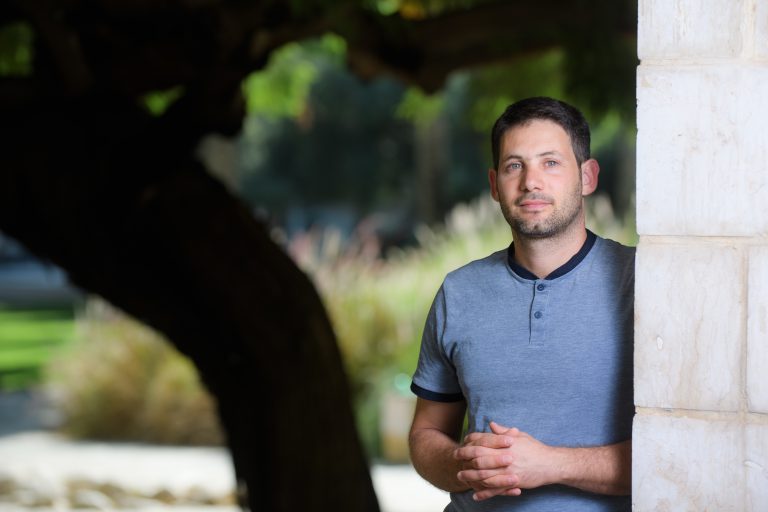
Oded Nir has isolated living Covid-19 virus at sewage treatment plants after treatment/Dani Machlis credit

Wastewater must be treated beyond conventional methods used today in Israel in order to eliminate Covid-19, report scientists from Ben-Gurion University (BGU) in Beersheba, Israel. The researchers have found that parts of the coronavirus or SARS-CoV-2  survives after sewage purification in treatments plants.

They isolated RNA samples of the virus post-treatment and the finding worries them for a number of reasons.

Wastewater poses a potential threat of a renewed outbreak around the world, the researchers urge. It may not reach your homes in the tap, but sewage workers are exposed to the virus through human faeces and urine by the nature of their work. 

Cod
Kando, a cleantech company from Israel sends sensors into a.sewer to see how Covid-19 infection rates are increasing.

“If we do not want recurring waves of outbreaks, reducing the infection rate may not be enough, wastewater must be neutralized as well,” says Oded Nir of the Zuckerberg Institute for Water Research at BGU. 

The BGU team analyzed samples of sewage collected during the first lockdown in April, 2020 and during the second wave in July. They found ample abundance of the virus’s RNA. Most of the sewage in Israel and other developed countries undergoes biological treatment before it gets released to the environment or before the water is reused, however that was insufficient to reduce the virus concentration to undetectable levels, the researchers report.

Their findings were just uploaded to medRxiv (links to the synopsis) and will be undergoing peer review shortly. An earlier study started this spring is using the sewer and live sewage to isolate Covid-10 outbreaks on city streets.

They urge wastewater to be further treated to minimize the risk of dissemination and infection of Covid-19. In a couple of instances where wastewater was treated by chlorine, the Covid-19 virus was no longer detectable.

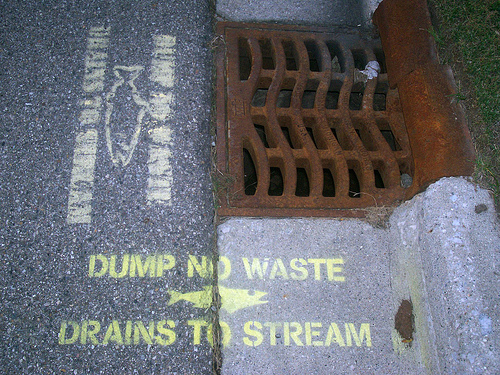
Protect our sewers from dangerous waste

don't dump poison in the sewer

If wastewater is left untreated, or if pipes burst or overflow from rains or winter storms in the Middle East, Covid-19 could infect people or animals who come into contact with it and perhaps create a mutated version of the virus, the scientists speculate. Covid-19 could also affect water sources if sewage is dumped in open areas.

In Israel, wastewater is collected, treated and then reused for agriculture. By the time it reaches the fields it is treated partially and called greywater which is not safe for consumption. In earlier studies in Israel (2016), researchers at the Hebrew University have reported a buildup of pharmaceuticals in the water and researchers are only now trying to understand how birth control pills, and drugs like cocaine and legal ones like chemotherapy and epilepsy medicine affect us when used in greywater to water vegetables and fruit. These pharmaceuticals also end up in treated water we drink – see Alon Tal

We asked Oded Nir a few more questions:

How worrying is it? “The main worry is that, worldwide, the new coronavirus is being discharged to the environment in an uncontrolled manner, which can have effects that we cannot predict,” Nir tells Green Prophet. 

“The pandemic is global, so the entire world should be worried and consider to minimize SARS-CoV-2 in wastewater effluents.

“Farmers should not be worried in particular, since wastewater effluents in Israel are chlorinated before reuse in agriculture. Overflow can be problematic but it is a short event. The continuous discharge should be taken care of,” he explains. 

“We did not study greywater. Treated wastewater leaving the wastewater treatment plant can contain traces of the virus if not chlorinated or further treatment by (for example) membranes. Around the world, these effluents ends up in rivers or lakes. If the virus traces are infectious (we are not sure yet) it could infect humans or animals, thus impeding efforts to eliminate the pandemic.”

What’s the best long-term solution in your mind to help humanity? Beyond choline. Something more sustainable?

Nir’s response: “I think the future is in applying advanced low-energy membrane filtration to the effluent. This can remove viruses completely and also reduce other bad stuff like organic micro-pollutants and heavy metals. We are currently working on such solutions in my lab.

“In this context, we are working on developing advanced membrane processes for (1) upgrading the quality of treated wastewater so it can be used in agriculture more sustainably or discharged into rivers without ecological damage. (2) recover valuable resources from wastewater, especially phosphorus which can reused as fertilizer.”

Additional researchers in the Covid-19 wastewater study at BGU include: Hala Abu Ali, Karin Yaniv, Edo Bar-ZeevSanhita Chaudhury, Marilou Shaga, Satish Lakkakula, and Prof. Zeev Ronen.

The hijab is the bombshell sportswear in this Afghan gym

0
hijab workout afghanistan women
Women work out in a concealed gym in Afghanistan. Image credit: Reuters

Muslim women face varying amounts of oppression from men depending on where they live. In some regions like Lebanon, Turkey, Morocco, Israel and the UAE, women are relatively as free as the men to drive, work — and yeah work out. While some women may dream of going to a post-workout Starbucks in Lululemon hot pink workout pants  – in Afghanistan women are fighting for the right to work out at all.

In a post-Taliban city of Kahandar, Afghanistan Muslim women are sneaking into a new gym to secretly work out. Though I am not sure how secret that may be now that the story was covered in the New York Times.

Some women say they faced depression and health problems and felt joining the  gym – founded by a women’s rights activist Maryam Durani (who survived two suicide bombings and death threats) was the only thing they could do for their well being.

Even Muslim women walking around outside in certain villages in the Bedouin society in Israel is not considered acceptable. So given the restrictions there aren’t a lot of creative ways for every Muslim woman to exercise. I have noticed a growing number of Muslim women walking in conservative workout gear in Jaffa, something I hadn’t seen let’s say 5 years ago. So times are changing, even in Afghanistan. And while women in America fought to wear pants in the 1930s, Afghani women are fighting for the treadmill. 

The gym was started last year in a basement, guarded by security, and away from prying eyes. 

“Kandahar is a very difficult environment for women. We have to be careful and discreet. The club is as much for women’s mental health as their physical health. Almost every woman who comes here is depressed,” she told the New York Times. Before Covid hit she had about 60 women as members of the gym. Today there are about 30. 


One gym member who refused to give her name said, “My father and brothers said they would kill me if I went to a health club.” Instead she puts on a white robe and says she is going to the madrasa, a place for studying the Quran. 

Afghan gym, hi
Maryam Durani, left, guiding a gym member through an exercise at her fitness club for women in Kandahar. Women agreed to be photographed only while wearing fully concealing clothing instead of their usual workout clothes. (Farzana Wahidy for The New York Times)


While there is a health club for women in the city of Kabul, some areas like Kandahar are extremely conservative. 

In my city the Muslim women enjoy a day at the gym every other day of the week at the Jewish Arab Community Center, which is sensitive to Muslim modesty needs. That’s women on one day, and men on the other.  There is a beach in North Tel Aviv which operates for the same reasons one day men, one day women, but for Orthodox Jewish families who practice similar modesty laws by choice. 

I support any society that wants to be modest, but not the ones enforcing the rules that clearly dehumanise others. 

In Bedouin towns in Israel such as Rahat women are not allowed to have free movement including going to work, and walking around the village, so it really depends more on village and town customs, and how men from the families enforce their religious observance, more than a country-wide oppression. 

Over in Afghanistan social media posts are calling the gym ‘a house for whores, so women can make themselves look better for men’. Women who visit the new gym have been threatened outside and hit with stones and death threats should they return –– a barbaric response to a basic human need to feel fit.

We need a little more Rumi

Even though the Taliban have left the city the women face the same control by men exerted over them as though the terror group never left, they say.

Afghanistan wasn’t always so repressive towards women. Neither was Iran. Repressive and oppressive regimes have turned both countries into backwater states, with barely a hint of their former selves.

My husband’s great-grandfather was born in Balkh, previously Persia and now Afghanistan, the same town where Rumi, a Muslim Sufi came from. I consider Rumi to be one of the world’s biggest spiritual guides, teaching humility, love for nature, love for god. Years ago his town and region was a mystical and cultural magnet from which the West met the East in much more than trade of goods, but where spiritual ideas looking for the truth and god collided.

Sadly the god of the bullies has taken over and we need to help the women in these impoverished places rise up – one sit up at a time. And remember even progressive-looking women can be married to despots. Read our story about Bashar al Asad’s London-born wife Asma al Asad. And the fiasco with Vogue. 

Fuel progressive thinking, and read more stories from Afghanistan and Iran

skateistan women in Afghanistan

How about the Girls of Skateistan? 

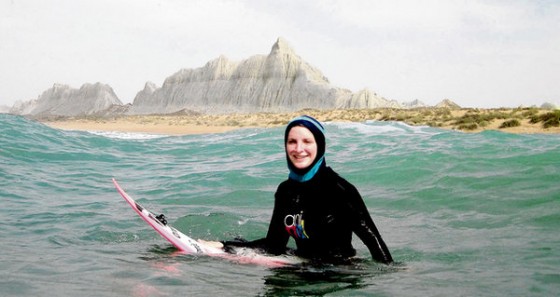
Easkey Britton, surf Iran


Or when we covered Surfing in Iran? 

Afghan Women National Cycling Team

Or the All-women Afghanistan Cycling Team?

This ancient Arab irrigation system invented before Rome’s aqueduct

Qanat in Iran persia aerial photo of water irrigation system
The Persian Qanat: An aerial view. A qanat or kariz or foggaras, is a system for transporting water from an aquifer or water well to the surface, through an underground aqueduct.

Falaj, also known as qanat or aflaj, is an ancient water management system, that has watered the Arabian Peninsula’s arid lands for centuries. Qanat comes from the Semetic word meaning to dig and some say that the qanat systems are as long as the distance from the earth to the moon. Long-ago tribesmen found underground springs in the foothills of the region, and engineered a technology that channels the water over the land, irrigating farms and oases and supplying households with water as needed.  Although some say that falaj is a concept 3000 years old, others claim 5000 years. We reported on the Al-Baydha project for regenerative agriculture in Saudi Arabia with similar aims here.

What we do know is how admirable and sustainable the falaj system is, built entirely from local materials and hewed out of rock and earth by hand.  First deep wells were dug, or  underground springs redirected, to flow into tunnels that emerge on land and into stone channels containing the streaming water. The waterflow moves across miles of land, as determined by the ancients, entirely by gravity. 

Falaj system

Shafts whose function is to regulate the flow of water are sunk in the channels about every 20 meters.  Today, field irrigation is managed by government-appointed overseers, who monitor which fields receive water, and for how many hours. This is done in some areas by removing covers of brick, stones and sheep fleeces from the openings of the shafts to let the water run in another given direction, then replacing the covers to force the water back.

Aflaj, qanat UAEThe Aflaj Irrigation Systems of Oman are ancient water channels from 500 AD located in the regions of Dakhiliyah, Sharqiyah and Batinah. However, they represent a type of irrigation system as old as 5000 years in the region named as Qanat or Kariz as originally named in Persia. This one is in the UAE.

In other falaj,  slab-like barriers are inserted into points built into the channel walls to divert the water, then put back as needed.

Falaj comes from the word aflaj, meaning split, or divided. As the photo above shows, the channels may be split to provide field irrigation on one side, and household water on the other.

Walk through a village in Oman, and you’ll  see pure, channeled water flowing in the streets and between houses. Some channels may be partially covered with slabs of stone placed at regular intervals over the top, to prevent night animals that come to drink from falling in and polluting the water.  

There might even be a bath house for the community, with the water provided by the falaj. In the 14th and 15th centuries, governments whose falaj systems had deteriorated rebuilt the tunnels and overland channels. Recognizing the huge value of the ancient waterways,  today’s Emirati and Omani governments have repaired many and put them back in use. Some areas in Oman have over 50 working falaj.

Al Ain oasis
Al Ain oasis

In the UAE there are seven oases, the largest in Al Ain. The stream rippling and burbling between thriving date palms and water greenery is a beautiful thing to see, and it also irrigates 1.200 acres of land, supplying over 550 farms. 

Community areas were once cleared around the mouths of the channels, where the tribes met to take their share of the crop and hold festivities.  Forts and castles were built around the Al Ain oasis to protect it from marauders, and important archaeological discoveries have been made there. UNESCO declared five of the UAE falaj systems to be heritage sites in 2011. 

The falaj system is said to have originated in ancient Iran early in the first millennium BCE, spreading to China and India.  Tribal laborers known as muqannis hand-built and maintained the water channels and shafts, as their descendants do to this day. 


Wind turbine power company nixed for biosphere risks in Israel

0
wind turbines Israel golan heights
The first wind farm in Israel on the Golan Heights

Israel is known as a solar energy pioneer, but wind in some locations, is not lacking in the small Middle East nation. But after seeing the research and the environmental impacts of wind energy companies, offshore wind turbines, and on land turbines, the Israeli government has rejected a plan for a local company Energix which works with wind turbine energy suppliers such as Vestas and Siemens. 

A government planning committee in the area of the planned site Ramat Menashe said that ultimately the turbines would have a negative impact on the local environment, classed as a UNESCO Biosphere. The wind turbine propellers would also be a risk to migratory birds who pass through Israel from Europe to Africa on an important migratory route. Look to local hero Yossi Leshem for saving the birds. Wind turbines get nixed in Jordan for the same reason as they share the same habitat as Israel.

An Israeli firm has developed an inflatable, collapsible, cost-affordable wind turbine for renewable energy.
Winflex, was one of the ideas that Israelis pioneered for the wind. The turbines inflate like a SUP surfboard.

The lesser kestrel is one of the birds in danger of extinction in Israel, despite the wind turbine company assessing that only a few birds would be harmed each year.  Other factors such as noise would shut the turbines down for hours during the day, and flickering where overhead turbine shadows can be a nuisance to people.  Other wind turbine projects have been abandoned in Israel for environmental reasons: one wind turbine power plant was planned for Ramat Sirin, the Yatir Hills and in the Golan Heights. 

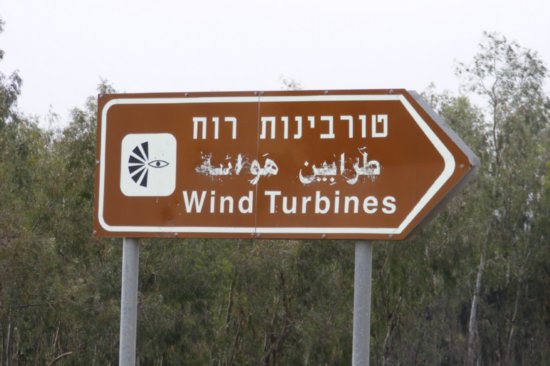
Vestas wind turbines Israel, sign to wind farm
Wind farms, a national sight seeing trip

Earlier this year the Jerusalem Post reported that Israel’s government had green-lit about $75 million worth of wind turbines in Israel’s north. When faced with endless committees and ministries who rarely agree or communicate with one another –– or worse –– agree on contradictory ideas it is really no wonder Israel can’t increase its adoption of renewable energies.

Wind energy history in Israel

The Golan Heights wind farm was Israel’s first wind farm and the first commercial wind-power project in the Middle East. Installation started after an extensive wind resource assessment carried out in 20 sites in the Golan Heights for about three years. The farm operates 10 Floda 600 wind turbines generating 6 MW in total.

There is no shortage of people trying to make existing technologies better, and certainly no shortage of people idealising working with the wind and the sun. Read below for some of the wind energy stories from Israel we have covered in the past:

Wind energy companies in Israel


CIBC Aventura card awards you for eating local

0
eco bus entertainment van for CIBC Aventura credit card
How do credit cards respond to lack of travel benefits? They encourage Canadians to spend for bonus points at local restaurants

As I graduated to my 40s, I was very excited to get a VIP credit card offer from my bank. While I’d prefer for my mainstream bank in Canada to offer me carbon credits on purchases made, they offered me cashback, and some astounding travel bonuses including free travel insurance, and free lounge service at a long list of international airports.

I was psyched to start drinking free champagne or many a local IPA at the airport and was already strategising increasing my connections to shorten long haul trips with my family. Covid changed everything for anyone banking on travel-backed benefits and credit cards. What are banks to do? They need to quickly start dancing in step with the times. Banks have learned that they aren’t just a service provider but by thinking ahead can help stimulate the consumer economy. 

A Canadian bank has offered benefits for buying local. With restrictions on restaurants beginning to ease across Canada, the CIBC bank is launching a new program to support business owners and help them bring back customers. (We covered the green bonds idea last month)

Double the rewards for buying local

Through their Revival Rewards program, people who use their CIBC rewards credit cards called Aventura to dine in, order take-out (including curbside pickup), or order delivery from local restaurants will receive double the rewards on their purchase. Oh yeah.

CIBC aventura rewards for eating at §
Remembering the good old days dinging out in the city

Over the last three months, credit card spending at restaurants has declined over 60% and was down more than 70% during the peak of the pandemic, according to CIBC data, highlighting that restaurants were some of the hardest hit businesses during the pandemic. I know that my credit card bill was down to about nothing, except for grocery food bills. I didn’t order anything online either because I wasn’t sure when the post offices would open again. 

And Canada’s summer suffered hard, while patio nights will be bleak into the cold winter. But the marketing team at CIBC want to reward you when you reward restaurants with your business.

“Our Revival Rewards program is designed to help restaurant owners get back on their feet and underscores our commitment to providing support for small business owners,” said Laura Dottori-Attanasio, Group Head, Personal and Business Banking at CIBC. 

I like this response because it meets the needs of people and enables them to support their local communities. That’s something very important to us and our societal circles as we slowly pull our heads out of the plague. 

The Cedars of God are dying

0
Foreign tourists walk in Al-Shouf Cedar Nature Reserve in the Shouf mount
A forest of cedar trees in Lebanon, also known as the Cedars of God

Lebanese cedar trees, also known as the Cedars of God, are being decimated by climate change, a new video report released by Greenpeace explores. Climate change is impacting the Middle East in extreme ways – from drought and famine in Syria, to forest fires in Israel and Lebanon, to wars over water in Iraq. 

The iconic cedar trees of Lebanon were used in the Holy Temple of Jerusalem and mentioned in the Old Testament, “The righteous flourish like the palm tree and grow like the cedar in Lebanon” (Psalm 92:12). They are also a symbol of strength and prosperity. 

There are a total of less than twenty Lebanon cedar forests remaining. They are the only old-growth forests in the Middle East, with some trees being more than two thousand years years old. 

Greenpeace is promoting a new film about the trees, the ‘Cedars of Lebanon’. This is the second film that was produced to document and highlight the devastating impact of global climate change on precious and unique ecosystems in the Middle East. 

ancient cedars in the snow, Cedars of God
Ancient cedars of Lebanon in the snow

The documentary highlights the increasing dangers and risk factors that the shrinking cedar forests face due to climate change, which include parasitic infestation from insects and fungi, frost and heat stress, the halting of natural forest growth, as well as forest fires of unprecedented ferocity, scale and frequency.

These threats are compounded by issues such as overgrazing, tree cutting, and rampant urbanisation in Lebanon. 

Julien Jreissati from Greenpeace

“The Lebanese Cedar tree, already unique and iconic species, is really suffering from unprecedented levels of stress and risk factors, the heat waves and forest fires of the past two years only increases their urgency,” warned Julien Jreissati, from Greenpeace.

climate report Cedars of Lebanon
This new video is a climate report dispatch. The majestic cedars of Lebanon are facing ruin

“By producing films such as these and working together with environmentalists and conservationists around the world, we document the effects of manmade climate change on our natural environment and work together to mitigate the risks and help develop sustainable solutions for its conservation.”

dead Lebanon cedar, climate report
A blackened dead cedar tree in Lebanon

“The immediate and urgent effects of the climate emergency are annually becoming ever more apparent, not just with the destruction of our ecosystems, but with the annual loss of lives and livelihoods as a result,” added Jressati. “It is imperative that climate change is acknowledged and tackled as a serious threat that is already profoundly affecting our lives, and that the necessary policies are urgently implemented to mitigate that impact.”

Cedars of God? The Bible says so

The Cedar Forest of ancient Mesopotamian religion appears in several sections of the Epic of Gilgamesh, according to Wikipedia. And the Lebanon Cedar is mentioned 103 times in the Bible. In the Hebrew text it is named Hebrew: ארז‎ and in the Greek text (LXX) it is named Greek: κέδρου

  • “Open thy doors, O Lebanon, that the fire may devour thy cedars. Howl, fir tree; for the cedar is fallen; because the mighty are spoiled: howl, O ye oaks of Bashan; for the forest of the vintage is come down.” (Zechariah 11:1, 2)
  • “He moves his tail like a cedar; The sinews of his thighs are tightly knit.” (Job 40:17)
  • “The priest shall take cedarwood and hyssop and scarlet stuff, and cast them into the midst of the burning of the heifer” (Numbers 19:6)
  • “The voice of the Lord breaks the cedars; the Lord breaks in pieces the cedars of Lebanon” (Psalm 29:5)
  • “Behold, I will liken you to a cedar in Lebanon, with fair branches and forest shade” (Ezekiel 31:3)

A global solution to local problems like the cedars of Lebanon?

Environmental philosopher and designer Pablo Solomon, weighs in:

Pablo Soloman
Environmental artist and designer Pablo Solomon

“As you know, I have preached for decades that the simplest solution to absorbing man made CO2 is to plant more trees and other greenery. The catch is, you need fresh water ( of course this is not all true as the oceans absorb most of the CO2 and release most of the oxygen ). But in general, more greenery on the dry earth would solve the problem.

“So I again have preached that every drop of water already available as grey water should be used,” Solomon tells Green Prophet. “And all excess energy should be used to either reservoir water and/or to desalinate sea water. The Cedars of Lebanon — and other trees–would grow again with proper reforestation.

“Nature observation of the week–saw a grey fox jump up and pull pecans off of a low branch. It may surprise you that our part of Texas dry as it is,  produces most of the pecans. In fact the guy who developed the modern species of pecans over a hundred years ago lived down our road in San Saba, Texas. The world record pecan tree–1,200 pounds in one year–is also down our road at Bend, Texas. (Colorado Bend State Park ).

“The trick is not irrigation, it is planting in existing river bottoms. My desire is that worldwide agriculture be done as much as possible without irrigation. For example, cotton.

“In an interconnected world, it is more possible than ever to grow crops in natural settings.

“Also, the expansion of urban areas over precious farmland drives me nuts. e.g.–Houston, Texas now has a 100 mile diameter covering some of the best soil in the best growing conditions in the world. However, some of this could be ameliorated with more planting in suburban yards, green strips, vertical greening, etc.,” concludes Solomon.


At the Four Seasons Casablanca? Learn about desert oases at risk

0
climate report Morocco
The Bedouin are losing their culture as oases dry up in the Moroccan deserts

You are at a hotel in Morocco wondering what delights might await you around the corner in Casablanca. Maybe you are going to pass Richard Branson’s eco-hotel in the Atlas mountains and land at a Berber hotel, where a quaint donkey ride will lead you up to your room.

This all makes you feel good because you are in touch with local culture and are having an adventure of a lifetime. 

But if you weren’t at 5 Star Four Seasons Casablanca or Marrakech – what would you know about the local people in Morocco? A video produced by Greenpeace helps show some of what happens as a byproduct to climate change. The deserts are getting even drier. 

Palm trees at the heart of the oasis

This short video above (3.5 minutes) lets you explore the challenges that nomadic Bedouin Moroccans face from disappearing oases.

The desert may look dry but it is very much alive to these people. Every year these nomadic people starting in 1995 noticed less and less water at their wells. Where once they could dig down a couple of yards to create a well now they need to dig about 10 or 15 or more to reach water. This effect is causing not only hardship but their culture to disappear. Invest a few minutes in learning about their plight. 


7 Great Eco-Friendly Dates

0
eco friendly dates
Ideas for dating in simpler times

It’s 2020 and the world is slowly becoming more environmentally conscious. For most of us, it’s about creating better habits in our day-to-day lives with positive, sustainable changes.

The thing is, when was the last time you considered this when it came to choosing the place for your next date? I know I haven’t and chances are, it’s the same way for most of us.

In this article, I’m about to give you 7 fun date ideas that are also a positive for the environment. After all, the more areas of our lives where we can make this a priority, the smaller our footprints can be.

Heck, if Las Vegas can work on going green, I don’t see why it’d be a struggle for the rest of us!

Go on a picnic

eco friendly dateNot just any old picnic but a zero-waste picnic, at that. If you’ve never tried this before, the challenge in itself can be part of the fun.

While being truly zero-waste might not be practical, the closer you can get the better. Rather than disposable plastic cutlery and cling wrap, find better solutions. Reusable containers, regular cutlery and beeswax wraps all make a big difference.

You could even take it a step further and make your own beeswax wraps too! If you’re a little intimidated by sitting face-to-face for a couple of hours you can always look up a great list of flirty questions to ask that will keep the conversation going.

Cook at home together

You can either integrate this into your picnic plans or do it as a standalone activity, but either way it’s a great option. It’s fun to get creative with the food you’re taking and it also helps to keep the costs down.

On a recent date, I invited her over to make vegetarian sushi together. We experimented with different ingredients, packed it all up and went for a walk to a local lookout to enjoy it.

I find it far more interesting than just ordering food at a restaurant and it’s nice to work together as a team, too.

With around ⅓ of the world’s food going to waste each year, even the act of cooking can help reduce our total waste!

Go for a bike ride

Bikes are one of my favorite eco-friendly ways to get around downtown and explore new things. Get out in the sunshine, exercise and enjoy the sights and sounds around you.

This makes it a fun date idea too. You can explore so much of the city together and stop at anything that takes your fancy.

Visit the local farmers market

Farmers markets are a great way to support local and buy plenty of fresh fruit and vegetables. They’re about so much more than local produce though, often packed with local artwork and performances too.

This makes for a fun date with so much to see and do. No matter what you’re both into, you’re bound to find something of interest.

Since farmers markets tend to have a strong focus on sustainability, you can also do it with a clear conscience. You might even come across some helpful products or ideas you hadn’t thought about before.

Walk to your favorite vegan or vegetarian restaurant

Whatever your stance on the topic, reducing meat consumption does have a positive impact on the environment.

You don’t have to “be a vegetarian” to eat at one of these restaurants and they’re a very simple substitution to make. Believe it or not, both of these diets are about more than just eating salads.

Walking to and from the restaurant is a great opportunity to work off some of your meal and chat too. I find it to be a relaxing end to a date and the perfect time to escalate if things are going well. Far better than driving two cars there and finding parking spots.

Explore new parts of your city together on foot

Just like cycling around downtown, doing it on foot can be a great option as well. Unlike in a car where you’re so insulated from your surroundings, you have the opportunity to slow down and take it all in.

Enjoy the sights and sounds around you, appreciate each other’s company and make it up as you go. In fact, my favorite way to do this is to start with a single plan and let the day unfold on its own.

Since you’re both making it up on the fly, the possibilities are endless and nobody feels pressured for time. Depending on the weather and fitness levels, you can really cover some ground this way.

I did this last year and a casual Saturday stroll turned into lunch, healthy snacks, dinner and over 20 km of walking! Things were going so well, we were enjoying our time in the sun and neither of us were in a hurry to leave. Personally, I’d consider that a successful (and eco-friendly) date.

Pick an outdoor sport you can both enjoy

If physical activity is something you’re both down for, outdoor sports are ideal. You’re getting some fresh air and exercise and don’t have a need for gas or electricity.

For some added fun you can both find something you haven’t done before and figure it out together. There’s something very disarming and humbling about being bad at a new activity which I find to be helpful to dating.

So long as you keep a positive attitude and remember that it doesn’t actually matter if you’re any good, things go well. The idea here isn’t to show off your skills at a sport, it’s about spending time with your date and doing something unique.

You just never know, today might be the day you find your new favorite activity and you get to do it with someone else.

There’s seven simple, fun date ideas to get you started. Once you start to build these eco-friendly habits into your dating life as well, it’ll slowly become second nature.

We all have a responsibility to do our part and it’s really not that hard to do it in this context either.

Israel plans for medical cannabis stock index

0
icharlotte figu
Cannabis treatments that include low THC and high CBC can treat children. The first notable case in the US was with the late Charlotte Figi.

Since the 60s Israel became known for its scientific look at cannabis. It was never illegally federally for cannabis to be studied so decades of progress have been in Israel thanks to those early pioneers, most notably chemist Raphael Mechoulam who I got to interview more than a decade ago, before the cowboys rushed in. 

While the industry is still rife with a lot of smokescreens and penny stock companies there are veritable potential breakthroughs waiting for business. Some 11 companies now with products from healthcare to pharmacology will take on their own sub-index on the TASE, the Tel Aviv Stock Exchange. The new index will start trading on November 1, according to the TASE. 

Stock market investors are betting that Israel will be a medical cannabis powerhouse and have invested about $205 million USD in shares so far. Those that only sell medical cannabis will not be part of the new index TA-Biomed that will focus on research and healthcare. 

The exchange said that investors were looking for this kind of index, and it will now also help mutual fund investors invest in cannabis. 

About 71,000 Israelis use medical cannabis in Israel, an almost 40% increase from last year. I’d argue the numbers are in the millions as Israelis self-medicate regularly with street cannabis, most of them medicating the effects of PTSD. 

Medical cannabis index companies on the TASE

Dr. Alan Shackelford is a well-known Israeli-American physician who is developing products to treat various indications. I met him in 2015 when I was running my own startup in the space. He was treating a young American girl named Charlotte Figi with a high CBD strain of cannabis to quell seizures. She had Dravet syndrome and the cannabidiol oil prevented daily seizures, giving her respite until she succumbed from Covid in April this year. The name of the medical cannabis strain made for her then is now called Charlotte’s Web.

There are also loads of antics locally, as more people want cannabis to be legal recreationally as well like in Canada. Drones have been dropping cannabis packs into crowds in various Israeli cities. 

The companies to be listed on the new index include: Tikkun Olam, Cannbit, Intelicanna, Intercure, Univo Pharmaceuticals, Pharmocann, Cannomed and Seah Medical Group.

Some companies already trading include Evogene. They are dual-listed on the TASE and the NASDAQ, which is common for Israeli stocks. 


A $100 million USD fund unites Arab Gulf and Israel

0
Abdullah Saeed Al Naboodah, JOn Medved on a Zoom meeting
Investors Abdullah Saeed Al Naboodah from the UAE and Jon Medved from Israel are the first to start sharing tech and investment deals between Israel and the United Arab Emirates

Israel’s most active investor along with his counterpart in the United Arab Emirates are banding together to create a new tech investment partnership. The announcement has come hot on the heels of a peace deal between Israel and the United Arab Emirates last month. If you read some of the commentary between the two men you’d imagine it’s the biggest new love story on the planet: but I see it as a chance for individual investors to help grease the wheels of peace and an “in” for cleantech companies from Israel eyeing the Gulf region to explore new business opportunities.

OurCrowd, the world’s largest global venture investing platform, signed a memorandum of understanding this week with UAE businessman Abdullah S Al Naboodah to create Phoenix as part of a 100m investment fund. Veteran investor Sabah Al-Binali will head OurCrowd’s Gulf operations. 

This is the first announced partnership between an established UAE corporation and a major Israeli venture investment firm at this level of commitment. Until now bilateral trade and investments have been rare and almost always under the radar with Luxembourg somewhere in the story as a middle man.

Investing for peace

Times have changed for good, I hope: founded by Jonathan Medved, OurCrowd is a global leader in equity crowdfunding and is Israel’s most active venture investor with $1.5B of committed funding. 

OurCrowd plans on identifying and supporting UAE-based startups seeking growth and development in Israel, as well as leveraging its diverse portfolio of 220 companies in the UAE.

The model of crowdfunding for equity means that individuals can invest in “peace” with real money, with as little as $50,000 USD. Regular venture firms won’t accept less than $1 million USD to enter a deal. 

While individual investors may not have a lot to say about how the investments are used, they can voice their interest in a portfolio that is well balanced and suggest businesses meet sustainability goals, which are mostly absent in Israeli companies. 

Phoenix in Dubai, led by Al Naboodah, will serve as an investment platform for individuals and family offices located in the Gulf seeking opportunities to invest in Israeli tech. Phoenix will enable investors to access OurCrowd’s tech investment opportunities in Agriculture, Medtech, AI and robotics. 

Abdullah Saeed Al Naboodah

Al Naboodah told the Financial Times: “The commodity-fuelled excess financial capital of the UAE fits well with Israel’s surplus technology and innovation. This will accelerate investing in opportunities both in Israel and the UAE.” 

Jon Medved, OurCrowd founder and CEO

Medved said: “The signing of OurCrowd’s first MOU in the UAE less than a month after formal normalization between the UAE and Israel shows our deep commitment to building relationships, and growing business in the UAE and beyond.”

The better known portfolio companies taken on by OurCrowd include the data-protection company BioCatch, the smart irrigation company CropX, and the cyber intelligence company Sixgill. 

OurCrowd cleantech companies suited for business in Dubai?

We reached out to Medved and Leah Stern from his team and they suggested these OurCrowd portfolio companies as potential businesses suited for expansion in the UAE: 

Enverid cleans a building’s indoor air at the molecular level, enabling the building to use far less outside air ventilation while improving indoor air quality. 

Ripple: the reduction of greenhouse gases by replacement of dairy with plant based milk, made from peas. Israel is going wild with food startups right now. This vegan cheesemaker is eyeing an IPO.

Skytran: Urban mobility solution via green flying pods on elevated rails. A little too modern for Israel right now, but perhaps Dubai is a better fit?

Juganu installs proprietary street lights maximizing energy efficiency and lighting stability. 

ClimaCell is a hyper-local weather intelligence platform, which uses the Weather-Of-Things to predict the weather. This is combined with air quality data that they collect as well in order to help companies decide if it is better to introduce outside air into the office at a certain time, or circulate the indoor air instead, on a hyper-local level.

What’s the big deal about crowd funding for angels?

A group of people investing increments in as little as $50 to $100K in a new company was always for the realm of angels, but risk-averse investors in the US wanted to get involved in Israeli startups. They didn’t want to buy Israeli bonds from the time of their grandparents.

I saw it starting in the mid-2000s when there was a frantic urge to invest in Israeli cleantech companies, solar and water specifically, with virtually no mechanism to help investors access deals without significant in pocket funds and savvy.

Investors were rushing into Israel coming to Tel Aviv looking for ways to get intel before the next exit. They knew something was brewing in Israel since M Systems and Mirabilis (ICQ) exited and made millionaires from engineering geeks, many with ties to the army.

The world sensed that Israel was brewing something big and they were right: since Israel has had exits in multiples of billions including Mobileye: $15.3 billion (2017), Frutarom (with a terrible environmental track record) $7 billion (2018), NDS $5 billion (2012) and Chromatis $4.7 billion (2000).

Back to the early 2010s and crowdfunding was just starting to make sense. People were sharing office spaces (though local hubs) and then living quarters (Couchsurfing) and the whole idea of social investments was starting to catch on. 

We heard about bands turning to the crowd to produce a music video or Kickstarter for a product and not long after, along with passing regulatory hurdles, crowdfunding for investors became a thing. This was a desirable model for American Jews to be able to support Israel without just pouring philanthropic aid into the country carte blanche.

By 2013 the Israeli-American investor Jonathan Medved stepped up to the plate and started a fund called OurCrowd that would allow almost any sized investor to own a piece of the Israeli startup pie. This excited Jews in America and it it gave new wind of support for young entrepreneurs in Israel that they they could go beyond the expensive government-funded incubator model and get funding without giving away more than half of their business in equity.

Medved is a marketing genius who probably knew all this. He is also known as a business ambassador – one who has collected some of the best to join his tribe from the media, tech and investment world.

____

Have something to say? A cleantech company you want to pitch or an idea for improving sustainability goals in the Middle East? Email me: [email protected]

Getting cadmium out of my chocolate through the roots

0
Simran Sethi cacao book
Simran Sethi is a writer and activist who protects food we love, like chocolate and wine. Scientists too are working to protect the food we love safer through more sustainable agricultural practices.

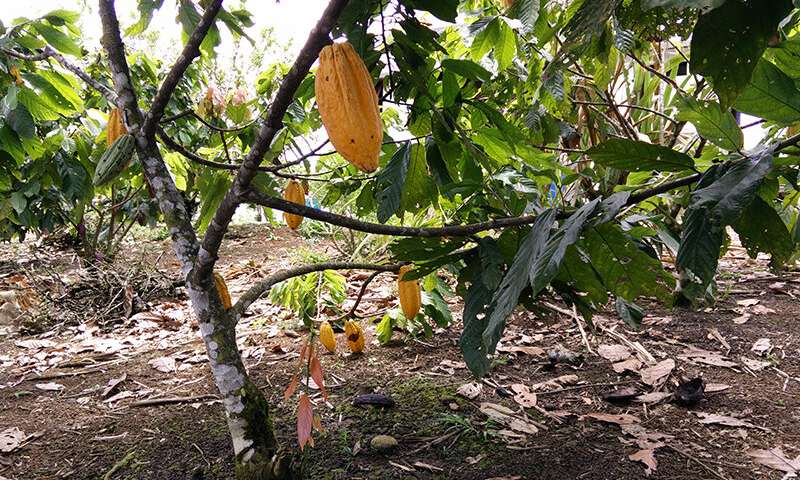
I am an addict. They say it’s good for me if I eat the 90% cacao, fair trade and organic. Chocolate is universally adored. But few know that farming for cacao is complicated business, mostly done by small-scale low-income farmers in Latin America, specifically Ecuador. New evidence suggests that eating too much chocolate might be dangerous because it grows in soils with high amounts of cadmium, which can build up in the body and cause cancer (see ceramic coated cooking pans).

The good news is that there are scientists working to help the farmers lower cadmium from their cacao trees. David Argüello from Belgium along with a team from Ecuador have found ways to reduce cadmium in chocolate trees, using lime. They report about it in the science Journal of Environmental Quality

cadmium cacao
Scientists find that applying lime to the soil and that below the surface into the roots can help reduce cadmium buildup in cacao, or its end-product chocolate

Argüello says: “The cadmium issue threatens the livelihood of farmers because their products may not be suitable for trade and some buyers would prefer not to buy polluted cacao beans. We have to understand how cacao plants takes up the element.”

David Argüello
David Argüello

Traditionally in science, researchers would look at studies of other crops to see what works to prevent cadmium uptake. Something commonly added to the soil to help with this issue is lime, or calcium carbonate, a compound derived from limestone which is cheap and widespread and easy to obtain. This changes the cadmium chemically so that it’s not as likely to be absorbed by the crops, Argüello explains. 

However, most crops like corn or sunflowers are replanted each year. This allows the lime to be mixed deep into the soil between crop seasons which is good. Cacao plants for chocolate, on the other hand, are trees that live for many years. It’s not possible to put lime into much of the soil without disturbing the roots of cacao. Farmers can only apply lime to the surface. 

“This crop is very different than other conventional plants. The information available for its management is scarce and outdated. Many farmers get the advice that adding lime will solve the issue. But we wanted to investigate this,” Argüello explains. 

The research team used an experiment where they planted cacao seedlings in pots in a greenhouse. This allowed them to add lime to the topsoil and subsoil and then test the cacao leaves for cadmium levels. 

The solution needs to be deep rooted

Their findings show that adding lime to both layers decreased cadmium in the cacao leaves, which was not surprising. They also found that liming only the top layer also decreased cadmium. However, they discovered that when only the top layer is limed, more cadmium is taken up from roots in the bottom layer. This means that researchers and farmers cannot ignore high cadmium levels deep in soils.

cacao beans, cadmium
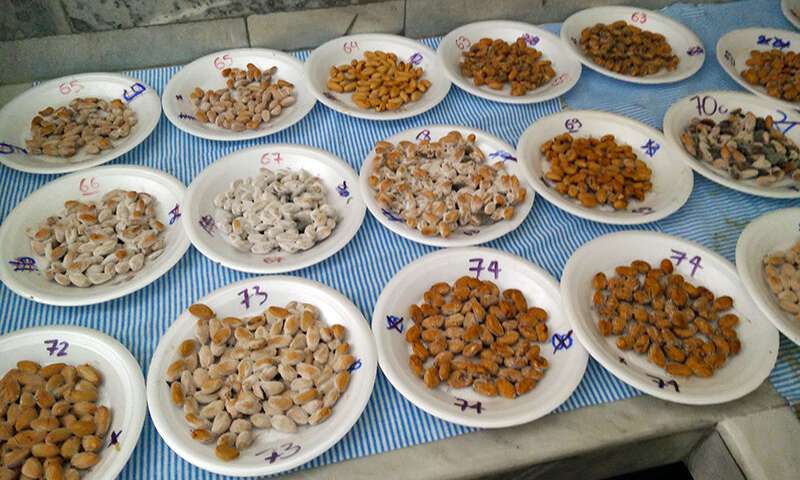
The cacao beans were tested for amounts of cadmium in them. Results on how to apply lime can save the livelihood of smallholder farmers.

“Other nutrients, such as zinc, are chemically similar to cadmium,” Argüello says. “We hypothesize that the reduction of the availability of those nutrients in the top layer due to liming causes the roots in the bottom layer to compensate. During that process, zinc uptake increases but some undesired cadmium is also taken up as a mistake.”

The researchers say their findings have helped scientists understand how cacao plants behave and can possibly chart a path to finding an effective reduction strategy. Argüello hopes their work can help small cacao farmers sell their products. I hope they can find a way to create systems that lead to regenerative agricultural approaches (see the film Kiss the Ground with Woody Harrelson). Maybe there is a biosystem that can be created that can reduce the cadmium more naturally than just dumping lime on the problem.  

“I am from Ecuador and cacao is the most traditional export commodity for my country,” says Argüello. “Every time I travel and find a bar of chocolate produced in Ecuador, I feel happy and proud. I like to think that my work will help small cacao farmers sell their products and help my country to continue to be recognized worldwide.”

Looking for a guide to sustainable chocolate? We have to start somewhere, so you can start here.

Home Security Systems for the sustainablist

0


floating home
Every home should feel like an eco oasis, and it can be done by saving energy using devices like Nest. Security systems are just as important for keeping your eco-oasis safe and home sweet home. 

Buying or building a home is among the most important investments that people make during their lifetime. What’s more, a home is a castle for most people. This is the castle where you want to feel safe and secure. You also want to be confident that your family and possessions are safe inside your home.

The installation of the Security Systems for Apartments and residential properties has, for a long time been considered the best method for protecting a house, occupants, and the valuable possessions in it. But, how effective is this unit in protecting a household? If that’s the question currently lingering in your mind, here are crucial things to know.

nest labs google
A Nest thermostat

Home Security Systems Deter Burglars

Research has shown that households with less-than-basic security are six times more likely to experience burglaries that those with basic security. Essentially, thieves target residential properties that lack security units more than those with effective security units. This shows that the installation of a residential security unit plays a crucial role in protecting you. We have a Canary system built by the team in NY, but it is enough?

When looking for residential buildings to break into, most burglars target places where it’s hard to be spotted or detected. Most thieves won’t try to break into residential properties that have security units or ptz camera systems. Thus, properly installed home security equipment will deter would-be criminals and thereby keep a family safe.

Numerous Home Security Systems Benefits

A home security unit is not just for keeping criminals away from a residential property or diminishing crime within a neighborhood. It also protects a homeowner and their household in several other ways.

These include:

  • Alerting you about fires
  • Alerting your household about carbon monoxide
  • Informing you about the whereabouts of your kids
  • Can help with medical emergencies
  • Surveillance cameras are crucial for monitoring a home’s exterior

A security unit’s installation in residence brings mental peace. It gives you confidence that you’ll be signaled in case of an attempted home break-in or even when a fire breaks out. Thus, a security system installation is an effective technique for protecting a household in different situations.

Reducing Other Crimes

A properly installed security unit will do more than simply prevent thieves from breaking into a residence. When several homeowners install security units, crime rates reduce across their neighborhoods. For instance, assaults, car vandalism, and thefts decrease within the neighborhoods where homeowners install security systems.

Essentially, criminals look for ways of making money in any means possible. A home break-in is an easy method in some cases. However, car break-ins are easier in other cases. The installation of security systems by more homeowners can limit options for criminals. As such, criminals are left with no option but to bypass the neighborhoods that they consider more secure. This makes such neighborhoods more secure and safer for their inhabitants. 

Repeat Crime Prevention 

Research has shown that residential properties with experienced break-ins are 5 and half times more vulnerable to future break-in attempts. When thieves break into a home, they realize that it can always be an easy target. If burglars do not notice the presence of quality security units during the first break-in, they will be tempted to try to gain unauthorized entry into it again since they know it’s easy to escape unnoticed.

If a home lacks a security system, it gives burglars a chance to survey a home compound and familiarize with its layout. They also know the easiest route for getting into your home without raising suspicion or being noticed. However, installing a reliable home security unit deters would-be criminals from regaining forceful entry into a residential property. A system that features surveillance video cameras provides footage that can be employed to search for and prosecution of the burglars. Additionally, burglars will most likely avoid breaking into your residence if they noticed the security cameras’ presence during the first break-in. That’s because burglars fear being detected, seen, or caught while committing the crime.

Home Protection When You’re Away

Most individuals are not always at home. However, they desire to have their residences and valuable possessions safe when away. Implementing an effective home security unit is a great way to protect residential property while away.

Modern units for protecting homes allow owners to easily monitor and even control some of their aspects while away. For instance, you can monitor different parts of your home using a mobile app. Some security systems allow users to turn lights on and/or off remotely. And, if something turns the alarm on, you can be notified via an SMS or email. This will enable you to decide the action to take based on the received alert. 

Contemporary Home Security Units come with more than the Hardware

Having locks, alarms, uniformed guards, and bars is a good way to ensure your home’s security. However, contemporary home security systems feature more than the hardware. They feature wireless cameras, highly-effective motion sensors, and mobile applications, among other advances. These make them more effective and easy to use. The installation of these security units makes it easier for homeowners to monitor their homes and take the right actions in case of break-in attempts.

They give homeowners more freedom and flexibility in terms of how they monitor and secure their homes. What’s more, these units can help in monitoring the elderly and sick persons while away. With some systems, an older person can easily alert their loved one when they need emergency assistance. Thus, they do more than just ensuring that properties are not broken into.

The Bottom Line

Home security units are undoubtedly effective in ensuring your protection and that of your household. Essentially, a home security unit does more than simply protect a homeowner and their valuable possessions. It can also allow an elderly or sick person the freedom to live without depending on the others. That’s because they can be left at home alone, and the security system can be used to alert their loved ones in case they need emergency assistance.

Vegan cheesemaker eyes IPO

0

vegan junk food

It’s a sign of the times: a vegan cheesemaking company in Israel is considering listing on the TASE – or Tel Aviv Stock Exchange. Two meat or animal product substitute companies already list there and now Vgarden, which makes vegan cheese is looking to raise capital. A report in the local paper Haaretz says the kibbutz-based company plans to list next year at a valuation of $102 million. 

Israel has more vegans per capita than anywhere in the world. And the company already has dozens of companies looking to offer a plant-based alternative to meat or animal based products. 

Yofix in Israel already sells its soy-free yogurt alternative made from oats, legumes and seeds. The fermented, cultured products contain protein, fiber, calcium and iron, have no added sugar or preservatives, and are pre- and probiotic.

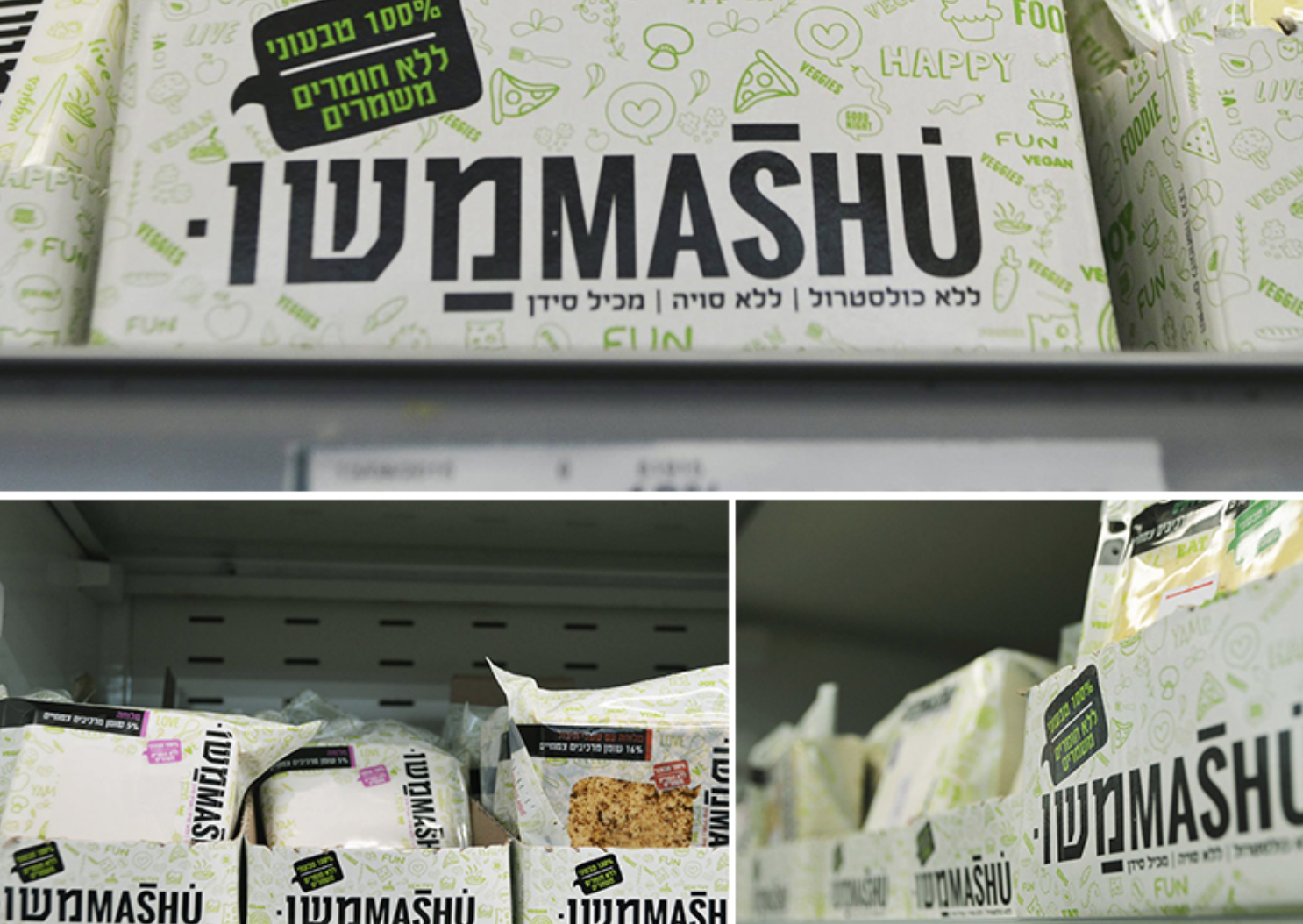
Vgarden produces sliced cheese, cream cheese, ricotta, and feta –– all without milk of any kind. And it’s marketed under the brand Mashu Mashu, which means “wow, that’s something” in Hebrew. I have tried the sliced cheese and it’s a satisfying and convincing alternative. It’s firm and tasty and has a cheesy smell and flavor likely from yeast – which the African Israelites have been using as a seasoning for decades. They are an all-vegan village in Beersheva. 

mashu mashu vegan cheese marketing packaging, Hebrew and English

The transition to complete veganism hasn’t been difficult for mainstream Israelis because as part of the Jewish lifestyle and dietary laws it is already known if a food product contains traces of animal products as it’s not allowed to eat meat and milk together, for those who observe the customs and traditions known as kashrut.

They are similar to the Muslim dietary laws called halal but are more restrictive – except for one – Jews are allowed to drink alcohol, Muslims are not

Israelis taking bite out of meat substitute markets

MeaTech in Israel 3-D prints meat alternatives and its shares have risen 120% on the TASE over the last year according to the Marker, an Israeli financial paper. SavorEat is developing a plant-based meat alternative using 3D printing and plant cellulose. 

Impossible Burgers have been on the Israeli grocery shelves for a couple of years already. But they cost about $8 a piece, which is more than double the price of a burger bought at a butcher. McDonalds in some locations in Israel is selling vegan burgers and for those observing dietary laws can for the first time order a cheeseburger from the famed fast-food chain. 

Redefine Meat from Israel says it is making the world’s first plant-based steak created using 3D printing technology. The Rehovot-based company said it will start testing the beef, which it calls Alt-Steak, at select high-end restaurants in Israel later this year.

Israelis are thrilled with the rollout of Beyond Meat and are clearly trying to take a bite out of this enviable market. Global Opportunity Analysis and Industry Forecast, 2019-2026, “the global meat substitute market size was valued at $4.1 billion in 2017, and is expected to reach $8.1 billion by 2026.”

RilBite is ambitiously positioning itself as the basis for “The burger that saves the world.”

Founded by Barak Melamed and incubated in The Kitchen FoodTech Hub of the Strauss Group in Ashdod, RilBite is developing a “minced plant” product using only six ingredients: onions, tomatoes, textured vegetable protein (TVP) from soy, lentils, rice and spices.

There is Kinoko Tech developing a vegan protein with a meat-like texture and slight umami flavor. The secret ingredient is an edible mushroom tissue called mycelium.

FFW is creating a yeast-based meat alternative. Founder Leonardo Marcovitz says that yeast contains 50% protein and has all the essential amino acids. It’s cheap and easily available. But until now, no one has been able to create a textured product out of yeast or temper its strong umami flavor.

“For the past year, our food technologists have been working on solving those two challenges,” he says. “We’re deciding whether our first product will be in the form of pulled chicken, chicken nuggets or Bolognese.”

Taking on the humble chickpea, a staple of the Middle East diet: InnovoPro and ChickP have developed proprietary technologies for extracting neutral-tasting protein from chickpeas for use in the food industry. Although hummus everywhere unless it’s organic contains high amounts of cancer-causing Roundup

Sometimes, unless it’s my daughter begging to try a vegan bacon one day, I just have to hope: maybe we should just stop trying to create substitutes? The next generation of vegans won’t hunger for milk, cheese or anything that resembles meat if we educate them properly. Food grown simply from a garden and made into a homemade spread without a printer or complicated enzymes in a lab is really the healthiest and more sustainable way we can consumer our food. These foodtech companies may both help and hinder a meat-free transition. What do you think?

Video Player


Finding Covid outbreaks in your street sewers

0
Cod
Kando sends sensors into a sewer find Covid-19 hotspots in your towns and cities. Should we bring one into the White House?

Is there a Covid-19 hotspot growing in numbers on Fifth Avenue near the Empire State Building or is it happening now in Brooklyn? Look to your sewer and it will tell you endless information about the health or problems of a local population.

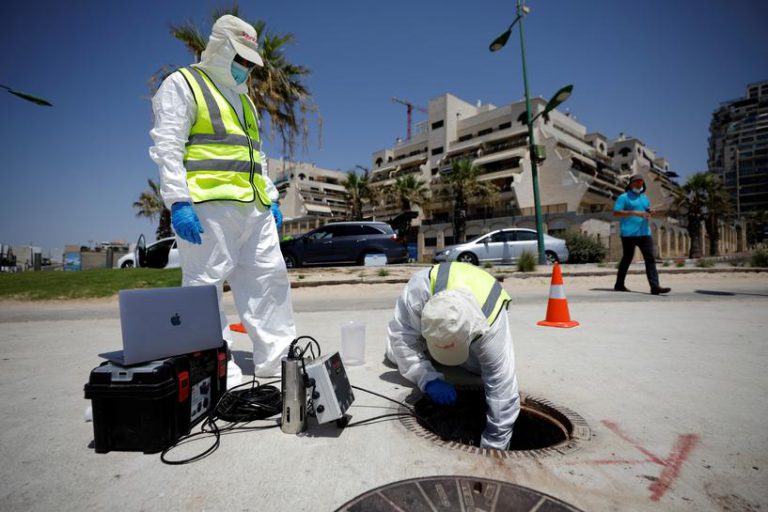
Human waste carries knowledge and disease, and it also carries the pharmaceuticals we use to keep our problems at bay. Now a wastewater data company called Kando is being hired in Israel to confirm Covid-19 outbreaks in the country. Kando can also predict where an outbreak will occur. 

Covid-19 can be detected in sewer systems, and knowing where it is being flushed – means health services can get a better handle on local Covid-19 hotspots and outbreaks. 

“Monitoring our sewers is like taking the ‘blood test’ of a city,” said Ari Goldfarb, the CEO of Kando.

Kando is the Israeli cleantech company that was hired for the task. In good days the company provides data to wastewater management companies so they can understand how to use their resources for treating pollution optimally. The company started a pilot this summer with Israeli universities and announced recently it will continue its sampling throughout Israeli cities. Some $220,000 USD was put into to support the pilot until the end of this year.

The company takes samples from sewers which are brought back to a lab to undergo polymerase chain reaction – or PCR – testing. We assume that in the future some better “real time” and online data assessment tool will be put in place to make sense of the data, because anyone anywhere can pull a sample of sewage out of a manhole and test it. The questions will be – what are we looking for and what does it mean in comparison to the density and population.

“Shit” down streets, not nations

Contract tracing has become impossible with dense communities and neighborhoods in poorer demographics in Israel where up to 12 people can live in one small apartment, or more if extended families are brought in. But it’s been impossible to segregate these areas in red or green zones: they predominantly poor ultra-Orthodox Jewish neighborhoods and poor Muslim enclaves. 

“The successful initial results of this pilot study demonstrate that our sophisticated wastewater monitoring systems can help detect new outbreaks and determine exactly where and how serious they are,” Goldfarb says.

The company partnered with local universities Ben Gurion University and the Technion “to offer actionable insights to authorities, alarming them to outbreaks even before residents are symptomatic. Our hope is to help cities around the world prevent wholesale shutdowns and mitigate future outbreaks.”  

Kando puts its sensors into manholes and say they are able to quantify and delineate this environmental and epidemiological data, allowing them to narrow down measurements to neighborhoods, and potentially streets.

The coastal city of Ashkelon in Israel was chosen as the pilot site for the project as it was believed to have a low number of case. But what researchers discovered was something entirely different: significant remnants of the coronavirus in municipal wastewater, indicating early detection of outbreaks in local neighborhoods.

The results suggest that tracking coronavirus remnants in the sewer network is a timelier and more efficient gauge of the extent of outbreaks than testing individuals – especially given the asymptomatic nature or delay in symptoms of those suffering from COVID-19. 

The results of the pilot study will offer authorities capabilities for early detection of new outbreaks and can help avoid total lockdowns by pinpointing affected areas, the company believes. Israel is in the third week of a 3-week lockdown, its second nation-wide lockdown since the middle of March, 2020.

Helping identify hubs of contagion can allow a much more localized response – avoiding the need for more sweeping lockdown measures. And that is something we all want. 

“Identifying traces of the coronavirus in city wastewater is extremely challenging due to the various types of substances found in sewage systems, including industrial wastewater, which can dilute or destroy remnants of the virus,” said Professor Nadav Davidovitch, Director, School of Public Health at Ben Gurion University, and who is part of the project:

“Our unique methodology enables us to detect and trace the presence of the virus and calculate its concentration with these substances factored into the equation, and to integrate epidemiological evidence in order to pinpoint emerging COVID-19 hotspots. This will allow authorities to take actions to contain future outbreaks. This type of interdisciplinary science will continue to help disease containment methods – for coronavirus, and beyond.”

Artificial Intelligence going down the drain?

Kando provides Internet of Things data for for wastewater management with operations in North AmericaEuropeAustraliaAsia and Israel. The company was founded in 2011 and is headquartered in Israel.  They can detect blockages in real time before extensive damage is done to sewer systems.

It is no coincidence that Israel produces a disproportionate number of wastewater data companies for its size: Israel has been a global leader for greywater recycling. It reuses about 97% of its water as grey water, but it comes with challenges as these lines can not contaminate drinking water for domestic use. Greywater contains a high amount of bacteria and toxins, even pharmaceuticals, so much to the point that organic vegetable growers in Israel don’t want to use the subsidized water offered to them for fear of a chemical load in their produce.

Who wants to eat someone else’s cancer medicine or birth control pills? There is also cocaine, codeine and methadone

But silver linings? Some startups make new paper from sewage waste

When I studied biology in university the professors always told us that there is gold in animal excrement –– how well an animals is doing, its habitat, its link in the web of life. I spent a year studying the waste of small amphibians to understand how populations of indicator species bounce back after forest fires or clearcut logging.

In times like these we need to put ourselves back into the circle of life and look for answers even in the lowliest places – the toilet bowl.

The case of an environmental fallacy?

Alon Tal, Israel environment
Alon Tal founded a number of NGOs, including the Arava Institute in Israel

Alon Tal, environment leader and lawyer from Israel cautions against this “looking for a needle in a haystack approach”. He has experience looking to wastewater for pollutants, including pharmaceuticals. He isn’t convinced this is a great method for detecting Covid-19 cases in the city:

“When you look at things at the neighborhood level, you just have to be careful you don’t commit, the “ecological fallacy”.

“Here’s a good explanation on you tube:


“So yes – it is good to know if there appears to be some residual corona in the sewage system of a city,” Tal tells Green Prophet. “But it can’t tell me a whole lot. It might be from a single family. It might be from an old age home which is in danger – or from an asymptomatic yeshiva student.

“I imagine that in the peak incidence days, Bnei Brak’s sewage [in Tel Aviv] might have been slightly higher than other communities. But you’d have to be very lucky to get samples to prove this. Concentrations are de minimis.

“In short —  I know they used sewage to try to identify illegal use of narcotics and such.  But, it’s not entirely clear to me why this makes more sense than simply random testing several hundred people directly. That might tell me much more about where morbidity is happening and how to intervene,” he concludes.