

It seemed like a sure thing five years ago, but today Israel’s Better Place electric car company has pulled the plug on its electric car network in Israel as it files for bankruptcy today. The company which embodied Israel’s spirited green innovation community filed for bankruptcy at the Lod District Court outside of Tel Aviv, and asked the court to dissolve the company.
“Despite significant efforts over that time frame, revenues are still insufficient to cover operating costs, and in the light of the continued negative cash flow position, the Board has decided that it has no option but to seek to make this application to the courts for an orderly liquidation of the company,” the company announced on Sunday, a work day in Israel.
“This is a difficult day for all of us,” Better Place CEO Dan Cohen said. The company had a vision and made some inroads in helped an electric car reality come to life, but the vision didn’t weigh in with the reality check: consumers in Israel were not buying the Renault-made cars that come with a switchable battery to reduce driver’s range anxiety.
Israel Corporation (TASE: ILCO), the controlling shareholder in the Better Place electric car venture company, notified the TASE, the Tel Aviv Stock Exchange today that it will not invest in future financing rounds because it could find no other investors to participate in the round of funding.
Some $800 million has been put into the company since its founding, and over the last past year the company was showing troubling signs the moment its visionary founder and CEO Shai Agassi was fired – news which we reported here.
“Unfortunately, after a year’s commercial operation, it was clear to us that despite many satisfied customers, the wider public take up would not be sufficient and that the support from the car producers was not forthcoming,” Cohen said.
The idea would have been great if it had worked: Better Place had built an extensive network of battery-replacement stations around the country. When a charge was low, instead of waiting for hours to “refuel” with a power cord, the electric car could gas up with a new battery, swapped at convenient locations throughout the country, and that which could be located with a smart driver’s onboard GPS system. This could be done in the time it takes a car to fill up with regular fuel.
The company hoped it would rival gas powered cars, and to some extent we hoped the idea would work to.
Based on what I saw in Israel Better Place was flawed from the beginning: it smacked of cronyism, by hiring relatives into high positions in the company, and by enticing investments in companies closely linked with infrastructure and government bodies in Israel.
Government officials in Israel, President Shimon Peres included, often lauded and praised the company as though the government and Better Place were one and the same.
The company spent way too much overhead on fancy PR and public education hoping to entice a strong following of buying “sheep” who were more interested in promoting Zionist values than environmental ones.
Israel, I have always said, needs a kick-ass network of public transportation, linking trains to light rails to mini-vans to bicycle hubs so that the public can wean itself not off oil, but of cars in general. An investor in a new green public transportation solution, not run by the government, would get my vote.
“The technical challenges we overcame successfully, but the other obstacles we were not able to overcome, despite the massive effort and resources that were deployed to that end,” the Board of Directors said in a statement. “The vision is still valid and important and we remain hopeful that eventually the vision will be realized for the benefit of a better world. However, Better Place will not be able to take part in the realization of this vision.”
I truly wonder what will happen to the poor recruits who bought a Better Place car. Will they be allowed to turn on their at home charge stations and pay the lower rates of electricity not running through the Better Place pricing system? Will they be able to endure long trips to the north and still use a switch station in some locations?
Instead of complaining or showing any signs of fear, buyers of the Better Place car seemed to carry on as usual last week – like Brian of London, who poured his heart and soul into praising his electric car on the Green Car Reports blog. Those who bought into the brand seemed to be loyal all the way. The problem was that there was never enough buyers.
The company would need four years and another half billion dollars to break even, some analysts say.
We’ll be letting readers know what happen to the buyers of the cars, in the hundreds, as the news unfolds. Meanwhile hundreds of employees will be laid off.
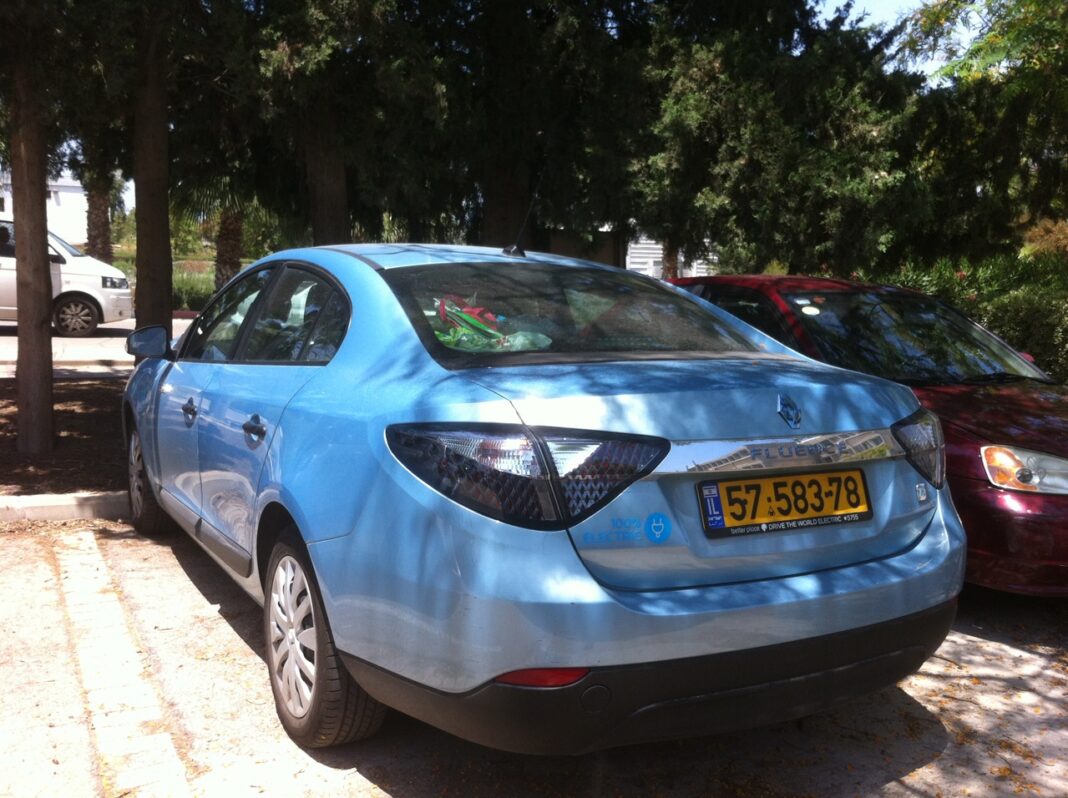
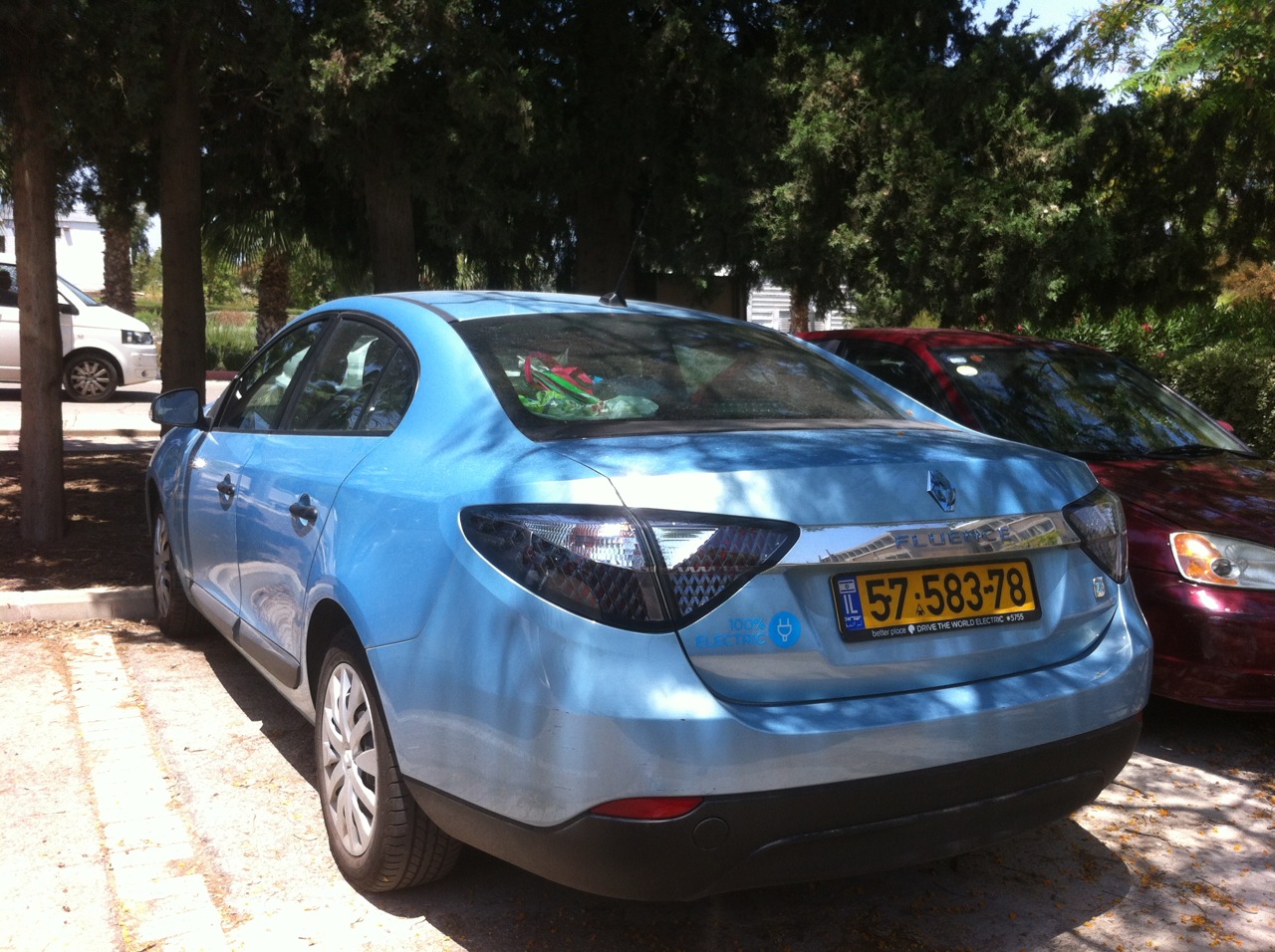
Above image of Better Place car parked at the Volcani Center in Israel last week, taken by Karin Kloosterman/Green Prophet




[…] TimesExclusive: Better Place to file for bankruptcyFortune (blog)Haaretz -Deutsche Welle -Green Prophetall 115 news […]
Hopefully, someone else will come along and take up where they left off. I feel a lot for those who actually bought the car.