Home Blog Page 120

How The Great NFTrees, Metaverse & Digiverse Can Change The Middle-East

william kwende, grat african wall, sahel, reforesting trees africa, dubai
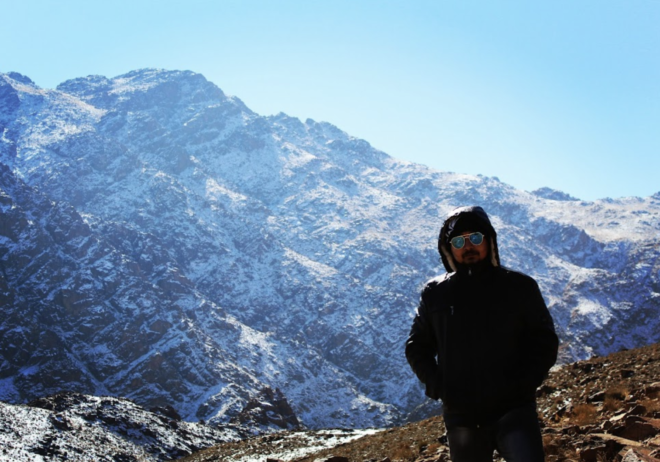
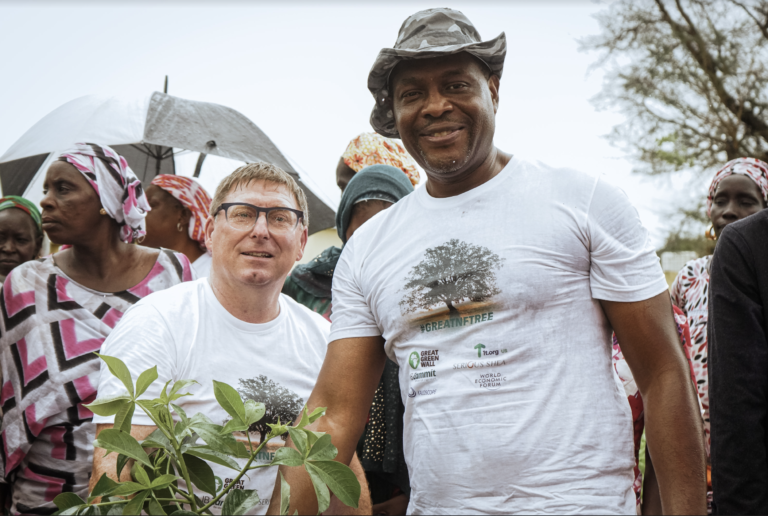
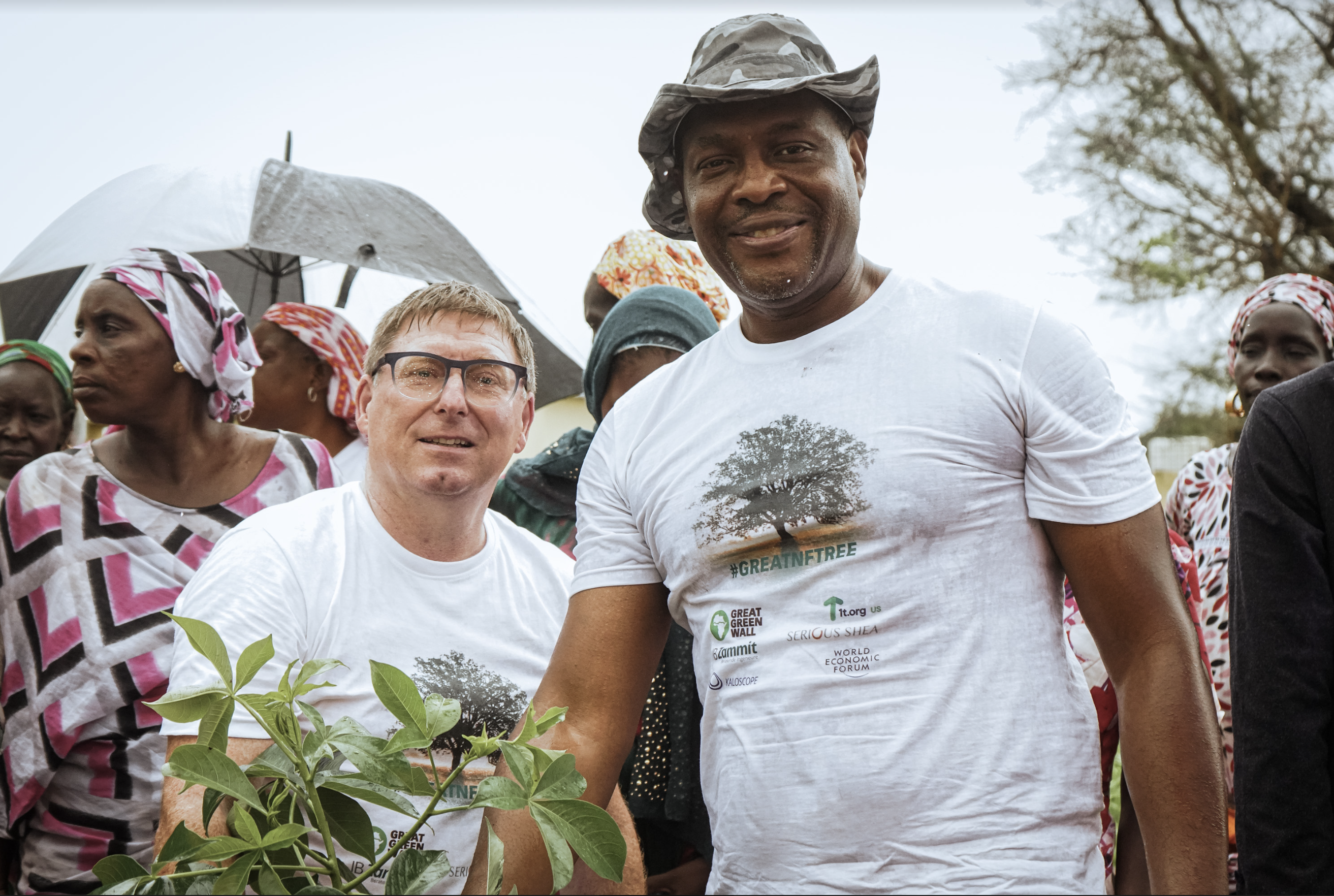
Me on the right, William Kawende, planting trees for the Great Green Wall project

For the longest time, the Middle East, has been considered to be a rife area of the world, due to the sea of oil they sit on, and hence, peace has been difficult to obtain while driven by money. Continuing to seek transformation in Dubai, to be the world’s best city to live, work and invest, the government are now planning to achieve this goal in maintaining a higher level of global competitiveness within the Metaverse. 

Most recently, Sheik Mohammed bin Rashid al Maktoum, the UAE Vice President, Prime Minister and Ruler of Dubai directed the formation of a higher committee to prepare the Dubai Metaverse strategy. Appointed the head of the committee is, Crown Prince Sheikh Hamdan bin Mohammed bin Rashid Al Maktoum, who most recently announced a new ‘metaverse strategy’ and one that will create 40,000 new virtual jobs and add $4 billion to the city’s GDP in five years- as reported by Fortune, and according to a Monday tweet:

“While the details are scant, it is reported that the pillars of the plan include fostering ‘metaverse innovation and economic contribution’, cultivating metaverse talent, and developing metaverse use cases and applications within the Dubai government.” 

I founded Agritech (since 2005),  and it is a company that focuses on achieving sustainable development goals by training farmers in the West African Sahel and supporting local economics. I had been working on a project called ‘Zero Carbon, Zero Deforestation Shea Value Chain’ since 2010, and creating interconnected ecovillages to provide renewable fuel, power and other sustainable agricultural tech to the region.

Furthermore, I am steering the Great Green Wall initiative towards a sustainable value chain oriented implementation strategy with the technology Serious Shea has developed. 
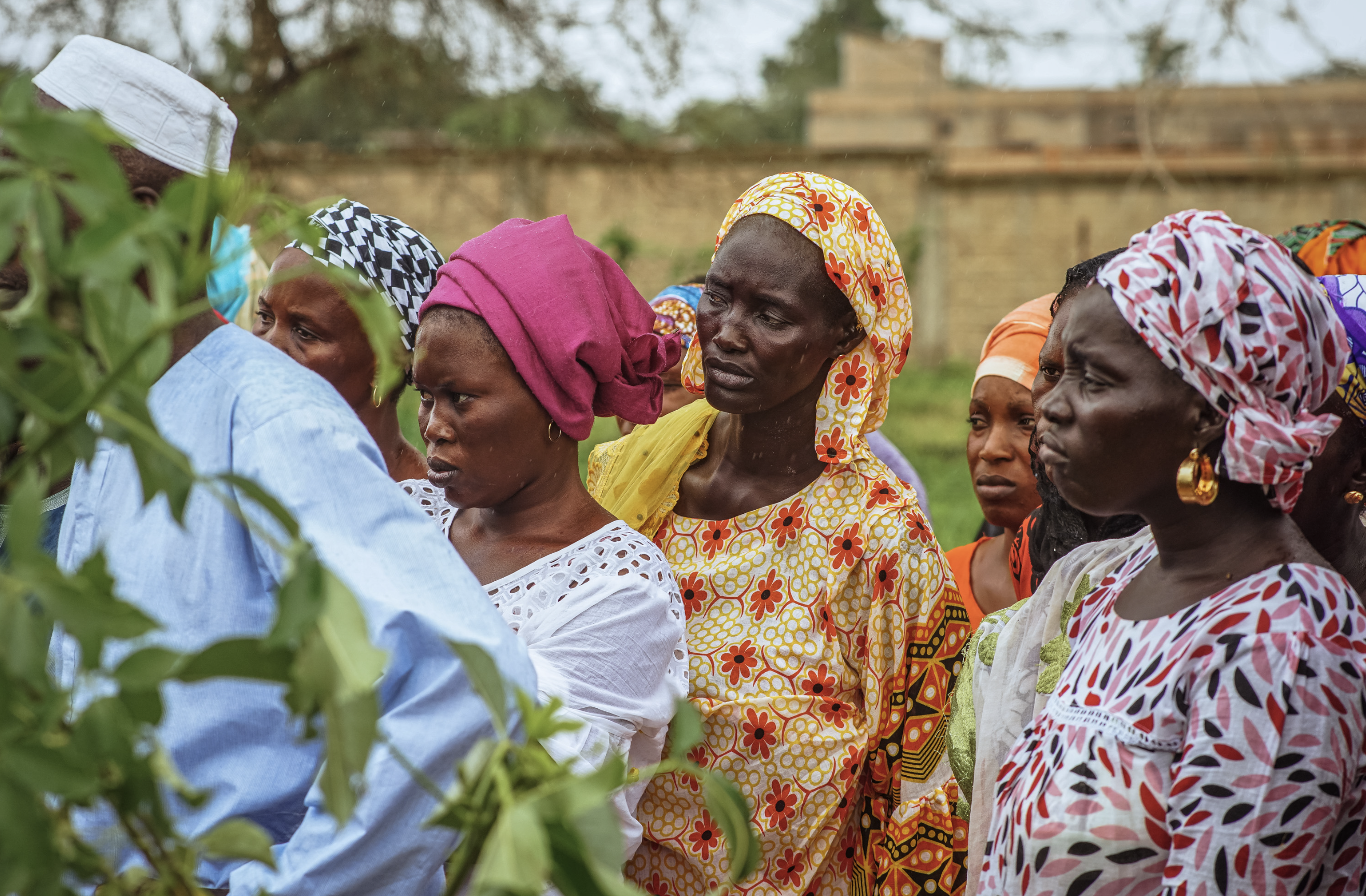
I believe the Middle East and Dubai would be a perfect place for an incubator project he’s been developing, which is focused on nature based solution and restoration, as well as fit for what I call the DigiReal Multiverse. I believe this as the Middle East continues to welcome millions of people, and the population has grown so much in recent years, meaning that more trees are need in order to provide oxygen for this rising population. 

The Middle East and Dubai are quickly becoming the heart and symbol of globalisation and leadership both in economic development and transformation. Like the rest of the world and my home Africa, we are unfortunate witnesses to the unprecedented climate breakdown, subsequent to pollution and the destruction of the strategic climate infrastructure, our primary ecosystems.

As the accelerating cost of catastrophic climate events threatens to cancel economic growth in many parts of the globe , the world is mobilising to find solutions and change the habits responsible for this mayhem. 

I moved to Dubai almost 9 year ago to take advantage of the strategic location for innovation and trading. Our companies Golden Organics and SeriousShea are dedicated to finding solutions for a better future in Africa and beyond by developing nature based solutions and innovative food stuff.

We believe that technology can greatly contribute to finding a solution and have started with the support of global organisations like the African Development Bank, The World Bank and the World Economic forum to work on nature based business models with a positive impact on the environment and our climate in the Sahel around the Great Green Wall Initiative.

Great Green Wall map

The Great Green Wall is an African-led movement with an epic ambition to grow an 8,000km natural wonder of the world across the entire width of Africa from Senegal to Djibouti across 13 countries. The Wall promises to be a compelling solution to the many urgent threats not only facing the African Continent, but the global community as a whole – notably climate change, drought, famine, conflict and migration. Once complete, the Great Green Wall will be the largest living structure on the planet, 3 times the size of the Great Barrier Reef.
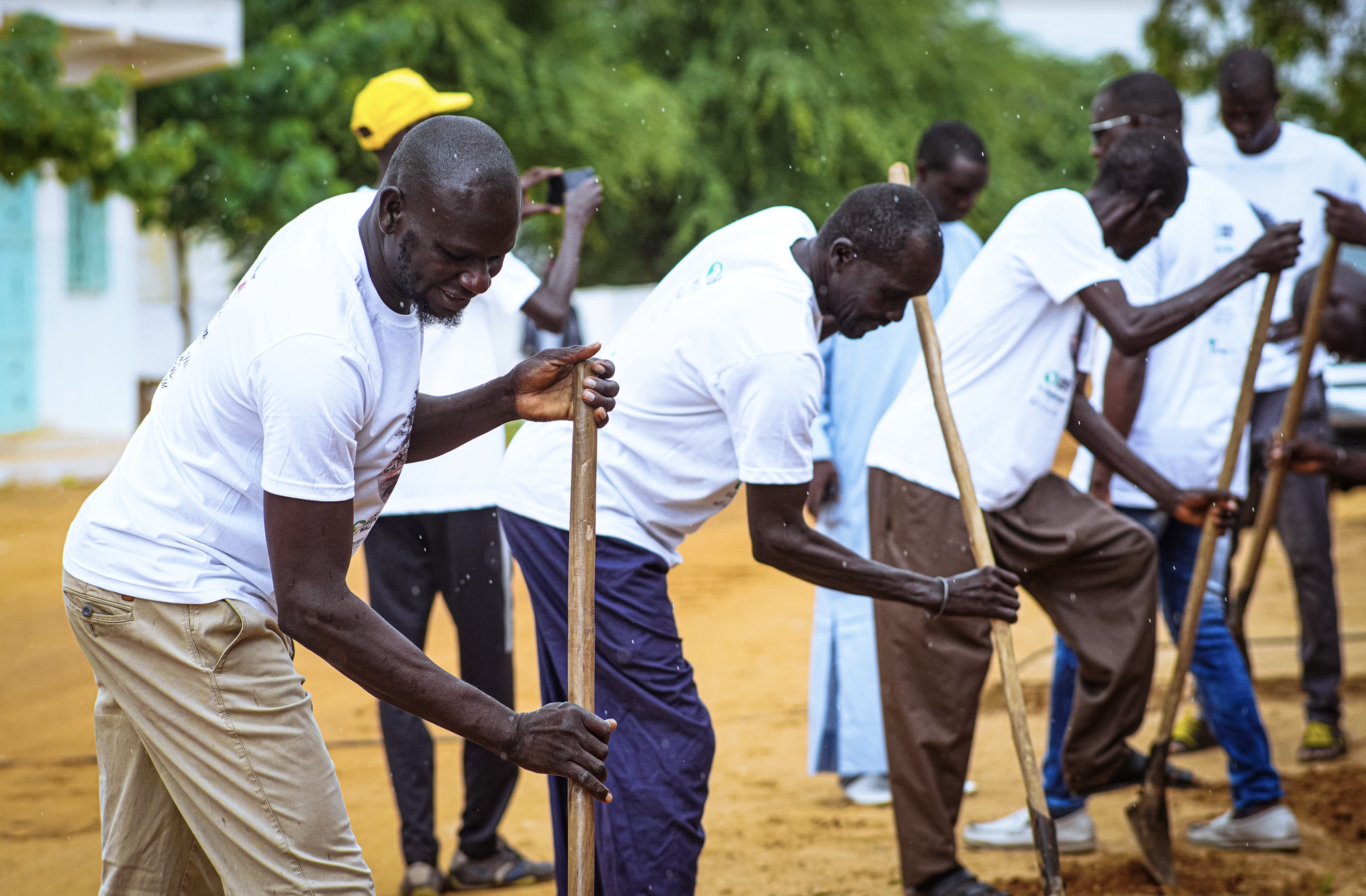
great green wall, treeplanting event, sahel, african men dig and plant trees

The Great Green Wall corresponds to the northern boundary of the millennial Shea belt which speaks for its role as the indigenous ecosystem for climate and desertification control. The Shea, Baobab, Acacias   trees are vital social, environmental and economic crops (i.e  shea butter—a multimillion-dollar ingredient used in cosmetics, personal care products, pharmaceuticals and chocolate,  Acacia – Arabic Gum used in many industrial food processes ).

Selected as  ‘Global Top Innovator’ by the World Economic through uplink and 1T.org  (one Trillion Trees initiative). Agritech are members of the public private 1T.org Sahel Coalition to accelerate our impact driving with the other 1T.ORG  and the collective action of ecopreneurs, government,  businesses and civil society to unlock restoration at scale in the Sahel! They plan to plant 1 billions trees by 2030 and support the development of the value chains using their innovations. 

Our first innovation recognizes the importance of developing sustainable value chains, protection and repopulating the trees in the sahel. They have developed a Zero Carbon and deforestation value chain based on mini industrial processing units running on a mix of renewable energies. This enables remote communities to process the harvest from the trees and export them globally to generate their own revenues and contribute to the global food supply which is under a lot of stress, the potential from the Sahel exceeds 50 billions USD in various ingredients and foodstuffs. 

The second innovation is the use of blockchain to insure the integrity of all our processes including the traceability and the carbon footprint of our plantations, ingredients and foodstuffs. 

Finally, one of the most interesting is our third innovation in partnership with KALOSCOPE is the creation of our Great NFTREE and our Great Green Multiverse to help mobilise resources and raise awareness about the global importance of the Sahel ecosystem for its people and  the World climate stability. It’s a unique use of technology to create a DIGIREALTY ecosystem to allow people and corporations around the world to contribute ideas, funds, technologies and connect with the people of the Sahel. 

Kaloscope is a decentralised social media platform, and in recent months added me to its board as its Strategic Sustainability Advisor. The Great NFTrees project will see users to purchase tree NFTs connected to geo-tagged locations and the actual planting of these trees in Africa’s Great Green Wall and aims to grow one trillion trees across 8,000 km stretch of land in Africa. 

It is within an app, where users will be able to display their metaverse spaces and purchases, and use ‘perkabilities’ a host of ‘perks’ and ‘utilities’. For example collectors might get access to exclusive events, a one-to-one conversation with me, for having minted and holding the NFT. It is also noteworthy that ninety percent of revenue form the project will be minted on the Polygon blockchain and take place later in the year, as the website is still in development, and will go towards the Great Green Wall Project. As for the remaining ten percent it will cover administrative costs as Kaloscope plans to allow collectors to purchase these with various cryptocurrencies. 
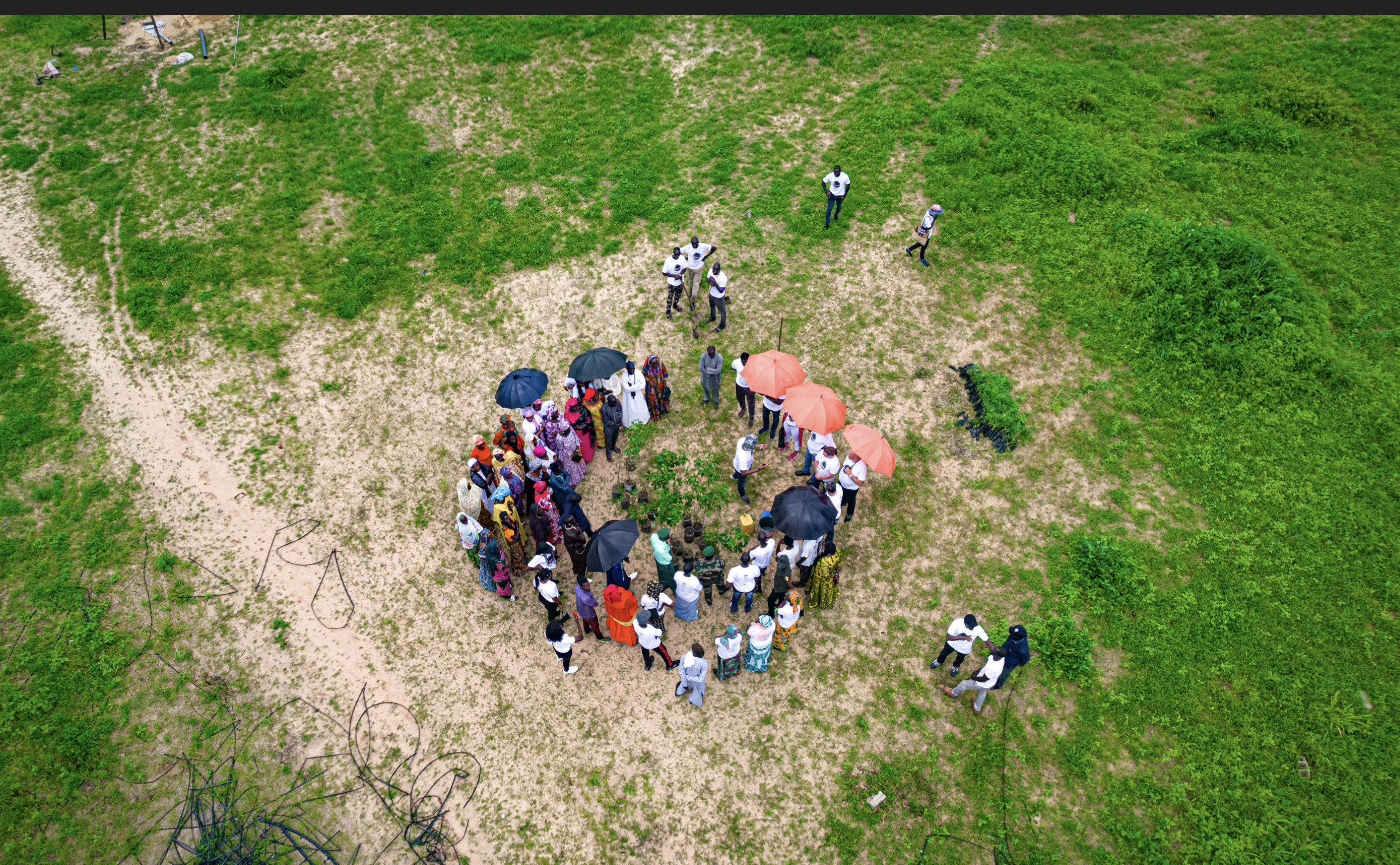
Great Green Wall, tree planting Africa, Sahel, drone shot from above
Planting trees for the Great Green Wall

One can see how this particular project, can, as I have already pointed out, also reach other parts of the world like the Middle East,  as they are in definite need of it. Such a project could possibly include attaching carbon credits to the Great NFTrees. While current carbon markets are known to be complex, this may be a way via the blockchain to truly contribute to solid sustainability efforts in all areas and possibly also the Middle East as they plan their next endeavour for this new market place. It is because the Middle-East is also feeling the full impact of climate change. 

Having a growing number of initiatives in the UAE and Saudi to scale the plantation of trees and restore ecosystems, we are now connecting with innovators and governments to share our experience and technologies in scaling up nature based systems and solutions for the greater good. Finally, we have welcomed our first partners in Germany, GmbH, Zammit International and ELCON LED GmbH, to be one of the first companies to be part of a coalition and alliance of global corporations for The Great Green Wall via the NFTrees.

Together we, at Golden Organics is focussing on achieving Environmental, Social and Governance (ESG) sustainability (for the water-energy-food nexus, including by developing and training clusters of farmers in the West African Sahel through to global trading). We have already started with the first hectares of the Great NFtrees planted in early September 2022. And from this, I also invite those interested in rebuilding global trust and restoration of the planet to join me to plant one tree at a time. 

About William Kwende

William Kwende is the CEO of Agritech which is the sustainable umbrella company for Global Organics & Serious Shea that is leading the project, The Great Green Wall. The NFTrees is a part of the project- the digital aspect of it. Kwende is a partner of Kaloscope, the Strategic Sustainability Advisor towards efforts to introduce Economic Social Governance (ESG) into the metaverse.
  

What Is an HTTPS proxy and how does it work – a guide for digital nomads

0
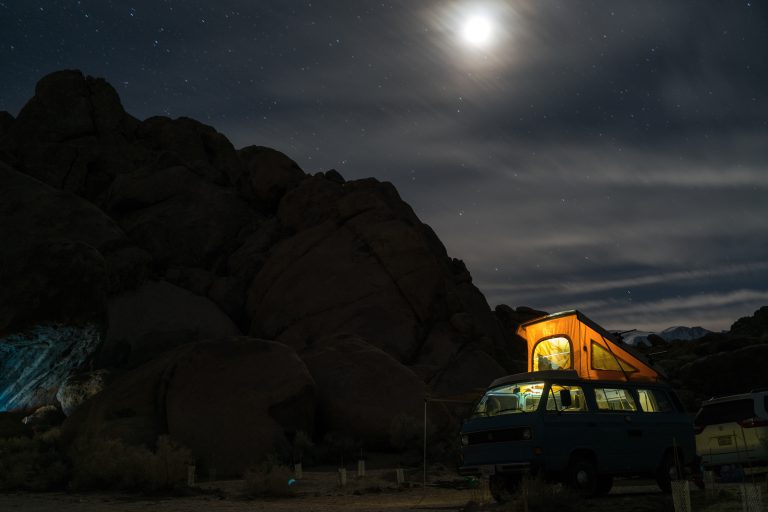
tiny office on the road
You can have a sustainable business and still live the #vanlife dream. But make sure your data is secure. Your financial life, personal life and professional life depends on it. This is a guide to an HTTPS proxy.

If you run a sustainable news blog or a website, or live the life of a digital nomad hooked in by Skylink or a SIM card –– you will need to know how to use an HTTPS proxy. Any data that is transmitted over Wifi is insecure. So if you are banking, building IP, or are entrusted with trade secrets or an important news tip, your business, and the safety of others depends on knowing how to use an HTTPS proxy – a private internet access proxy. Here is your guide.

The HyperText Transfer Protocol (HTTP) has become the de facto standard for transmitting data between computers and web servers since computers first started. HTTPS is the next generation, a secure framework extension to HTTP, encrypting data in transit with varying degrees of strength.

While this may seem like enough protection to the ordinary user, in today’s era of ever-present security threats, and online transactions and banking, it is crucial to keep sensitive data safe at all times. The great news is that you can protect yourself while surfing the web and making critical financial transactions (banking, crypto investing, topping up your stock portfolio on solar energy) without spending a fortune. Using an HTTPS proxy can provide that extra layer of security that could save your personal information from falling into the wrong hands. 

What Is an HTTPS Proxy Server? The geek explanation

HTTPS proxies guarantee secure, end-to-end communication. Hence, the client uses the CONNECT verb in a special request sent to the proxy. The proxy creates an encrypted, private tunnel through a direct TCP connection to the target server. After making the socket connection, the HTTPS proxy responds with 200 OK to the client and begins relaying requests and responses between the client and the server. It means the client and the server can communicate using any protocol they like, not just HTTPS. With the CONNECT verb and an HTTPS proxy, it is possible to create a secure tunnel for any protocol.

The client’s request is received, processed, and responded to by the HTTP proxy. When the requested resource is located on a remote server and cannot be obtained locally (via the cache), the HTTP proxy initiates communication with the server in the client role. The client receives the downloaded resource. Keep reading to understand how and where you can use an HTTPS proxy

How Does an HTTPS Proxy Server Work?

There are many ways in which using an HTTPS proxy can improve your online safety and privacy. While it’s natural to draw comparisons between an HTTP proxy and an HTTPS proxy, there are significant differences between the two.

HTTPS builds an encrypted connection that eliminates the possibility of a third party eavesdropping on the network. It means that HTTPS is fundamentally incompatible with common proxies. While the user experience remains unchanged, your browser must go through a few hoops to create a secure proxy connection.

Initially, you’ll need to connect to the server through a specific TCP port. These port numbers are somewhat arbitrary; however, a server administrator can designate specific ports for particular purposes. Some ports are also commonly used, for instance, Port 23 for POP3 email and Port 80 for normal web browsing.

Following this, the security handshake procedure begins. Transport Layer Security (TLS) and the older Secure Sockets Layer (which we use on Green Prophet) are the two most common encryption methods used during joint working. These guidelines aim to create a “trust chain” in which each node in the communication chain gets independent validation.

That way, only the client and the server can read the transmitted data between them. As a result, a proxied connection will typically cause the joint functions to fail. Multiple techniques, like passive exclusion, authoritative inclusion, and dynamic, allow an HTTPS proxy to terminate the operation successfully. 

In passive exclusion, a proxy takes no part in the handshake and simply forwards all messages to the client without alteration. Since the proxy’s encryption layer is not at work with all of the data during the process, this approach isn’t as safe.

If the proxy has TLS or SSL credentials, it can play the role of an authoritative server. A secure HTTPS proxy creates an additional layer of protection between itself and the client. It’s a safer way when the duo of lawyers works together.

A dynamic HTTPS proxy can use either approach as needed. A dynamic HTTPS proxy is a better choice as it works with more servers than any other type. 

If you live in a country such as Russia, China, North Korea or Iran, building anything online will require a private HTTPS proxy.

Bottom Line

An HTTPS proxy is essentially a relay between the internet and your device. The proxy adds another layer of security for your data. The main feature that sets an HTTPS proxy apart from a regular proxy is support for secure communication protocols like SSL and TLS.

When additional security is required, like when banking online or when evading geofencing, HTTPS proxies are the best option. In those scenarios, you’ll want the kind of full data encryption and anonymous surfing that only an HTTPS proxy can offer.

Using an HTTPS proxy is safer than connecting directly, as it adds another layer of security on top of HTTPS’s encryption. Just make sure to get your proxy servers from a reliable provider with a clear privacy policy, because your proxy will have access to all the information it transmits.


Melodea replaces plastic and aluminum coatings in packaging

0

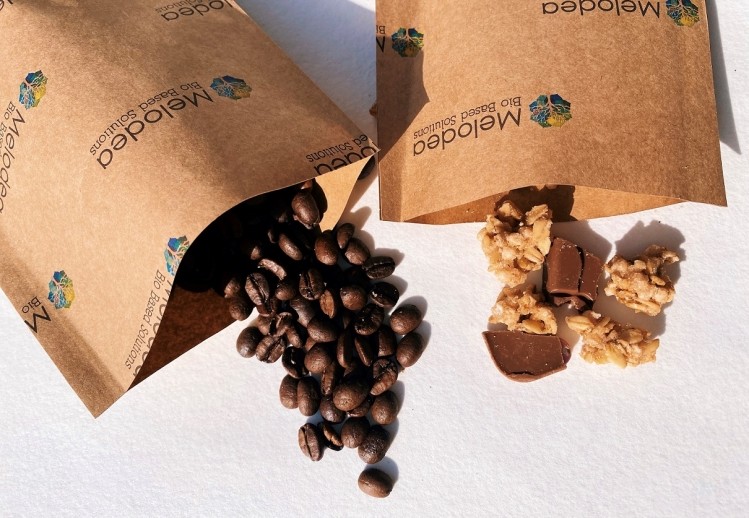
melodea, biodegradable plastic alternative for coffee

A small bag of apple chips. A dry granola bar. Some nuts. A bag of coffee beans. A small baggie of medical cannabis. Even if you’re a conscientious consumer, it’s hard, almost impossible to not indulge in single-use plastics. Even if the outer side is paper, the inside will almost always be a non-biodegradable aluminum and plastic coating to keep moisture out and the oil in. So what’s the point if it’s not sustainable all the way? 

A company from Israel called Melodea has started working in the US to produce a sustainable barrier coatings for packaging. Israeli super-entrepreneur Oded Shoseyov is on the board. Melodea joins plastic packaging alternatives from Israel already in the market: TIPA, the first plastics alternative from Israel on the market in 2011 and which handles wet products, and W-Cycle.

One of the greatest strains on the ecology of our sweet planet is plastic waste. It’s choking the sea and microplastics are turning up in human breast milk and in the air we breathe. Of the millions of tons of plastic waste generated each year, single-use plastic packaging is the worst culprit. Melodea hopes to help solve the problem.

It produces barrier coating material sourced from wood pulp, a sidestream of the paper-making industry. Its solution is helping food, beverage, and consumer goods packagers sever unwanted ties with plastic.

Plastic has long been necessary to maintain food freshness, acting as a barrier to prevent unwanted transmission of oxygen, water, oil, or grease into the products.

How to make plastic from wood

plastic from wood, biodegradable nanocellulose, plastic alternative melodea
Biodegradable wood-based polymer called nanocellulose

Melodea developed a unique formula derived from cellulose (called CNC, or nanocellulose) that can withstand high humidity and protects packed products from oxygen, water, oil, and grease. This sturdy but lightweight plant material offers an alternative to plastic and aluminum for maintaining the quality and integrity of packaged foods. As a forestry by-product, it also is biodegradable, fully recyclable, and non-toxic to people or the environment. The material currently is being used in paper-based pouches, lids, and molded pulp trays.

All of Melodea’s barrier coatings are in compliance with FDA regulations for food packaging and will now be manufactured in the United States.

“CNC from naturally abundant and renewable cellulose is emerging as one of the most promising green solutions to help replace environmentally harmful materials,” says Shaul Lapidot, CEO of Melodea. “The new plant, combined with our newly established ties in the US, can potentially triple our manufacturing capacity to meet amplified demands. It also will shorten the travel and subsequent carbon footprint by bringing production closer to our main markets in South America and the US.”

Melodea recently forged a new commercial deal with a major manufacturer of plant-based fiber solutions in its mission to eliminate single-use plastics. The company will produce and market various packaging products infused with Melodea’s VBcoat moisture barrier. The first product to be rolled out is an eco-friendly, high-performing molded pulp tray for leafy greens designed to replace existing plastic-based formats.

Melodea estimates it will be ready to start shipping locally from the US site within the next 3 to 6 months as it initiates production of its novel barrier coatings with a local US partner. 

About the nanocellulose market 

The global nanocellulose market is currently worth approximately US$346M and is projected to grow to US$963M by 2026. Driven by consumers’ demands for eco-supportive packaging solutions, nanocellulose is gaining traction among retailers differentiating themselves by decreasing the impact of their products on the environment.

North America boasts the highest market share of the global flexible packaging market, with some of the largest international market players in the field of paper-based packaging headquartered there.

Melodea has so far raised a total of US$20M in capital. The company wasy founded as a spin-off project initiated at the Hebrew university of Jerusalem in 2010 in Israel by Shaul Lapidot together with Tord Andres – an expert from the composites world, and Oded Shoseyov, a serial super-entrepreneur and expert in Nano materials and plant biotechnology. He is on Melodea’s advisory board. And has founded 18 companies to date. 

Other nanotech companies Shoseyov has helped found are SP Nano, Valentis Nanotech (nano-bio-based transparent films for food packaging and agriculture), Paulee CleanTec (transforming pet and human waste into sterile powdered fertilizer), GemmaCert (fast cannabis plant analysis), Biobetter (producing therapeutic antibodies on tobacco plants), Second Skin, Cannabi-Tech (standardization tools for medical cannabis products) and BondX (environmentally friendly bio-additives for the paper industry).

“Our CNC is sustainably produced, recycling about 95% of the materials in the process, and its superior performance has been verified by academic research. CNC has great potential to turn the tide on the cascade of negative impacts from plastic pollution that have been a pressing environmental issue for too long,” says Zvika Weiss, CFO of Melodea.

Can plants grow on the moon?

0
Lunar Plants Research Documentation, Via NASA

Can plants grow in a barren landscape such as the surface of the moon? If so, what types of plants will grow on the moon. Can we eat them? Could enough plants grow to support a future colony on the moon? Maybe these plants could grow on Mars too? Emiratis plan on living on Mars as much as Elon Musk. NASA has already shown that plants can grow on simulated moon soil. What’s the next step? The moon itself.

An Israeli and Australian team are going to launch a hydroponic system to the moon, called Lunariums, to see if plants will grow under controlled conditions on the moon’s surface. They will launch 2025 via an Israeli probe that will be going to the moon.

Lunariums, grow plants on the moon, agriculture lunar, grow plants in space, Israel and australia
Lunariums hope to help grow food on the moon to see if plants will grow on lunar soil

These are the ambitious questions the Lunaria One consortium has set out to answer. An experiment proposed by Lunaria One, known as Aleph, was selected by SpaceIL, an Israeli non-profit aerospace organization, to be included as one of the payloads on board their Beresheet2 lander. Beresheet means Genesis in Hebrew. Aleph is the first letter of the Hebrew alphabet. 

We covered SpaceIL more than 10 years ago when they first started dreaming about lunar research.

The Beresheet2 mission, planned to launch in mid-2025, will consist of two landers alighting on each side of the moon and an orbiter that will continue to orbit the moon for up to 5 years.

space plants, moon soil, NASA
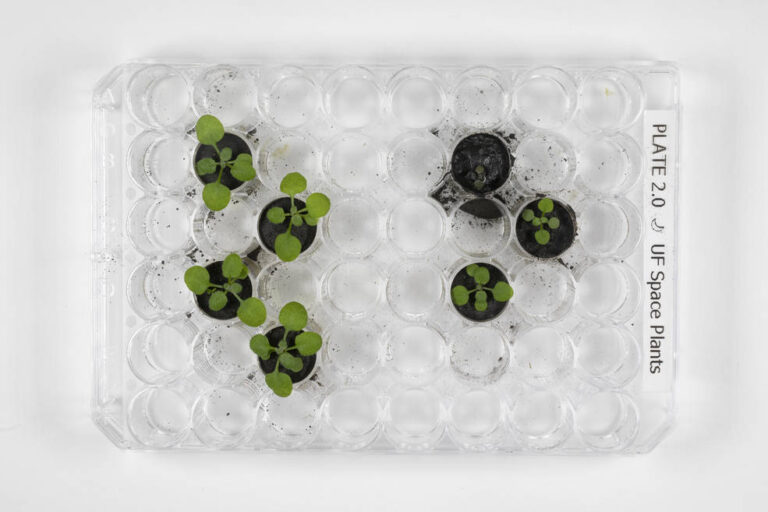
NASA grows plants on volcanic soil and a medium resembling moon soil (right). 

Aleph will consist of a tray of seeds and dehydrated plants, a way to rehydrate and water them (a form of hydroponics), heaters, and cameras to monitor the plants. Israelis are specialists in hydroponic farming since most of their greenhouse crops in effect grow this way using a sand/soil medium, nutrients and irrigation.

Prof. Simon Barak at Ben-Gurion University of the Negev, is coordinating all the plant biologists and imaging specialists.

Space food – growing food on the moon

Shimon Sarid, SpaceIL CEO says: “The chosen experiment has enormous value both for our life here on Earth and for humanity’s progress in space exploration. Examining plant growth under extreme conditions will help us as far as food security is concerned. Plant growth in extreme conditions will help humanity in the long-term.”

Growing plants on the moon means overcoming several challenges such as massive temperature swings on the way to the moon, a water supply for the plants, and high temperatures when growing the plants. The plant types will need to be those that can germinate and grow to an appropriate size for imaging within 72 hours of deployment.

Matt Damon, grows potatoes, mars movie, food in space, elon musk, spaceIL, lunariums
NASA has been growing potatoes in Mars-like conditions since the 80s using hydroponics. Plants also grow on international space stations. Here, Matt Damon shows how he grows potatoes on Mars in the science fiction movie, The Martian

In the meantime, they expect their plant selections to be relevant for vertical farming, regenerative farming, and resource challenged landscapes here on Earth. Growing plants and food in the desert under our climate crisis is a growing global concern.

“The motivation for this mission comes from humanity’s passion to explore and see life thrive in barren landscapes,” explains Prof. Barak. “We see the Aleph payload as an important step towards our eventual goal of providing plants for food, medicine, oxygen production, CO2-scrubbing and general wellbeing for future astronauts inhabiting the moon and beyond.”

Simon Barak, growing plants on the moon
Prof. Simon Barak (right) with students. Ben Gurion University

“The central value guiding this project is that space exploration is for everyone; we don’t want a future where only autonomous and remote-controlled machines inhabit realms beyond earth, but where humans can live and thrive. The key to this is to get humans involved and to give them a say in how we get there. The ALEPH project aims to open up the science and engineering behind growing life on the Moon so that anyone can be involved,” explains Lunaria One Director Lauren Fell.

The project also has a strong citizen science component. Parallel science experiments will be carried out by amateurs (for example, high school students) and professionals to compare growth to that on the Moon.

Additional universities participating in Lunaria One include: QUT, RMIT, and ANU in Australia and The University of Cape Town in South Africa.


Learn earthen architecture of the Middle East

earth architecture, oman, getty

Getty Conservation Institute partners with Department of Culture and Tourism-Abu Dhabi to teach conservation best practices

Local and international experts will gather in Al Ain, United Arab Emirates and Nizwa, Oman from October 22 to November 19, 2022 for the International Course on the Conservation of Earthen Architecture. This follows a similar and recent course on mosaic restoration.

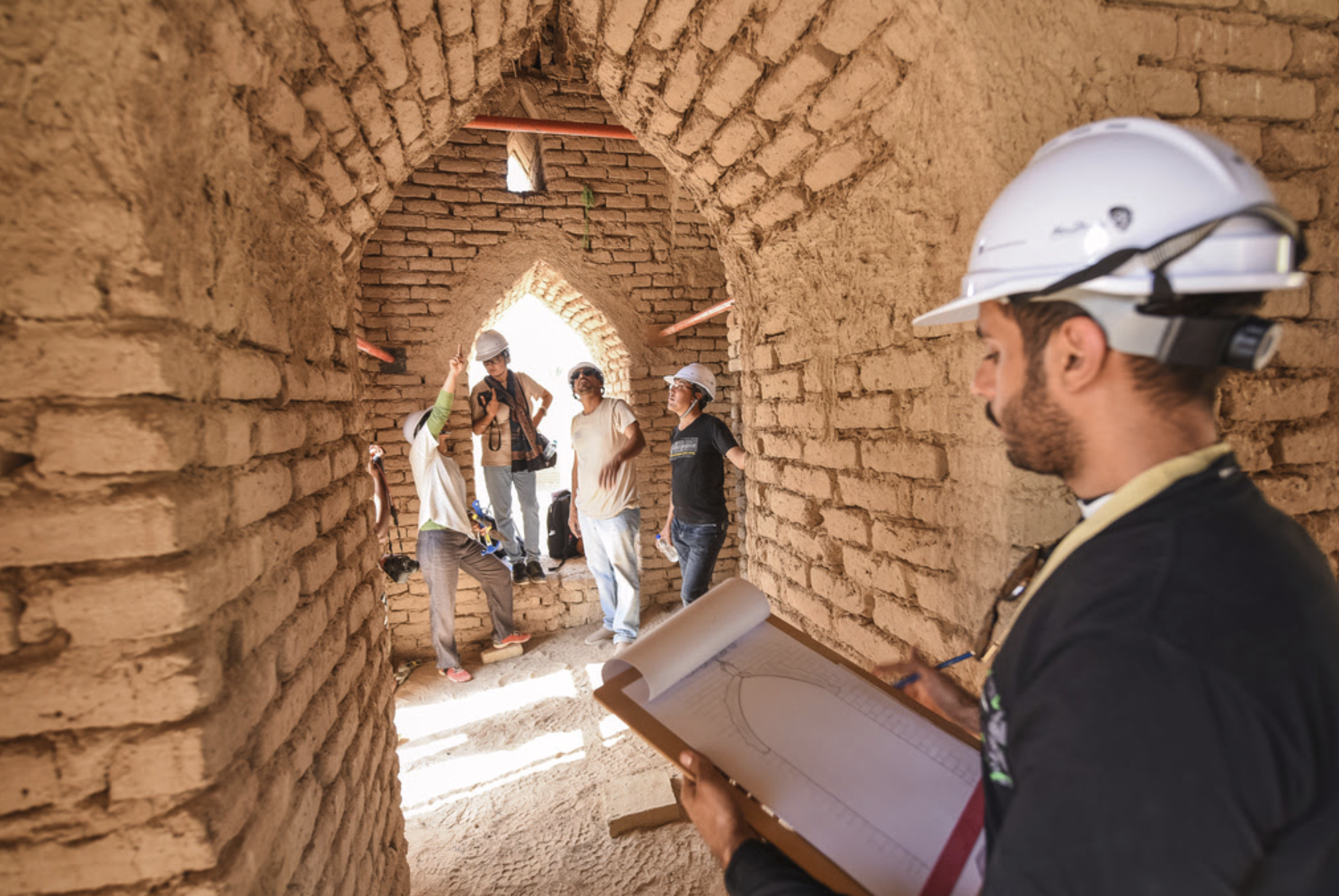
This one-month training course will use Al Ain, UAE as an open-air laboratory for participants to learn practical, hands-on methods for preserving earthen buildings and archaeological sites. On a study trip to Oman, participants will carry out an exercise on the conservation of urban settlements made of earth in Nizwa’s al Aqr neighborhood, an ancient, fortified city built with earthen bricks.

Earthen Architecture Course topics include:

  • Conservation theory and principles
  • Laboratory and field analysis of earthen materials
  • Earth as a building material—use and construction techniques
  • Mechanisms of decay—material and structural
  • Methods of recording for documentation and analysis
  • Conservation methodology—Planning of conservation and rehabilitation interventions
  • Practical conservation methods—structural and non-structural
  • Conservation of earthen archaeological sites and decorative surfaces
  • Maintenance and preventive conservation
  • Developing rehabilitation and adaptive re-use projects for earthen buildings

A study trip to Oman where participants will carry out an exercise on the conservation of urban settlements made of earth (Manah village, near Nizwa, Oman)

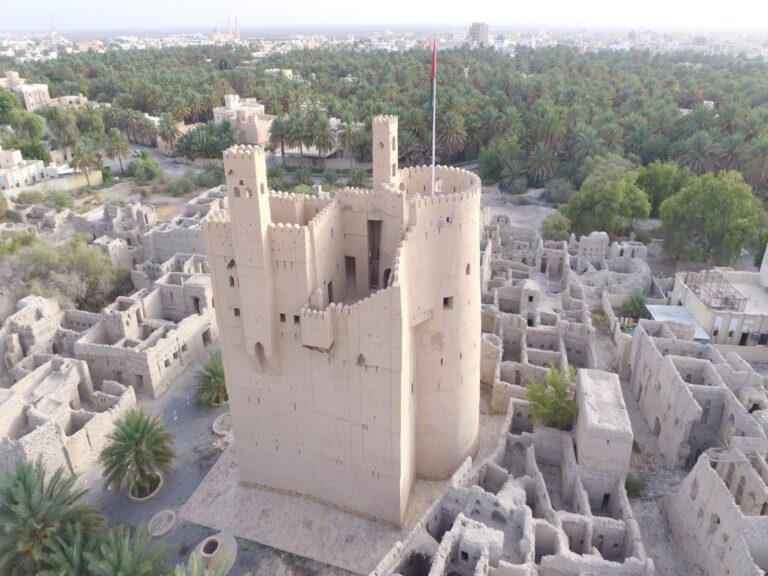
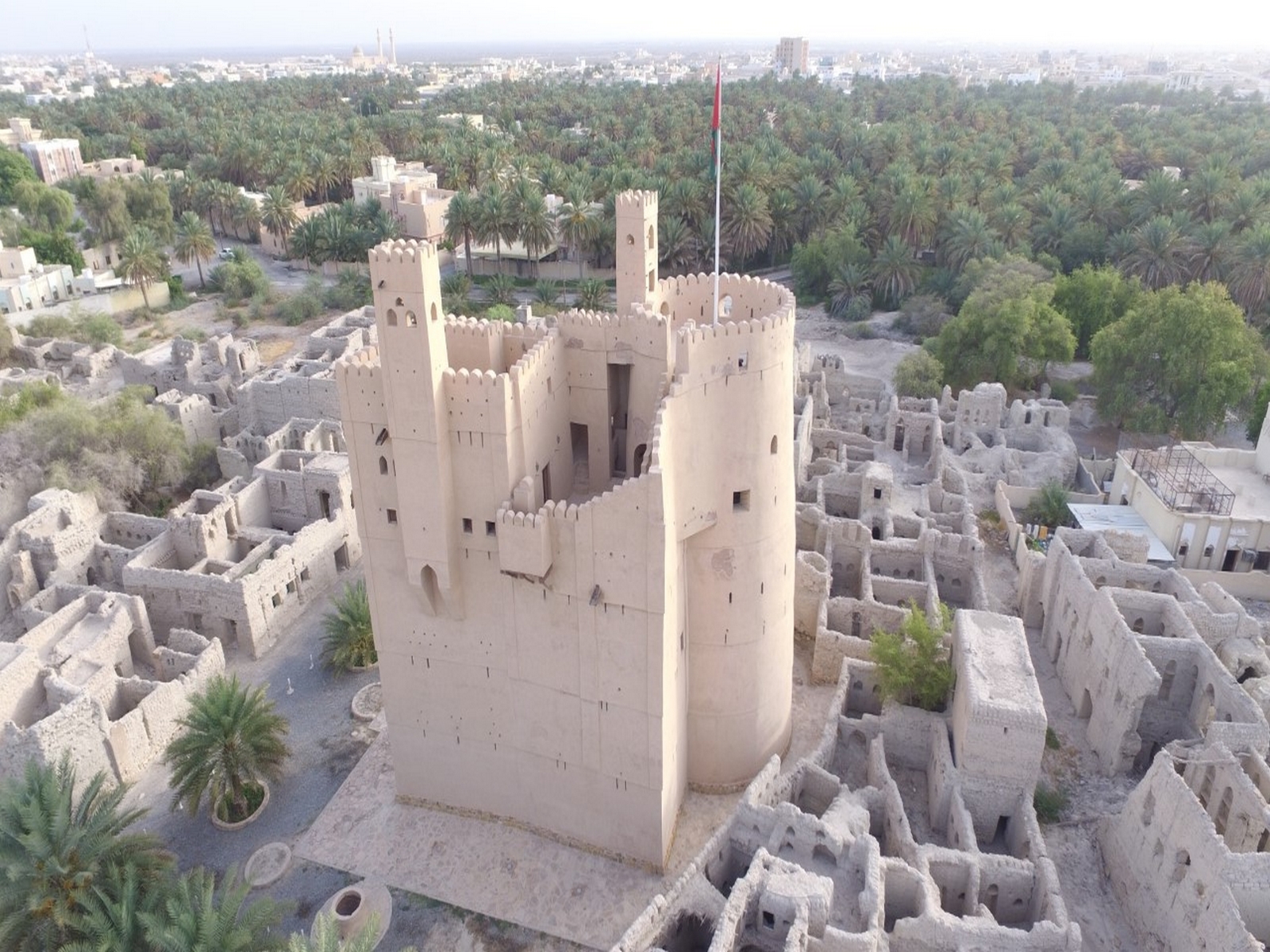
A four-story castle made from mud and sand

Manah tower, oman, earth architecture
Al Faiqain Castle is a 4-story mud tower in the Manah village near Nizwa, Oman via Times of Oman

Earthen architecture is one of the oldest and most widespread building types in the world. Despite its long history, however, it faces many threats to its preservation. It’s also not earthquake proof.

In the Middle East and North Africa region, earthen buildings are under threat from a variety of factors including abandonment and population displacement, earthquakes, and climate change.

Unreinforced buildings made of earth can be extremely vulnerable to earthquakes, subject to weakening and even collapse, especially if they are poorly maintained. Similarly, climate change and erratic weather events such as monsoons and floods are especially destructive to earthen structures and settlements.

Located in the Emirate of Abu Dhabi, Al Ain is known as the “Garden City” of the United Arab Emirates. It is also a UNESCO World Heritage Site with a 5,000-year history of settlement in oases, archaeological sites and buildings constructed with earth.

earth architecture course, middle east

Sites that will be visited by participants include Al Jimi and Al Qattara Oases and Hili Archaeological Park.

“Al Ain is the ideal setting for the earthen architecture course because of its rich heritage, central location in the region, and the expertise of DCT Abu Dhabi in heritage management and conservation,” said Susan Macdonald, head of Building and Sites at the Getty Conservation Institute. “Participants will gain theoretical and technical experience needed to preserve their home country’s earthen heritage.”

Yemen’s mud city of skyscrapers

Yemen, for instance, is home to one of the most impressive, one of the oldest and also one of the tallest mud cities in the world. Before the city scrapers of New York, the city of Shibam had built high rise apartments out of mud which tower to over 100 feet and are between 5 and 11 storeys high.

shibam, mud city, earthen architecture, yemen
Shibam, mud skyscrapers, Yemen

Dating back to around the 2nd century CE, the city was built using local clay and is still home to around 7,000 residents who live in the fortified city.

Although it is over 2,000 years old, rain and erosion necessitates constant maintenance, which efforts are now supported by restoration and urban development programmes. Nicknamed Manhattan of the Desert, the city is testament to the durability of mud not just for single structures but also for modern high-rise living.

hassan, hasan fathy, Egypt, green sustainable architect
Modern earth architect Hassan Fathy

While attendance for this class is now closed, be in touch with the Getty Institute to learn about future earth architecture opportunities. If you want more inspiration from the Middle East, see more on Iran’s Nader Khalili, and earth architect Hassan Fathy. If you are in the United States, learn more about local straw building through Bill and Athena Steen. I had the pleasure of staying with them for a week about 20 years ago. Their strawbale building projects at Canelo are still going strong. And are more relevant than ever.

Nursing as a Profession to Change the World

0
nurses in a circle, studying classes together
Nurses unite and change the world for good!

There are few professions as under-appreciated as that of nursing. Nurses work long hours in sometimes chaotic environments, and yet they have to ensure that each patient gets the best care possible. They bring a combination of education, expertise, and compassion to their jobs, even when they don’t really feel like it. In addition to their day-to-day duties, they also have to continue their education in the form of CEUs, or continuing education units. By taking classes for nursing CEUs, nurses are able to stay up-to-date on recent advancements in healthcare. This adds to their overall knowledge and skills, and helps them provide a better quality of care for their patients.

Nursing is a field that demands ongoing learning, with plenty of opportunities for advancement. To illustrate, achieving the title of a Certified Nursing Assistant (CNA) necessitates active studying and earning a passing score on the CNA exam. You can find online reading materials and 17 free study guides for the CNA test from platforms like Career Employer and Study, among others. Similar practice resources are also available for HESI, TEAS, and NCLEX exams. Regardless of their role, every nurse contributes uniquely to healthcare through their specific responsibilities, collectively making a significant impact.

There’s a lot more to being a nurse than just checking charts and administering medications; here are some ways in which nurses can change lives, communities, and the world at large.

They improve quality of care

The doctors may be the ones performing surgeries or handing out diagnoses, but it’s the nurses who take measures to prevent secondary infections, reduce the chances of developing pressure ulcers, and speed up recovery times with specialized care. They also continually hone their educational foundations with CEU courses, so that they can apply the latest advancements and techniques as they care for their patients.

nurse looking to the future
Nurses are thinking about the present and the future

They support the medical system

Without nurses, today’s modern medical system wouldn’t be possible. There are approximately 3.8 million registered nurses within the US, and that number is expected to keep growing. According to 2015 statistics, there were about 3.5 nurses for every doctor – an important fact if you’re considering who’s spending the most time with patients.  And about paying the bills, a senior nurse can make more than a decent living wage: and you can relocate and turn a part-time mission into a stable job: for instance see locum tenens family medicine salaries. The doctors may be the ones performing important procedures and recommending treatments, but they don’t have enough time to personally oversee recovery periods, dosages, or therapies. That’s where nurses come in. Without their time and effort, what would the medical system be able to offer patients? Only a fraction of what it actually does.

They support communities by volunteering

As if nurses weren’t already busy enough at work, many of them report spending time volunteering in environments unrelated to healthcare. This could include spending time working with Habitat for Humanity, educating people on healthy lifestyle habits, or giving guidance on nutrition and exercise. These activities may not involve technical skills, but they do require the qualities that make nurses good at what they do – characteristics like teamwork, empathy, and an understanding of the relationship between lifestyles and overall well-being.

They support their co-workers

Being a nurse often takes a heavy toll, whether that’s physically, mentally, or emotionally. Not only is it difficult to witness people’s pain on a daily basis, but it’s even harder when patients don’t experience desired outcomes. It’s common for nurses to suffer from things like burnout, exhaustion, depression, and more because of their jobs. When this happens, though, they often get support from other nurses. This could come in the form of taking on a couple of their patients, or a few encouraging words at the right time. Whatever the case, nurses don’t just care about their patients; they care about each other too.

They improve the lives of patients’ families

While most of the focus is rightly on the patients, their families deserve to be acknowledged too. It could be that the family of a patient is in the healthcare facility to check up on how they’re doing, or they may have come in with the patient and not yet left. Nurses can make sure that families feel seen and heard by keeping them updated on the patient’s status, bringing extra chairs if needed, pointing out coffee or vending machines, and generally helping them feel less disoriented. These may be small gestures, but they can also be instrumental in keeping the patient’s support group intact.

They offer emotional support

If someone needs the services of a nurse, chances are they’re in some level of distress. And if they’re experiencing physical distress, they’re likely also experiencing emotional distress. A nurse’s job is to help address the physical side of the equation, but they can also help with the emotional side of things as well. They might go out of their way to express sympathy, or use humor to lighten the mood. This helps the patient manage their stress and anxiety, which makes them feel like they’re regaining some control over the situation after all.

They advocate for patients

Most doctors are only able to spend a limited amount of time with each patient; this can result in overlooked symptoms, misdiagnoses, and errors in medication. Nurses, on the other hand, spend much more time with patients. They monitor symptoms, they talk more extensively about how the medications or treatments are working, and they explain the reasoning behind treatment strategies. If new information comes to light that the doctor needs to know about – but that the patient wouldn’t have necessarily told the doctor themselves – the nurses make sure that the doctor gets this information as quickly as possible.

They improve health literacy

Patients can’t remain under a nurse’s care forever; once it’s time for them to leave the healthcare facility, their nurse takes the time to improve their health literacy. This could mean demonstrating how to do specific exercises, going over literature so they understand their prognosis, or explaining how to interpret dosing information on prescription bottles. Health literacy is essential if someone is going to take care of themselves properly, but close to 90% of adults in the US have limited health literacy. This being the case, nurses take it upon themselves to ensure that each of their patients can continue working towards a positive health outcome on their own.

The takeaway

It’s pretty clear by now that nurses are an essential part of the healthcare system. Their hard work has a ripple effect with every patient, eventually reaching their families, communities, countries, and the world. The healthcare system in the US may not be perfect, but it still sets precedents for countries all over the world – thanks in large part to the hard work of its nurses.

Gift Guide:10 Sustainable Gifts for the Man in Your Life

gift guide sustainable men

If you’re looking for gifts for the man in your life, then this gift guide will give you some ideas. From a solar-powered watch to ecologically sound clothing and beyond, there are plenty of great options that he’ll love. And best of all, they’re all sustainable. So, whether the man in your life is a resource-efficient guy or just someone who appreciates great gifts, sustainable gifts for him are sure to be received thankfully.

1. Lip Balm Made With Organic Beeswax

Is the man in your life looking for a way to hydrate his lips and feel good about doing it? Natural lip balm is the perfect gift! This lip balm is made with organic beeswax that provides long-lasting hydration without any chapping or cracking of the lips. Plus, it comes in various flavors so that you can find the perfect one for him. 

2. Solar-Powered Watch

Solar-powered watches can make an excellent gift for the eco-conscious man in your life who wants to reduce his environmental impact. And because it’s solar-powered, he’ll never have to worry about batteries dying or replacing them. These watches come in various colors and styles to suit any taste; some are water resistant.

3. Vegan Leather Wallet

A stylish vegan leather wallet is a great gift for a man who cares about animals and the environment. They are usually made from sustainable materials like recycled nylons and rubber, so it’s gentle on the planet. Plus, it’s PETA approved, so you can be sure that no animals were harmed in its production. He’ll love carrying his wallet, knowing it’s cruelty-free and environmentally friendly.

4. Sustainable Clothing

eco-fashion, Middle East, summer, green design, sustainable design

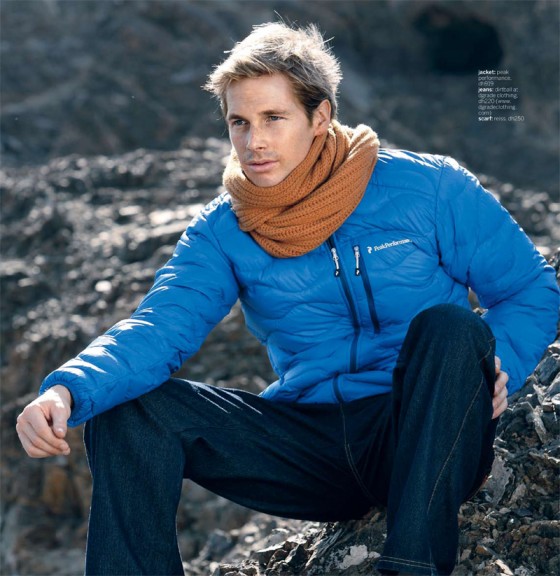
Sustainable clothing is a great gift for any man who cares about the environment. Sustainable shirts, jackets and more are made from organic hemp, bamboo or recycled materials. They’re gentle on the planet, and they look great too!

5. Reusable Water Bottle

Puri, sea water, desalination in a bottle, water bottle makes sea water potable, drinking water, clean tech, green tech

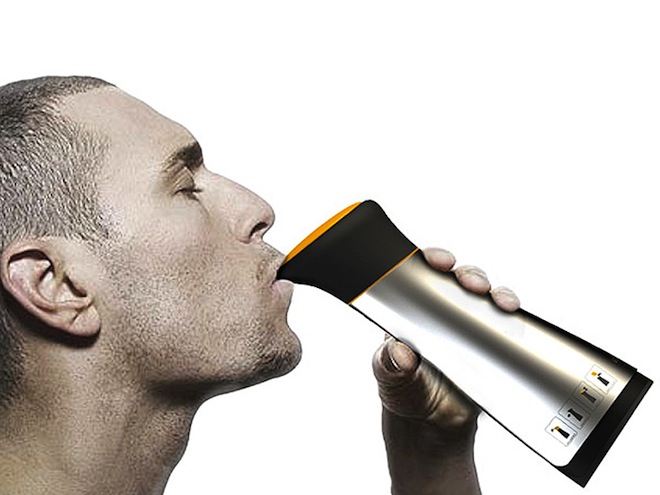
A reusable water bottle is a must-have for anyone who wants to stay hydrated. Reusable bottles are sustainable, eco-friendly and stylish. They make the perfect gift for the man who wants to reduce his plastic use and help save the planet. Insulated water bottles can keep drinks cold for up to 24 hours or hot for up to 12, so he can enjoy his favorite beverages anytime, anywhere.

6. Sustainable Home Goods

smart thermostat, ecobee
A smart thermostat is a key product for any eco home.

Sustainable home goods make a great gift for the man who might have recently moved out to live on his own. These products are also a simple way to introduce someone to living a low-waste lifestyle. From sustainable sheets and towels to cookware and beyond, you can find a wide selection of eco-friendly home goods that are sure to please. And because they’re made from sustainable materials, he’ll be helping to reduce his impact on the environment every time he uses them.

7. Natural Dry Deodorant That’s Aluminum Free

Plastic-free deodorant is a must-have for any eco-conscious man, and a naturally derived dry deodorant that’s aluminum free fits the bill. This natural formula is made with baking soda, arrowroot powder and cocoa butter and will keep him smelling great all day long and without harming the planet.

When shopping for a natural deodorant, be sure to search for one that kills odor-causing bacteria, neutralizes odor and absorbs sweat. Even though you are purchasing something eco-friendly, it should still work just as well as its non-natural counterpart. 

8. Dry Shampoo

Is the man in your life always on the go? If so, he’ll love using a natural dry shampoo. It’s perfect for busy guys who don’t have time to wash their hair daily. Just sprinkle a little on, massage it through the hair and style the hair as usual. This natural formula will absorb oil and leave hair looking and feeling fresh. 

9. Wooden Watch

svenn wood watch

A stylish wooden watch is a perfect gift for a man who loves the outdoors. Some models are water resistant so that he can wear them anywhere, including the shower. And because it’s wooden, it’s unique and different from any other watch he’s ever worn. Enhance the appeal of a wooden watch by including interchangeable watch bands. Choose from sustainable materials like recycled fabric or long-lasting silicone watch bands to maintain its environmentally conscious theme. This variety allows the wearer to customize their watch for different styles and activities, making the gift even more versatile and unique.He’ll love showing off his new watch to all his friends, and he’ll be doing his part to save the planet, too.

10. Sustainable Socks

Sustainable socks are the perfect gift for a man who loves to be comfortable. Many sustainable socks are made from a blend of bamboo or recycled cotton and merino wool, so they’re soft and warm. Because they come in various colors and styles, you can find the perfect pair to suit his personality.

Shop Sustainable Gifts for Him 

The perfect sustainable gift for the man in your life is out there. With a little thought and creativity, you can find something that he’ll love that won’t harm the planet. 

How to Use Nature With OCD Therapy

0
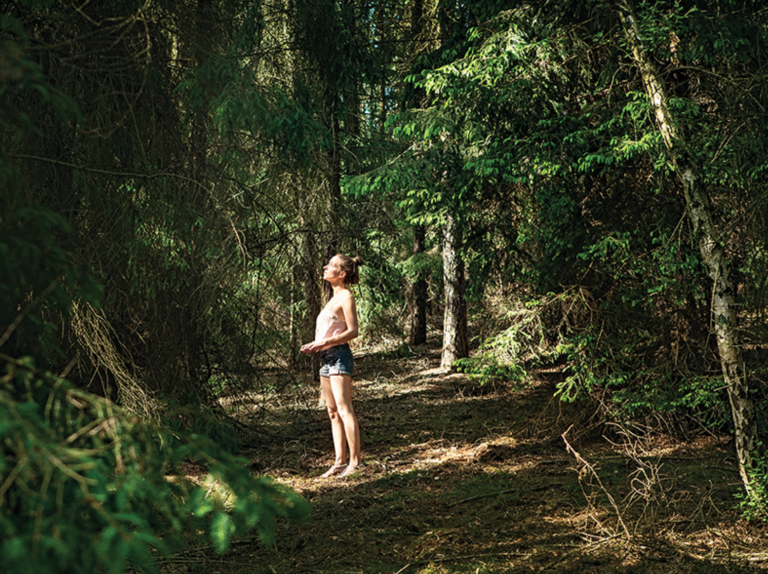
forest bathing, OCD therapy, woman hipster contemplating nature in dark green forest
Forest bathing is prescribed by Japanese doctors for good health. It can also help with OCD.

There’s no doubt that cognitive behavior therapy (CBT) is the most effective treatment for OCD, alongside medication. However, OCD medication can have negative side effects, which some patients may not want to deal with. In such cases, pairing OCD therapy with natural remedies can be more effective than you think. 

Plus, they’re entirely safe, which is why many people prefer them over OCD medication. The right remedies, such as hypnosis, herbs, mindfulness, and diet improvement, cannot eliminate OCD entirely, but they can reduce the symptoms drastically.

Here are a few natural remedies to utilize in conjunction with your OCD therapy, such as CBT and ERP, for the best results.

A Better Diet

It may seem like cliche advice, but improving your diet can drastically improve your mental health. Of course, it cannot guarantee an end to mental disorders such as OCD or depression, but physical health plays a great role in your mental performance. If your body lacks certain nutrients, essential vitamins, minerals, and omega-3 fatty acids, your mental health may suffer the consequences. 

Studies have found that the levels of these essential nutrients are exceptionally deficient in patients with mental disorders. Vitamin D3 (cholecalciferol) is a crucial part of your diet that can improve your OCD symptoms, and you may consume it with fish, egg yolks, mushrooms, and cow milk. 

You may also add oysters, beef, crab, greens, seeds, and whole grains to your diet to increase your zinc and magnesium intake since they are deficient in OCD patients. Those suffering from OCD may also benefit from Vitamin B 12 (cyanocobalamin) from tofu, liver, trout, and cheese. 

Finally, adding omega-3 and -6 fatty acids to your diet can significantly improve your mental health, decreasing the chances of a depressive episode.

Mindfulness Training

You may explore mindfulness training if you’re looking for a natural remedy that doesn’t involve drastically changing your routine. This natural remedy for OCD is powerful, mainly due to its ability to ease your mind anywhere and anytime, especially further into the training stages. In addition, it targets the source of OCD symptoms: intrusive thoughts. 

The awareness and control of intrusive thoughts allow patients to reduce undesirable repetitive behaviors that typically follow such thoughts. Researchers state meditation is one of the best remedies for OCD when applied correctly, as it helps control both thought processes and following behaviors.

Supplements and Vitamins

The Global Neuroscience Initiative Foundation (GNIF) details that certain dietary supplements meet nutritional requirements for reducing symptoms of severe mental disorders, such as OCD or schizophrenia. Their researchers even suggested that OCD medication can cause severe side effects for the patient, including increased suicidal thoughts during the first weeks.

They suggested certain supplements as an alternative to reducing OCD symptoms. Of course, they may not cause an immediate effect, but they do make a great difference. For example, Amino acid supplements improve the production of neurotransmitters, ultimately balancing OCD symptoms.

An amino acid named tryptophan is a known precursor to serotonin, which is associated with brain function, cognition, mood regulation, and other aspects of mental health. High tryptophan supplements can enhance serotonin levels enough to reduce certain OCD symptoms.

Make sure to discuss this with your doctors before making any significant changes in your diet.

Acupuncture

Acupuncture is a holistic remedy, part of complementary and alternative medicines (CAMs). CAMs typically refer to practices that promote better health, relaxation, and healing and are unlike conventional medical procedures. Other than acupuncture, CAMs include yoga, aromatherapy, herbal medicine, and therapeutic massages. 

Acupuncture is considered a natural remedy for OCD as it focuses on both the mind and body, triggering your immune system to expedite the healing process. The expert inserts small needles into your body’s acupuncture points, releasing stress, anxiety, and other OCD symptoms.

If you have a platelet disorder or are taking blood thinners, consult your doctor before exploring acupuncture.

Hypnotherapy and Hypnosis

Hypnotherapy and hypnosis are unusual yet highly effective natural remedies for OCD, with most patients reporting positive results. The hypnotherapist puts you in a semiconscious, trans-like state, where you allow self-awareness, deep focus, and a sense of control.

These three factors are crucial in reducing intrusive thoughts and behaviors, the root of most OCD symptoms. Hypnosis helps you determine the root causes of your OCD and learn valuable insights on how to reduce your symptoms on a personal basis. It also provides a secluded space to replace unwanted thoughts and behaviors with healthier alternatives.

It may take multiple hypnosis sessions before you see notable results.

Herbs

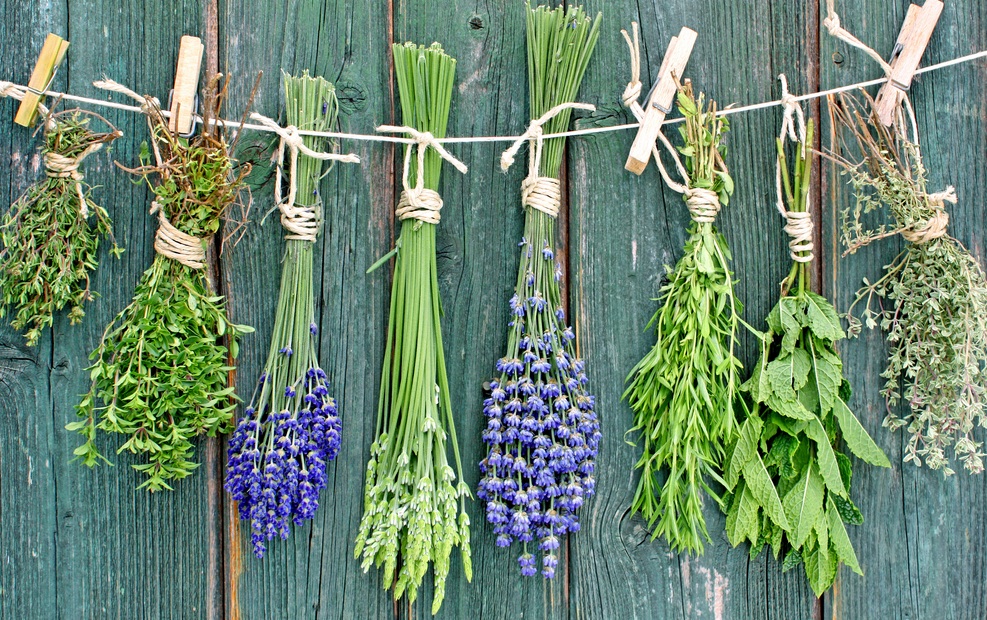
string of herbs on wall, herbs you can grow

Last but not least, herbal remedies are the simplest but one of the most effective natural remedies for OCD. The versatility of this remedy allows each patient to find which herb or combination of herbs can help eliminate their symptoms best. The only downfall is that it may take time before you notice a significant change in your symptoms.

However, this remedy’s main benefit is combining multiple herbs to treat a set of symptoms together. For example, St. John’s Wort is one of the most popular herbs for OCD treatment, being used to treat mood and anxiety disorders for decades. It mainly does its job by promoting serotonin production, the lack of which is linked to OCD symptoms.

N-Acetylcysteine is another beneficial herb for OCD, as it regulates glutamine in the brain. Meanwhile, Milk Thistle/Silybum Marianum serves as an herbal antidepressant, and Kava/Piper Methysticum eases anxiety, stress, and mild depression. Lastly, you may explore 5-HTP/Inositol, as it can regulate your mood and reduce most OCD symptoms.

However, if you’re already taking OCD medication, make sure to contact your doctor before taking any unusual herbs, as they can interact with some medication.

Conclusion

It’s not easy to live with OCD, which is why most patients combine therapy with medication to achieve more effective results. However, those who aren’t comfortable with OCD medication side effects opt for natural remedies. 

If you or a loved one are showing symptoms of OCD, take an OCD test while keeping in mind that it isn’t a professional diagnosis. To moderate your condition before it escalates, explore some of the natural remedies for OCD and reduce your symptoms without medication. 


The 10 best desert marathons

0
marathon des sables, single man running
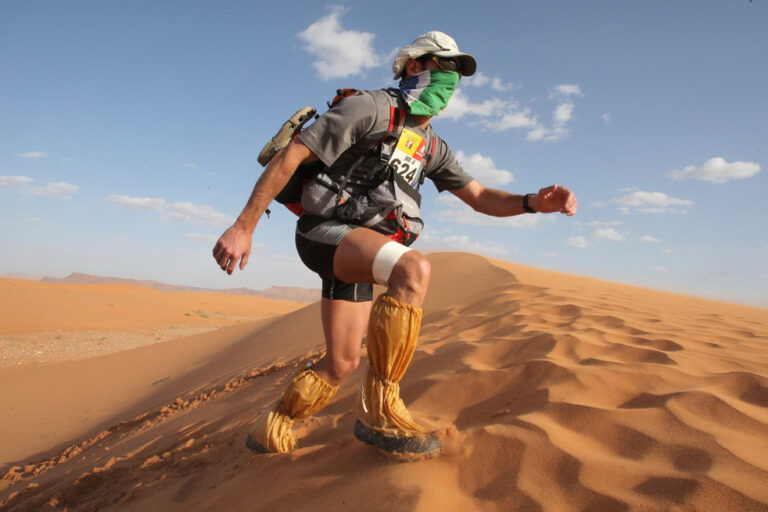
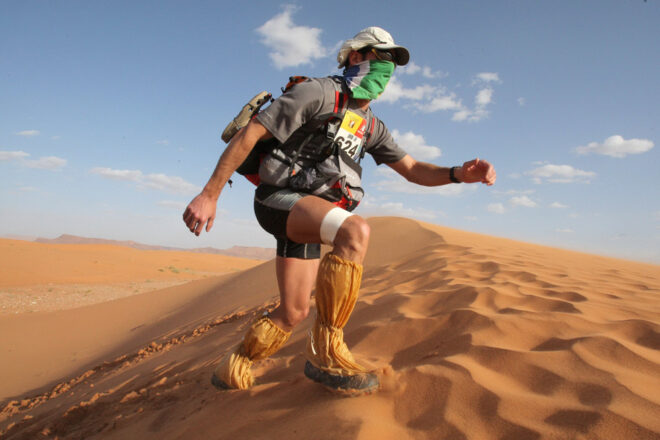
A competitor climbs a dune, during the third stage of the Marathon des Sables in the Sahara desert, some 250 miles south of Ouarzazate in Morocco. PIERRE VERDY/ AFP/ Getty Images

The best marathon in the world? Ones where women are allowed to run? This is a hard question to answer and you will get answers as varied as the people you ask. There are the well known marathons, like the New York Marathon in November, the London Marathon in April and the Berlin Marathon in September. Chicago, Boston, Stockholm and Paris follow suit.

What about the best marathons in the Middle East? Now you are in for an adventure. 

Adventurous, sustainable travel that’s good for you, and a marathon rolled into one? That’s a marathon in the Middle East. A marathon to support women runners? Maybe you have an eye on the prize or want to run around holy sites, the land of the cedars, or through grueling but expansive deserts in the Sahara Desert?

Maybe you are a global nomad who’s looking for the next location for roaming and running for the next few months. Nothing like training in situ like a local. Nothing like running for cardio health. And nothing like the Mediterranean Diet for heart health. We are Green Prophet so we’ve got your Middle East marathon bases covered. For this purpose locations in North Africa, the Arab parts of it, are lumped into what we call The Middle East. 

From starts in capital cities to desolate deserts or a run to help save refugees, here is a list of the best runs, the month they run, with varying degrees of atmosphere, speed, beauty and even prize money. Want us to consider adding another to this list? Drop us a line to [email protected] or a message via Instagram

The 10 best marathons in the Middle East

Marathon des Sables, Ouarzazate, Morocco – April

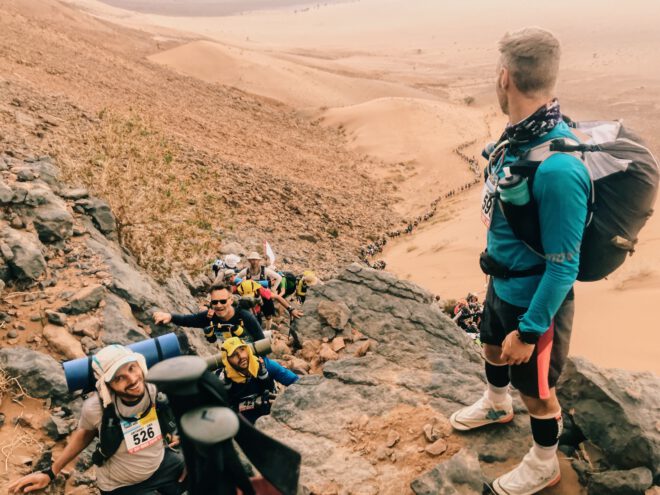
Participants helping each other up the mountains, Marathons des Sables, marathon in the Middle East
In line climbing Sahara mountains, Marathon des Sables

The Marathon des Sables is iconic and profits go to charity. It’s the marathon that might change your life or your status as an athlete. This marathon is more adventure and eco-tourism than any marathon you’ve ever met. “Sables” means sand in French, a second language of Morocco – after Arabic – and it’s in sand you will run. Sand will fill every crack of your soul.

It’s considered the world’s toughest footrace which combines 5 and a half marathons in one, spanning about 200 miles (251km) over five to six days. Everything you will need to eat is carried on your back, except water, as you run through the tops of the Sahara Desert in Morocco, in the heat of the sun, making it a coveted event for top athletes. Proceeds to this event go to a charity that help support desert dwellers. Funds go to solar energy systems and schools. 

Standard Chartered Dubai Marathon, Dubai, UAE – February

Dubai Marathon, Burj al Arab, marathons of the middle East, best marathons, UAE
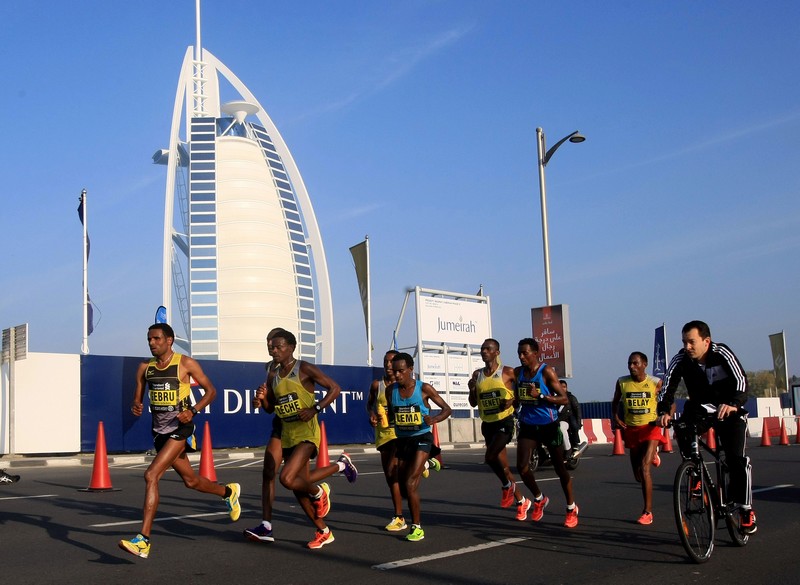
Runners pass by Burj Al Arab hotel at the Standard Chartered Dubai Marathon in Dubai, United Arab Emirates, (AP)

The Dubai Marathon is the largest mass sporting event in the Middle East, according to event organizers. It’s an annual road-based marathon hosted by Dubai, United Arab Emirates, since 1998. The marathon is categorized as a Gold Label Road Race by World Athletics. In 2007, it was announced that the 2008 marathon would become the world’s richest long distance running event in history, with one million dollars offered as a prize for a world record and $250,000 for first place for both men and women. 

Top cash prizes still attract the world’s best runners. Participants from the past claimed that while the architecture is beautiful, and the weather is great for Europeans looking for a bit more heat in the winter, most of the race takes place through flat and boring scenery. 

But if you’ve come for the prize month or the ecological attractions before and after, and you are in the trance of running, who cares?

Bahrain International Marathon, Bahrain- February

Bahrain Marathon map, best marathons Middle East,
Map out the Bahrain Marathon from above

The Bahrain Marathon is older than you’d think. It was This race was inaugurated in 1979 to coincide with a visit from Queen Elizabeth II, where 15 participants ran. In 1983 Mustafa Fulad became the first Bahraini to complete a full marathon but more and more locals participate in it every year as sports, and the joy of running, catches on in the Middle East.

Today this marathon is known for crossing both desert and mountains on Amwaj Island in Bahrain. Definitely not boring. As per Middle East style, the purse money is about $100,000 every year for top winners in male and female categories.

ADNOC Abu Dhabi Marathon, Abu Dhabi, UAE – December

Abi Dhabi marathon, Adnoc, best marathons Middle East
Abu Dhabi Marathon, UAE

Enjoy running with marathon elites in the heart of Abu Dhabi, while taking in iconic landmarks, stunning scenery and cheering crowds as you stride in style to finish line success. Run past the Zayed Sports Center, and Sheikh Zayed Grand Mosque. People come for the biggest prize money at this race, totalling about $300,000 USD dollars every year.

Sahara Marathon, Algeria – February

Sahara Marathon, best marathons Middle East, north africa
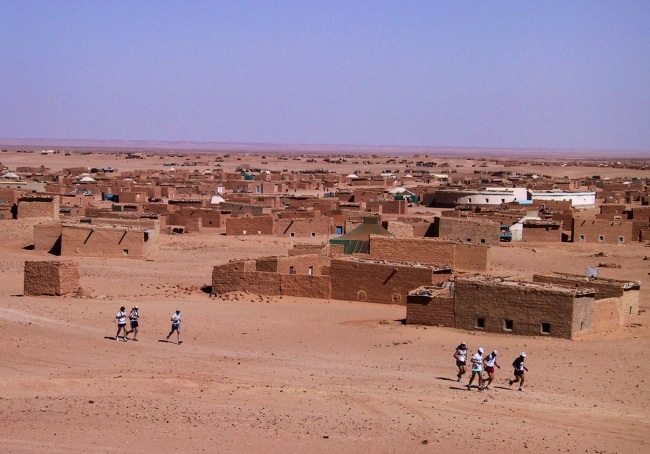
Running around refugee camps, during the Sahara Marathon

This intense course, a humanitarian and activist race at its core, starts in the Sahara, and you have to fly in to reach it at Al Ayoun, Algeria. Aid stations are set up throughout as you run in the world’s largest desert.  This marathon event has brought together thousands of runners for a few decades to the Saharawi refugee camps of Tindouf in Algeria. 

The Sahara Marathon is an international sport event to demonstrate solidarity with the Saharawi people with the aim of promoting sport among Saharawi young men and women and financing and developing humanitarian programs to help these people overcome conflict in the region.

Who are the Saharawi people?

The Sahrawi, or Saharawi people, are an ethnic group and nation native to the western part of the Sahara desert, which includes the Western Sahara, southern Morocco, much of Mauritania, and along the southwestern border of Algeria. They are of mixed Berber, Arab and Black African descent. Systematic human rights abuses, police brutality, violations of international law and fundamental rights, the Sahrawi people of Africa’s last colony, Western Sahara, have endured decades of repression at the hands of Moroccan occupying forces. Since replacing Spain as coloniser, Morocco has attempted to control a territory about the size of the UK, using military force to suppress free speech and pro-independence protests. 

Jerusalem Marathon, Jerusalem, Israel – March

Jerusalem Marathon, old city, city of David, best marathons Middle East
Run around the City of David, Jerusalem

Going for a Holy Run? The Jerusalem Marathon is an annual marathon running event held in Jerusalem during the month of March when the weather is pleasant and warm in this Israeli city, also known as The City of David. 

The course begins at Israel’s parliament, passes through Mount Scopus and the Old City, and finishes at Sacher Park. Prize money for winners is only a few thousand dollars, so this is a run you do for your soul. 

Jerusalem’s big brother marathon is the Tel Aviv Marathon, which happens in February attracts more runners and prizes (about $7,000 USD for winners, $40,000 for record breakers) and this year about 40,000 runners made it to the event. Our advice? Stay for a month and come for both marathons.

Update 2024: It’s not announced if the Jerusalem Marathon will go ahead this year but the Tel Aviv Marathon will be in March

Antalya Marathon, Anatolia, Turkey – March

Antalya marathon, Turkey, best marathons Middle East

The Antalya Marathon, officially International Öger Antalya Marathon, and for a short time known as Runtalya, is an international athletic event that takes place in Antalya, Turkey since 2006. It is one of the best marathons of the Middle East. Run along the sea, a most refreshing course that winds along one of the prettiest parts of the Mediterranean Sea. After the flat course race, rip off your shoes and head to the beach. A most sporting holiday with up to 10,000 others.

Antalya is a Turkish resort city with a yacht-filled Old Harbor and beaches with plenty of boutique hotels. It’s a gateway to Turkey’s southern Mediterranean region, known as the Turquoise Coast for its blue waters. And it’s a great destination for stargazing or launching a yacht to cruise along the Aegean and Mediterranean Seas.

Remnants remain from Antalya’s time in the past as a major Roman port. These include Hadrian’s Gate, built to honor the Roman emperor’s visit in 130 A.D and 2nd-century Hidirlik Tower, with stunning views of the harbor.

The Dead Sea Ultra Marathon, Ein Bokek, Israel – February

Dead Sea Marathon, Israel, run along the dead sea dikes, best marathons Middle East
Runners get a once a year chance to explore the Dead Sea between Israel and Jordon on this special run.

The Dead Sea is the lowest place on earth and one of the world’s wonders. Also known for Spencer Tunick’s naked Dead Sea. Cleopatra’s beauty secret too. The highlight of the race, then, is a run towards the sea on the border embankment of the Dead Sea Works that surrounds the southern part of the Dead Sea. It happens only once a year, in marathon and ultra marathon distances, and just for this race, that security forces allow this scenic route to be open along the dikes, giving runners breathtaking views that have so far been observed by employees of the Dead Sea factories. The Dead Sea is dying. Run this race to draw awareness to the devastation caused to it from water overuse and the Dead Sea factories on other side of the sea.

The dike serves as the border area between the Israeli side of the Dead Sea and the Jordanian Dead Sea and they serve as a barrier without a fence between the two countries that maintain a peaceful relationship. So straddle both sides on this once of a lifetime run. 

“Amazing location,” says one runner who ran the Dead Sea, “I think you’d struggle to find a cooler place to run! Not crowded, fantastic photos and drone photos included, plentiful aid stations. But the main plus is definitely the awe inspiring location.”

BDL Beirut International Marathon, Beirut, Lebanon – November

Beirut Marathon, best marathons Middle East
The Beirut Marathon is one of the best marathons in the Middle East

Hosted in Lebanon’s capital city, the Beirut Marathon offers both wheelchair and running races, hoping to inspire health and fitness in the Land of God’s Cedars

Beirut is considered the cool kid on the block in the Middle East. It’s a modern city, with modern free thinkers, like the kids nearby in Tel Aviv. Although the two can never meet as conflict with Hezbollah terror groups keeps the borders closed. 

Beirut has suffered some terrible setbacks from corruption, explosions and terrorism.  Running around this Mediterranean Sea city is a powerful way to bring life back to Beirut after devastating losses in the past couple of years. After the run there are plenty of hikes and eco-tourism options to follow around Lebanon. 

Istanbul Eurasia Marathon, Istanbul, Turkey – November

crossing Istanbul's bridge during the marathon, best marathons Middle East
Crossing Istanbul’s bridge during the marathon

Crossing from Asia into Europe, this full marathon The Istanbul Eurasia Marathon race spans two continents and you cross a bridge to connect them. The Istanbul Marathon starts 300m behind the Bosphorus Bridge; the race course divides in Besiktas turnoff after passing the bridge, then goes down from Barbaros Boulevard to Besiktas, and follows the coastal road to reach Karakoy.

Founded in 1979 in an effort to host a marathon for visiting German tourists, it is one of the oldest races in the region and certainly a foundation for one of the best marathons in the Middle East. And no doubt, visiting Istanbul is an experience you will never forget. The prize money is pretty good, about $50,000 USD every year for the winners.

Lesser known marathons in the Middle East

Saudi Arabian woman lacing her running shoes before a marathon, running in hijab, best marathons Middle East
A Saudi woman laces her shoes before a run. Via ON shoes.

Already tried these 10 best marathons of the Middle East? Don’t forget there are some other new and noteworthy marathons in the Middle East region: Cairo hosts a stunning race but you need to run 4 times in a loop, the Erbil marathon for peace in Iraqi-held Kurdistan in November.

Amman, Jordan hosts a marathon every year but I don’t love the city. It’s polluted and not walkable. If you want to visit Jordan, try the Petra Marathon in the south and which runs around antiquities; or the Dead Sea Marathon you access from the Israeli side, via Jerusalem. The run starts in Israel and then head over to Aqaba and Petra for tourism before going to Bir Sweir in Sinai, Egypt for a week. 

If you are near Jordan, you can also try the Riyadh Road Runners, a marathon in Riyadh, Saudi Arabia meant for social and professional runners. Women are allowed to run in regular running gear but adapted hijabs make it possible to run covered. There will be a women’s only group running starting in 2022. So join the race and when you run, run in solidarity with the women too. And remember, at ultra-long distances women can outrun men.

Want us to consider adding another to this list of the Best Marathons in the Middle East? Have a sporting event for us to cover, an event which makes sustainable travel even better? Drop us a line  [email protected] or a message us via Instagram


Key Things to Know About Parvo in Dogs

0
cute pupper, red collar, by the sea
Raise your pet sustainably with vegan or wild range organic food. But make sure you stay abreast of latest viruses so your guy lives his best life.

If you own a dog and you want to ensure you look after your pet properly, it is important to familiarize yourself with potential health issues. There are some health problems and conditions that are common in certain dog breeds, and there are some that can affect all dog breeds. One of the diseases that fall into the latter group is canine parvovirus, and this is a disease that can be spread easily and can prove fatal in some dogs.

In order to reduce the risk of parvo for your pet, it is important that you are aware of some of the key factors relating to this disease. Once your dog has parvo, it can become not only very contagious to other dogs, but it can also end up in a lot of pain and could even die as a result of the disease. The more you know about the disease, the better equipped you will be to take action to either prevent parvo in your dog or to get treatment in a timely manner if the need arises. In this article, we will look at a few of the key things that you should know about parvo in dogs.

What You Need to Know

There are a few key things that you should keep in mind when it comes to parvo in the canine population. Some of the main ones are:

Symptoms Can Be Varied

One thing to keep in mind is that the symptoms of parvo in dogs can be varied, and while some pets may display all symptoms, others might only show a few of them. In addition, the symptoms of parvo can be very similar to symptoms of other health issues, so it is important to contact a vet as soon as possible to either rule out or confirm parvo in your dog. Some of the key symptoms are foul smelling stools, diarrhea with blood, lethargy, loss of appetite, weight loss, and depression.

It Spreads with Ease

Another thing you need to be aware of is that this disease spreads with ease among the canine population. This means that if you suspect your dog might have parvo, you must keep it isolated so that it does not spread to other dogs. Likewise, if you suspect another dog in the area has parvo, it is important to keep your pet away so that it does not spread to your dog.

Some Dogs Are at Increased Risk

One of the other factors to keep in mind is that some dogs are at heightened risk of serious issues with parvo. For instance, young pups aged up to six months are at increased risk of death from this disease as are dogs that have not been vaccinated. Making sure you protect your pets and get speedy advice and treatment is, therefore, essential.

By familiarizing yourself with parvo, its symptoms, and its impact, you can ensure you are ready to take action and in a position to protect your pet. 

Trojena’s $500 billion ski resort for a planet on fire

Trojena, Saudi Arabia, ski resort, Neom, Asian Winter Games, Zaha Hadid, Unstudio The world is on fire: once confident Europeans are now reeling from an energy crisis. Mortgage rates are skyrocketing, the cost of food is becoming crazy (Yemenites are starving), gas prices are crippling Canada and the US, yet somehow architects who claim to be sustainable leaders are laughing all the way to the bank.

It’s reasonable that the prince of Saudi Arabia, Mohammed bin Salman, Crown Prince and Chairman of Neom wants what he wants: endless opulence fuelled by oil money to dazzle the west with fake grandeur. The joke is that western architect firms participate in these scandals. The latest is a winter wonderland village that Saudi Arabia will build in the middle of the desert as part of Saudi Arabia’s climate nightmare city Neom

Trojena part of Vision 2030 

“Trojena will redefine mountain tourism for the world by creating a place based on the principles of ecotourism, highlighting our efforts to preserve nature and enhance the community’s quality of life, which is aligned with the goals of the Kingdom’s Vision 2030,” he said in a statement.

“It also confirms our commitment to be part of the global effort to protect the environment. Trojena will be an important addition to tourism in the region, a unique example of how Saudi Arabia is creating destinations based on its geographical and environmental diversity.”

Nice statements but what’s the carbon footprint of building a giant resort in the middle of a pristine desert. What kind of magical renewable energy does the prince of Saudi Arabia think will run this project? Trojena, Saudi Arabia, ski resort, Neom, Asian Winter Games, Zaha Hadid, Unstudio

Saudi Arabia won the bid to host the 2029 Asian Winter Games at what will be called its Trojena resort, designed by Zaha Hadid Architects  (Zaha Hadid passed away a number of years ago at a young 65), The Holland-based UNStudio, UK’s Aedas, German’s LAVA and Bureau Proberts from Australia.

Have any of these firms no sense to say that the Emperor of Saudi Arabia is wearing no clothes?

Distorted applications of renewable energy

These firms that talk about sustainability (and remove themselves from airport projects) like they actually care about the state of our climate, are designing the 2029 Asian Winter Games for a 50-mile skiing and outdoor activity resort that is set to be completed in 2026 as part of Neom. It will operate all year long as a ski resort in the colder months, and a wellness retreat in the warmer.

“Trojena will have a suitable infrastructure to create the winter atmosphere in the heart of the desert, to make this Winter Games an unprecedented global event,” explained Neom chief executive Nadhmi al-Nasr.

Trojena, Saudi Arabia, ski resort, Neom, Asian Winter Games, Zaha Hadid, Unstudio

The Olympic Council of Asia picked the Saudi candidacy: “The deserts and mountains of Saudi Arabia will soon be a playground for Winter sports!” the OCA said in a statement announcing its decision early this month.

The International Olympic Committee said on Wednesday it was not consulted in the decision by the Olympic Council of Asia to pick Saudi Arabia as the hosts of the 2029 Asian winter Games, reports Reuters

Foreign starchitects plan Saudi’s future

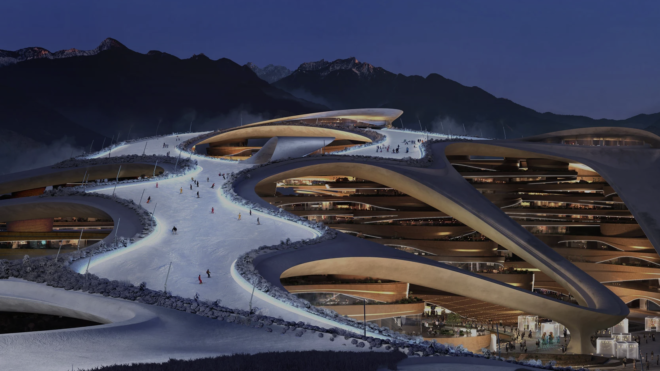
The firm Lava master-planned the resort, which will offer winter skiing, making it the first outdoor ski location in the country. 

Trojena, Saudi Arabia, ski resort, Neom, Asian Winter Games, Zaha Hadid, Unstudio
Folding village

The same firm, Lava, also designed a futuristic folded-vertical village for Trojena, see above.

Trojena, neom, artificial lake, saudi arabia

Location of Trojena, part of Neom

Geographically speaking, Trojena is located about 30 miles (or 50km) from the Red Sea coast and is close to the border of Jordan. While the majority of Saudi Arabia is a desert climate, the southwestern part where Trojena will be built is semi-arid. It will be part of a massive development project called Neom.

The exact site is to be constructed on a mountain across the sea from Mount Sinai, called Jabal al-Lawz, also known as Gebel el-Lawz, which is a mountain located in northwest Saudi Arabia, near the Jordanian border, above the Gulf of Aqaba at 8,465 feet above sea level. The name means ‘mountain of almonds’.

Trojena location, Saudi Arabia, Mount Lawz, Vision 2030, red Sea, Neom
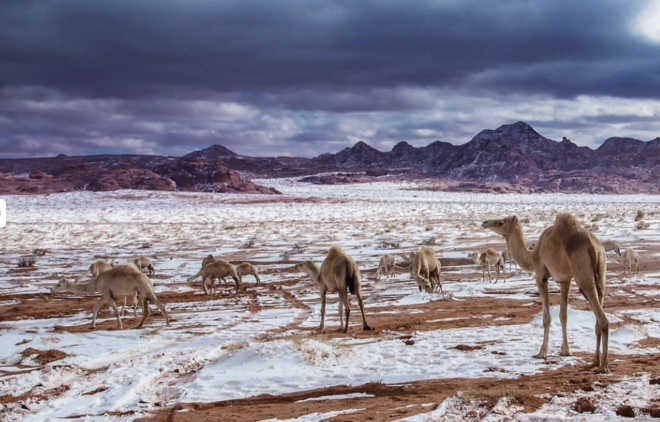
Location in winter, uploaded by Mohammed
Trojena location, mount lawz, saudi arabia,
Location of Mount Lawz, Trojena uploaded by Mashba

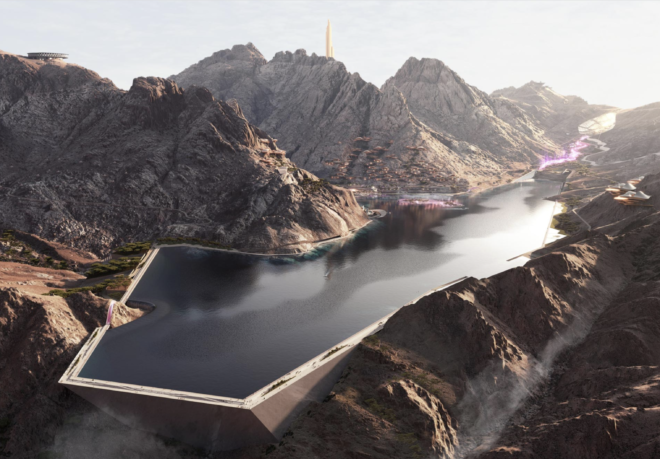
The peak of Mount Lawz, consists of a light-colored, calc-alkaline granite.artificial lake, trojena, Nount laawz, mountains, ski resort, A man-made freshwater lake designed by Location of Trojena, Google Maps, artificial lake, trojena, Nount laawz, mountains, ski resortA man-made freshwater lake designed by Bureau Proberts, of Australia will need to be full of water year-round to fuel the snow machines, while Zaha Hadid Architects “came up with other elements of the design”, reported the Neom team in a press release.

Weather patterns in Trojena, Neom

weather patterns Trojena, Almond Mountain Jebel Lawz, Saudi Arabia, Neom, Gulf of Aqaba, east of Sinai Mountain
Yearly highs and lows at the proposed Trojena site on Jabal al-Lawz.From November to February, ski season in Europe, Trojena daytime temps will range between 3°C and 9°C. 

The best temperatures for making snow are between -5°C (23°F) and -25°c (-13°F). Too warm, ski resort owners report and their machines are too expensive to run. The ideal conditions are dry and cold. Only for a short window, in January, do temperatures at the proposed Trojena site, dip below 0°C.

Trojena advertises its skiing will be open December to March. Wellness season, adventure season and lake season, the rest of the year.

Snow machines’ carbon footprint

Based at the University of Colorado-Boulder, the National Snow and Ice Data Center (NSIDC) conducts studies on changing weather patterns and climate change and the effects of climate on snow and snow production in the United States.

NSIDC, software developer Julia Collins has some thoughts on snowmaking. She’s not a fan. “If the weather is too warm, it doesn’t do any good, and it has a carbon footprint,” she says.

Architecture magazines such as Dezeen continue to advertise bombastic planet-sabotaging projects as though they are revolutionary. 

Commenters on Dezeen magazine, on the other hand, offer their sobering view:

“Starchitects (and especially those who aren’t themselves, but work by borrowing the fame of somebody else) are truly miserable as they will do anything for money,” said one.

“Just save everyone some time and pump oil right onto the mountains and then light it on fire,” said another. 

“It just goes to show that money can buy anything, except taste, morals, common sense, principles, ethics etc.”

… are some of my favorites. 


Want to Start Your Own Commune?

1
eco village, kibbutz newsletter
A pioneering newsletter started in the 70s is still helping the next generation plan their intentional community

Since the foundation of the first Kibbutz in Israel, which today is a modern commune with various democratic, socialist or anarchistic systems in place (or not), nations around the world have looked to the Israeli model for communal living. You’ve seen American style communes and the problems there in the 60s in Mother Nature News, but Israel started differently as it was building up its newly established country.

women and men in the kibbutz, 19602
Kibbutz life in the 60s. Swedish women meet Israeli men. Screenshot from Apples and Oranges.

I’ve lived in a kibbutz in Israel for one year when I was 29 and it was life-changing. Great for someone single, yes. Great for someone with young kids? Yes. Great for old age. Most definitely. But in the end, I chose the freedom of the city and owning my own home in the country.

There are religious kibbutzes in Israel, ones based on ecological and social experiments including open love and organic food. You can find one for all walks of life. But what if you are not in Israel and are thinking about making your own intentionally community in Portugal? In Costa Rica and which is not at Pacha Mama?

Start research on communal living with CALL

One of the cornerstones to learn about the foundations of the new commune and kibbutz movement is CALL (Communes at Large Letter), a free seasonal magazine that reports on intentional communities in Israel and the rest of the world. It’s a great resource to connect with offering a sober and realistic take on what building a commune entails? What about millennials? The last issue offers some very handy resources.

For those interested to know more about intentional communities, you can subscribe to CALL. It is a modest magazine that explores all ways of community living, and includes information on international conferences and events. This link here takes you to the latest 20/21 issue.

And a film worth checking out on the Israeli kibbutz movement is Apples and Oranges (2021), about sex, love, drugs and volunteering at a kibbutz in the 60s:

Communal living and how do we do it right is a particularly relevant concept in today’s world where some of us strive to build homes that are less impacting on the environment. We are seeing hundreds of queries of people looking to move to the nature in Portugal for instance (or to Texas – check out this course that helps you build straw bale homes) , but it’s happening anywhere and everywhere there is nature to be explored.

COVID accelerated the desire and need for people to find a new way of living.

CALL the organization itself, was started in 1976 at the initiative of the late Mordechai Bentov, a kibbutz member and cabinet minister.

Today their headquarters are at the Yad Tabenkin Institute, on the campus of Seminar Efal, on the outskirts of Tel Aviv. Check out their website and newsletter. Intentional communities are not just a kibbutz thing. There is also social permaculture, a way for people to farm and better the land with the support and interest of like minds all around. See our post on regenerative farming for more and check out the CALL newsletter in the link below.

::CALL

Ecotourism in Egypt

7

Sinai beach camp
Low key Bedouin-run camp in Sinai on the Red Sea

In contrast to eco tourism in other countries in the Middle East, such as Jordan, Lebanon, Syria, and Iran, there is an extremely active Ecotourism Committee in the Egyptian Tourism Federation, which makes eco tourism in Egypt especially diverse, authentic, and unique. You can find high-end, and low end –- all satisfying experiences based on your budget. We offer some examples below.

Since 1997 Egypt’s Ecotourism Committee, which is the most active of all of the Egyptian Tourism Federation’s committees, holds over 14 meetings a year that include top environmentalists, cabinet ministers, scientists, and ecotourism professionals.

They do important work, including protecting natural areas and cracking down on illegal hunting. The Committee also produces a weekly half-hour program in cooperation with Egyptian satellite television called Misr Ard Al Jamal (Egypt the Land of Beauty) which features Egypt’s protected areas, ecotourism activities, eco-lodges, and indigenous tribes of Egypt’s three deserts.

The passage of a law in 1983 has also led to the declaration of 27 Protected Areas in Egypt that represent most of the habitats and ecosystems in Egypt. But the Committee isn’t willing to stop there – they want to increase the number of Protectorates to 40 by the year 2017. Consider nomad travel insurance when booking a trip to Egypt. To ensure peace of mind while traveling or living abroad, we recommend getting health insurance. SafetyWing’s Essential plan covers travel and medical emergencies with options for adventure sports and electronics theft. Their Complete plan offers comprehensive health coverage with routine healthcare, mental health support, and maternity, anywhere in the world, including in your home country.

national parks, eco reserves, Egypt
Map of National Parks, or eco reserves in Egypt

So what’s an eco-loving, sustainability-touting tourist to do in Egypt? Here are some great options:

Adrere Amellal Ecolodge

This high-end, off-grid Adrere Amellal Ecolodge in the Siwa Oasis includes 40 rooms constructed out of mud, salt, and palm leaves with traditional Siwan methods, and is located 12 miles away from Siwa, an Egyptian oasis. Today this most isolated settlement is home to a small population of Berbers and one of the world’s most interesting hotels.

There are ancient olive and palm groves nearby, and the traditional cuisine offered at the lodge is prepared with organic herbs and vegetables picked the same day. The entire lodge is telephone (hide your cell phone!) and electricity free, with candles and torches used for lighting.

Low-key sustainability comes with a hefty price-tag unfortunately, starting at about $500 USD a night for a single room. Budget-minded folks are better off heading to Sinai’s beaches of Bir Sweir or Nuweiba, to get an authentic, spiritual desert experience.

Siwa oasis

Shali Fortress, Tombs of Jabal el Mawta, the Oracle of Amun, the Temple of Um Ubeydah, Cleopatra’s water spring, Fantasy Island, Jabal Dakrour sandbaths, and Bir Wahed – a natural jacuzzi in the desert – are some nearby eco-highlights.

Al Karm Ecolodge

Al Karm Ecolodge

The Al Karm Ecolodge is a Bedouin owned and operated lodge in the St. Katherine Protectorate.

Like Adrere Amellal, it has no electricity but uses solar panels to heat water for the showers, and has sanitary compost toilets. The small hotel has only seven double rooms. We have tried to contact the lodge to see if they have recovered from Covid but we have no updates and find no dates available for rooms online. If you are an eco-tourism researcher, this paper outlines the sustainability efforts put into place while building the Al Karm Ecolodge.

Ras Muhammad National Park

Ras Muhammad

Ras Muhammad National Park: This natural protectorate in southern Sinai is protected by law and has a variety of beautiful natural features for the eco tourist’s viewing pleasure. In addition to its stunning coral reefs which attracts snorkelers and divers, the park has an eel garden and is a great spot to watch migratory birds.

Sinai Bir Sweir Beach Nuweiba/Taba

Bir Sweir is about as eco and friendly and as spiritual as you can imagine. My first trip there made me feel that I’d come to the coolest place in the Universe. There is nothing to do and nothing happens. If you like that vibe, find some of the Bedouin camps that may or may not be operating at the time of your visit. Just showing us is also okay but not recommended during the Jewish holidays when the area is flooded with Israelis.

Select camps in Nuweiba

  • Al Tarek Camp
  • Alexandria Beach
  • Aqua Sun
  • Asala Beach
  • Barracuda Camp
  • Bella Donna Camp
  • Diana Beach
  • Good Life
  • Half Moon Beach
  • Magic Land
  • Miami Beach
  • Paradise Sweir
  • Shanti Camp
  • Trankila Beach
  • White Sand CampTaba Nuweiba Beach, Bir Sweir, Sinai, Egypt

Tips on Encouraging a Senior Loved One to be More Sustainable

0

senior garden center Adopting a sustainable lifestyle is easier to accomplish for young people. The older generation finds it a little more challenging, but that doesn’t mean they should give up. It’s never too late to start adopting more sustainable practices or habits. The smallest of lifestyle changes can go a long way.

Elderly people have many things to consider, such as ALTCS eligibility, writing a will, modifying their home, managing their health, and eating a balanced diet. You can help them appreciate the impact they’re making on future generations. In addition, you can show them how they can promote sustainability in their own lives and amongst their friends.

Here are some ways older adults can help protect the environment and encourage their friends to do the same.

Reduce Their Use of Plastic and Styrofoam

In today’s modern world we’re all in such a hurry. This has made many of us look for ways to make things easier. Convenience foods and products packed in plastic are often the answer, unfortunately. 

We create a massive amount of waste every day, from plastic water bottles to fast food packaging. If you want to teach your senior loved one how they can reduce plastic pollution, there are lots of online resources available from organizations such as Earth Day Network and Plastic Oceans. 

Grow Their Own

As well as being good for the planet, growing your produce and gardening, in general, provides a wealth of physical and mental health benefits. Vegetable gardening also reduces waste and your carbon footprint. 

You don’t need as much space as you might think. If your loved one only has a small garden or just a patio or balcony, container gardening could be the answer. If they find they’re growing more than they can eat, freeze part of the harvest to use during the winter. 

If gardening isn’t their thing, encourage them to shop at a local farmers’ market as a way of helping protect the environment. On average, many of the products they buy in a grocery store have traveled 1,500 miles before they appear on the shelf. That uses a lot of fossil fuels and other resources. 

If your senior loved one is part of any community or lives in a retirement home, see if there is the possibility of building a small garden or raised bed. 

If a small group of older adults has the opportunity to work together, it will build connections between them and improve their quality of life. They’ll be able to grow flowers to pick during the spring and summer, and vegetables and herbs to eat. 

Skip the Chemicals

Many senior loved ones will have grown up using chemical-laden cleaning products and harsh detergents. At the time, little was known about the damage they did to the environment. 

Thankfully, there are plenty of more eco-friendly cleaning products we can use. There is the option of buying them or making them at home ourselves. 
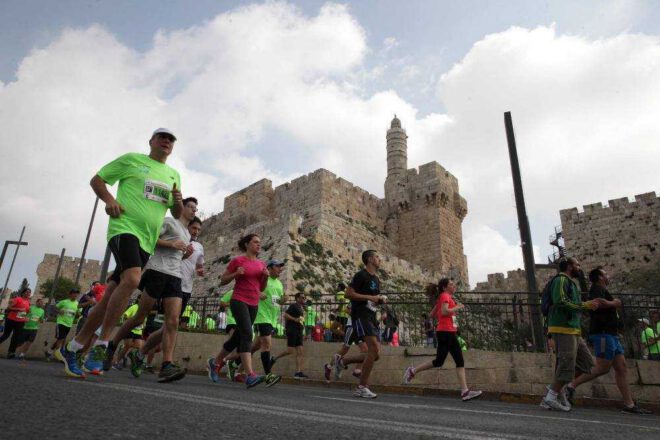
The simplest can be made using white vinegar, baking soda, and essential oils. 

Keep Vehicles Well Maintained

There are a few ways to protect the earth and your car:

  • Get your oil changed according to the manufacturers’ recommendations
  • Don’t top off your gas tank
  • Drive at reasonable speeds

Opt-Out of Mailing Lists

How much unsolicited mail does your loved one receive through the letterbox every day? Most will likely end up in a landfill, without ever being opened. 

To stop this annoying flood of mail you must contact the companies directly or by email and ask for your name to be removed from the mailing list. 

Alternatively, you can encourage your loved ones and their friends to sign up for the National Do Not Mail List. This removed their name from the many mailing lists that exist for direct marketing companies to use.  
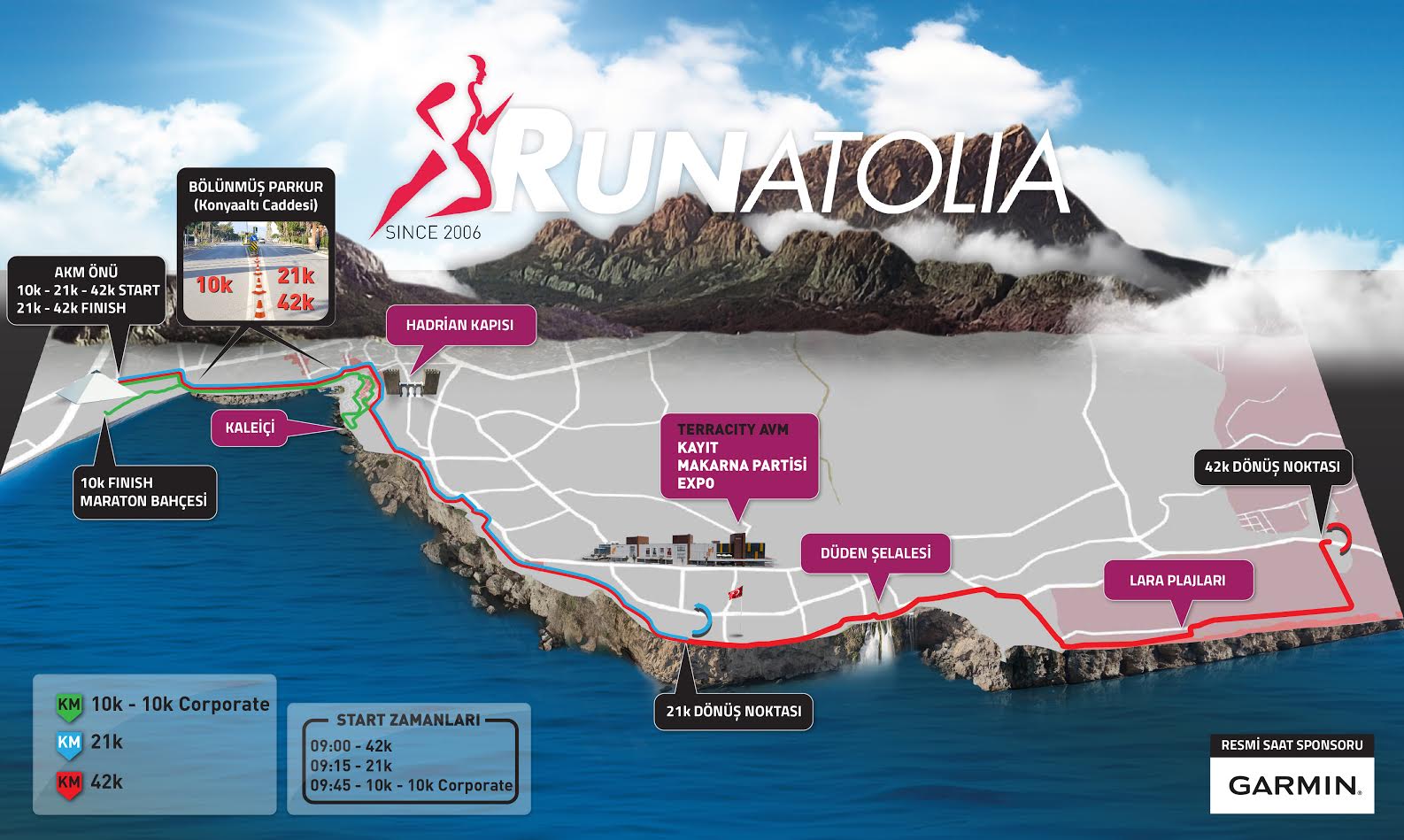
Learn More About Recycling

How much does your loved one know about recycling? A common misconception among the elderly is that they can only recycle bottles and cans. In actual fact, there are many things you can recycle. Local non profit recycling organizations will be able to offer advice, along with local government offices. 
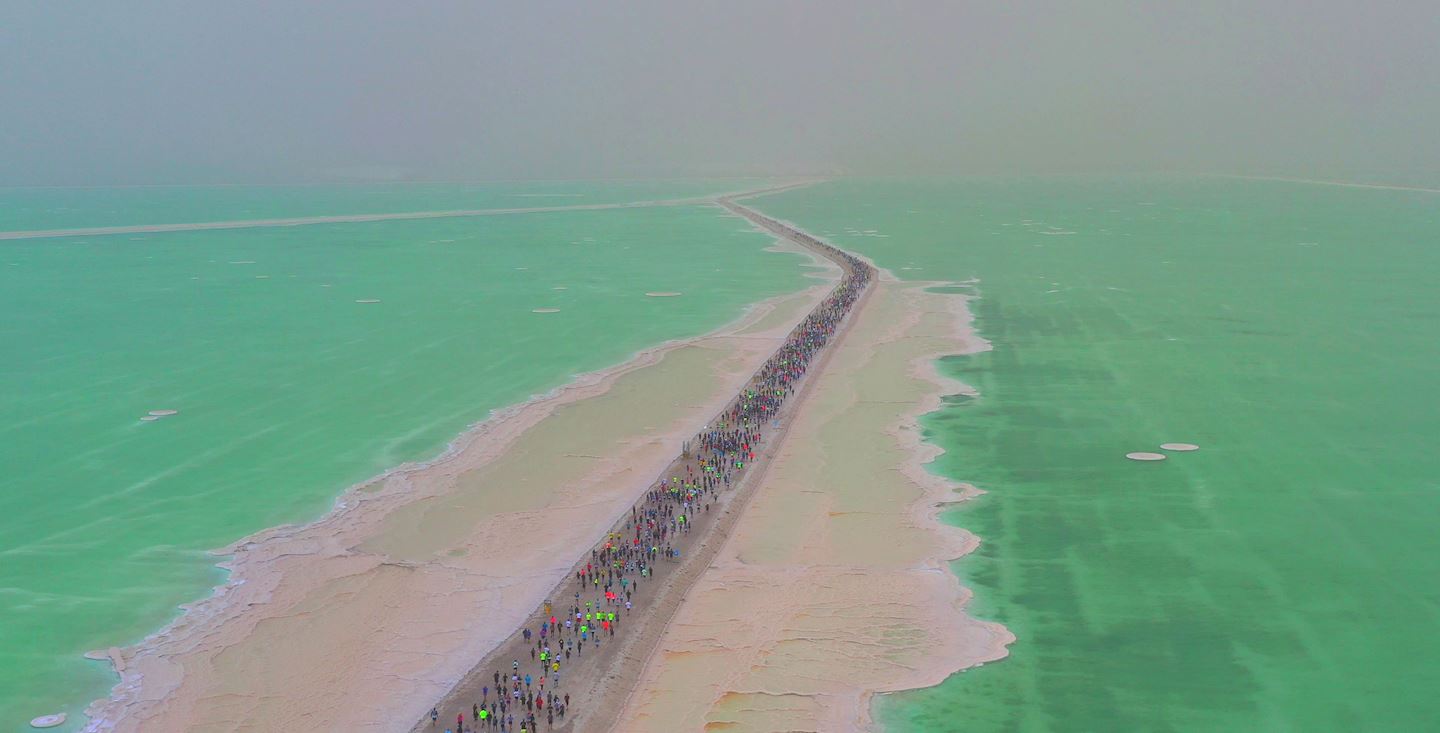
Volunteering

This is a great way for older adults to be more invested in sustainability and the environment. It’s also a great way for them to do something new, meet new people, and use their skills in different ways. 

Unfortunately, older people are often put off volunteering because they feel they don’t know enough to be able to make a valuable contribution. In addition, they might struggle to find volunteer opportunities. 

Use the power of Google to help them find nearby volunteer opportunities that are older-adult friendly. 

Final Thoughts

When it comes to living a sustainable life, we all have a part to play regardless of our age. Every little effort makes a difference. 


Luxury glamping in Abu Dhabi

luxury glamping, UAE, Abu Dhabi Jebel Hafit, Al Ain, night time stars
Luxury tenting, known as glamping, in Jebel Hafit, UAE

It’s been some time now that people are used to the idea that camping, if it’s called glamping, means luxury and a closeness to nature one could only expect on an African safari. Luxury tent camping, glamping (glamor + camping) is becoming commonplace around the world and the Middle East is no exception. People everywhere want authentic experiences close to nature, with some modern conveniences of home like heating and lights and a good bed. 

Glamping in the deserts of Abu Dhabi offers the best of a region where the options are slim. Slick hotels or camping on your own. As you start looking around for options in the Abu Dhabi, consider a few day trip to the desert with glamping sites as your destination.

luxury glamping, UAE, Abu Dhabi Jebel Hafit, Al Ain, night time stars

Jebel Hafit Desert Park in Al Ain is about 1.5 hours away from Abu Dhabi. The national park is about a 7 mile stretch which starts at the Jebel Hafit mountain, Abu Dhabi’s tallest peak, where visitors can explore the family-friendly park’s majestic natural surroundings on a hike, mountain bike, horse or camel.

Jebel Hafit Mountain, with hotel

Archaeological and historical remains can tell enchanting stories of this unique area’s ancient habitation. Remnants include those from the Neolithic period from 8,000 years ago, to the 5,000-year-old Jebel Hafit Tombs excavated in 1959 at the request of the late Sheikh Zayed bin Sultan Al Nahyan, Founding Father of the United Arab Emirates.

In 2011, UNESCO recognised the Jebel Hafit Desert Park area as being a vital component of the World Heritage Site of Al Ain, the UAE’s first World Heritage Site. 

Jebel Hafit Desert Park not only preserves the area’s rich history but also its unique biodiversity, encouraging visitors to experience this dynamic landscape up close and understand how it has changed over millions of years.

And now you can glamp inside it. The park offers guests three camping experiences: basic camping for which you need to bring your own equipment (you’ll find inexpensive camping gear at several Al Ain and Abu Dhabi city stores – but better to borrow from a local); fully serviced camping, including breakfast, in a camp showcasing Bedouin (look inside a Bedouin tent here) tents, and; furnished five-star bubble glamping tents complete with air-conditioning.

Want to glamp? Contact Pura here